
Two-week practical creativity program
Deadline: Not announced yet · From £3,495 · 12-16
by ARTEFFECT
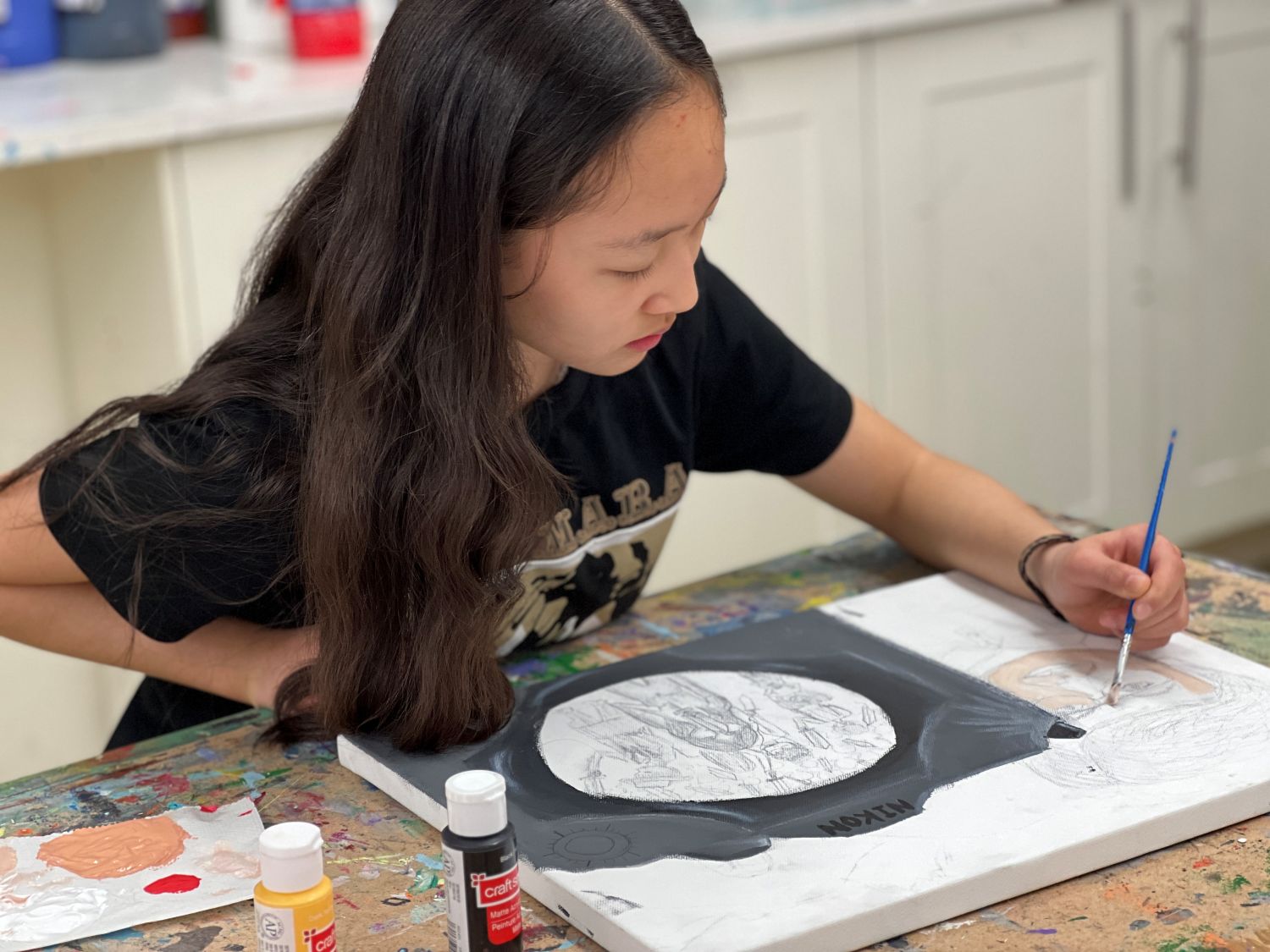
ARTEFFECT's summer competition asks high school students to choose an innovator from its approved list of Unsung Heroes, make an original 2D or 3D artwork about that person and write a 500- to 1,000-word Impact Statement about their story and the student's own process. Everything is submitted online through Submittable, and a panel scores the artwork and the essay together. The 2026 edition, themed Innovation Generation, took entries from 15 May to 15 September 2026.
Why it's worth it
It costs nothing, accepts entries from anywhere in the world and pays real cash prizes, while letting you work in almost any 2D or 3D medium at any size. Selected winning pieces also go on show in ARTEFFECT's gallery in Washington, DC.
What it asks of you
You're making a finished, original artwork and researching a real person well enough to write 500 to 1,000 words about them, all inside a summer window that ran about four months in 2026. You'll also need a parent's signature and your school and teacher details.
Who should skip it
Students with a finished portfolio piece they hoped to enter, because the artwork has to be about one of the 43 innovators on ARTEFFECT's 2026 list, and anyone working in film or photography, which isn't accepted as the artwork.
The 2026 competition asked for one original artwork about a single innovator from ARTEFFECT's approved list, plus a written Impact Statement, all uploaded through ARTEFFECT's Submittable portal. Entries are individual only, and the artwork can be drawing, painting, printmaking, digital art (at least 300 dpi), mixed media, sculpture or textiles, at any size. Films and photography don't count as the artwork.
ARTEFFECT doesn't say how long a project takes, but in our estimate the artwork takes most of the time, followed by the reading you'll need for the essay. The form itself is quick, and ARTEFFECT suggests allowing at least 30 minutes once everything is ready. Photograph your work as you go, because the rules ask for at least three photos of sketches and in-process stages. ARTEFFECT's submission guide calls in-process images optional, so check which applies before you finish.
The artwork
One original 2D or 3D piece, with its medium, materials and dimensions listed on the form.
Photos of it
At least one high-resolution image for 2D or digital work and at least four for 3D work, as .jpg or .png files under 5MB.
The Impact Statement
500 to 1,000 words in English, pasted into the form, with an optional list of the sources you used.
Signatures and details
A parent or guardian's digital signature, your school and a teacher's contact details, and your typed name confirming you didn't use AI.
There were four prompts in 2026, and the Impact Statement had to cover all of them in 500 to 1,000 words of English. The bigger choice comes first, when you pick your Unsung Hero from ARTEFFECT's list of 43 innovators, which runs from the paleontologist Mary Anning and the inventor Hedy Lamarr to the surgeon Vivien Thomas and the physician John Snow. It pays to pick someone whose story you can picture, because the same research feeds the artwork and the first two prompts. ARTEFFECT's rubric mentions five prompt questions in places, but its outline and rules give four, so answer those four fully.
A panel drawn from art education, art history, design, fine arts and museums scores each project out of 100, with 80% resting on the artwork and 20% on the Impact Statement. Half of the artwork's weight is about how well it tells the hero's story, so a polished portrait copied from a famous photo gives up points. ARTEFFECT allows historical images as reference but discourages copying them directly and says judges weigh originality.
Creative Interpretation of the Unsung Hero's Story
A thorough understanding of the story, interpreted in a thoughtful, original way through the hero's character traits, heroic acts or social impact.
40%
Aesthetic Value
Technical skill, craftsmanship and execution of the media, with a strong composition and a distinctive artistic voice.
40%
Impact Statement
A clear essay of 500 to 1,000 words that covers every prompt, describes your process in detail, reflects honestly and lays out how you'll share the work.
20%
On the essay, coming in under 500 words drops you into the rubric's lower bands, and the top band asks for a specific plan for sharing your artwork, where a general one only reaches the middle.
The most useful thing ARTEFFECT publishes is its Judging Rubric, which describes what a project looks like at each of four levels for every criterion, so you can hold a draft up against the top column. Pair it with the Impact Statement Outline and draft each prompt as its own section before joining them up.
The recording of the 2026 info session covers the innovator heroes, submission tips and award categories, and includes two students who had entered before. For topics, the Innovation Generation directory tells each approved hero's story, and the Submission Guide walks through the 10-step form. These are all 2026 versions, and the hero list belongs to that year's Innovation Generation theme.
The 2026 prizes were cash paid to the winners, adding up to more than $20,000, and each entry could win only one. Spotlight Prizes went to work built around data visualization (charts, maps, formulas or schematics) or a polyptych spread across two or more panels, and those entries still competed for the top awards.
| Award (2026) | Prize | Notes |
|---|---|---|
| Grand Prize | $3,000 | One winner |
| Best in Show | $2,000 | One winner |
| First Place | $1,500 | One winner |
| Second Place | $1,000 | One winner |
| Spotlight Prize, Style: Data Visualization | $1,000 | May have several winners |
| Spotlight Prize, Media: Polyptych | $1,000 | May have several winners |
| Certificate of Excellence | $750 | At the judges' discretion, may have several winners |
Winning comes with a condition families should know about. ARTEFFECT takes exclusive rights to award-winning work, and winners have to send in the original piece, with shipping reimbursed against receipts. Finalists and winners appear on ARTEFFECT's website, and selected winning projects are exhibited at the Milken Center for Advancing the American Dream in Washington, DC and the Lowell Milken Center Hall of Unsung Heroes in Fort Scott, Kansas. Every entrant can download a Certificate of Participation, which records that you entered rather than any award.
Several of ARTEFFECT's rules apply from the moment you start planning, well before you reach the form.
No AI at any stage
ARTEFFECT bans AI tools for brainstorming, drafting, editing and final production of both the artwork and the essay, screens entries for AI-generated content and has you certify that you used none.
Approved heroes only
The artwork had to be about someone from the Innovation Generation directory, and ARTEFFECT doesn't accept a hero you found yourself.
One student, one entry
Group projects are ineligible, and each student may submit only one entry.
No late entries
The 2026 deadline was 11:59 PM Pacific Time on 15 September 2026, and ARTEFFECT doesn't accept late submissions.
A parent signs, even at 18
Both you and a parent or legal guardian sign the agreement, including entrants who are already adults.
Past wins limit future prizes
Once a student has won two top awards across ARTEFFECT's summer and annual competitions, they can't receive further cash prizes, and a resubmitted piece that was already a finalist or winner won't be considered for new awards.
Two-week practical creativity program
Deadline: Not announced yet · From £3,495 · 12-16
Creative game design summer program
Deadline: Not announced yet · From $4,295 · 14-18
Immersive lessons, workshops and activities
Deadline: Not announced yet · From £4,095 · 8-12
Save this competition in Succeed to compare it with other essay prizes, deadlines and entry formats in one place.
Compare with other competitionsarteffectlmc.org · Official page
cdn.prod.website-files.com
cdn.prod.website-files.com
arteffectlmc.org
arteffectlmc.org
cdn.prod.website-files.com
cdn.prod.website-files.com
cdn.prod.website-files.com
Facts checked against the official page on 2 Nov 2026
Editor: Ben Stacy
Succeed has no commercial relationship with ARTEFFECT.
Spot an error? Report it