
Applications
Rolling admissions

by National Student Leadership Conference
A residential pre-college program where students investigate mock crime scenes, analyse forensic evidence and learn from working professionals.
See Succeed's assessment of the programme, who it may suit, the estimated total cost, what applying involves and what is still to confirm.
or let us know if .
What Succeed checks
We review public program details such as eligibility, age range, cost, duration, location, format, accommodation, meals and application timing.
What Last verified means
Last verified is the latest date Succeed checked the public details shown on this page. Program dates, prices and availability can still change.
How official sources are used
Succeed uses official provider information where available, then rewrites it into a student-facing summary for comparison and planning.
Why some dates are reference dates
If the current cycle is not available, Succeed may show the latest verified cycle dates so you can understand typical timing.
Succeed is independent from this provider unless a partnership is clearly stated.
Current status
Applications open
Eligibility
High-school students
Age range / Year group
Ages 14-18
Location / Region
Washington, DC; New York, NY
Cost
$4,595
Duration
9 days
Format
In-person
Application deadline
Rolling · Next cycle not announced yet. These dates are from the latest verified cycle and should be used as a reference only.
Save programStudents investigate a simulated crime scene, collect evidence and use scientific techniques to reconstruct events.
Practical work covers fingerprinting, DNA, blood-spatter analysis, forensic anthropology, pathology and expert-witness testimony.
It suits students who want to test forensic science through intensive teamwork, laboratory activities and professional perspectives.
The Forensic Science program is an immersive pre-college experience run by the National Student Leadership Conference. Students step into the role of crime-scene investigators and use scientific analysis to connect physical evidence with an unfolding case.
The program combines laboratory work, investigative simulations, leadership workshops, professional speakers and field trips. Students also experience university classrooms, supervised dormitory living and campus life.
Students practise a broad set of forensic techniques through connected investigative simulations.
The mock crime scene turns scientific analysis into a collaborative, evidence-led case exercise.
Expert-witness testimony develops the ability to explain findings under questioning.
Guest speakers and field trips connect classroom activities with professional forensic settings.
Leadership workshops add communication, listening, resilience and empathy to the academic experience.
Students who enjoy applied science, careful observation, teamwork and reconstructing events from physical evidence.
You want a non-residential course, a narrowly theoretical science class or a formally assessed qualification.
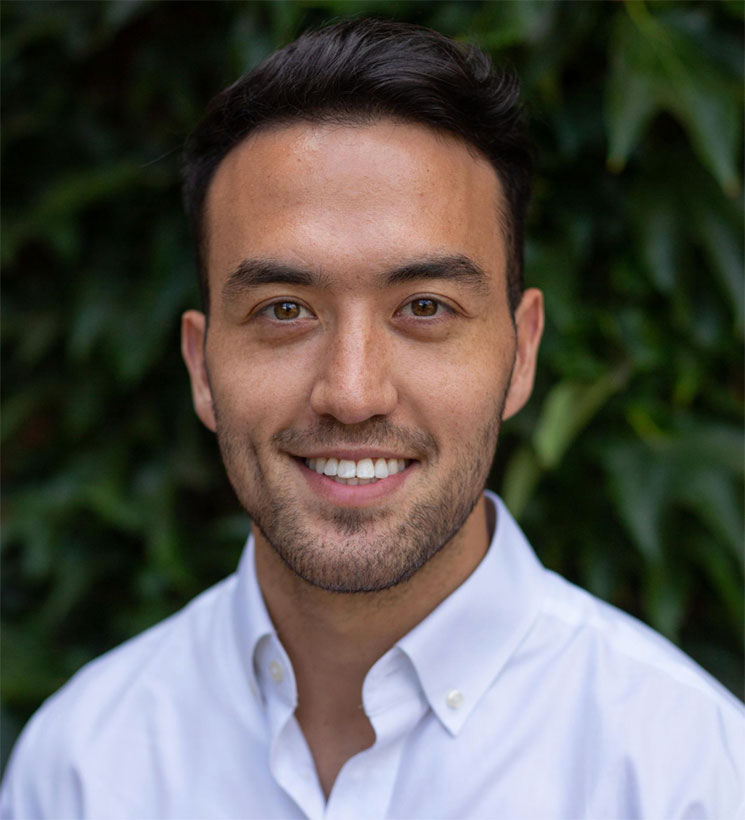
Sean
Founder, Succeed
Talk it through with Sean
“I can help you compare the programmes you're considering, think through the practicalities and work out what makes sense for you.”
20 minutes · No obligation to enrol
A practical overview of cost, accommodation, meals, dates and provider details to review before deciding.
Cost and what is included
$4,595; includes Supervised campus housing., On-campus meals., Course materials and academic expenses., Trips, tours and activities., Off-campus event transportation..
Accommodation
Supervised campus dormitory
Meals
On-campus meals included
Provider details
Review the National Student Leadership Conference provider page and official sources before making a final decision.
Dates and logistics
9 days; Washington, DC; New York, NY.
What to check before committing
Confirm current dates, payment terms, travel arrangements, cancellation rules and what is included with the provider.
Compare this program with similar options before deciding on dates, cost, format and fit.
Compare with similar programsEffort level
High-intensity residential program.
Best started
Begin planning two to three months before a future session for enrollment, funding and travel.
Main challenge
Analysing evidence carefully while working and communicating as a team.
Review the eligibility requirements and confirm that residential participation suits you.
Compare available campuses and session dates once the next cycle is released.
Budget for tuition, travel and personal expenses, then investigate scholarships early.
Refresh basic biology and scientific observation skills before attending.
Useful if
You want to test forensic science before choosing a degree or career.
Students work through a simulated investigation using forensic laboratory methods, evidence interpretation and oral testimony while also completing leadership activities and professional visits.
Measure, photograph, document and collect evidence at a simulated crime scene.
Practise fingerprinting, DNA analysis, blood-spatter analysis and forensic anthropology.
Use an autopsy lab to examine medical-examiner procedures.
Analyse collected evidence and reconstruct the sequence of events.
Present findings as an expert witness under attorney questioning.
Join leadership workshops, guest-speaker sessions and location-specific trips.
The program covers the following focus areas.
Crime Scene Investigation
Measure, photograph, document and collect evidence from a simulated scene.
Forensic Laboratory Skills
Practise blood-spatter, fingerprint, DNA, anthropology and pathology techniques.
Active Investigations
Interpret collected evidence to reconstruct the events behind a case.
Expert Witness Testimony
Explain forensic findings while responding to attorney cross-examination.
Leadership Development
Develop communication, listening, resilience, empathy and self-awareness.
Curriculum may be adjusted based on participant interests and current developments.
Students learn from forensic professionals and guest speakers who bring practical knowledge and real-world perspectives. Past contributors have included investigators, laboratory directors, medical examiners, forensic anthropologists and FBI specialists.
Named speakers are examples from previous programs and may change by cycle.
Travel to and from the program, souvenirs, laundry and off-campus meals are personal expenses.
After completing this program, participants often pursue:
Use the experience to test interest in forensic science careers.
Draw on practical academic experiences in future applications and interviews.
Build evidence-analysis, teamwork and scientific communication skills.
Explore related study in science, medicine, psychology or law.
Optionally take a separate one-credit American University online course.
The optional college-credit course costs extra and is completed outside program dates.
The latest verified cycle ran at American University in Washington, DC, and on the Columbia University campus in New York. Each location combined university-campus living with forensic or cultural trips in the surrounding city.
NSLC is not affiliated with, endorsed by or sponsored by Columbia University.
Program tuition
$4,595 — Residential fee for both verified locations.
Funding or discounts
What's included
Supervised campus housing., On-campus meals., Course materials and academic expenses., Trips, tours and activities., Off-campus event transportation.
Ages 14-18.
Current Grades 9-12.
At least one year of high school completed.
Attendance allowed through summer after high-school graduation.
Academic excellence and leadership ability are encouraged.
Open the NSLC online enrollment portal.
Create an NSLC ID or use an existing one.
Enter the student's birth date, gender and current grade.
Choose an available program location and session.
Complete the online application and pay the required deposit.
If funding is needed, enroll first and then prepare the scholarship application.
Next cycle not announced yet. These dates are from the latest verified cycle and should be used as a reference only.
Applications
Rolling admissions
Application deadline
28 July 2026
Columbia University — 12-20 June 2026
12-20 June 2026
American University — 15-23 June 2026
15-23 June 2026
Columbia University — 24 June-2 July 2026
24 June-2 July 2026
American University — 27 June-5 July 2026
27 June-5 July 2026
Columbia University — 8-16 July 2026
8-16 July 2026
Columbia University — 20-28 July 2026
20-28 July 2026
| Milestone | Date | Timezone | Status | |
|---|---|---|---|---|
Applications | Rolling admissions | Local | Reference date | |
Application deadline | 28 July 2026 | Local | Reference date | |
Columbia University — 12-20 June 2026 | 12-20 June 2026 | Local | Reference date | |
American University — 15-23 June 2026 | 15-23 June 2026 | Local | Reference date | |
Columbia University — 24 June-2 July 2026 | 24 June-2 July 2026 | Local | Reference date | |
American University — 27 June-5 July 2026 | 27 June-5 July 2026 | Local | Reference date | |
Columbia University — 8-16 July 2026 | 8-16 July 2026 | Local | Reference date | |
Columbia University — 20-28 July 2026 | 20-28 July 2026 | Local | Reference date |
The program can be worthwhile for a student seriously exploring forensic science because it brings laboratory techniques, crime-scene procedure and professional perspectives into one coherent experience. The residential setting also offers a useful test of campus independence.
The main limitation is value for money: the program is expensive and does not advertise an included qualification. Students should judge it primarily as career exploration and practical enrichment, then compare the experience with less costly science programs or independent projects.
Next step with Succeed
or let us know if .
Succeed replies first, usually within a working day
Compare programs that explore adjacent scientific, psychological, medical or legal interests.
University-style study of psychology and mental health
Best for
Students more interested in human behaviour than physical evidence.
Practical science with biotechnology applications
Best for
Students drawn to biological analysis and emerging technology.
Psychology study with analysis and statistics
Best for
Students interested in behavioural evidence and research.
Legal study with debating and advocacy
Best for
Students more interested in courtroom reasoning than laboratory science.
Save this program in Succeed to compare it with similar programs, dates, costs and formats in one place.
Compare with other programsContent reviewed by
Co-founder, Succeed | Founder, Immerse Education (2012–2026)
Sean works at the intersection of academic enrichment, program quality and university preparation, with expertise in evaluating pre-university experiences for ambitious secondary school students.
Succeed uses official provider information where available, but keeps this public page focused on comparison and planning inside Succeed.
Program format checked
Eligibility reviewed
Tuition verified
Session dates checked
Accommodation reviewed
Scholarship terms checked
Enrollment process reviewed
We use source material to verify core facts, then show older cycle dates as reference when a current cycle is not available. Always check current application instructions before applying.
Forensic Science Summer Program
by National Student Leadership Conference
Get the full picture before you decide
Succeed's assessment, estimated total cost and what applying involves.
No account needed for the Guide or Compare.