
Summer study in art and design
Deadline: Not announced yet · From £8,650 · 13-18 · St Andrews · In-person
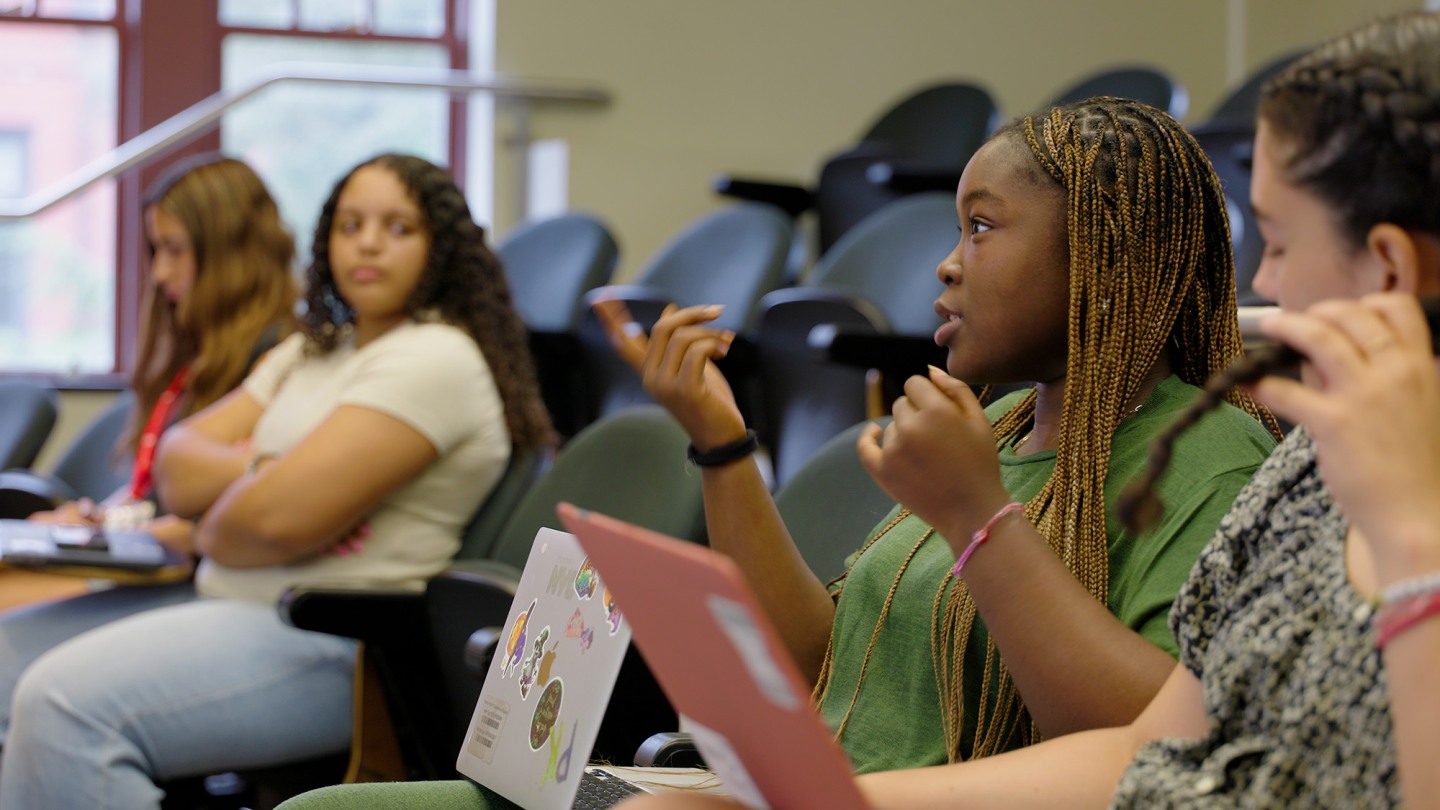
Beyond the Book is a three-week Summer@Brown course on Brown University's campus in Providence where you make new creative work every day, combining writing and images in forms such as graphic novels, illustrated essays, zines and artist books. Weekday morning classes mix discussion, small-group work and generative exercises with trips to the special collections at the Rhode Island School of Design (RISD), Brown's John Hay Library and the Providence Athenaeum. Short readings with creative responses build toward a final portfolio.
Get the key facts by email
The dates, costs and how to apply, all in one place.
Why it's worth it
You make something every day rather than mostly studying other people's work, and the course mixes writing and visual art on purpose, so a writer gets pushed toward images and an artist toward words. Because no experience is needed, it's a fair way to find out whether that kind of work suits you.
What it asks of you
Every class is compulsory, and Brown can dismiss a student for absence with no refund or certificate, so keep those three weeks clear. It's also a lot of money for three weeks, and in 2026 living on campus cost $1,956 more than commuting.
Who should skip it
Students who need college credit or a transcript, since Brown's Pre-College courses offer neither, and anyone wanting sustained technical training in drawing or one form of writing, because the course spreads across poetry, prose and visual forms by design.
In 2026 the class met Monday to Friday from 8:30 to 11:20 a.m., and you make something in every session. The rest of the day is yours to plan, but Brown expects 2 to 3 hours of work outside class each day, done alone or with classmates, and leaves it to you to decide when to fit it in.
Afternoons and evenings are filled with optional workshops on topics such as time management and college applications, along with social events and excursions to local beaches, escape rooms and the mall, all included in the fee. You can also use the fitness center and pool, and residential students are required to attend hall meetings two or three times a week. The campus is spread through the city, so walks of up to 15 to 20 minutes between class, the dining halls and your room are normal.
You leave with a book of your own, a set of shorter creative pieces and a kit of prompts and journaling formats for when you're stuck. The "book" can be a website, a portfolio, a map or a box of stories and objects, so it doesn't have to be bound pages.
If you successfully complete the course, Brown sends a digital certificate of completion, and because the course runs three weeks you also get a Course Performance Report, the instructor's assessment of your work with brief comments. Both arrive in September. The course carries no credit and produces no transcript, and Brown says Pre-College isn't a prospecting program for its own undergraduate admissions. Your Brown Google Drive and Canvas access ends at the end of August, so save your work before then.
You apply to Brown Pre-College as a whole, not to this course. The 2026 application asked for a 250- to 500-word essay on one of two prompts, your grades from the current and previous school years (unofficial copies were fine) and an $80 fee, which some U.S. students could have waived. A recommendation was optional, though Brown strongly suggested one for applicants who would be under 15 on 14 June 2026 or had any grade of C or below. International students whose first language isn't English also needed a TOEFL iBT or Duolingo English Test score.
Brown reviews applications holistically and on a rolling basis, weighing academic performance, motivation, interests and English proficiency, and in most cases decides within 15 business days.
The bigger catch is that admission doesn't reserve you a place in this course. Once admitted, you pay a $500 non-refundable deposit and enroll yourself, and courses fill as students sign up, so check that this course still has space before you pay.
In 2026 the three weeks cost $8,372 if you lived on campus and $6,416 if you commuted. The residential price covered your room, three dining-hall meals a day and the fitness and pool facilities, and Brown broke it down into a $5,948 course fee, $1,182 for housing, $1,128 for meals and a $114 wellness fee. Commuters got the course, one meal a day, the fitness center and free rides on RIPTA, Rhode Island's public transit, but no room.
On top of that come the $80 application fee, an $80 accident insurance plan that international students and U.S. students without health insurance are charged, travel to Providence, any required course materials and spending money. Paying the balance by card adds a processor fee of 2.95% for U.S. cards or 4.25% for foreign ones, which is never refunded.
Financial help is limited. Sibley Scholarships are need-based, open to U.S. citizens, permanent residents and some other U.S. residents, and awarded first come, first served until the money runs out. Students at Providence public schools can get a full scholarship, and partner organizations nominate their own scholars. Brown offers no merit awards and had nothing for international students in 2026.
The $500 deposit isn't refunded unless Brown cancels the course and you choose not to switch to another one. For the 6 July 2026 start, if you withdrew in writing, Brown refunded this share of what you'd paid.
| Written withdrawal date | Refund of payments made |
|---|---|
| On or before 29 June 2026 | 100%, less the $500 deposit |
| 30 June to 7 July 2026 | 80% |
| 8 to 11 July 2026 | 50% |
| After 11 July 2026 | 0% |
Resident assistants live in the halls with students, and every evening at 10 p.m. you check in with staff face to face and then stay on your floor until 6 a.m. If you're not accounted for, staff call your parents and then alert Brown's public safety department. Pre-College staff are on call around the clock while the program runs, and Brown's own police department patrols the campus 24/7. Health Services is open weekdays from 8 a.m. to 4 p.m., a nursing line is available at any hour, and in a medical emergency students are generally taken to Hasbro Children's Hospital in Providence. You're responsible for storing and taking your own medication.
Outside class and curfew you have real freedom. You can explore Providence and the rest of Rhode Island without a parent's permission, although leaving the state needs a form from a parent at least 24 hours ahead. Rooms are singles, doubles or triples, roommates are usually within a year of your age, and parents can't enter the halls except at move-in and move-out. Brown provides no transport, so families arrange travel and students should expect to handle check-in on their own. Brown's Pre-College policies set out the full rules.

Sean
Talk it through with Sean
“I can help you compare the programs you're considering, think through the practicalities and work out what makes sense for you.”
Summer study in art and design
Deadline: Not announced yet · From £8,650 · 13-18 · St Andrews · In-person
Online research mentorship in creative writing and literature
Deadline: Not announced yet · From $3,900 · 14-18 · Online · Online
Journalism summer study covering writing, ethics, and media
Deadline: Not announced yet · From £6,650 · 14-18 · Cambridge · In-person
Save this program in Succeed to compare it with similar programs, dates, costs and formats in one place.
Compare with other programscatalog.precollege.brown.edu · Official page
precollege.brown.edu
precollege.brown.edu
precollege.brown.edu
precollege.brown.edu
precollege.brown.edu
precollege.brown.edu
precollege.brown.edu
Facts checked against the official page on 10 Nov 2026
Editor: Ben Stacy
Succeed has no commercial relationship with Brown Pre-College Programs.
Spot an error? Report it