
Biology
Deadline: Not announced yet
From $495
13+
Online
Online
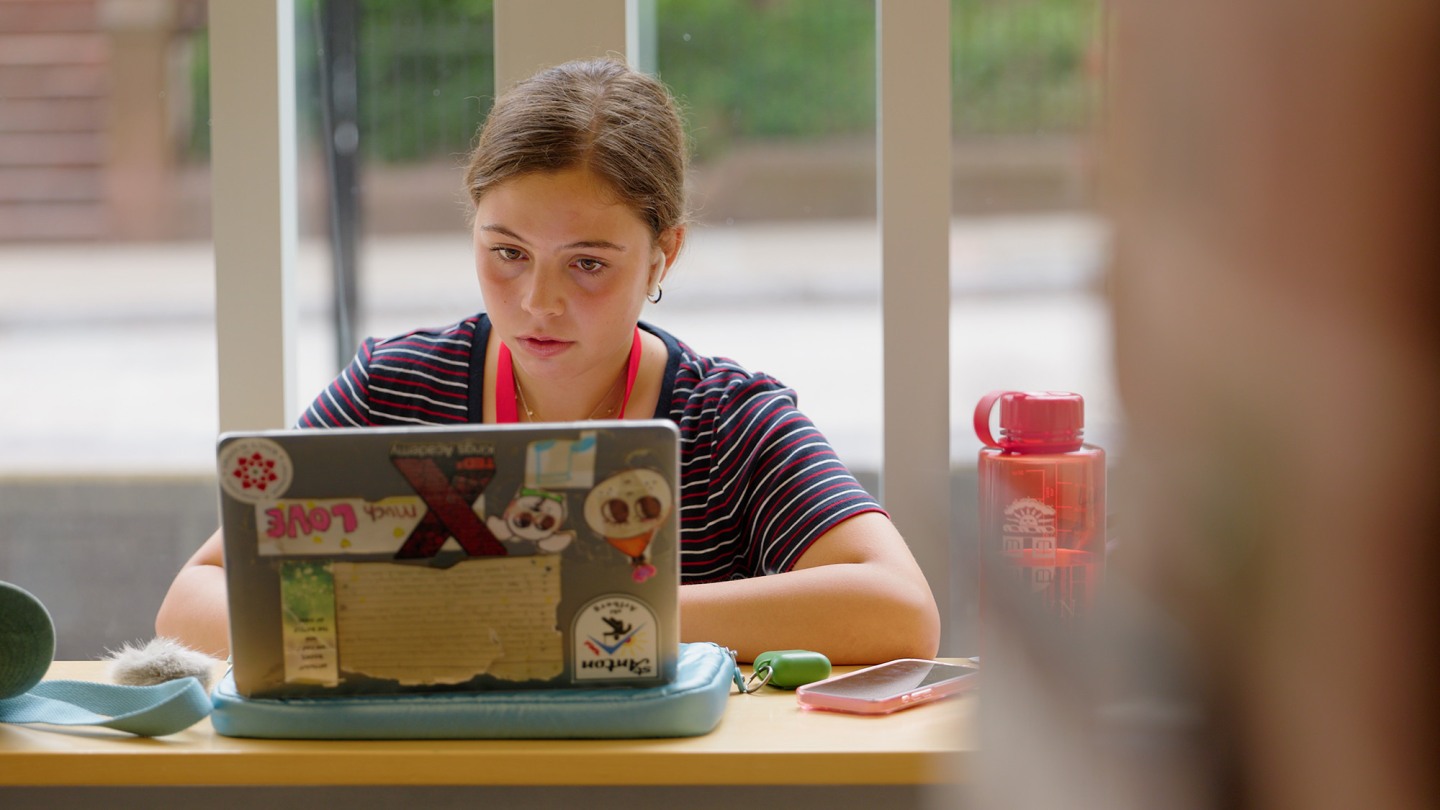
Brown Pre-College Online lets high school students take one of Brown University's noncredit summer courses from home, in sessions of two, three, four or six weeks run through Brown's Canvas system. Courses range across biology, marine science, biotechnology, neuroscience, engineering, writing, economics and more. Each one is either mostly self-paced or blended with one to three required live sessions a week. Students who successfully finish get a digital certificate, and courses of three weeks or longer also come with a written report from the instructor.
 Sean Stevens · Sources
Get the key facts by email
The dates, costs and how to apply, all in one place.
Succeed's assessment
In short
Why it's worth it
The online courses run from marine science and biotechnology to economics and writing, so you can test a fairly narrow interest at Brown without leaving home or paying for a residential summer.
What it asks of you
You'll need to keep up about 15 hours of self-directed work a week for the whole course. Brown drops any online student whose instructor reports them as inactive at the end of the first week, with no refund, which is a real risk on a fee of several thousand dollars.
Who should skip it
Students who need credit or a transcript to show colleges, since Brown gives neither, and those who rely on a teacher in the room to keep them on pace, because most of the work is done on your own.
Every course is either mostly asynchronous or blended, and the catalog shows which format each section uses. In a mostly asynchronous course you work through the material on your own schedule, with a few optional live sessions you can join or watch as recordings. A blended course adds one to three required live sessions a week, and Brown expects you to attend all of them whatever your time zone, with the times published in the catalog in the spring.
Either way, you're expected to log in every day. A week might mix instructor videos, written discussions and peer review, independent reading, a project or experiment, a guest lecture and small-group meetings. Every course has virtual office hours with the instructor, and you can use Brown's library online and book the Writing Center. Before the course starts there's a required orientation in Canvas that takes about three hours and has to be done by the Friday before. You'll need a computer with reliable internet, a webcam and microphone, a word processor, a PDF reader and Zoom.
Leadership Institute Online runs differently, with live workshops on Tuesdays and Thursdays from 11:30 a.m. to 12:30 p.m. Eastern Time, one-on-one meetings with the instructor and an Action Plan as its main project. Brown also asks for a little more time on it, about 15 to 20 hours a week.
In 2026 Brown took students finishing grades 9 to 12 who were 14 to 18 by 14 June 2026, and it judged each application as a whole, weighing academic performance, motivation, interests and English proficiency. Brown says it looks for academically high-achieving students whose essay shows intellectual curiosity, social maturity and self-motivation, and not everyone who applies gets in. Decisions came on a rolling basis, in most cases within 15 business days of a complete application.
Getting in doesn't put you in a course. You then pay the $500 deposit and enroll yourself in an open course. Some courses fill up and keep waitlists, so check that the course you want has space before you pay. Some courses also set their own minimum age or prerequisites, and you can enroll yourself in an online course until two weeks before it starts.
Essay
250 to 500 words on one of two prompts, either a school subject you can't get enough of and what you want to explore, or a time you tried something new and what you learned. A supplementary essay is optional.
Grades
All your grades from the current school year and the previous one, in English. An unofficial transcript, report card or portal screenshot with your name on it is fine.
Recommendation
It's optional, but Brown strongly suggests one if you'll be under 15 on 14 June 2026 or have any grade of C or below.
English test
International students whose first language isn't English send a TOEFL iBT score (generally at least 5.5 for tests from January 2026) or a Duolingo English Test score (generally at least 130), from a test taken on or after 1 July 2025.
In 2026 one Summer@Brown Online course cost $3,364 for two weeks and up to $6,520 for six, and the four-week Leadership Institute Online course cost $5,778. Each fee covers one course, so taking two at once means paying two fees. On top of that comes the $80 application fee, which isn't refundable, along with any supplemental or materials fee Brown lists in the course description and textbooks where a course needs them. Paying the balance by card adds a processing fee of 2.95% on U.S. cards or 4.25% on international ones, and that fee is never refunded.
Brown's main aid, the need-based Sibley Scholarship, is open only to U.S. citizens, permanent residents, refugees, asylees, DACA recipients and undocumented students living in the U.S. Sibley Scholarships go to admitted students first come, first served until the money runs out, and for online courses they cover the course fee for one course only. If you can't attend without aid, Brown suggests waiting for your award decision before paying the deposit. Students at Providence Public School District schools who file the district scholarship form on time get a full scholarship if admitted, and Brown's partner organizations can nominate students for its Partner Scholarships. Brown doesn't offer merit scholarships, and it had nothing for international students in 2026. A fee waiver for U.S. students on free or reduced-price lunch and a few other groups removes the $80 application fee only.
The $500 deposit isn't refundable unless Brown cancels your course and you choose not to take another one. If you withdraw in writing at least a week before the start, you get back the rest of what you've paid to Brown. After that, a two-week course refunds 70% until the day after it starts, while longer courses refund 80% over that same week and 50% for a few days more, and nothing is refunded after that.
| Course | 2026 fee per course |
|---|---|
| Summer@Brown Online, 2 weeks | $3,364 |
| Summer@Brown Online, 3 weeks | $4,656 |
| Summer@Brown Online, 4 weeks | $5,554 |
| Summer@Brown Online, 6 weeks | $6,520 |
| Leadership Institute Online, 4 weeks | $5,778 |
If you complete the course successfully, you get a digital Certificate of Completion, a verifiable PDF with its own 12-digit ID. On a course of three weeks or longer your instructor also writes a Course Performance Report, with comments on how you engaged and a short narrative. Both arrive in September. That's all you come away with on record, because the courses carry no credit and produce no transcript.
Brown says Pre-College isn't a route into its own undergraduate admissions, although it says completing a course shows any admissions office your interest in a subject. Brown removes your Canvas and Google Drive access at the end of August, so save any project or research work before then.

Sean
Founder, Succeed
Talk it through with Sean
“I can help you compare the programs you're considering, think through the practicalities and work out what makes sense for you.”
20 minutes · No obligation to enroll
Succeed has a commercial partnership with this provider.
Save this program in Succeed to compare it with similar programs, dates, costs and formats in one place.
Compare with other programsprecollege.brown.edu · Official page
precollege.brown.edu
precollege.brown.edu
precollege.brown.edu
precollege.brown.edu
precollege.brown.edu
precollege.brown.edu
precollege.brown.edu
Facts checked against the official page on 10 Nov 2026
Editor: Sean Stevens
Succeed has no commercial relationship with Brown Pre-College Programs.
Spot an error? Report it
Not ready to decide yet? Keep it for later.