
Application deadline
15 May 2026
Brown Pre-College's general application deadline.

Brown’s introductory economics course explores how national economies work through real-world data, policy analysis, economic models, and simulations.
Request your Program Guide. We'll email it within 24 hours.
or let us know if .
What Succeed checks
We review public program details such as eligibility, age range, cost, duration, location, format, accommodation, meals and application timing.
What Last verified means
Last verified is the latest date Succeed checked the public details shown on this page. Program dates, prices and availability can still change.
How official sources are used
Succeed uses official provider information where available, then rewrites it into a student-facing summary for comparison and planning.
Why some dates are reference dates
If the current cycle is not available, Succeed may show the latest verified cycle dates so you can understand typical timing.
Succeed is independent from this provider unless a partnership is clearly stated.
Current status
Upcoming
Eligibility
Completing grades 9-12
Age range / Year group
Ages 14-18
Location / Region
Providence, Rhode Island, United States; Online
Cost
$6,416; $6,520; $8,372
Duration
3 weeks
Format
Hybrid
Brown’s introductory course connects national economic data with the theories behind fiscal and monetary policy. Its focus is understanding economic decisions and evaluating models.
Students practice selecting data, framing hypotheses, and analyzing policy tools, with programming, games, and simulations among the course activities.
It suits students who want to test their interest in economics through college-level study and build a more informed understanding of economic news.
How a Nation's Economy Works: An Introduction to Macroeconomics is a Brown University Pre-College course about national economic performance and policymaking. Students learn to interpret economic indicators, understand fiscal and monetary policy, and compare competing economic models.
The course offers separate campus and mostly asynchronous online sections. Students use economic analysis and laptop-based activities to investigate real-world questions, developing critical thinking alongside their understanding of macroeconomics.
The course connects economic theory to real-world data and public policy.
Its learning outcomes emphasize evaluating models and hypotheses, giving students practice beyond memorizing terminology.
Programming, games, and simulations offer practical ways to investigate economic ideas.
An instructor-written Course Performance Report provides individual feedback alongside completion recognition.
Students curious about economic news, government policy, and how evidence can explain national economic trends.
You primarily want college credit, a guaranteed admissions advantage, or a course with little independent work.
The course is a strong fit if you want structured practice interpreting economic data and testing policy arguments. Its explicit learning outcomes make it easier to judge whether the academic work matches your interests.
The value depends on how actively you engage with the coursework and feedback. It is a non-credit learning experience, and Brown explicitly says Pre-College is not a prospecting program for undergraduate admission.
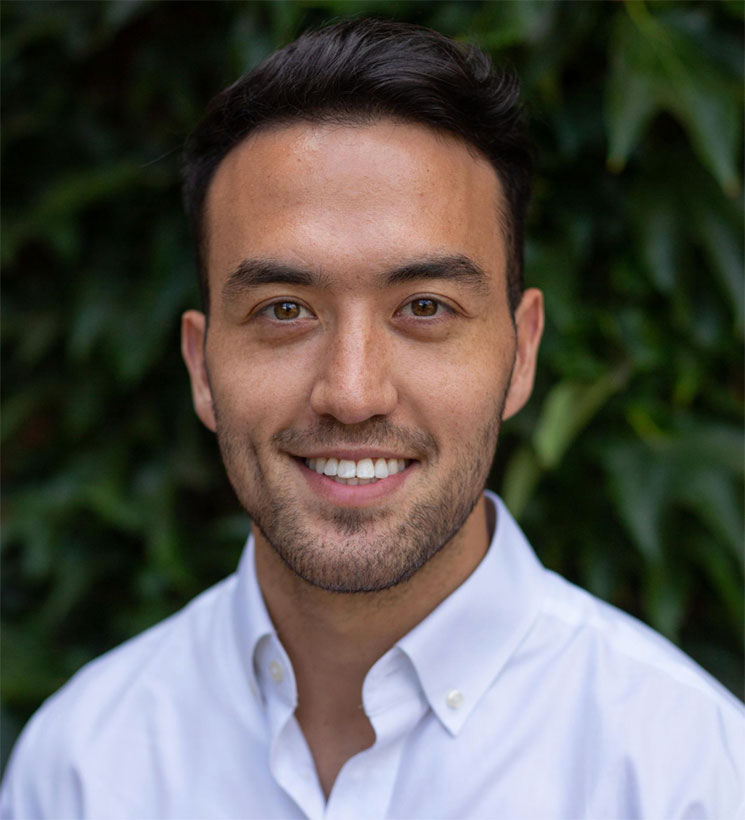
Sean
Founder, Succeed
Talk it through with Sean
“I can help you compare the programmes you're considering, think through the practicalities and work out what makes sense for you.”
20 minutes · No obligation to enrol
A practical overview of cost, accommodation, meals, dates and provider details to review before deciding.
Cost and what is included
$6,416; $6,520; $8,372; includes Course instruction in the selected section., Residential: housing and three meals daily., Commuter: one dining-hall meal daily., Campus options: fitness, athletic, and aquatics facilities., Campus options: program activities and excursions., Online: virtual instructor office hours., Successful completion: digital certificate and Course Performance Report..
Accommodation
Residential or commuter campus options
Meals
Residential: three daily; commuter: one daily
Provider details
Review the Brown Pre-College Programs provider page and official sources before making a final decision.
Dates and logistics
3 weeks; Providence, Rhode Island, United States; Online.
What to check before committing
Confirm current dates, payment terms, travel arrangements, cancellation rules and what is included with the provider.
Compare this program with similar options before deciding on dates, cost, format and fit.
Compare with similar programsEffort level
Substantial, with sustained independent study.
Best started
Allow four to six weeks for application preparation once the next cycle is published.
Main challenge
Keeping up with economic analysis while managing independent work.
Refresh Algebra II concepts before the course begins.
Gather current and previous academic-year grades and draft your own application essay.
Confirm that your laptop supports desktop software downloads.
For online study, reserve the preceding week for the required Canvas orientation.
Useful if
You want to test whether economics interests you enough for further study.
You investigate national economic performance using data, policy tools, and economic models. Laptop-based programming, games, and simulations support the analytical work.
Build familiarity with macroeconomic indicators, institutions, and vocabulary.
Interpret tools used in fiscal and monetary policymaking.
Frame economic questions and hypotheses about relevant events.
Select appropriate data to investigate those questions.
Compare models and explain different macroeconomic schools of thought.
Next cycle not announced yet. These dates are from the latest verified cycle and should be used as a reference only.
Application deadline
15 May 2026
Brown Pre-College's general application deadline.
How a Nation's Economy Works: An Introduction to Macroeconomics — Online, 6 weeks, Course 10039
15 June-24 July 2026
Mostly asynchronous; instructor Paige Carmichael.
How a Nation's Economy Works: An Introduction to Macroeconomics — On campus, 3 weeks, Course 10114
22 June-10 July 2026
Monday-Friday, 12:15-3:05 p.m. ET; instructor Reena Ahuja.
How a Nation's Economy Works: An Introduction to Macroeconomics — On campus, 3 weeks, Course 10113
6-24 July 2026
Monday-Friday, 12:15-3:05 p.m. ET; instructor Paige Carmichael.
Applications open
14 January 2026
2026 application cycle.
Final admission decisions
22 May 2026
| Milestone | Date | Timezone | Status | |
|---|---|---|---|---|
Application deadline | 15 May 2026 | Local | Reference date | |
How a Nation's Economy Works: An Introduction to Macroeconomics — Online, 6 weeks, Course 10039 | 15 June-24 July 2026 | Local | Reference date | |
How a Nation's Economy Works: An Introduction to Macroeconomics — On campus, 3 weeks, Course 10114 | 22 June-10 July 2026 | Local | Reference date | |
How a Nation's Economy Works: An Introduction to Macroeconomics — On campus, 3 weeks, Course 10113 | 6-24 July 2026 | Local | Reference date | |
Applications open | 14 January 2026 | Local | Reference date | |
Final admission decisions | 22 May 2026 | Local | Reference date |
Completing grades 9-12.
Ages 14-18 by 14 June 2026.
No prior economics knowledge required.
Algebra II-level mathematics suggested.
Interest in economics and active course engagement required.
Strong English proficiency required.
Laptop capable of required desktop software downloads.
Online program fee
$6,520 — Six-week course.
Funding or discounts
What's included
Course instruction in the selected section., Residential: housing and three meals daily., Commuter: one dining-hall meal daily., Campus options: fitness, athletic, and aquatics facilities., Campus options: program activities and excursions., Online: virtual instructor office hours., Successful completion: digital certificate and Course Performance Report.
Create one applicant account through Brown's Student Portal.
Complete the Brown Pre-College application form and 250-500-word essay.
Upload current and previous academic-year grades in English.
Provide English test results when required and any recommendation you choose to submit.
Pay the application fee or complete the applicable fee-waiver process.
Monitor your portal for requests and the admission decision.
After admission, confirm your course choice before paying the enrollment deposit.
Enroll separately in an eligible course section through your student portal.
Next step with Succeed
or let us know if .
Succeed replies first, usually within a working day
The program covers the following focus areas.
Macroeconomic indicators
Identify economic indicators and the institutions and vocabulary associated with them.
Fiscal and monetary policy
Interpret the tools policymakers use to influence the national economy.
Economic data and hypotheses
Frame questions, select appropriate data, and evaluate the economic impact of events.
Models and schools of thought
Compare economic models and interpret different macroeconomic schools of thought.
Curriculum may be adjusted based on participant interests and current developments.
A typical day during the program.
Monday-Friday, 12:15-3:05 p.m. Eastern Time.
Campus students should plan for two to three hours of homework.
Check in at 10 p.m. ET and remain on your floor until 6 a.m.
Reena Ahuja teaches campus Course 10114, while Paige Carmichael teaches campus Course 10113. Carmichael also teaches the online section.
Students may be assigned single, double, or triple rooms; roommate requests are not honored.
After completing this program, participants often pursue:
Earn a digital certificate through successful completion.
Receive an instructor-written Course Performance Report.
Build a foundation for further economics study.
Develop more informed economic and civic engagement.
The course is non-credit, and participation does not guarantee undergraduate admission.
Campus sections take place at Brown University in Providence, Rhode Island. Residential and commuter check-in takes place at Sayles Hall on the Main Green on the Sunday before instruction begins.
Families arrange travel to and from campus; Brown does not provide transportation or coordinate travel assistance.
The online section uses Canvas and is mostly asynchronous, with daily engagement and approximately 15 hours of coursework per week. Optional live sessions and virtual instructor office hours supplement independent study, with live-session times announced at course start.
Complete the approximately three-hour Canvas orientation during the preceding week, by the Friday before the course begins.
Paige Carmichael teaches the online section.
Virtual instructor office hours support questions and discussion.
Optional live sessions supplement asynchronous learning.
Personalized feedback is part of Brown Pre-College Online.
A Course Performance Report assesses work and engagement.
Writing Center and English language support appointments are available.
Laptop capable of downloading required desktop software.
Reliable internet connection for online study.
Webcam and microphone for online sessions.
Word-processing software and a PDF reader.
Access to Canvas and Zoom.
Assessment emphasizes instructor feedback on coursework and engagement through a Course Performance Report.
Main deliverable / output
Completion recognition consists of a digital certificate and an instructor-written Course Performance Report.
Digital CeCertificate of Completion after successful completion.
Course Performance Report assessing work and engagement.
Compare these economics programs by academic focus, delivery, and family budget.
An in-person course focused on introductory macroeconomics
Best for
Students comparing introductory macroeconomics courses
An in-person economics summer course in Cambridge
Best for
Students considering economics study in Cambridge
An online course combining Python, economics, and finance
Best for
Students interested in economics and programming
Save this program in Succeed to compare it with similar programs, dates, costs and formats in one place.
Compare with other programsContent reviewed by
Co-founder, Succeed | Founder, Immerse Education (2012–2026)
Sean works at the intersection of academic enrichment, program quality and university preparation, with expertise in evaluating pre-university experiences for ambitious secondary school students.
Succeed uses official provider information where available, but keeps this public page focused on comparison and planning inside Succeed.
Official course catalog checked
Section dates cross-checked
Format-specific fees matched
Application requirements reviewed
Completion criteria checked
Residential policies reviewed
We use source material to verify core facts, then show older cycle dates as reference when a current cycle is not available. Always check current application instructions before applying.
How a Nation's Economy Works: An Introduction to Macroeconomics
by Brown Pre-College Programs
May qualify for the £300 Succeed Programme Award.
Get the full picture before you decide
Request your Program Guide. We'll email it within 24 hours.
No account needed to compare programmes.