
In person in Los Angeles, ages 15 to 18, from $8,130.
Deadline: Not announced yet · From $8,130 · 15-18 · Los Angeles · In-person
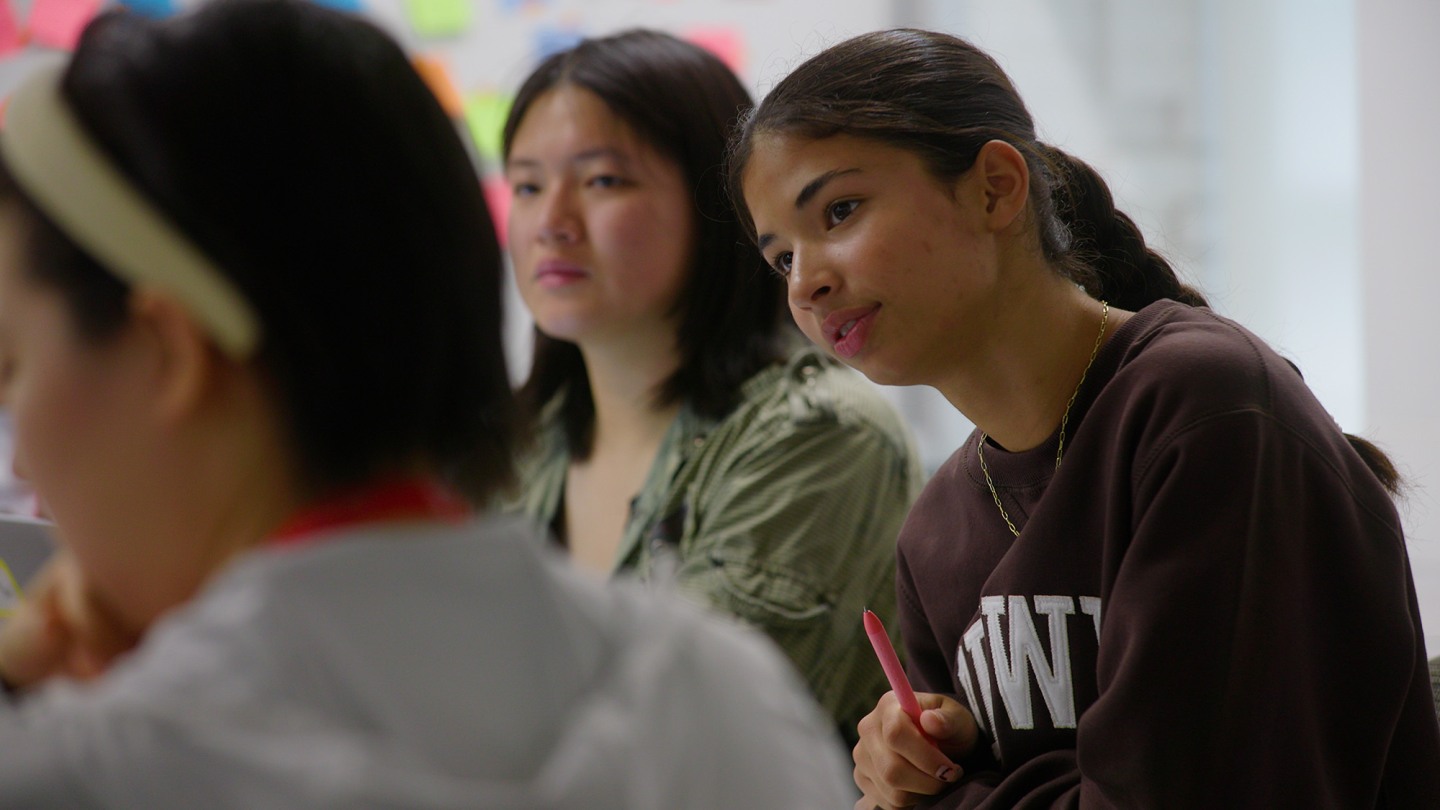
A two-week, on-campus course in Brown University's Leadership Institute that looks at how the Civil Rights, immigrant rights, LGBTQ+ rights and environmental justice movements worked with lawyers and the courts to push for change. You spend five hours each weekday in class and leadership workshops in Providence, reading sociology, anthropology, history and excerpts from legal cases. On the last day you present an Action Plan, a project you design to tackle a problem in your own community.
Get the key facts by email
The dates, costs and how to apply, all in one place.
Why it's worth it
You get a tight focus on how real movements used the legal system, taught through case studies, and the Leadership Institute wraps that in leadership workshops and an Action Plan you build for your own community. Nothing is graded, which leaves room to take on hard questions without worrying about marks.
What it asks of you
Two weeks in Providence at full pace, with class filling most of each weekday and two to three hours of homework a day. The fee is the real hurdle, and Brown's need-based aid is limited and not open to international students.
Who should skip it
Students who want something to put on a transcript, because Brown's pre-college courses carry no credit, and anyone hoping to practice legal argument, since the readings treat the law as something shaped by activists and communities more than as a craft to learn.
Brown listed Kevin Escudero as the instructor for the 2026 section, and in the Leadership Institute instructors work alongside Teaching Associates who help each student shape their Action Plan.
The reading mixes sociology, anthropology, history and law, including excerpts from legal opinions and briefs, but Brown describes the approach as a sociology and anthropology of law. In practice that means you look at the messages activists put out, how their local communities reacted and whether their campaigns worked, with the focus on how many people together shape what the law means. Instructors also hold office hours, which Brown encourages students to use as they would in college.
Weekdays are built around class, which runs from 9 to 11:30 a.m. and again from 12:30 to 3 p.m., with lunch in a dining hall in between. Those blocks mix the course itself with leadership workshops, and past topics have included leadership styles and identity and privilege. Afternoons and evenings go on the 2 to 3 hours of homework Brown expects each day, along with community meetings and campus activities, and weekends are free for study and extracurriculars. Because the Leadership Institute keeps its own timetable, Brown warns that its students get fewer chances to join the activities run for all pre-college students on campus.
The work starts before you arrive, with a pre-course assignment of about an hour on Canvas, Brown's online learning platform, which you finish at least a week before the first class.
For summer 2026 the course was open to students finishing grades 9 to 12 who were 14 to 18 by 14 June 2026, and it had no prerequisites. You don't apply to the course itself. You apply to Brown's Pre-College Program, which reads each application as a whole, looking at your grades, motivation, interests and, if English isn't your first language, your English. Decisions usually come within 15 business days, but nothing is reviewed until every piece is in.
Being admitted doesn't hold you a seat. You then pay the deposit and enroll in the course if it still has room, and courses fill on a rolling basis. The Leadership Institute's on-campus courses went waitlist-only during the 2026 cycle, so it pays to enroll as soon as you're admitted.
Essay
250 to 500 words on one of two prompts, either a school subject you can't get enough of or a time you tried something new.
Grades
All your grades from the current and previous school year, and an unofficial transcript, report card or portal screenshot is fine.
English score
If English isn't your primary language, a TOEFL iBT or Duolingo English Test score. Brown says successful applicants usually score at least 130 on Duolingo, or 5.5 on a TOEFL taken from January 2026.
Recommendation
Optional, but Brown strongly suggests one if you have any grades of C or below.
In 2026 the two weeks cost $6,052 if you lived on campus and $4,748 if you commuted, and Brown hasn't published prices for a later summer. The residential price covered the course, a residence hall room, three meals a day and use of the gym and pool, while commuters got the course, one meal a day and the same gym and pool access but no room.
On top of that came an $80 application fee that isn't refunded, and international students and U.S. students without health insurance paid $80 for Brown's limited accident insurance. Travel to Providence, any required books and spending money were extra, and paying the balance by card added a 2.95% processing fee on U.S. cards or 4.25% on international ones. To claim a seat you paid a $500 deposit, which Brown keeps if you withdraw unless it cancels your course. The balance was due on 13 May 2026, or within 48 hours of enrolling if you enrolled after 11 May.
Need-based Sibley Scholarships are open to U.S. citizens, permanent residents, refugees and asylees, and to students with DACA or undocumented status who live in the U.S. The money goes first come, first served until it runs out, so Brown urges eligible students to apply as soon as they finish the admission application. Students at Providence Public School District schools who fill in the district's scholarship form by the deadline and are admitted get a full scholarship. There was no aid for international students in 2026, and Brown offers no merit scholarships.
| If you withdrew in writing | Refund for the 22 June 2026 start |
|---|---|
| On or before 15 June 2026 | Everything paid, minus the $500 deposit |
| 16 to 23 June 2026 | 70% of payments made |
| After 23 June 2026 | Nothing |
You leave with an Action Plan, a project you design during the course to tackle an issue back home, and you present it to classmates and guests on the last afternoon. Brown publishes past Leadership Institute examples, including a campaign to ban flavored tobacco products in Oregon and an awareness drive about pre-college scholarship opportunities.
Finish the course and you also get a digital Certificate of Completion and, because the course runs two weeks, a Course Performance Report in which your instructor comments on your work. Both arrive in the fall. The course is ungraded, carries no credit and produces no transcript, and missing classes can cost you the certificate.
Residential students check in face to face with staff at 10 p.m. every night and stay on their floor until 6 a.m., and if anyone isn't accounted for, staff call the parents and then campus police. Resident Assistants, usually college-aged, live in the halls with students, and Pre-College staff are on call 24 hours a day while the program runs.
Outside class and curfew, students can explore Providence and the rest of Rhode Island on their own, but leaving the state needs a form from a parent at least 24 hours ahead. Overnight stays away from campus need the same notice and are only allowed for reasons such as family circumstances, religious commitments or a rare opportunity. Brown Health Services sees students on weekdays, a nursing line runs around the clock and medical emergencies generally go to Hasbro Children's Hospital in Providence. Students manage their own medication, and parents can't enter the residence halls except at move-in and move-out.
Brown doesn't arrange travel and can't take students who arrive outside check-in, which runs from 9 a.m. to 1 p.m. on the Sunday before class, so plan for the student to arrive and leave on their own. The full rules are in Brown's pre-college policies.

Sean
Talk it through with Sean
“I can help you compare the programs you're considering, think through the practicalities and work out what makes sense for you.”
In person in Los Angeles, ages 15 to 18, from $8,130.
Deadline: Not announced yet · From $8,130 · 15-18 · Los Angeles · In-person
Law and politics summer school, ages 16 to 18, from £5,995.
Deadline: Not announced yet · From £5,995 · 16-18 · Cambridge · In-person
Wake Forest leadership program in Winston-Salem, ages 14 to 18, from $3,500.
Deadline: Not announced yet · From $3,500 · 14-18 · Winston-Salem · In-person
Save this program in Succeed to compare it with similar programs, dates, costs and formats in one place.
Compare with other programscatalog.precollege.brown.edu · Official page
precollege.brown.edu
precollege.brown.edu
precollege.brown.edu
precollege.brown.edu
precollege.brown.edu
precollege.brown.edu
precollege.brown.edu
Facts checked against the official page on 10 Nov 2026
Editor: Ben Stacy
Succeed has no commercial relationship with Brown Pre-College Programs.
Spot an error? Report it