
In person in St Andrews, ages 13 to 18, from £7,900.
Deadline: Not announced yet · From £7,900 · 13-18 · St Andrews · In-person
by Carnegie Mellon Pre-College Programs
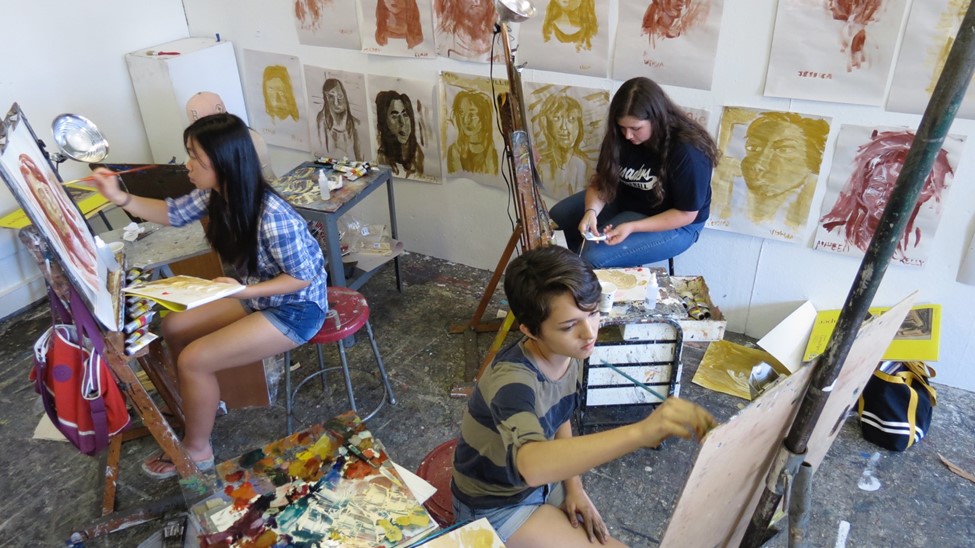
Carnegie Mellon's Pre-College Art program brings rising high school juniors and seniors into its School of Art studios in Pittsburgh for three or six weeks in summer 2027. You take four courses in each three-week half, from drawing and sculpture to animation and printmaking, and spend Fridays in workshops you choose. You can live in a campus residence hall, or commute if your family lives nearby.
Get the key facts by email
The dates, costs and how to apply, then 2 reminders: 15 Feb (2 weeks before) and 26 Feb (3 days before).
Why it's worth it
You get a compressed version of what CMU's School of Art teaches its own undergraduates, Concept Studio included, plus individual critique and a one-on-one portfolio review with School of Art faculty, which is useful rehearsal if you're applying to art programs.
What it asks of you
This is a full working week in the studio with evening work on top, so it suits someone who already makes art without being told to. Six weeks on campus is the costliest option at $12,631 on CMU's 2026 price list, and need-based aid is open only to US citizens and permanent residents.
Who should skip it
Students hoping for college credit or a foot in the door at CMU, because the program carries no credit and CMU says Pre-College admission has no influence on an undergraduate application.
Classes run Monday to Thursday from 9:00 am to 12:00 pm and 1:00 pm to 4:00 pm, and Fridays go to elective workshops you sign up for once you've enrolled. CMU also expects you back in the studios in the evenings for open studio time, and on average you'll spend 8 to 10 hours a week on projects outside class.
Weeks 1 to 3
Drawing, Sculpture, Animation and Concept Studio, with a student exhibition at the end for three-week students.
Weeks 4 to 6
Painting, Physical Computing, Printmaking and the second part of Concept Studio, for six-week students only.
Each three-week half carries four courses. Concept Studio runs through both halves and is less about technique than about how you generate ideas, with readings, short writing, group projects and your own artworks. Friday workshops aren't graded, and past topics have ranged from puppetry and soft sculpture to green screening, kite-building and using a laser cutter.
Outside class, residential students eat three meals a day on weekdays and brunch and dinner on weekends. Evenings and weekends bring optional clubs, free museum visits on the Arts Pass and ticketed day trips such as a Pittsburgh Pirates game or Fallingwater.
CMU says its courses are taught by accomplished artists who have taught both teenagers and college students. Undergraduate teaching assistants from the School of Art's Bachelor of Fine Arts program help in class, which gives you a close look at what studying art at college involves. CMU describes the classes as small but doesn't publish a class size or ratio.
Friday workshops draw on a wider group, including Pre-College faculty, teaching assistants, CMU-affiliated artists and Pittsburgh-based experts.
You need to be 16 by 26 June 2027 and in 10th or 11th grade when you apply, so the program is only for rising juniors and seniors. CMU asks for a strong interest in art rather than a set level of experience. Most students have taken high school art classes or community programs, it says, but some do well with little experience if they're highly motivated. CMU doesn't publish an acceptance rate or cohort size.
Commuting is limited to families whose permanent home is within about 30 miles of campus or in Allegheny County, and CMU makes no exceptions. International students face a bigger hurdle. CMU issues student visa paperwork (the I-20) only for its credit-bearing Summer Session, so to take Art you'd need to be in the US already under another immigration status or attending a US high school on an F-1 visa. If English isn't your first language, you'll also need a score from the past two years, such as IELTS 7.5, TOEFL iBT 102 or Duolingo 135, unless you've attended a US high school for at least a year and are going back to it.
Essays
One 300- to 500-word essay on what you hope to gain from CMU's Pre-College Programs, plus three 150- to 200-word answers on why you want this Art program, what resources you wish your area had, and the art you make outside school assignments.
Artwork
Optional but recommended: 5 to 10 images in a single PDF, or a video of up to three minutes on YouTube or Vimeo.
Paperwork
An unofficial transcript, one letter of recommendation and, if you think they'll help, PSAT, SAT, PreACT or ACT scores.
You apply through CMU's Pre-College online application, where you can rank up to two programs but will only be admitted to one.
Decide between three and six weeks, and whether to ask for need-based scholarship consideration, which moves your deadline to 1 February 2027 and waives the $75 application fee.
Request your recommendation letter through the application early, because CMU won't review your file until the letter arrives.
Submit by 11:59 pm Eastern on 1 March 2027, or by 1 February 2027 if you're an international student who hasn't attended a US high school for at least a year, and apply earlier if you can, since programs can fill up.
Expect a decision usually within 15 working days of submitting a complete application, or on 1 April 2027 if you applied for a scholarship.
Accept within 7 days by returning the Enrollment Reply Form with the $800 deposit, or $100 if you have a scholarship.
Pay the balance and finish your medical forms, ID photo and enrollment paperwork by 5 May 2027, because CMU cancels the place of anyone who hasn't paid in full by then.
On CMU's latest price list, which it labels 2026, six weeks cost $12,631 living on campus or $9,355 commuting, and three weeks cost $8,223 residential or $6,400 commuting. Check the 2027 figure before you commit. The price covers classes, an art material kit from the CMU Art Store, dining, a CMU ID with an Arts Pass for free entry to many Pittsburgh museums and free rides on Pittsburgh Regional Transit, plus a room for residential students.
On top come the $75 application fee, travel to Pittsburgh, your own sketchbooks and a large portfolio (20 by 30 or similar), and bedding, towels and a fan if you live on campus. CMU recommends a laptop with Adobe Creative Suite but doesn't require one. Every student needs health insurance that covers emergency care, or a short-term policy for the summer, and most visits to the campus health center add $15 to $35 each. CMU says students spend $250 to $350 on average over six weeks, though it doesn't require any spending money.
Full scholarships covering tuition, housing and dining go to a very limited number of students who show financial need, are US citizens or permanent residents and apply by 1 February 2027. CMU also mentions merit scholarships but gives no details, so ask its Pre-College office if you think you'd qualify.
Deposit
The $800 enrollment deposit counts toward the price but is never refunded.
Withdraw by 5 May 2027
You get everything back except the deposit and the application fee.
Withdraw 6 to 21 May 2027
CMU refunds 50% of the program cost.
From 22 May 2027
There's no refund, and none for students who leave early or are expelled.
Visa refusal
International students who show they couldn't get a US visa get a full refund apart from the application fee.
Residential students live in CMU's first-year residence halls, mostly in double rooms, with undergraduate resident advisors living in the building and staff on call around the clock. All residential staff pass Pennsylvania criminal history and child abuse checks and an FBI background check. Curfew is 10:00 pm Sunday to Thursday and 11:00 pm on Fridays and Saturdays, after which students must stay on their own floor, and a missed check-in sets off CMU's missing student protocol.
CMU expects students to look after themselves much as first-year college students do. Staff can't store or hand out medication, so a student on prescriptions manages their own and brings a lockbox. Any night away or ride in a private car, even with family, needs a request at least 48 hours ahead, with an adult aged 21 or over going along and a parent confirming by phone.
Health care
University Health Services sees students after a phone evaluation, and staff go with a student to urgent care or a UPMC emergency room when needed.
Parents
A 24/7 help line (412-552-3118) runs while the program is in session, and parents are contacted as soon as possible in an emergency.
Getting there
A free shuttle runs from Pittsburgh International Airport on move-in day and back at move-out for students traveling alone.
Conduct
Alcohol or drugs mean immediate expulsion with no refund, and expelled students leave within 24 hours at the family's expense.

Sean
Talk it through with Sean
“I can help you compare the programs you're considering, think through the practicalities and work out what makes sense for you.”
In person in St Andrews, ages 13 to 18, from £7,900.
Deadline: Not announced yet · From £7,900 · 13-18 · St Andrews · In-person
Guitar seminar in Los Angeles, ages 15 to 18, from $8,130.
Deadline: Not announced yet · From $8,130 · 15-18 · Los Angeles · In-person
Art and design in Cambridge, ages 14 to 17, from £3,995.
Deadline: Not announced yet · From £3,995 · 14-17 · Cambridge · In-person
Save this program in Succeed to compare it with similar programs, dates, costs and formats in one place.
Compare with other programscmu.edu · Official page
drive.google.com
cmu.edu
apply-precollege.studentaffairs.cmu.edu
cmu.edu
cmu.edu
cmu.edu
drive.google.com
Facts checked against the official page on 4 Nov 2026
Editor: Ben Stacy
Succeed has no commercial relationship with Carnegie Mellon Pre-College Programs.
Spot an error? Report it