
Art and design in Cambridge, ages 14 to 17, from £3,995.
Deadline: Not announced yet · From £3,995 · 14-17 · Cambridge · In-person
by Carnegie Mellon Pre-College Programs
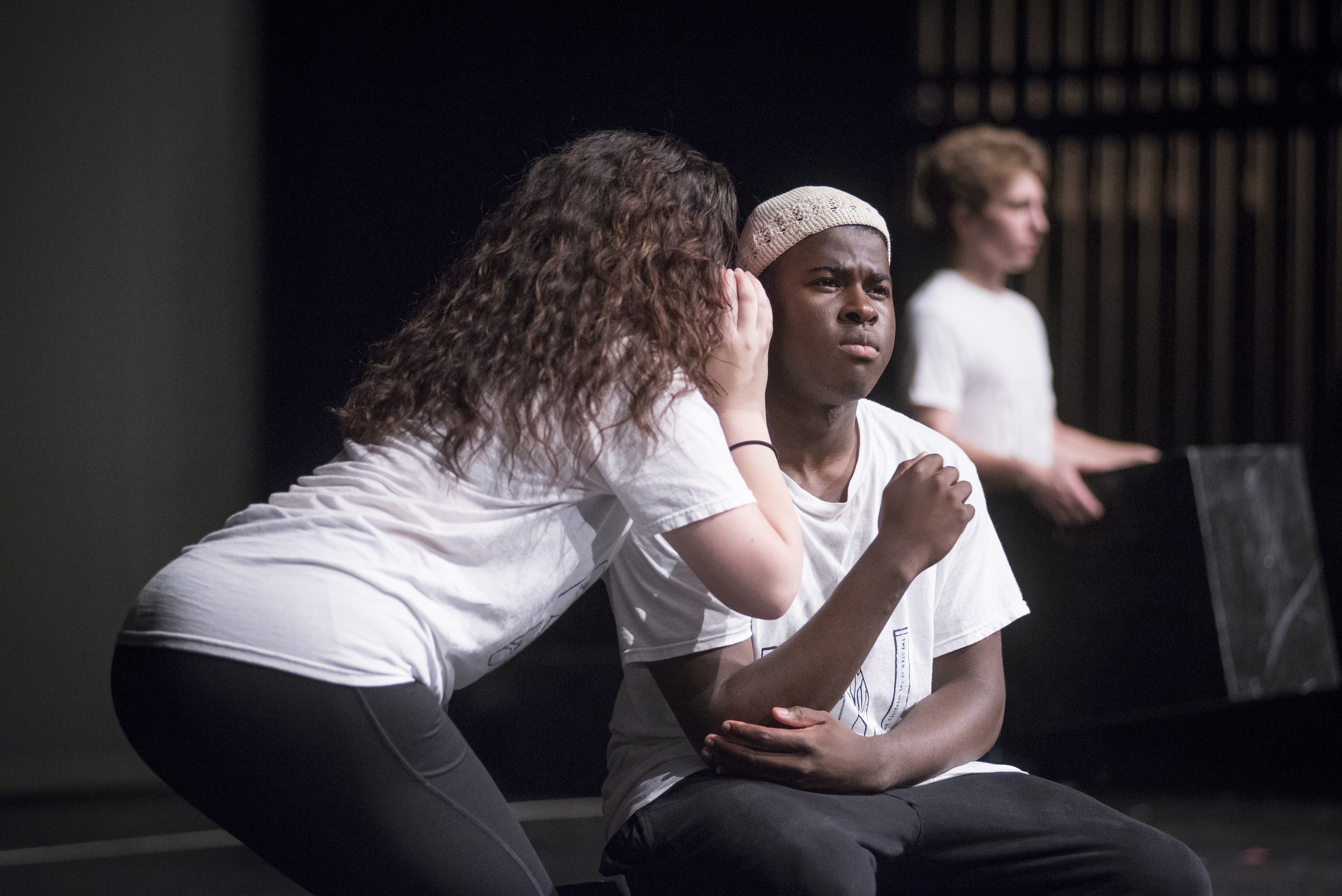
For six weeks at Carnegie Mellon in Pittsburgh, rising high school juniors and seniors train in one of three options: Acting, Music Theater or Design/Production. Classes take up about eight hours every weekday. Actors and singers build audition pieces in classes such as Audition, Voice & Speech and Song Coaching and finish with a mock audition and feedback, while design students start a college portfolio. There's no final show, and you don't audition to get in.
Get the key facts by email
The dates, costs and how to apply, then 2 reminders: 15 Feb (2 weeks before) and 26 Feb (3 days before).
Why it's worth it
Everything points toward the college audition or portfolio. Actors and singers finish with a mock audition and specific feedback on what to work on next, design students start a portfolio, and because there's no audition to get in, you don't need polished pieces before you apply.
What it asks of you
Attendance at every class is mandatory, and students who miss class without approval can be expelled with no refund. It's also a substantial cost for six weeks, before you add travel.
Who should skip it
Students who mainly want to rehearse and perform in a production. The same goes for families hoping it will help with Carnegie Mellon's own admissions, since the university says admission to Pre-College has no influence on an undergraduate application.
Most of every weekday is class time: you're in session Monday through Friday from 9 a.m. to 6 p.m., about eight hours with a lunch break. Carnegie Mellon models the program on its undergraduate drama degree and says plainly that it isn't a summer camp. Which classes fill those hours depends on your option, and everyone takes Dramaturgy, a play-analysis class.
Acting
Audition, Acting, Acting for the Camera and Dramaturgy, plus Movement, Shakespeare and Voice & Speech, which includes some dialect work.
Music Theater
Audition, Acting, Song Coaching, Acting for the Camera and Dramaturgy, plus Ballet and Jazz, where newer dancers get a foundation and experienced ones are placed with peers at their level.
Design/Production
Classes may include Basic Design, Science of Scenery, Technical Production, Production Management, Stagecraft and an Applying to College course on portfolios, interviews and resumes.
Electives
Improv, Dramatic Writing (your script gets a staged reading near the end), Music Theater Rep, Analyzing Text, Directing, Tap and The American Musical: A History, all subject to change.
On Monday to Thursday evenings there are one to three optional workshops and masterclasses. Weekends are for homework, independent rehearsal and Pre-College activities such as trips to a Pirates game or Fallingwater, with tickets bought separately. Acting and Music Theater students also take one elective. You rank three choices, and because classes are small and can clash with required classes, you may not get your first. Design/Production students have no room for an elective.
Carnegie Mellon faculty and adjunct professors teach the classes, and the three faculty members it names are all from its School of Drama. David Boevers coordinates the Design/Production track and advises the student technical directors on School of Drama productions, with past work at places such as the Yale Repertory Theatre and Hudson Scenic Studios. Gary Logan, a Professor of Speech and Dialects, used to direct the Shakespeare Theatre Company's Academy for Classical Acting and wrote The Eloquent Shakespeare, a pronouncing dictionary for Shakespeare's plays. Kristi Good has taught in the School of Drama for over a decade, including Production Dramaturgy.
We couldn't find a class size or staff ratio for Drama, though Carnegie Mellon says acting classes work in small groups and elective classes are small.
You leave with audition material and honest feedback, not credit. Acting students finish with a set of monologues, and Music Theater students with monologues and songs, chosen to suit their age and type. Both perform a mock audition at the end and get specific feedback on their strengths and what to work on next. Acting for the Camera includes self-taping, which Carnegie Mellon says will help with recorded pre-screens for college auditions. Design/Production students begin a portfolio they can keep building for their applications.
Pre-College Drama is non-credit, and there's no final production to list on a resume. Students who leave early may not receive a certificate or academic evaluation.
You need to be 16 by 26 June 2027 and a high school sophomore or junior when you apply. There's no audition, because building audition material is the point of the program. Decisions are rolling and usually come within 15 working days of a complete application, and since programs can fill up, Carnegie Mellon recommends applying early. Your application isn't complete until your recommendation letter arrives, so ask early.
You can name a second-choice Pre-College program, but it's only considered if your first choice neither admits nor waitlists you. Commuting is only open to students whose family's permanent home is within about 30 miles of the Pittsburgh campus or in Allegheny County, and Carnegie Mellon makes no exceptions.
For international students, the visa rules are the main hurdle. Carnegie Mellon issues the I-20 visa document only for its Summer Session program, so a student coming from abroad can't get one for Drama. It says students already in the U.S. in another status, or attending a U.S. high school on F-1 status, may be able to take part. International applicants who apply after 1 February 2027 must show at least a year at a U.S. high school and be returning to a U.S. high school the following year. Non-native English speakers need test scores such as IELTS 7.5 or TOEFL iBT 102, unless they've spent at least a year at a U.S. high school and are going back to it.
Essays
Three 300- to 500-word responses on what you hope to gain, a non-theater experience where your theater background helped you solve a problem or make a positive change, and the habits that show you can commit fully to six weeks of rigorous training.
Recommendation
One letter from a counselor, teacher or similar adult who can speak to your readiness for college-level work, independent living and working in groups.
Transcript and scores
An unofficial transcript listing all your high school courses and grades. Test scores are optional, so send them only if you think they help.
The latest fees Carnegie Mellon lists are for 2026, when Drama cost $12,734 for residential students and $9,288 for commuters, plus a $75 application fee that isn't refunded. Both prices include tuition, a CMU ID card with an Arts Pass for free entry to many Pittsburgh museums, and free rides on the city's buses. Residential students also get a room in a first-year residence hall and three meals a day on weekdays, with brunch and dinner on weekends, while commuters get $100 a week in campus dining funds.
If you're admitted, you have seven days to pay an $800 deposit, which comes off the fee but is never refunded. The balance is due by 5 May 2027, and Carnegie Mellon cancels your place if it isn't paid. Full need-based scholarships cover tuition, housing and dining for U.S. citizens and permanent residents who apply by 1 February 2027, although Carnegie Mellon says the number is very limited. Scholarship applicants don't pay the application fee, and recipients pay a $100 deposit that comes back to them as spending money on their ID card.
Travel
Getting to Pittsburgh and home is up to you, though a free airport shuttle runs on arrival and move-out days for students traveling alone.
Course needs
You'll buy books from a short list. Acting and Music Theater students need a laptop or tablet for Dramaturgy, and Music Theater students also need dancewear. Design/Production students need closed-toe shoes and a laptop that can run Adobe software, which the program provides.
Supply kit
Design/Production students buy a supply kit, prepared at the university bookstore, before they arrive, though Carnegie Mellon also says the program cost includes it, so confirm before you pay.
Living costs
Bedding, towels and fans aren't supplied, and optional trips are ticketed. Carnegie Mellon says students typically spend $250 to $350 over the six weeks.
Health
Students must have health insurance with inpatient and outpatient emergency coverage, and most campus health service visits add $15 to $35 to the student account.
| Written withdrawal received | Refund |
|---|---|
| On or before 5 May 2027 | Full program cost, minus the $800 deposit |
| 6 to 21 May 2027 | 50% of the program cost |
| On or after 22 May 2027 | No refund |
Residential staff live in the halls and respond 24 hours a day. They're current Carnegie Mellon undergraduates working as Resident Advisors and Community Advisors, and each one has passed Pennsylvania criminal history, child abuse and FBI background checks. They enforce a building curfew of 10 p.m. Sunday to Thursday and 11 p.m. on Friday and Saturday, after which students must stay on their own floor. A missed curfew check-in starts a missing-student protocol that involves parents and police.
To stay off campus overnight or ride in any private car, even a parent's, a student needs an approved Absence From Campus request at least 48 hours ahead, an accompanying adult aged 21 or over and a parent's confirmation by phone. Campus police patrol around the clock, and parents can call the Pre-College help line at 412-552-3118 while the program runs. Most students share a double room, on either a single-gender floor or an opt-in queer community floor, and all the halls are air-conditioned.
Carnegie Mellon expects students to manage their own routines, and staff don't give one-on-one reminders. Students handle their own medication, which staff can't store or give out, and anyone bringing prescriptions needs a lockbox. Alcohol or drugs mean immediate expulsion. The full rules are in the 2027 Pre-College Handbook.

Sean
Talk it through with Sean
“I can help you compare the programs you're considering, think through the practicalities and work out what makes sense for you.”
Art and design in Cambridge, ages 14 to 17, from £3,995.
Deadline: Not announced yet · From £3,995 · 14-17 · Cambridge · In-person
Graphic design work experience in London, ages 15 to 18, from £1,799.
Deadline: Not announced yet · From £1,799 · 15-18 · London · In-person
Art, digital design and photography in Oxford, ages 15 to 17, from £3,980.
Deadline: Not announced yet · From £3,980 · 15-17 · Oxford · In-person
Save this program in Succeed to compare it with similar programs, dates, costs and formats in one place.
Compare with other programscmu.edu · Official page
drive.google.com
apply-precollege.studentaffairs.cmu.edu
cmu.edu
cmu.edu
cmu.edu
cmu.edu
drive.google.com
Facts checked against the official page on 4 Nov 2026
Editor: Ben Stacy
Succeed has no commercial relationship with Carnegie Mellon Pre-College Programs.
Spot an error? Report it