
Columbia University Pre-College Programs Climate School in the Green Mountains
by Columbia University Pre-College Programs
- 2027 program
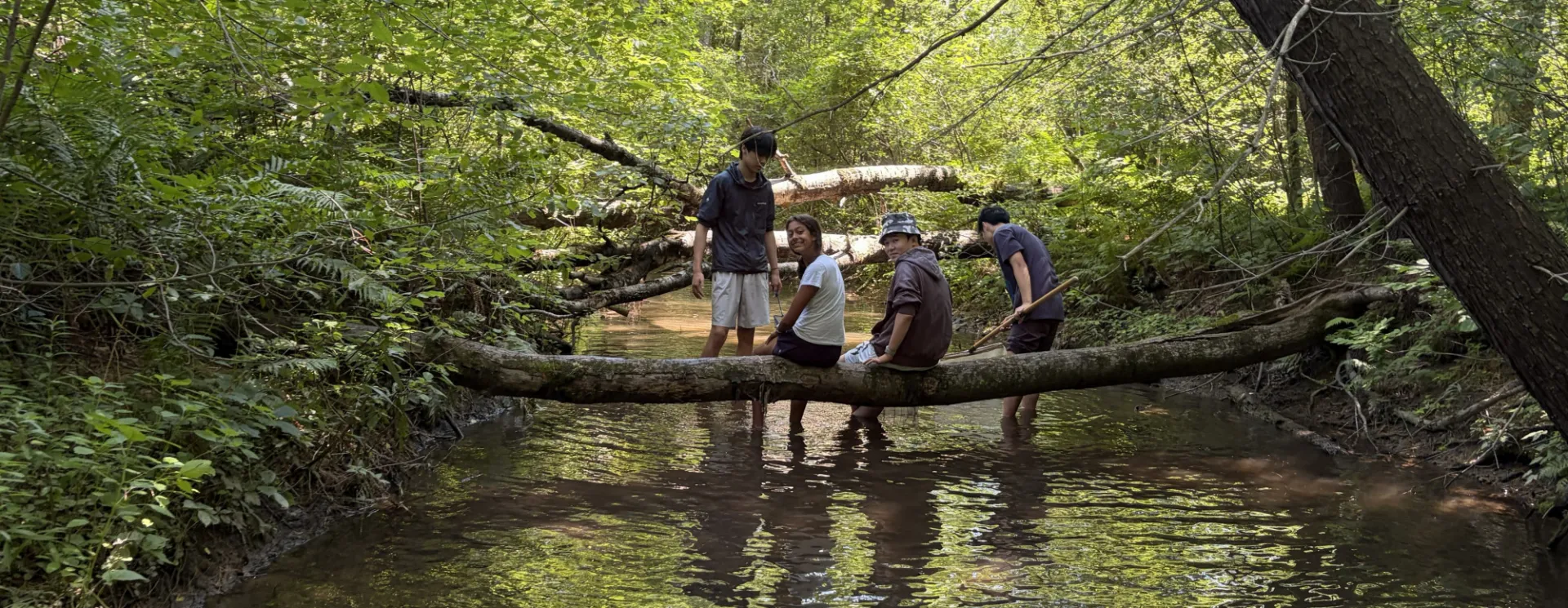
For 13 days in July 2027, high school students live on the University of Vermont campus in Burlington and study climate science, policy and solutions with faculty and researchers from the Columbia Climate School. Seminars are mixed with fieldwork such as tree coring and lake water sampling, and there are trips to downtown Burlington and the State House in Montpelier. Over the two weeks, each student builds a climate action plan for their own community and presents it at a final poster session.
 Sean Stevens · Sources
At a glance
Official facts · checked 11 Nov 2026- DatesOfficial
- 2027: 5 to 17 July
- Who can applyOfficial
- High school students in grades 9 to 12, from any country. Need-based scholarships only for US residents who meet income guidelines
- Total costOfficial
- 2027: $7,690
- Format and placeOfficial
- In person, University dormitory, University of Vermont, Burlington, Vermont, United States
- Length
- 13 days
- Included / budget separately
- Included: accommodation, meals (Three meals a day included). Separately: application fee $200 (nonrefundable), travel to and from Burlington, arranged by families, travel coordination fee from $150 for arrivals or departures outside the designated windows, optional trip cancellation insurance (US residents)
- Deposit and refunds
- Deposit $500. Withdraw before 15 March 2027 after being accepted: the $500 enrollment deposit is refunded and the $200 application fee is kept
- Financial aid
- Full and partial need-based scholarships from the Columbia Climate School
- Apply by
- Rolling admissions
- Cohort and selectivity
- Admission is selective and rolling until the program fills. No acceptance rate is published, and recent cohorts were 58 students in 2026, about 60 in 2024 and 65 in 2023. 58 students from 6 countries (2026)
- Credit or certificate
- Certificate of participation from the Columbia Climate School, signed by the Associate Dean of the Office of Engagement & Impact. Non-credit
Succeed's assessment
Should you apply?
SucceedIn short
Why it's worth it
Columbia Climate School faculty and researchers design and teach every lesson, and the whole two weeks builds toward one thing you take home, a climate action plan for your own community that you present at the end.
What it asks of you
Thirteen days away in July and $7,690, plus the $200 application fee and your own travel to Burlington. The application asks for a statement of up to 300 words and two references, and places are offered on a rolling basis until the program fills, so a late application risks finding no room.
Who should skip it
Students who want college credit or a grade, because Columbia awards a certificate of participation and calls this a non-credit program. The program covers everything from tree rings to climate law in two weeks, with a group Putney puts at 60 to 80 students, so it's a broad survey, and someone hoping for sustained lab research in one field will find it moves on too quickly.
What happens across the 13 days?
Columbia's sample schedule mixes taught sessions with fieldwork, excursions and afternoon activities. After arrival on Day 1 and orientation on Day 2, you move from climate science primers to hands-on work such as tree coring, proxy data analysis and a lake excursion for biological surveys and water-quality sampling. Later days turn to policy and solutions, with the EN-Roads climate simulator, sessions on the Paris Agreement, international law and climate negotiations, and a model electrical grid demonstration.
Recurring "Climate Action Plan Time" blocks are where your own project takes shape, from assessing your community to identifying stakeholders. Day 9 brings excursions in Burlington and four climate tracks: Climate Finance & Entrepreneurship, Sustainable Planning & The Built Environment, Biodiversity & Conservation, and Food Systems & Climate. On Day 11 the group goes to Montpelier for State House tours, and Day 12 brings final presentations and a poster session, followed by a talent show and a final dinner.
Afternoon options on the schedule include a pollinator walk, ultimate frisbee, berry picking, biking, a creative writing workshop and a local concert series. Columbia notes that the schedule is subject to change.
Who teaches the sessions?
Columbia Climate School faculty, researchers and staff teach the academic side, while Putney Student Travel runs housing, supervision and logistics. The experts Columbia names include Josh DeVincenzo of the National Center for Disaster Preparedness, who developed courses for this program, Martin Dietrich Brauch of the Columbia Center on Sustainable Investment, who works on climate investment policy, and Sandra Goldmark, a Barnard professor who works on the circular economy and wrote Fixation: How to Have Stuff without Breaking the Planet.
The list also includes Laurel Zaima-Sheehy, Associate Director of Pre-College & Partner Programs at the Columbia Climate School, and two Columbia PhD students in Earth and Environmental Sciences, Alex Parsells and Aandishah Tehzeeb Samara. Putney lists a typical group of 60 to 80 students with 10 instructors, which works out at roughly one instructor for every 6 to 8 students.
Who gets a place?
Students in grades 9 to 12 from any country can apply, and so can rising 9th graders who finish 8th grade in spring 2027. Columbia describes admission as selective and says it looks for motivated students who want to take climate action in their own communities. Putney Student Travel, which handles admissions, says most applicants to its programs are accepted, but it gives no figure for this one. Recent cohorts give a sense of scale, with 65 students in 2023, about 60 in 2024 and 58 from six countries in 2026.
Along with the application form, you submit a personal statement of up to 300 words covering your interest or experience in climate activism, how the program fits your goals and what you hope to gain. You also need two references. At least one must be a teacher who knows you academically, while the other can come from someone who knows you through a job, sports team or club, and references from family and friends aren't accepted. Putney also asks students not to apply if their families want them under constant supervision or if they're likely to behave disruptively.
What does it cost, and is there aid?
A family pays $7,890 before travel and personal costs, which is the $7,690 program fee plus the $200 nonrefundable application fee. The fee covers the dorm room, three meals a day, all teaching, transport during the program, entry fees, field excursions, guest lectures, social events, taxes and tips. Getting to and from Burlington is up to you, as are baggage fees, laundry, health care, snacks and spending money, and Putney adds classroom supplies and some optional activities to that list. Every student must have their own medical insurance, and Putney offers optional trip cancellation insurance to US residents at extra cost.
The refund rules turn on 15 March 2027. If you're accepted and withdraw before that date, you get the $500 deposit back but not the application fee. If you withdraw after it, you lose everything you've paid, which for most families by then is the full fee. If you aren't accepted, the full $700 comes back.
Columbia offers need-based scholarships to US residents only. A full scholarship covers the whole program fee, round-trip travel from home and a small amount of spending money for excursions, while a partial one covers half the fee plus the same travel and spending money. Eligibility depends on adjusted gross income, and for a household of four the limit is $90,000 for full funding and $120,000 for partial funding, rising by $15,000 for each additional person. Scholarship materials must arrive by 15 March 2027, and late or incomplete applications aren't considered.
How are students looked after on campus?
Staff live on the dormitory floors with students, who share double rooms with bathrooms down the hall. Putney says its program staff are trained in first aid and CPR and its leaders are background-checked. If a student needs medical care, staff take them to a nearby clinic or hospital, and health decisions are made together with the student and family. Putney's Vermont home office can be reached 24 hours a day during the summer.
Phones are allowed, but expert lectures and some group activities are phone-free. Students sign Putney's Program Standards, and anyone dismissed for breaking the rules travels home at the family's expense. If you have dietary or medical needs, Putney asks you to call before applying.
How do you apply?
Standard applications go through Putney Student Travel's online application, and places are offered on a rolling basis until the program is full.
If you're a US resident who may meet the income limits, use the scholarship application instead, since Columbia asks scholarship applicants not to start a standard one. It asks for two statements of about 500 words (the second can be a video), two references and your parents' tax return, all by 15 March 2027.
Complete the online application form and sign the Agreement Form with a parent or guardian.
Pay $700 to hold a place, made up of the $200 nonrefundable application fee and a $500 deposit that counts toward the program fee.
Submit your personal statement of up to 300 words and your two references, and check with your referees yourself, since Putney leaves that follow-up to students.
Putney's admissions team reviews a complete application within a few days and emails you the decision.
If you're accepted before 15 March 2027, the balance is due on that date. If you apply after it, you pay in full within five days of your first $700 payment.

Sean
Founder, Succeed
Talk it through with Sean
Want to talk it through?
“I can help you compare the programs you're considering, think through the practicalities and work out what makes sense for you.”
20 minutes · No obligation to enroll
What should you do next?
Frequently asked questions
Sources
- Columbia Climate School in the Green Mountains
precollege.sps.columbia.edu · Official page
- Safety & Risk Management
goputney.com
- Apply Now
goputney.com
- Frequently Asked Questions
climate.columbia.edu
- Scholarship Opportunities
climate.columbia.edu
- Application Process
climate.columbia.edu
- Frequently Asked Questions About Student Travel Programs
goputney.com
- 2027 Dates & Tuitions
goputney.com
Facts checked against the official page on 11 Nov 2026
Editor: Sean Stevens
Succeed has no commercial relationship with Columbia University Pre-College Programs.
Spot an error? Report it
Not ready to decide yet? Keep it for later.