
Finance & Investing High School Course
Applications open
Succeed has a commercial partnership with this provider.
Business & Economics
21 Feb 2027
From $3,298
14-18
New York
In-person
by Columbia University Pre-College Programs
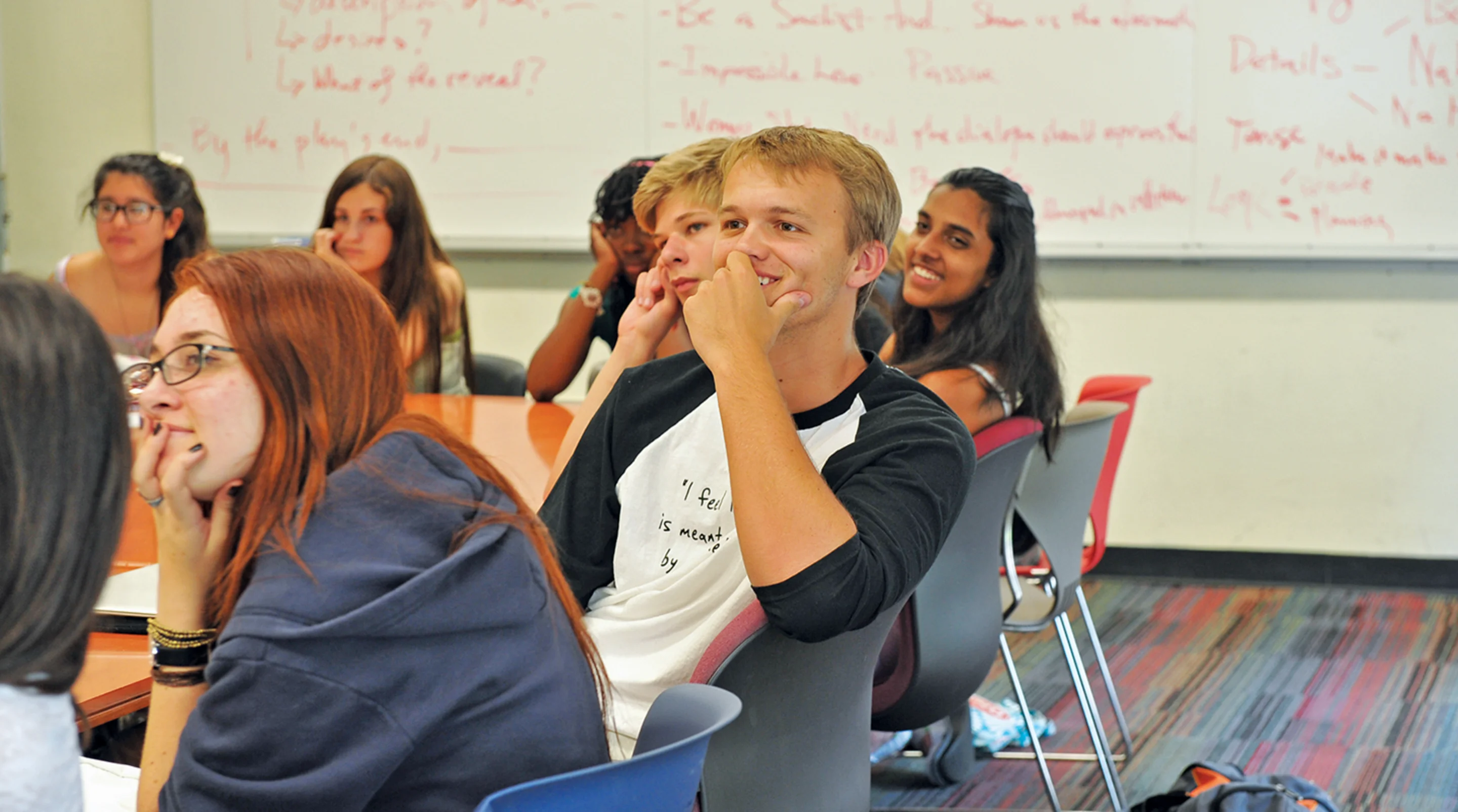
Dynamics of Financial Markets is a one-week, in-person course in Columbia University's NYC Commuter Summer program. You study why markets boom and crash by working through the Great Depression, the dot-com bubble, the 2008 financial crisis, meme stocks and cryptocurrencies. Classes run about four hours a day on Columbia's New York City campus and mix interactive lectures, instructional games and guided hands-on work. The session is for commuters only, so you live with a parent or guardian and travel in each day.
 Sean Stevens · Sources
Get the key facts by email
The dates, costs and how to apply, then 2 reminders: 18 Mar (2 weeks before) and 29 Mar (3 days before).
Succeed's assessment
In short
Why it's worth it
The week is built around real crises, from the Great Depression to meme stocks and crypto, and then has you use current market data to judge where today's markets sit in the cycle. That gives a curious student a way of thinking about markets, not just a list of famous crashes.
What it asks of you
About four hours of class a day plus, by Columbia's estimate, an hour or two of homework a night, so it's a full week. Applying takes recommendations from both a teacher and a school counselor, and the fee doesn't include travel or lunches.
Who should skip it
Students counting on it to strengthen a Columbia application, because Columbia says taking part has no influence on admission to Columbia College.
Your class meets Monday to Friday from 11:10 a.m. to 1:00 p.m. and again from 3:10 to 5:00 p.m. Eastern Time. The two hours in between are for lunch and Columbia's midday program, which includes commuter lounges, special lectures by program instructors and college-prep workshops.
After class, commuters can join early-evening programming that ends before 6:30 p.m., but Columbia asks them to leave campus by 6:30 p.m. Monday to Thursday. On Friday evening you can stay for the weekly community events with a parent's permission. The week starts with check-in at Lerner Hall on Monday 21 June 2027, between 9:00 and 10:30 a.m. for an 11:10 class, and Columbia warns that there will be a line.
Columbia admits students entering grades 9 to 12, plus seniors who'll attend just after graduating, and looks for academically strong, motivated students rather than a set GPA. It doesn't ask for SAT, ACT or PSAT scores. The application asks for an unofficial transcript, answers to two short-response questions, a recommendation from a current teacher in a related subject and, because this is a commuter session, a second one from a school counselor or administrator.
Columbia describes admission as selective but doesn't give an acceptance rate, and it reviews complete applications on a rolling basis. You don't need to send English test scores, but if English isn't your first language, Columbia expects a level equivalent to at least 90 on the internet-based TOEFL or 6.5 on IELTS, because classes depend on fast-paced discussion.
You apply through Columbia's summer programs application, choosing the commuter program and Session AA. You only sign up for this specific course after you've been admitted and paid your deposit.
Create an account, pick NYC Commuter Summer Session AA, list this course among your top two choices and check the financial aid box before you submit if you need aid.
Submit the application, the $95 fee, your transcript, your short responses and your recommenders' details by 1 February 2027 for early registration, or by 1 April 2027 at the latest.
Expect an emailed decision three to five weeks after everything has arrived.
Pay the $1,000 deposit by the date in your acceptance email, upload proof of measles, mumps and rubella immunity within two weeks of admission, and complete the enrollment forms.
Register yourself for the course (FINC0106) as soon as your holds clear. Registration opens on 3 March 2027 for students who applied by the early deadline and on 17 March 2027 for everyone else. A full class isn't overenrolled and there's no waitlist, so it pays to be quick.
The week costs $2,883, which is Columbia's Summer 2027 estimate and still subject to Board of Trustees approval. That covers the course plus activities, health services and technology fees. Add the $95 application fee and the roughly $50 Columbia suggests budgeting for materials, and you're at about $3,028 before travel and food. Commuters can't buy a meal plan, so you'll pay for lunch yourself, and the campus dining halls sell meals to commuters. Every in-person student must also have medical insurance, and Columbia doesn't offer a plan of its own.
A $1,000 deposit, due when you accept your place, counts toward the total but is never refunded. The balance is due by 11 June 2027 with no payment plan, and paying by card adds 2.85% for US cards or 4.25% for international ones. If you withdraw by 11:59 p.m. Eastern Time on 17 June 2027, you get back everything you've paid toward the program except the deposit. After that, you owe the full amount.
Columbia offers need-based aid to US citizens and permanent residents living in the United States or its five major territories, as long as they take only one session. Awards cover 25% to 50% of the $2,700 program cost, or roughly $675 to $1,350, but not the activities, health services or technology fees. The deadline is 10 February 2027, awards go out on a rolling basis until the money runs out, and parents have to upload their tax returns and W-2s.
You leave with an official Columbia University Certification of Participation and an evaluation letter from your instructor, which Columbia typically posts to your portal by mid-October. There are no grades and no college credit. The letter comments on your effort, participation, assignments, progress and potential in the field, and Columbia says you can ask your school counselor to add both documents to their recommendation when you apply to college.
The certificate depends on your attendance, participation, assignments and conduct, and the attendance rule is strict. In a one-week session, missing more than one class rules it out, and because this class meets twice a day, Columbia counts a single missed session as a missed day. A student dismissed for breaking the conduct rules gets neither document and no refund.
Every commuter must live with direct adult supervision, which Columbia's conduct agreement defines as a parent or guardian living in the same residence, and families document this during enrollment. Hotels, Airbnb rentals and hostels aren't allowed, even for students who are 18, and a student found living unsupervised has to move on campus at the family's cost or withdraw.
Instructors have passed background checks and Columbia's Protection of Minors training, and program staff are New York State mandated reporters. Commuters must stay within campus boundaries from 9:00 a.m. to 5:00 p.m. apart from their journey in and out, and Columbia's Public Safety runs EMS, 24-hour guard booths and safety escorts. The program provides no transport, so for parents collecting a student each day, Columbia suggests the main gates at 116th Street on Broadway or Amsterdam, which are near a public safety kiosk. If you'll miss class, a parent or guardian should let the Student Services Office know in advance. The full rules are in the conduct and community standards.

Sean
Founder, Succeed
Talk it through with Sean
“I can help you compare the programs you're considering, think through the practicalities and work out what makes sense for you.”
20 minutes · No obligation to enroll
Succeed has a commercial partnership with this provider.
Succeed has a commercial partnership with this provider.
Save this program in Succeed to compare it with similar programs, dates, costs and formats in one place.
Compare with other programsprecollege.sps.columbia.edu · Official page
precollege.sps.columbia.edu
precollege.sps.columbia.edu
precollege.sps.columbia.edu
precollege.sps.columbia.edu
Facts checked against the official page on 11 Nov 2026
Editor: Sean Stevens
Succeed has no commercial relationship with Columbia University Pre-College Programs.
Spot an error? Report it
Not ready to decide yet? Keep it for later.