
Columbia University Pre-College Programs NYC Commuter Summer
by Columbia University Pre-College Programs
- 2027 program
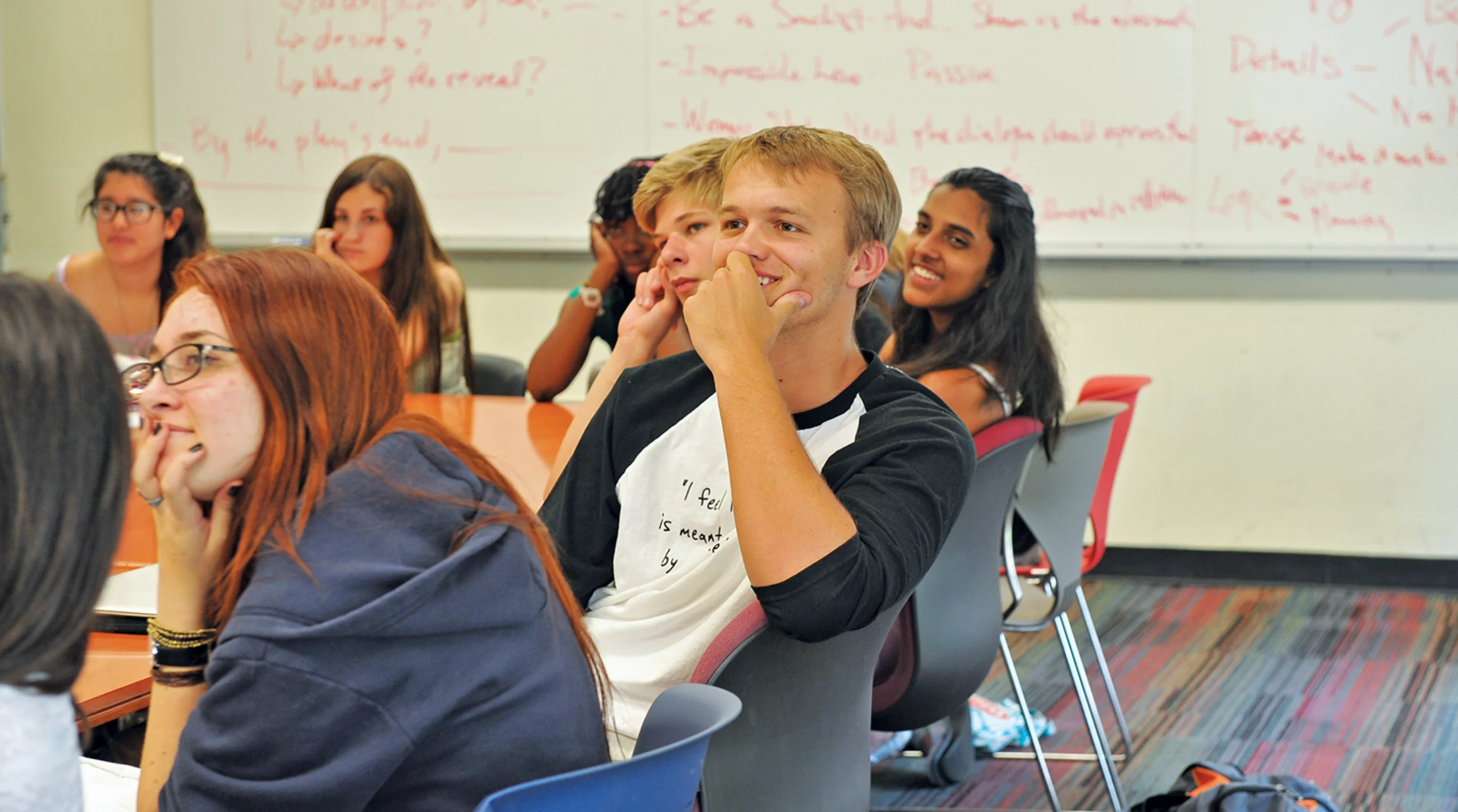
You take one Columbia course on the university's campus in New York City for a one- or three-week session, spending about four hours in class each weekday and heading home each evening. There are more than 70 courses across a dozen subject areas, from constitutional law and neuroscience to architecture and fiction writing, and you can combine sessions that don't overlap. Between classes and into the early evening you can join lectures, college-prep workshops and campus activities, and if you complete the course you leave with a Certification of Participation and a written evaluation from your instructor.
 Sean Stevens · Sources
At a glance
Official facts · checked 11 Nov 2026- DatesOfficial
- 2027: 21 to 25 June (AA, 1 Week), 28 June to 16 July (A, 3 Weeks), 20 July to 6 August (B, 3 Weeks), 2 to 6 August (C, 1 Week)
- Who can applyOfficial
- Students entering grades 9 to 12 or their freshman year of college
- Total costOfficial
- 2027: $2,883 (AA, 1 Week), $6,381 (A, 3 Weeks), $6,381 (B, 3 Weeks), $2,883 (C, 1 Week)
- Format and placeOfficial
- In person, Columbia University, New York City
- Length
- 1 week or 3 weeks per session
- Included / budget separately
- Included: meals (meal plans are not available to commuters, who can buy meals at campus dining halls and cafes). Separately: application fee $95, Course-specific fees of $50 to $200 on some courses, Credit card processing fee of 2.85% on US cards or 4.25% on international cards, medical insurance required, with no Columbia plan offered
- Deposit and refunds
- Deposit $2,000. Withdraw by your session's deadline (11:59 p.m
- Financial aid
- Need-based scholarships of 25% to 50% of the program cost for US citizens and permanent residents living in the United States or its five major territories
- Apply by
- 2027: 1 February (Early registration), 10 February (Financial aid), 1 April (General application)
- Cohort and selectivity
- Admission is selective: an admissions committee reviews complete applications on a rolling basis, with no minimum GPA and no test scores required, and decisions are final
- Credit or certificate
- Columbia University Certification of Participation and instructor evaluation letter
Get the key facts by email
The dates, costs and how to apply, then 2 reminders: 18 Mar (2 weeks before) and 29 Mar (3 days before).
Succeed's assessment
Should you apply?
SucceedIn short
Why it's worth it
You spend one or three weeks in a small, demanding class, on subjects ranging from trial advocacy to neuroscience, and Columbia uses New York for field trips and guest speakers where it can. Need-based aid can bring the cost down for eligible families living in the US.
What it asks of you
You'll travel to campus every weekday for about four hours of class and an hour or two of homework most nights, and three weeks cost $6,381 before fees, lunches and travel.
Who should skip it
Anyone who wants something that counts on a transcript, since the courses carry no credit or grades, or who hopes it will help with Columbia admissions. Columbia says taking part has no influence on admission to Columbia College.
Your course isn't guaranteed
You're admitted to the program rather than a course, and you only pick your class after paying the non-refundable deposit and clearing your paperwork. Courses fill, there's no waitlist and early-deadline applicants register first, so go in with backup choices you'd be happy with.
What does a commuter's day look like?
Your course meets for about four hours every weekday, two in the morning and two in the afternoon, with a two-hour break in between. Columbia's sample timetables show the two standard patterns: 9:10 to 11:00 a.m. and 1:10 to 3:00 p.m., or 11:10 a.m. to 1:00 p.m. and 3:10 to 5:00 p.m. Some studio and lab courses run longer, and Intensive Modern Chemistry Laboratory takes up most of the day.
The midday break is for lunch, commuter lounges, the gym and activities such as instructor lectures, college-prep workshops and clubs. There's no meal plan for commuters, so you'll buy food at the dining halls, which serve vegetarian and vegan dishes and offer kosher and halal meals you can request when you enroll, or at cafes on and around campus.
Instructor talks, which Columbia calls Master Class Moments, and college workshops carry on into the evening. The sample timetables run them until 7:00 p.m., but commuters need to leave campus by 6:30 p.m. Monday to Thursday. Friday evening community events are open with a parent's permission, but weekend activities and the residence halls are off-limits. Expect an hour or two of homework most nights as well.
Who can commute, and what does the application ask for?
You can apply if you're entering grades 9 to 12, or if you're a senior who'll attend the summer after graduating, and admission is selective. Columbia's admissions committee looks for academically exceptional, motivated students but sets no minimum GPA and doesn't ask for SAT or ACT scores. Some courses have prerequisites, which you must have completed with a B or better to register.
The application asks for an unofficial transcript, answers to two short-response questions, a recommendation from a current teacher in a subject close to the courses you want, and, for this program, a second one from your school counselor, an academic advisor, a principal or a headmaster. Homeschooled students can use their primary instructor for the teacher recommendation. International students don't need TOEFL or IELTS scores, but their English should be equivalent to 90 or above on the TOEFL iBT or at least 6.5 on IELTS.
Commuting comes with a housing rule. You must live with family members or family friends in the same home during the program, and hotels, Airbnbs and hostels aren't allowed, though you don't have to live in New York City. Columbia's 2025 guide for commuter parents asks for supervising adults over 25 and suggests a commute of no more than an hour each way.
What does it really cost?
A three-week session costs $6,381 and a one-week session $2,883, which Columbia lists as Summer 2027 estimates still subject to its Board of Trustees' approval. Each price covers the course plus activity, health services and technology fees, but no housing or meals, so lunch and daily travel are yours to budget for.
On top of that come a $95 application fee, a course fee of $50 to $200 on some art, architecture, lab and field-trip courses (Columbia's latest list is for 2026), and roughly $50 for books and supplies on most courses. Paying by credit card adds 2.85% on US cards and 4.25% on international ones, and every commuter needs their own medical insurance because Columbia doesn't sell a plan.
Once admitted, you pay a non-refundable deposit that counts toward the price, and the rest is due by 11 June 2027 with no payment plan. Withdraw by your session's deadline and you get everything back except the deposit, but after it you owe the full amount. Each extra session carries its own price and deposit, so Sessions AA, A and B together come to $15,645 before extras, and dropping a session later means losing its deposit.
Need-based aid covering 25% to 50% of the program cost, though not the fees, is open to US citizens and permanent residents living in the US or its five major territories. It covers one course in one session, and students signed up for more than one session can't apply. You have to tick the aid option before you submit your application, the deadline is 10 February 2027, and limited funds go out on a rolling basis. Children of eligible full-time Columbia staff get 50% off, excluding fees.
| Session | Dates | Price | Deposit | Withdrawal deadline |
|---|---|---|---|---|
| AA (1 week) | 21 to 25 June 2027 | $2,883 | $1,000 | 17 June 2027 |
| A (3 weeks) | 28 June to 16 July 2027 | $6,381 | $2,000 | 24 June 2027 |
| B (3 weeks) | 20 July to 6 August 2027 | $6,381 | $2,000 | 15 July 2027 |
| C (1 week) | 2 to 6 August 2027 | $2,883 | $1,000 | 29 July 2027 |
How are commuters kept safe on and around campus?
Commuters stay within set campus boundaries during the day. In Columbia's 2025 guide for commuter parents, that means 110th to 120th Street between Amsterdam Avenue and Riverside Drive, with Riverside and Morningside parks off-limits and no subway rides except the trip home. Columbia's Public Safety department runs EMS, 24-hour guard booths and safety escorts. Instructors have had background checks and Protection of Minors training, and program staff are New York State mandated reporters, so they're legally required to report suspected abuse.
For daily pick-up, Columbia suggests the main gates at 116th Street on Broadway or Amsterdam, which sit near a public safety kiosk. Attendance is taken at every class, parents report absences by calling the Student Services Office at 212-853-7400, and Columbia says it's up to families to set expectations about attendance and boundaries. Every commuter needs proof of medical insurance at check-in and approved measles, mumps and rubella immunization records before registering for a class. The Community Standards are strictly enforced, and breaking them usually means dismissal on a first offense with no refund.
What do you leave with?
You leave with a Columbia University Certification of Participation and an evaluation letter from your instructor, both downloadable from your applicant portal, typically by mid-October. The letter comments on your effort, participation, assignments, progress and potential in the field, and some courses also end in something you can show, such as a design project for an architecture portfolio, a business plan or a painting in an end-of-session group show.
There are no grades and no college credit, though your school counselor can attach the certificate and letter to their recommendation. The certificate depends on turning up. Miss more than two days of class in a three-week session, or more than one day in a one-week session, and you won't be eligible for it even if the absences are excused, while a student who's dismissed gets neither document.
How do you apply for a session?
Everything happens through Columbia's summer application portal, and applications are reviewed on a rolling basis once they're complete.
Applications for summer 2027 open in mid-November 2026, and you choose the commuter option and your session or sessions on the form.
Gather an unofficial transcript, ask a teacher and your school counselor to recommend you, and pick your top two courses.
If you want financial aid, say so in the application before you submit it, and have the aid paperwork in by 10 February 2027.
Submit by 1 February 2027 to register for courses in the early round, which opens 3 March 2027. The general deadline is 1 April 2027, and general registration opens 17 March 2027.
Expect a decision by email three to five weeks after your application is complete.
If you're admitted, pay the deposit, upload immunization records within two weeks, complete the enrollment forms, and send an ID photo at least four weeks before your session starts.
Register for your course once your holds are cleared, and pay the balance by 11 June 2027.

Sean
Founder, Succeed
Talk it through with Sean
Want to talk it through?
“I can help you compare the programs you're considering, think through the practicalities and work out what makes sense for you.”
20 minutes · No obligation to enroll
What should you do next?
Frequently asked questions
Sources
- Programs
precollege.sps.columbia.edu · Official page
- Frequently Asked Questions
precollege.sps.columbia.edu
- Admissions Program Policies
precollege.sps.columbia.edu
- The Columbia Experience Commuting to Campus
precollege.sps.columbia.edu
- precollege.sps.columbia.edu/admissions/program-costs/pre-college-programs-cost-and-fees/withdrawal-deferral-and-refund-policy
- Admissions Dates and Deadlines
precollege.sps.columbia.edu
- precollege.sps.columbia.edu/admissions/program-costs/pre-college-programs-cost-and-fees
- Pre-College Parent Article: Commuter Students (Summer 2025)
precollege.sps.columbia.edu
Facts checked against the official page on 11 Nov 2026
Editor: Sean Stevens
Succeed has no commercial relationship with Columbia University Pre-College Programs.
Spot an error? Report it
Not ready to decide yet? Keep it for later.