
Columbia University Pre-College Programs NYC Residential Summer
by Columbia University Pre-College Programs
- 2027 program
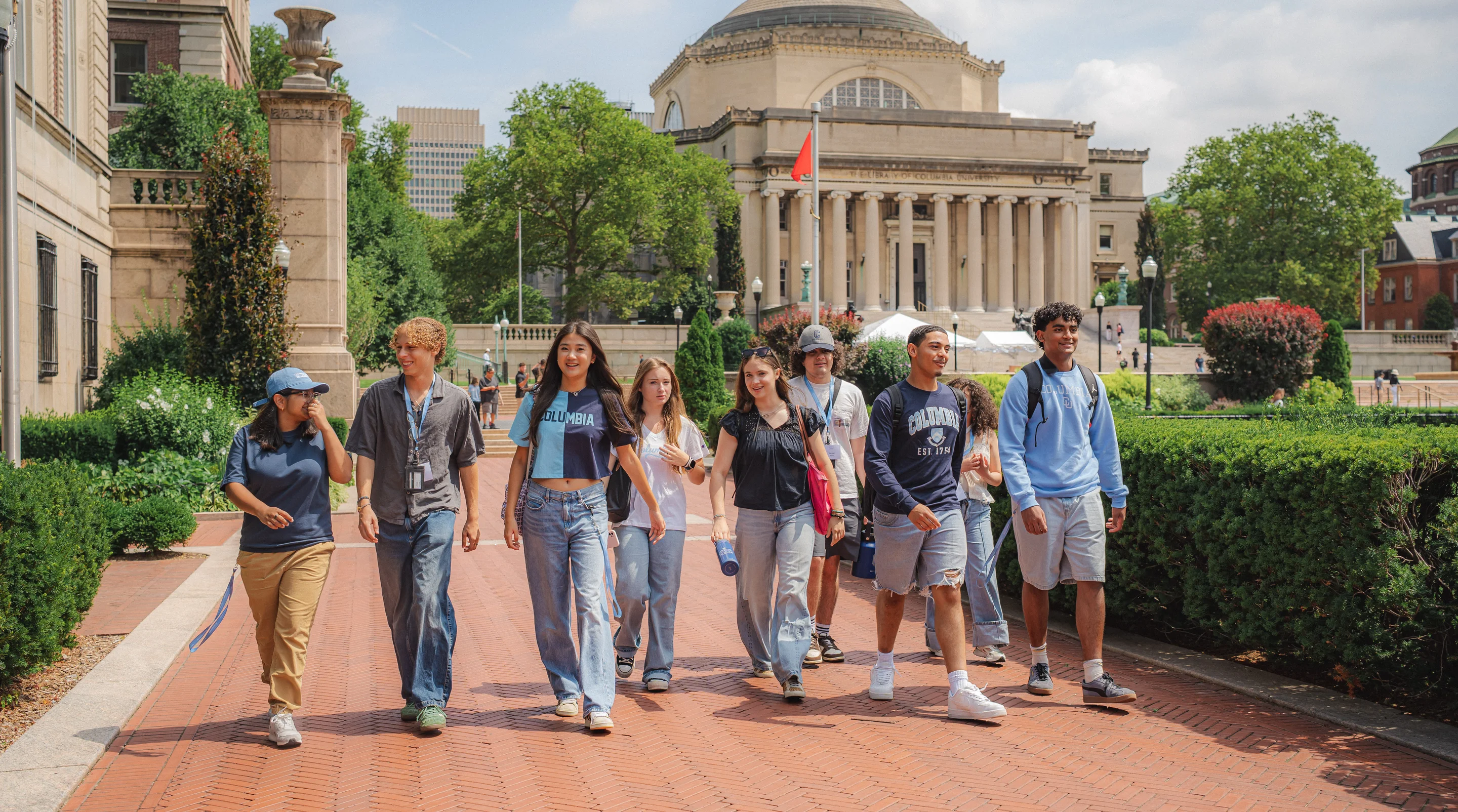
Columbia University runs this three-week summer program on its Morningside campus in Manhattan, where high school students aged 15 and up take one noncredit course from a list of more than 70 and live in the university's residence halls. Classes meet for about four hours each weekday, split into a morning block and an afternoon block, and clubs, college workshops and city outings fill the evenings and weekends. Students who complete it get a Certification of Participation and a written evaluation from their instructor.
 Sean Stevens · Sources
At a glance
Official facts · checked 11 Nov 2026- DatesOfficial
- 2027: 28 June to 16 July (A, 3), 28 June to 6 August (AB, 6), 20 July to 6 August (B, 3)
- Who can applyOfficial
- Rising 9th through current 12th grade students, domestic and international. At least 15 years old. English proficiency equivalent to 90+ on the internet-based TOEFL or 6.5+ on the IELTS expected (scores not required)
- Total costOfficial
- 2027: $12,838
- Format and placeOfficial
- In person, New York, NY (Columbia University Morningside campus)
- Length
- 3 weeks per session. 6 weeks for Session AB
- Included / budget separately
- Included: accommodation, meals (breakfast, lunch and dinner seven days a week, included). Separately: application fee $95, Course-specific fees $100 to $200 for some courses (Summer 2026 list), Course materials about $50, Credit card processing fee 2.85% domestic, 4.25% international
- Deposit and refunds
- Deposit $3,500. Withdraw by 11:59 p.m
- Financial aid
- Not published
- Apply by
- 2027: 1 February (Early registration), 1 March (General application)
- Cohort and selectivity
- Admission is selective and reviewed on a rolling basis with no minimum GPA. Columbia publishes no acceptance rate or cohort size, and decisions are final with no appeal
- Credit or certificate
- Columbia University Certification of Participation and written evaluation letter, typically issued by mid-October
Get the key facts by email
The dates, costs and how to apply, then 2 reminders: 15 Feb (2 weeks before) and 26 Feb (3 days before).
Succeed's assessment
Should you apply?
SucceedIn short
Why it's worth it
The course list is unusually broad, running from trial advocacy and constitutional law to quantum computing and neuroscience, and some courses use the city itself, with visits to the United Nations, the New York County Criminal Court or the Metropolitan Museum of Art. Living in the dorms with students from around the world makes it a realistic trial run of college life.
What it asks of you
Expect about four hours of class each weekday plus an hour or two of homework most nights. Missing more than two classes in a session costs you the certificate, and Columbia counts excused absences too. You also arrange your own travel to New York, and Columbia doesn't let anyone arrive before move-in day.
Who should skip it
Students who mainly want something for their college applications, because the courses carry no credit and Columbia says taking part has no influence on admission to Columbia College, so what you're paying for is the experience itself.
What does a day of classes and campus life look like?
Your course meets for two hours in the morning and two in the afternoon, Monday to Friday, in one of two patterns depending on the section you register for: 9:10 to 11:00 a.m. and 1:10 to 3:00 p.m., or 11:10 a.m. to 1:00 p.m. and 3:10 to 5:00 p.m. A few courses keep longer hours, such as the intensive chemistry lab, which Columbia warns will limit time for other events.
Columbia's sample timetables fill the rest of the day with breakfast and an optional fitness session from 7:30 a.m., lunch and activities in the midday gap, and optional clubs in the late afternoon. Evenings alternate between cultural outings and college workshops, with a special event on Fridays. On weekends there's a food-and-exploring tour of SoHo, the Lower East Side or Chelsea, plus optional excursions and a raffle for the chance to buy Broadway tickets.
What do you get at the end of the three weeks?
If you complete your course, you get an official Columbia University Certification of Participation and a written evaluation letter from your instructor, which Columbia typically posts to your online account by mid-October. Instructors decide completion based on attendance, participation, assignments and how well you follow the community standards. The letter takes the place of a grade and comments candidly on your effort, progress and potential in the field, and Columbia says you can ask your school counselor to add both documents to their recommendation.
Some courses also leave you with work you can show, such as an architecture design project that can start a portfolio, a set of revised fiction or a playable video game prototype, so read the course description if that matters to you. A student dismissed from the program gets neither document.
Who can apply, and how selective is it?
You need to be a rising ninth grader through a current 12th grader, and seniors can come the summer right after they graduate. You also have to be at least 15, and 15-year-olds must turn 16 by 31 December 2027. Students from any country can apply. There's no minimum GPA and Columbia doesn't ask for SAT, ACT or PSAT scores, but it describes admission as selective and wants your application to show the academic background, motivation and maturity to keep up.
International applicants don't have to send TOEFL or IELTS scores, although Columbia expects English at the level of at least 90 on the internet-based TOEFL or 6.5 on the IELTS, because classes depend on fast-paced discussion. Admission gets you into the program, not a particular course, and courses with prerequisites require you to have passed them with a B or higher, so check them before you set your heart on one. Decisions are final, with no appeal.
How do you apply and register for a course?
You apply through Columbia's summer programs application, and the student has to submit it, not a parent or an agent.
Choose Session A, Session B or both, and pick your top two courses, knowing that neither is guaranteed.
Gather an unofficial transcript and add a teacher and a school counselor or administrator as recommenders, who then get a form by email.
Answer two short response questions, pay the $95 application fee by credit card and submit by 1 February 2027 for early course registration, or by 1 March 2027 at the latest.
Expect a decision by email three to five weeks after all your materials are in, since Columbia reviews complete applications on a rolling basis.
If you're admitted, pay the enrollment deposit, then upload your immunization records and enrollment forms, which can take two to three weeks to clear.
Register yourself for one course from 3 March 2027 if you applied early or from 17 March 2027 otherwise, with a backup course in mind because full courses have no waitlist.
What does a session really cost?
A three-week session costs $12,838, which covers the program, your room and meals, and the activities, health services and technology fees. Columbia calls this an estimate that its trustees still have to approve. It prices each session separately and takes a deposit for each one, so the six-week option means paying for both. On top of that come the $95 application fee, a course fee of $100 to $200 for some courses (Columbia's latest list is for summer 2026), about $50 for books and supplies, and your travel to New York. Medical insurance is required, and international students have to buy a plan that covers them in the United States.
Once you're admitted, you hold your place with a $3,500 deposit, which counts toward the total but is never refunded. The full balance is due by 11 June 2027. Columbia offers no payment plan, adds a 2.85% fee for domestic credit cards or 4.25% for international ones, and its need-based financial aid doesn't cover the residential program. If you withdraw by 24 June 2027 for Session A or 15 July 2027 for Session B, you get everything back except the deposit. After that you owe the full amount, and a student who's dismissed gets nothing back.
How are residential students looked after?
Live-in Resident Assistants, who complete two weeks of training, supervise students, and professional Resident Directors are on call around the clock. Columbia gives its staff-to-student ratio as 6:1. Public Safety officers guard the residence hall entrances 24 hours a day, only people with a Columbia ID get in, and parents are allowed inside only at move-in and move-out. Students can't visit floors or suites other than their own, and everyone who supervises minors is trained under Columbia's Protection of Minors policy.
Curfew is 11 p.m. on weeknights and midnight on weekends, and Columbia dismisses students who break it. After class you may leave campus for food, shopping and exercise, but only between 110th and 120th Streets and between Amsterdam Avenue and Riverside Park, with no parks unless staff are with you. Going farther needs a parent's permission, and Columbia contacts parents if a student misses class. Rooms are singles or doubles, assigned at random on single-gender floors or in single-gender suites, with non-binary housing available, and you bring your own bedding. Three meals a day are served seven days a week, with vegetarian and vegan food and kosher or halal plans on request.

Sean
Founder, Succeed
Talk it through with Sean
Want to talk it through?
“I can help you compare the programs you're considering, think through the practicalities and work out what makes sense for you.”
20 minutes · No obligation to enroll
What should you do next?
Frequently asked questions
Sources
- Programs
precollege.sps.columbia.edu · Official page
- precollege.sps.columbia.edu/admissions/admitted-students/summer-admitted-students
- Frequently Asked Questions
precollege.sps.columbia.edu
- Admissions Program Policies
precollege.sps.columbia.edu
- precollege.sps.columbia.edu/admissions/applying-pre-college-programs/application-materials
- Admissions Dates and Deadlines
precollege.sps.columbia.edu
- precollege.sps.columbia.edu/admissions/program-costs/pre-college-programs-cost-and-fees/withdrawal-deferral-and-refund-policy
- precollege.sps.columbia.edu/admissions/program-costs/pre-college-programs-cost-and-fees
Facts checked against the official page on 11 Nov 2026
Editor: Sean Stevens
Succeed has no commercial relationship with Columbia University Pre-College Programs.
Spot an error? Report it
Not ready to decide yet? Keep it for later.