
Columbia University Pre-College Programs Summer High School Academic Program for Engineers (SHAPE)
by Columbia University Pre-College Programs
- 2026 program
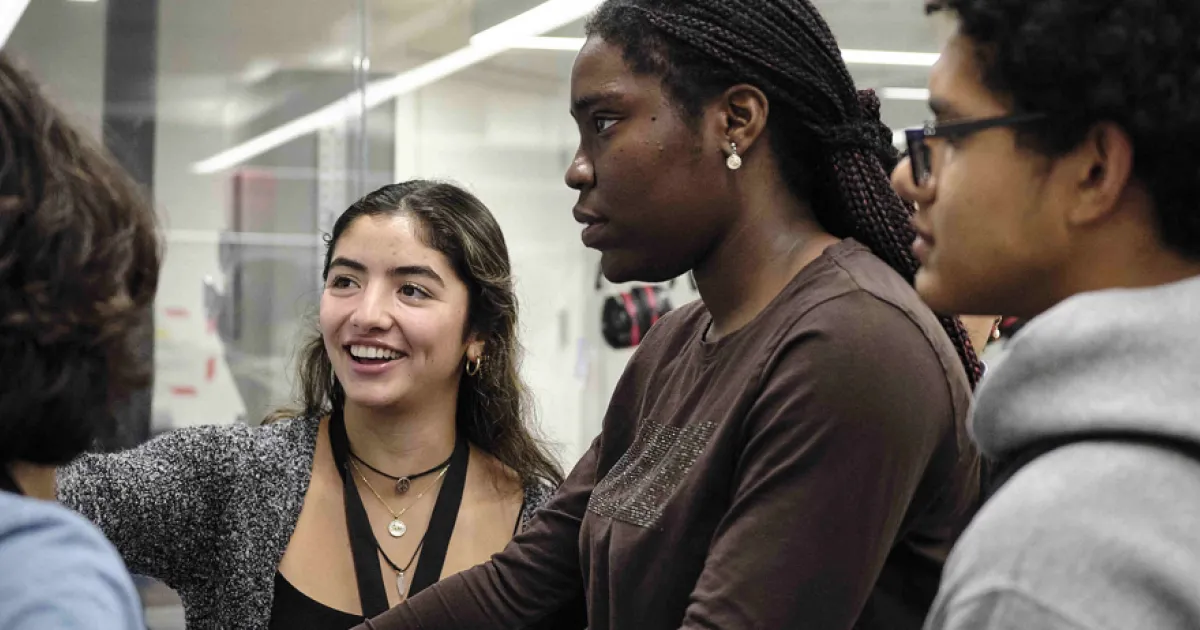
SHAPE is Columbia Engineering's summer program for high school students, held on Columbia's campus in New York City. You spend three weeks in one college-level engineering course taught by Columbia faculty and build a project such as a robotic car, a walking robot or a solar oven. Days run from 9 AM to 5 PM and mix classes, lab and project time with an elective, workshops and company visits. You commute in each day unless you get one of the limited residential places, which are only in Session 1 and only for students 16 and older.
 Sean Stevens · Sources
At a glance
Official facts · checked 11 Nov 2026- DatesOfficial
- 2027: 5 to 23 July (Session 1), 26 July to 13 August (Session 2)
- Who can applyOfficial
- Current high school students, freshmen to seniors, for the commuter option. Rising sophomores, juniors, seniors and recent high school graduates. Residential places in 2026 mostly reserved for students living and attending school in the US, with a limited number of international students
- Total costOfficial
- $6,241 commuter, $11,492 residential (2026)
- Format and placeOfficial
- In person, University residence hall, Columbia University, New York, NY
- Length
- 3 weeks per session
- Included / budget separately
- Included: meals (Residential students eat three meals a day at Columbia Dining). Separately: application fee $50 (waived before 16 December 2026)
- Deposit and refunds
- Deposit $1,000. The deposit ($1,000 commuter, $3,000 residential) is never refunded, including if the student withdraws
- Financial aid
- A limited number of need-based scholarships cover the full cost of tuition and fees, including housing for the residential option
- Apply by
- Applications open 16 November 2026. 2027: 16 December 2026 (Priority), 5 March (Final), 12 March (Final materials)
- Cohort and selectivity
- Columbia plans to admit 450 students across 18 classes averaging 25 students each, and says it receives many more applications than it can accept
- Credit or certificate
- Program certificate and a letter of recommendation from the faculty member. No college credit.
Get the key facts by email
The dates, costs and how to apply, all in one place.
Succeed's assessment
Should you apply?
SucceedIn short
Why it's worth it
Every course is built around a real project, and the faculty letter of recommendation you leave with is the most valuable part, since it comes from a professor who has watched three weeks of your work.
What it asks of you
Expect to put real effort into the application, which needs essays, a resume and a teacher recommendation, and to cover daily travel to campus yourself, which even a full scholarship doesn't pay for.
Who it's harder for
International students who'd need housing, because Columbia reserved most 2026 residential places for students who live and go to school in the US and selected only a limited number of international students. Its need-based aid is also open only to domestic families.
Who teaches the courses?
Columbia faculty teach every course, and classes average 25 students. If a faculty member becomes unavailable, Columbia lets applicants move to their second-choice course or get a refund. Columbia students help run the whole program, and undergraduates teach the electives alongside professional staff. A research series also brings in Columbia students talking about their own projects and Dr. Richard Hagan on the path to a PhD.
You take one course per session, so it's worth checking which session your favorite falls in. Columbia says the course list may change for 2027. In 2026, Robotics and Autonomous Driving, Moving Forward: Walking Robots, Biomedical Engineering, Chemical Engineering, Sustainable Engineering and Healthcare Engineering ran in both sessions. AI Builders, Introduction to Computer Programming, Electrical Engineering (built around solar energy) and Math in Action ran only in Session 1, while Data Science and Introduction to Data Structures and Algorithms ran only in Session 2.
What does a typical day look like?
Days run from 9:00 AM to 5:00 PM, and most of that time goes to your course, with two professor-led classes, an hour of lab time and an hour of project time. Mornings open with a speaker session, presentation or workshop, lunch runs from 12:15 PM to 1:45 PM, and the last hour is for your elective or a social hour.
The workshops cover skills such as public speaking and presenting yourself online, and Columbia's undergraduate admissions office runs college preparation sessions. Every student visits the Columbia Makerspace, which has 3D printers, laser cutters and CNC (computer-controlled cutting) machines, and some courses build their prototypes there regularly. Residential students spend evenings and weekends on group outings around New York City, including a Broadway show.
What do you leave with?
You leave with a program certificate, a letter of recommendation from your course's faculty member and the experience of seeing a project through, whether that's building a robotic car or a solar oven or designing an AI project of your own. SHAPE gives no college credit.
Columbia also says that attending a program on its campus earns no automatic preference in its own undergraduate admissions, so the letter and the project you can describe are what you'll actually be able to use on applications.
How do you get in?
Any current high school student, freshman through senior, can apply as a commuter, while the residential option is only for students who are 16 or older on the program's first day. Columbia says it plans to admit 450 students across 18 classes and receives many more applications than it can accept, so it encourages applying early.
The application asks for three essays (plus a fourth if you want housing), your latest transcript or report card, a resume of school and activities, and a recommendation from a math or science teacher, with transcripts and letters in English or officially translated. Columbia can't review an application until every document is in. Rolling admissions start on 15 January 2027, so if you wait for the 5 March 2027 final deadline, some places may already have been offered. Decisions come by April.
A few courses set their own bar. Chemical Engineering requires high school chemistry, and Introduction to Data Structures and Algorithms is for students who can already program.
What does it really cost?
In summer 2026, a three-week commuter session cost $6,241 in total and the residential option cost $11,492, and Columbia will publish 2027 prices in spring 2027. Both totals bundled the program fee with lab, course materials, health and activity fees. The residential price also covered room and board and gym access, and its activity fee was $700 rather than the commuters' $100. Fees are charged per session, so a commuter taking both sessions pays for two. Getting to and from Columbia is always on you, even with a scholarship.
When you accept a place, you pay a non-refundable deposit of $1,000 for commuters or $3,000 for residential students, which counts toward tuition, although scholarship recipients don't pay one. The balance is due one week before the program starts, and parents sign a binding agreement making them responsible for the fees. If you start and change your mind, you have until 5:00 PM on the second day to leave without owing full tuition, though the deposit stays with Columbia. After that you owe the full amount, and days you miss aren't discounted.
Need-based scholarships cover the full cost, including housing for residential students, but there are only a limited number. They're open only to domestic families who can document their income, and priority goes to students at New York City schools in Districts Five and Six and to those who complete their application by 16 December 2026. There are no merit scholarships. Applying before that date also waives the $50 application fee.
How are residential students looked after?
A Residential Director and resident advisers with residential life experience, who know Columbia's protocols, run the residential program, and there's a 10 PM curfew every night. In 2026, residential students lived in Furnald Hall in furnished, air-conditioned rooms with bedding provided, and ate three meals a day through Columbia Dining, which can accommodate dietary restrictions. The residential health fee covered urgent care and counseling services.
For everyone, Makerspace work happens only after safety training and under close supervision, and admitted students have to meet Columbia University's public health requirements.

Sean
Founder, Succeed
Talk it through with Sean
Want to talk it through?
“I can help you compare the programs you're considering, think through the practicalities and work out what makes sense for you.”
20 minutes · No obligation to enroll
What should you do next?
Frequently asked questions
Sources
- SHAPE
precollege.sps.columbia.edu · Official page
- FAQs | Columbia Engineering Outreach Programs
outreach.engineering.columbia.edu
- Courses and Schedule
outreach.engineering.columbia.edu
- Program Costs & Fees
outreach.engineering.columbia.edu
- Apply | Columbia Engineering Outreach Programs
outreach.engineering.columbia.edu
- SHAPE2020 ParentFinancialResponsibilityAgreement
outreach.engineering.columbia.edu
- About SHAPE
outreach.engineering.columbia.edu
Facts checked against the official page on 11 Nov 2026
Editor: Sean Stevens
Succeed has no commercial relationship with Columbia University Pre-College Programs.
Spot an error? Report it
Not ready to decide yet? Keep it for later.