
Business & Economics
Deadline: Not announced yet
From $6,300
14-18
Durham
In-person
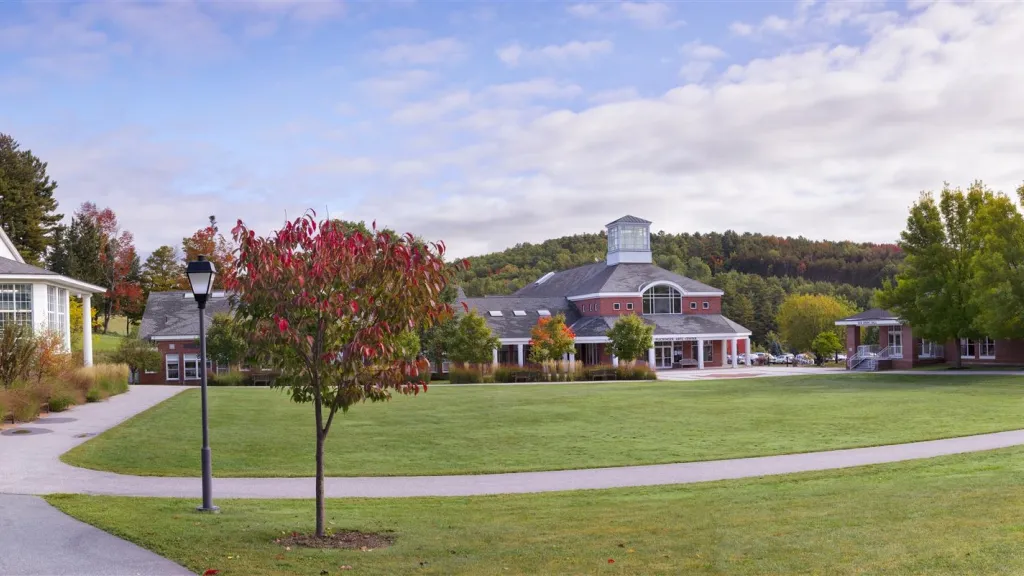
Students 14 and up spend two weeks taking one introductory course in business, engineering or medicine, taught by Dartmouth instructors. Classes, dorms and activities are at Kimball Union Academy (KUA), a boarding school in Meriden, New Hampshire, about 20 minutes from Dartmouth, with at least two full-day trips to Dartmouth's campus. Each course ends with a group project presented to a panel of Dartmouth undergraduates.
 Sean Stevens · Sources
Succeed's assessment
In short
Why it's worth it
At 14 it's the only way into Dartmouth Summer Scholars, and you still get Dartmouth teaching and real time on Dartmouth's campus, with a small boarding school as your base the rest of the time.
What it asks of you
Two weeks away from home in full days of class, at $8,299 or more for a residential place, with no financial aid to soften the cost.
Who should skip it
Students who've already taken a class or joined a club in business, engineering or medicine. Every course here is an introduction, and that experience is what Dartmouth asks for in several of its advanced summer courses.
Course confirmation
Dartmouth Precollege only confirms which courses will run by 1 March 2027, after early applicants have paid their deposit, so it's sensible to wait until then before booking travel.
Class runs from 9 am to noon and again from 2 to 4 pm, so you get about five hours of teaching a day, with lunch, homework and free time in between. Breakfast is at 8, and after class comes an organized activity from 4 to 6 pm, dinner at KUA, evening activities from 7 to 9 pm and an hour of dorm time before lights out at 10. There are optional morning hikes, and the campus has ponds, trails, art and music studios, a fitness center, indoor fields and basketball and tennis courts.
Several days break the routine. Each course spends at least two full days at Dartmouth touring labs, meeting faculty and current students, eating in the dining hall and taking an admissions tour. Medicine classes add a half-day at Dartmouth's research hospital, and business classes get a workshop led by the Tuck School of Business. Weekends bring a day on Dartmouth's campus and an off-campus excursion.
You can apply if you're a rising 9th to 12th grader aged 14 to 18 during the program, as long as you've finished 8th grade and haven't yet graduated from high school. At 14, these three courses are your only way into Summer Scholars, but older students who are new to the subject are welcome too, and no prior coursework is needed. US, international and homeschooled students can all apply.
Dartmouth Precollege admits students to specific courses based on interest and academic fit, and it doesn't publish an acceptance rate or cohort size. International students also have to show English proficiency through standardized test scores, a transcript from an international school that teaches its core curriculum in English, or a video interview. Children of Dartmouth alumni get no preference. You can't switch courses once the program starts, so choose carefully.
Residential staff live in the dorms alongside students at a 1:8 staff ratio, and they're the same Summer Scholars team that runs residential life for the advanced courses on Dartmouth's campus. Families are welcome at an arrival reception and parent orientation.
Dartmouth Precollege's residential rules for Summer Scholars also provide a camp nurse who lives in one of the program residences, and they require medical information and a parent's or guardian's permission for staff to arrange care. Guests aren't allowed in the residence halls. Approved parents or guardians can check a student out on evenings or weekends with at least 24 hours' notice. A student dismissed under the code of conduct of Summer Discovery, Dartmouth's enrollment partner, is sent home at the family's expense with no refund.
You leave with a Dartmouth-branded certificate of completion, emailed once all the summer sessions end (typically around August or September), and the group project your team presented. That's a company valuation in Business Foundations, a team solution to a real-world problem in Introduction to Engineering, or a presentation on how subjects from chemistry to sociology are used in medical jobs in Foundations in Medicine. The courses carry no college credit or grades.
The certificate matters most inside the program, because completing one of these courses makes you eligible for Dartmouth's advanced on-campus courses in that field in a later summer. Dartmouth is also clear that taking part has no effect on undergraduate admission to Dartmouth.
A residential place starts at $8,299 and a commuter place at $4,999, plus a $100 application fee that's never refunded. Dartmouth Precollege says the price varies by course, format and when you apply, and the application site shows the current figure. The residential price covers housing, three meals a day, activities and weekend excursions, transportation to included activities, linens, laundry and supervision, while commuters pay for weekend activities themselves. Flights, airport transfers, spending money and medical bills are extra. Students living outside the United States also pay a non-refundable international registration fee of $379 (residential) or $239 (commuter), which covers US health insurance and, for residential students, airport transfers.
The deposit depends on when you enroll. It's $1,900 before 31 January 2027 and $2,500 from 1 February to 1 April 2027. From 1 April to 1 June 2027 it's $3,500, and the full fee is due at the same time. Otherwise the balance is due by 1 April 2027, and paying by credit card adds a 3.5% surcharge. There's no financial aid for on-campus programs, although you can ask Summer Discovery, which handles payments for Dartmouth, to waive the application fee. Cancellations must be made in writing, and the fee you lose grows as the summer gets closer.
| When you cancel | What you lose |
|---|---|
| Before 1 February 2027 | Only the $100 application fee and any optional travel protection |
| 1 February to 1 April 2027 | A fee equal to the deposit paid |
| 1 April to 1 May 2027 | $3,500 or the deposit paid |
| 1 May to 1 June 2027 | $4,500 |
| After 1 June 2027 | Everything, with no exceptions |
The application is hosted by Summer Discovery, Dartmouth's enrollment partner, and you reach it from Dartmouth Precollege's apply page.
Pick a course and session
Choose Business Foundations, Introduction to Engineering or Foundations in Medicine in Session 1 or Session 3, since you're reviewed only for what's on your application.
Submit by a round deadline
The application asks for your details, your course choice and short answers about your interests, along with a grade report or transcript and the $100 fee. The three deadlines are 11:59 pm Eastern on 15 December 2026, 27 January 2027 and 23 March 2027, and after 1 May 2027 applications are taken on a rolling basis while space lasts.
Hear back
Decisions arrive within two weeks of applying, or within one week in the rolling period.
Accept and pay the deposit
You have 10 days from the offer, or one week in the rolling period, when the full fee is due straight away.
Pay the balance and fill in your profile
The rest is due by 1 April 2027, and in spring you complete a personal profile used to match roommates.

Sean
Founder, Succeed
Talk it through with Sean
“I can help you compare the programs you're considering, think through the practicalities and work out what makes sense for you.”
20 minutes · No obligation to enroll
Succeed has a commercial partnership with this provider.
Save this program in Succeed to compare it with similar programs, dates, costs and formats in one place.
Compare with other programsprecollege.dartmouth.edu · Official page
summerdiscovery.com
precollege.dartmouth.edu
precollege.dartmouth.edu
precollege.dartmouth.edu
precollege.dartmouth.edu
precollege.dartmouth.edu
precollege.dartmouth.edu
Not ready to decide yet? Keep it for later.