
Georgetown University Summer Programs Bridges to Social Justice Academy
by Georgetown University Summer Programs
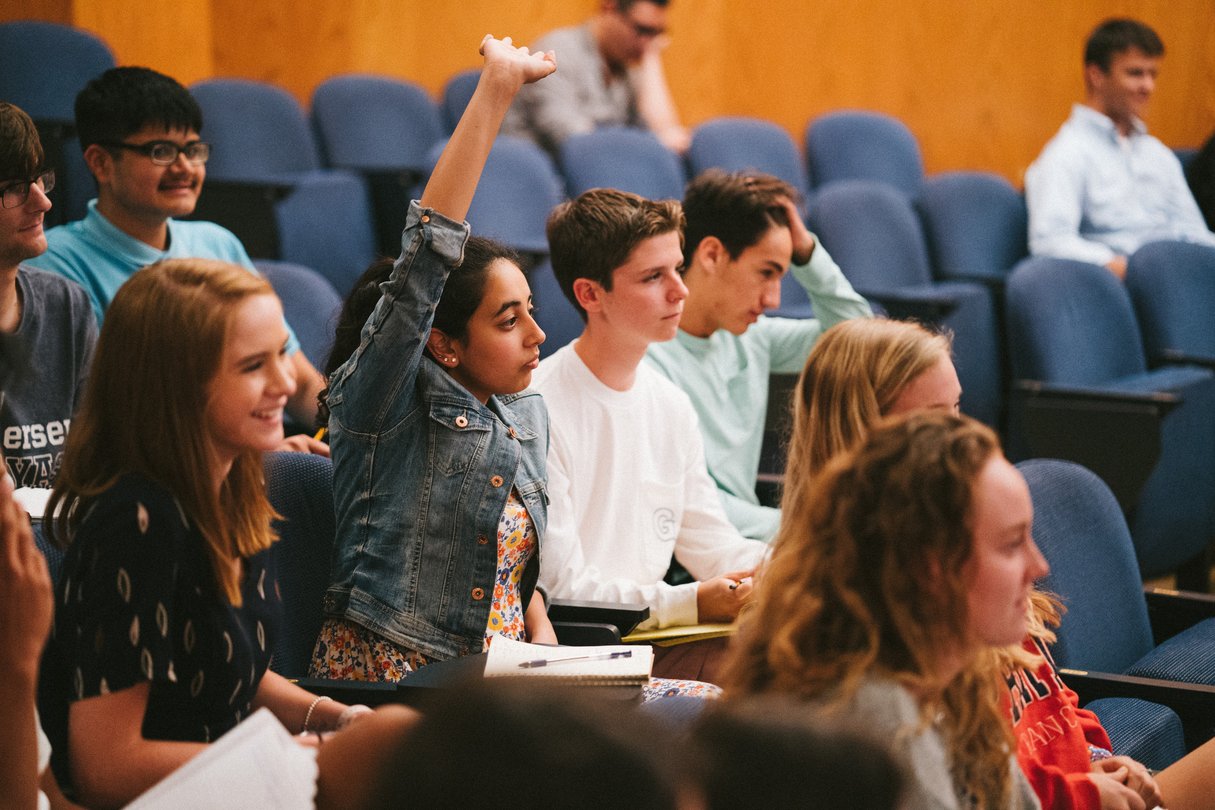
Over three weeks on Georgetown's campus in Washington, DC, you study how social change happens through community organizing, advocacy for public policy, direct service, community-engaged research and social entrepreneurship. Days mix class sessions, workshops and small-group discussions with site visits around the city, where you meet people from policy think tanks and rights organizations. In Georgetown's sample schedule, two hours each weekday evening go to a capstone project. You finish by designing a student organization built to tackle one social injustice, and you can either live on campus or commute.

At a glance
Official facts · checked 11 Nov 2026- DatesOfficial
- 2027: Not announced yet. 2026: 28 June to 17 July
- Who can applyOfficial
- Current 8th, 9th, 10th, 11th or 12th grader during the academic year before the summer program. Good academic standing with at least a 2.0 GPA
- Total costOfficial
- $9,085 residential, $7,085 commuter (2026)
- Format and placeOfficial
- In person, Washington, DC
- Length
- 3 weeks
- Included / budget separately
- Included: accommodation, meals (The residential price includes 19 meals a week). Separately: application fee $50 (non-refundable, waived by the early-bird deadline), health insurance $135 (international students only)
- Deposit and refunds
- Drop 3 or more weeks before the start: 100% of tuition and fees refunded
- Financial aid
- Limited number of need-based scholarships for admitted Academy students
- Apply by
- Not publishedNot announced yet
- Cohort and selectivity
- Georgetown admits on a rolling basis using grades, courses taken, a school reviewer form and a personal statement, publishes no acceptance rate, and gives seats to admitted students who register and pay first
- Credit or certificate
- Certificate of Participation
Get the key facts by email
The dates, costs and how to apply, all in one place.
Succeed's assessment
Should you apply?
SucceedIn short
Why it's worth it
It treats social change as a set of practical routes, from organizing and advocacy to direct service and social entrepreneurship, and puts you in the same room as the advocates, policy analysts and movement leaders working in them. The capstone, designing a student organization around one injustice, gives you something concrete to take back to school.
What it asks of you
Three weeks of 9-to-5 weekdays with capstone work in the evenings, and in 2026 that cost $9,085 living on campus or $7,085 commuting. That's a large outlay for a non-credit program, so it pays off mainly if the site visits and mentoring matter to you.
Who should skip it
Students who want graded academic work or a deep dive into one subject. This is an introduction to several pathways, marked pass or fail, and the certificate rests on attendance and participation across all three weeks.
What does a typical day look like?
Weekdays run from 9 a.m. to 5 p.m. in a morning block and an afternoon block of lectures, guest speakers, hands-on activities, group discussions and off-site visits, with lunch from noon to 1:30 p.m. In Georgetown's sample day, dinner runs from 5 to 7 p.m., then two hours go to the capstone project, and 9 to 11 p.m. is for student activities under residential supervision before curfew.
Optional evening and weekend programming includes lecture series, movie and game nights, off-campus outings and weekend trips, which change from year to year. Not every student goes on the same off-site visits, so two students in the same cohort may see different organizations.
Who runs the sessions?
Georgetown lists three staff members for the academy. Andria Wisler is executive director of the Center for Social Justice Research, Teaching and Service and a Teaching Professor of Justice and Peace. Kathleen Bonnette is academic program manager at the Center on Faith and Justice, and Ray Shiu is listed as deputy director.
The hands-on activities in public speaking, facilitation, project design and listening are led by undergraduate mentors and Georgetown faculty, and you also hear from community advocates, policy analysts and movement leaders. Georgetown doesn't publish a class size or a student-to-staff ratio.
Who can get in, and what does the application ask?
You need to be in 8th to 12th grade in the school year before the summer, with at least a 2.0 GPA, and you must be 15 by check-in day. Georgetown makes no exceptions to the age rule for this academy, so an 8th or 9th grader who hasn't turned 15 by then can't attend.
The application asks for a 300- to 500-word personal statement on why you want to attend Georgetown's summer programs, since the same application covers every academy. You also need a School Official Reviewer Form from your counselor (Georgetown's preference), an advisor, a teacher or your principal, who can verify your GPA and speak to your academic readiness. Homeschooled students can't use a family member or paid tutor for the form. Georgetown weighs your grades, courses, reviewer form and statement, admits on a rolling basis and publishes no acceptance rate.
International students don't need an F-1 or J-1 student visa or a TOEFL score for the academies, and Georgetown gives no visa help for them. It does recommend English strong enough to follow complex discussions and argue a point clearly in writing.
How do you apply and secure a seat?
Applications go through Georgetown's Academies portal, and Georgetown says its 2027 offerings and application go live on 16 November 2026.
Start the Academies application, which covers every Georgetown academy at once, and upload your 300- to 500-word personal statement.
Name your school official, who gets an automatic email asking them to complete the reviewer form.
Submit by 31 January 2027 to skip the $50 application fee, or by the final academies deadline of 15 May 2027, after which Georgetown reviews applications case by case.
Allow up to three weeks after your application is complete for an emailed decision.
Once approved, register for Bridges in the MySCS portal and pay the full tuition by credit card, because seats go first come, first served and Georgetown holds nothing until you pay.
What does it really cost?
In 2026, Bridges cost $9,085 to live on campus, which covered tuition, a room and 19 meals a week, or $7,085 to commute, which covered tuition only. Georgetown says all its rates and fees are subject to change, so the 2027 price may differ. On top of that comes a $50 non-refundable application fee unless you apply by the early-bird date, and international students pay $135 for the required health insurance. Commuters can buy a meal plan from Georgetown Dining if they want one.
Commuting
You have to live with a parent, guardian or an adult they designate for the whole program. Georgetown can turn down your Commuter Form if there's no designated adult or if the address isn't within 45 minutes of campus at any time of day, rush hour included, and that decision can't be appealed.
Scholarships
Georgetown offers a limited number of need-based scholarships that cover tuition only and aren't guaranteed. You can apply only after you've been admitted, and the application asks for two essays. Georgetown says the 2027 academy scholarship application is scheduled to open in late December 2026. The academy deadline is 2 March, decisions come by the last week of March, and late applications aren't reviewed.
Refunds
Drop three or more weeks before the start and you get all tuition and fees back, then 90% two weeks out, 85% one week out and 75% up to the first day. After that it's 50% of tuition through the third day and nothing from day four.
How are students looked after?
Trained resident counselors live in every residence hall, with one on duty throughout the day, and each commuter is assigned a resident counselor while on campus. Georgetown's Protection of Minors Policy sets requirements for the students, faculty and staff who work with under-18s. Possessing alcohol or drugs, or even being around them, means immediate dismissal from the program and the residence halls.
Georgetown University Police patrol the campus, and outside office hours families can call them at (202) 687-4343 to reach the Summer High School staff member on duty. Georgetown sets out its rules on leaving campus in the Academy Welcome Packet and encourages parents to read them.

Sean
Founder, Succeed
Talk it through with Sean
Want to talk it through?
“I can help you compare the programs you're considering, think through the practicalities and work out what makes sense for you.”
20 minutes · No obligation to enroll
What should you do next?
Frequently asked questions
Sources
- Bridges to Social Justice Academy
summer.georgetown.edu · Official page
- summer.georgetown.edu/pre-college-programs/academies
- Resources for Parents
summer.georgetown.edu
- summer.georgetown.edu/resources/how-to-register/academies
- summer.georgetown.edu/apply
- Costs & Scholarships
summer.georgetown.edu
- summer.georgetown.edu/programs/SHS21/bridges-to-social-justice-academy/how-to-apply
- College Credit
summer.georgetown.edu
Facts checked against the official page on 11 Nov 2026
Editor: Ben Stacy
Succeed has no commercial relationship with Georgetown University Summer Programs.
Spot an error? Report it
Not ready to decide yet? Keep it for later.