
Georgetown University Summer Programs Democracy, Peace & Conflict Academy
by Georgetown University Summer Programs
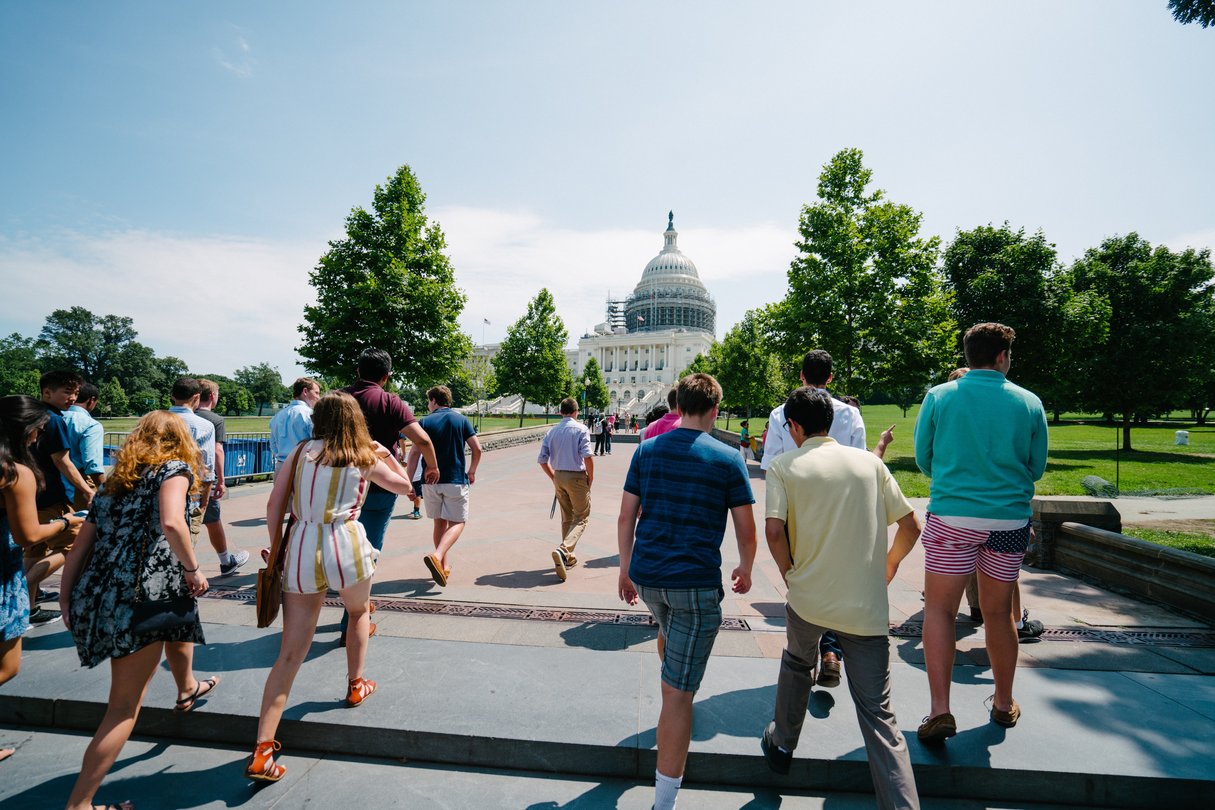
A one-week, non-credit summer course on Georgetown University's campus in Washington, D.C., about how democracies deal with conflict. The week mixes lectures, group discussions, guest talks and a crisis simulation. You look at elections and the causes of electoral violence, why some democracies endure while others erode, and populism and polarization, and you practice tools such as perspective-taking and dialogue. Weekday evenings include time on a capstone project, and you can either live on campus or commute.

At a glance
Official facts · checked 11 Nov 2026- DatesOfficial
- 2027: Not announced yet. 2026: 5 to 11 July
- Who can applyOfficial
- Current 8th, 9th, 10th, 11th or 12th graders during the academic year before the summer program. Good academic standing with at least a 2.0 GPA
- Total costOfficial
- $3,725 residential (2026), $3,095 commuter (2026)
- Format and placeOfficial
- In person, University residence hall, Washington, DC
- Length
- 1 week
- Included / budget separately
- Included: accommodation, meals (The residential price includes 19 meals per week). Separately: application fee $50 (non-refundable, waived for applications by 31 January), health insurance fee $45 (international students only)
- Deposit and refunds
- Drop 3 weeks or more before the start: 100% of tuition and fees refunded
- Financial aid
- Limited need-based scholarships for students admitted to an Academy, covering tuition only
- Apply by
- Not publishedNot announced yet
- Cohort and selectivity
- Admission is rolling and based on high school grades, courses taken, a School Official Reviewer Form and a personal statement, and admitted students then get seats first come, first served once tuition is paid
- Credit or certificate
- Certificate of Participation on successful completion, plus a Pass/Fail grade on a non-credit transcript
Get the key facts by email
The dates, costs and how to apply, all in one place.
Succeed's assessment
Should you apply?
SucceedIn short
Why it's worth it
The week is built around one narrow, live question, how democracies handle conflict, and it mixes lectures with a crisis simulation and talks from civil society activists and policymakers, in a city where those debates actually play out.
What it asks of you
Mostly money and one week of your summer. Since the fee pays for just seven days, it's best spent by a student who wants this exact topic rather than a general taste of college life.
Who should skip it
Students who need something to show for the week beyond a Certificate of Participation, because the Academy carries no credit and records only a Pass/Fail grade on a non-credit transcript.
What does a typical day look like?
Weekdays are full. In Georgetown's sample schedule, you're in lectures, labs or off-site visits from 9:00 a.m. to noon and again from 1:30 to 5:00 p.m., with a 90-minute lunch in between. After dinner you come back for capstone project work from 7:00 to 9:00 p.m. Guest speakers, group discussions and visits around Washington fill those blocks.
From 9:00 to 11:00 p.m. there are optional activities, supervised by residential staff, before curfew. Georgetown's evening lineup includes movies, game nights, cookouts and concerts, and its Residential Living program adds off-campus outings and weekend trips. Breakfast runs from 7:00 to 9:00 a.m. and dinner from 5:00 to 7:00 p.m.
Who leads the week?
Georgetown lists Elton Skendaj as the Academy's faculty member. He directs the university's MA in Democracy and Governance program, holds a PhD in Government from Cornell University and was previously the inaugural Gladdys Muir Professor of Peace Studies at Manchester University in Indiana. His research looks at how democratic institutions are strengthened and how conflicts can be prevented without violence, and he has worked on projects with the United Nations, the U.S. Institute of Peace and the Wilson Center.
That background lines up closely with the course topics, and Georgetown says he teaches through discussion, simulations and design papers. Other Georgetown professors, civil society activists and policymakers also speak during the week.
Who can apply, and how hard is it to get in?
Georgetown's minimum bar is modest. Its Academies are open to students in 8th through 12th grade during the school year before the summer who are in good academic standing with at least a 2.0 GPA. Five of the Academies require students to be at least 15, but this one isn't among them. Admissions weighs your grades, the courses you've taken, a School Official Reviewer Form from a counselor, advisor, teacher or principal, and a 300- to 500-word personal statement on why you want to come. Homeschooled applicants need a reviewer who isn't a family member or paid tutor.
Admission is rolling, and Georgetown emails a decision within three weeks of receiving your complete application. One application covers every Academy. Being admitted doesn't hold you a place, though. Seats go first come, first served to admitted students who register and pay tuition in full, so register quickly once you're in.
International students don't need a student visa (I-20, F-1 or J-1) or TOEFL scores for the Academies, but Georgetown gives no visa help for them and recommends English strong enough to follow complex discussions and argue a viewpoint.
What does it really cost?
For Summer 2026 the week cost $3,725 if you lived on campus, covering tuition, a residence hall room and 19 meals, or $3,095 as a commuter, covering tuition only. Commuters could add a Georgetown Dining meal plan at its own price. Georgetown says its rates can change, so expect to confirm the Summer 2027 price once it's posted.
On top of tuition there's a $50 non-refundable application fee, which Georgetown waives if you apply by the Early Bird Deadline of 31 January 2027, and international students pay a $45 health insurance fee. Tuition is due in full by credit card when you register, and your seat isn't held until it's paid. If you drop, how much comes back depends on how close you are to the start date.
Georgetown also offers a limited number of need-based scholarships. They cover tuition only, and because funding is competitive, an award isn't guaranteed. You apply after you've been admitted, answering two essay prompts. The Summer 2027 Academy scholarship application is scheduled to open in late December 2026, the deadline is 2 March 2027, and decisions come by the last week of March.
| When you drop | Refund |
|---|---|
| 3 weeks or more before the start | 100% of tuition and fees |
| 2 weeks before the start | 90% of tuition and fees |
| 1 week before the start | 85% of tuition and fees |
| Up to the start date | 75% of tuition and fees |
| Up to the 3rd day | 50% of tuition |
| 4th day or later | No refund |
How are students looked after on campus?
Trained resident counselors live in every residence hall and supervise all students, with one on duty in each hall throughout the day, and commuters are assigned a counselor too. Evenings end with a curfew after optional activities, and Georgetown's Protection of Minors Policy covers everyone under 18.
The alcohol and drug rules are strict. Possessing or consuming alcohol or drugs, or even being around them, means immediate dismissal from the program and the residence halls. The Georgetown University Police Department patrols campus regularly, and outside business hours families can call it at (202) 687-4343 to reach the summer program staff member on duty.

Sean
Founder, Succeed
Talk it through with Sean
Want to talk it through?
“I can help you compare the programs you're considering, think through the practicalities and work out what makes sense for you.”
20 minutes · No obligation to enroll
What should you do next?
Frequently asked questions
Sources
- Democracy, Peace & Conflict Academy
summer.georgetown.edu · Official page
- Resources for International Students
summer.georgetown.edu
- summer.georgetown.edu/pre-college-programs/academies
- Resources for Parents
summer.georgetown.edu
- summer.georgetown.edu/resources/how-to-register/academies
- summer.georgetown.edu/apply
- Costs & Scholarships
summer.georgetown.edu
- summer.georgetown.edu/programs/SHS35/democracy-peace-conflict-academy/how-to-apply
Facts checked against the official page on 11 Nov 2026
Editor: Ben Stacy
Succeed has no commercial relationship with Georgetown University Summer Programs.
Spot an error? Report it
Not ready to decide yet? Keep it for later.