
Georgetown University Summer Programs Medical Academy
by Georgetown University Summer Programs
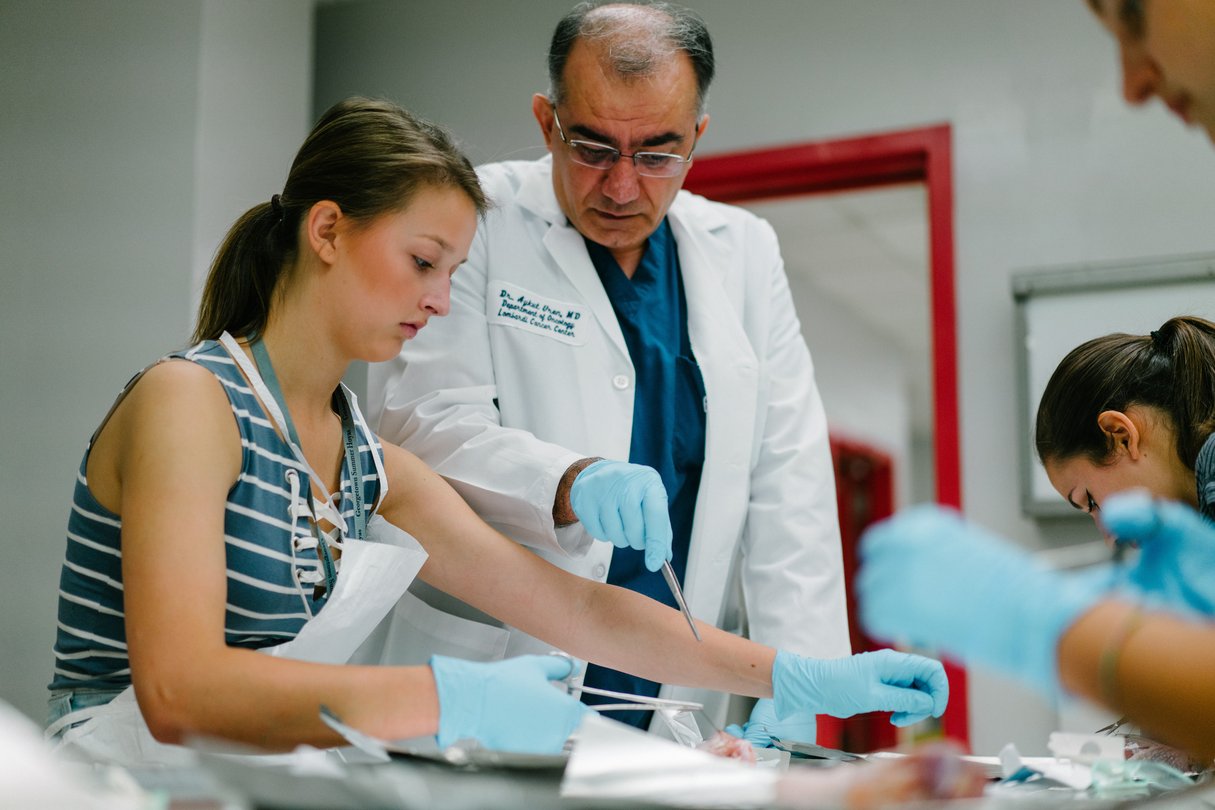
Medical Academy is a one-week summer program on Georgetown University's campus in Washington, DC, where high school students spend weekdays in lectures, labs and off-site visits on topics from anatomy and radiology to surgery, cancer, emergency medicine and biomedical ethics. You practice suturing, casting, taking blood pressure and drawing blood, work with a patient simulator and take part in a small mammal dissection, then spend evenings on a capstone project. You can live on campus or commute, and you finish with a Certificate of Participation.
 Sean Stevens · Sources
At a glance
Official facts · checked 11 Nov 2026- DatesOfficial
- 2027: Not announced yet. 2026: 21 to 27 June (I), 5 to 11 July (II), 12 to 18 July (III)
- Who can applyOfficial
- At least 15 years old by the date of check-in (no exceptions). International students need no visa or TOEFL scores for the Academies
- Total costOfficial
- $4,120 residential (2026), $3,490 commuter (2026)
- Format and placeOfficial
- In person, Georgetown University, Washington, DC
- Length
- 1 week
- Included / budget separately
- Included: accommodation, meals (19 meals per week at Leo O'Donovan Dining Hall for residential students, optional meal plan for commuters). Separately: application fee $50 (non-refundable, waived by the Early Bird Deadline), health insurance fee $45 (international students only), optional meal plan for commuters, priced by plan through Georgetown Dining
- Deposit and refunds
- Withdraw 3 weeks or more before the start: 100% of tuition and fees refunded
- Financial aid
- Limited number of need-based scholarships for admitted Academy students, covering tuition only
- Apply by
- Not publishedNot announced yet
- Cohort and selectivity
- Georgetown admits on a rolling basis, weighing grades, courses taken, the School Official Reviewer Form and the personal statement, and publishes no acceptance rate
- Credit or certificate
- Certificate of Participation upon successful completion
- Official page
- summer.georgetown.edu/programs/SHS19/medical-academy
Get the key facts by email
The dates, costs and how to apply, all in one place.
Succeed's assessment
Should you apply?
SucceedIn short
Why it's worth it
In a single week you practice real clinical skills, from suturing and casting to taking blood pressure and drawing blood, and you hear straight from Georgetown medical students, faculty and hospital physicians about the path into medicine.
What it asks of you
Weekdays run from 9 a.m. to 9 p.m., evening capstone included, so it's an intense week. In 2026 it cost $4,120 to live on campus or $3,490 to commute, which is a lot for seven days.
Who should skip it
Students hoping to earn college credit or a letter grade, because the academy is non-credit. You get a Pass or Fail on a non-credit transcript and a Certificate of Participation.
What does a day at the academy look like?
Academic programming runs from 9 a.m. to 9 p.m. on weekdays. In Georgetown's sample schedule, the 9 a.m. to noon and 1:30 to 5 p.m. blocks are filled with lectures, labs and off-site visits, with a 90-minute lunch in between. After dinner, which runs from 5 to 7 p.m., you spend 7 to 9 p.m. on your capstone project, and from 9 to 11 p.m. there are student activities with residential life staff supervising.
Outside class, the summer program puts on evening events such as movies on the lawn, game nights, cookouts and concerts, along with residential outings and weekend trips. In 2026, each session ran from Sunday to Saturday.
Who will you learn from?
You learn from people working in medicine at Georgetown. Georgetown says you'll interact directly with current medical students, School of Medicine faculty and physicians from MedStar Georgetown University Hospital, who talk you through the path to becoming a doctor, how to succeed in medical school and the range of specialties. An expert leads you through the dissections.
The faculty Georgetown lists for the academy are Dhruvi Banerjee, associate professor Caitlin Coker and John Wanamaker, an associate professor on the School of Medicine's Medical Educator Track. Georgetown doesn't publish a class size or staff ratio.
Who can apply, and who gets a place?
You need to be in 8th through 12th grade during the school year before the program, with at least a 2.0 GPA, and you must be 15 by check-in day. Georgetown makes no exceptions to the age rule, so a younger 8th or 9th grader can miss out even though their grade qualifies.
Georgetown looks at your grades, the courses you've taken, your School Official Reviewer Form and your personal statement. It admits on a rolling basis and encourages early applications, but it doesn't publish an acceptance rate or cohort size. Homeschooled students can apply, as long as the reviewer form comes from a teacher or someone else who isn't a family member or paid tutor.
International students don't need a student visa or TOEFL scores, although Georgetown recommends English good enough to follow technical discussions and gives no visa help to academy students. Georgetown also says health insurance is mandatory for international students.
What does the week cost?
For Summer 2026, the residential option cost $4,120, covering tuition, a shared double room on campus and 19 meals a week. The commuter option cost $3,490 and covered tuition only. Georgetown hasn't yet posted Summer 2027 tuition and says all rates and fees are subject to change.
On top of that, there's a $50 non-refundable application fee unless you apply by the Early Bird deadline of 31 January. International students pay a $45 health insurance fee, and commuters who want a meal plan buy one directly from Georgetown Dining, priced by the plan they choose.
Georgetown offers a limited number of need-based scholarships that cover tuition only, and competition for the funding is real. You have to be admitted first and then submit a scholarship application with two essays. For academies, the Summer 2027 form is scheduled to open in late December 2026 and the deadline is 2 March 2027, with decisions by the last week of March. Late applications aren't reviewed.
If you withdraw three weeks or more before the start, Georgetown refunds all your tuition and fees. The refund shrinks the closer you get to the start, and from the fourth day of the program you get nothing back. Georgetown goes by the date it receives your request, and after the three-week point you have to withdraw by emailing highschool@georgetown.edu rather than through the MySCS portal.
| When you withdraw | Refund |
|---|---|
| 3 weeks or more before the start | 100% of tuition and fees |
| 2 weeks before the start | 90% of tuition and fees |
| 1 week before the start | 85% of tuition and fees |
| Up to the start | 75% of tuition and fees |
| Up to the 3rd day | 50% of tuition |
| 4th day or later | No refund |
How are students looked after on campus?
Resident counselors live in every residence hall and supervise all students, with one on duty in each hall throughout the day, and commuters are assigned one too. Floor curfew is 10:30 p.m. with bed checks at 11:30 p.m., although Georgetown says those times can shift with the day's programming. The Student Health Center is staffed by family practice physicians and nurse practitioners, and the Georgetown University Police Department patrols the campus.
Georgetown's Protection of Minors Policy sets requirements for the university staff and students who work with participants under 18. Possessing alcohol or drugs, or even being around them, means immediate dismissal from the program and the residence halls.
Commuters must live with a parent, guardian or another responsible adult they designate, within 45 minutes of campus at any time of day, rush hour included. Georgetown reviews every Commuter Form and can turn down a request, with no appeal.
How do you apply and secure a place?
Applications go through Georgetown's academy application page, and being admitted doesn't hold a seat until you've paid.
Start the Academy application once it opens on 16 November 2026. Applying by the Early Bird deadline of 31 January 2027 waives the $50 fee, and the final deadline is 15 May 2027, after which Georgetown reviews applications case by case.
Before you submit, upload a 300- to 500-word personal statement on why you want to attend Georgetown's summer programs.
Name a school official who can speak to your academic readiness and confirm your GPA. Georgetown prefers your counselor, but an advisor, teacher or principal also works, and they get an automatic email asking them to complete the School Official Reviewer Form.
Georgetown reviews only complete applications, including your reviewer's response, and emails a decision within three weeks of receiving one.
Once you're admitted, register for your session in the MySCS portal and pay full tuition by credit card. Seats go first-come, first-served, so it's worth registering promptly.
Complete your Student Life Forms in CampDoc, plus the Commuter Form if you're commuting, seven weeks before your program starts.

Sean
Founder, Succeed
Talk it through with Sean
Want to talk it through?
“I can help you compare the programs you're considering, think through the practicalities and work out what makes sense for you.”
20 minutes · No obligation to enroll
What should you do next?
Frequently asked questions
Sources
- Medical Academy
summer.georgetown.edu · Official page
- 2027 Important Dates_Deadlines v 1.0.pdf
georgetown.app.box.com
- summer.georgetown.edu/pre-college-programs/academies
- Resources for Parents
summer.georgetown.edu
- Campus Resources
summer.georgetown.edu
- summer.georgetown.edu/resources/how-to-register/academies
- summer.georgetown.edu/apply
- Costs & Scholarships
summer.georgetown.edu
Facts checked against the official page on 11 Nov 2026
Editor: Sean Stevens
Succeed has no commercial relationship with Georgetown University Summer Programs.
Spot an error? Report it
Not ready to decide yet? Keep it for later.