Hillary Outdoors Discovery Camp
- 2027 program
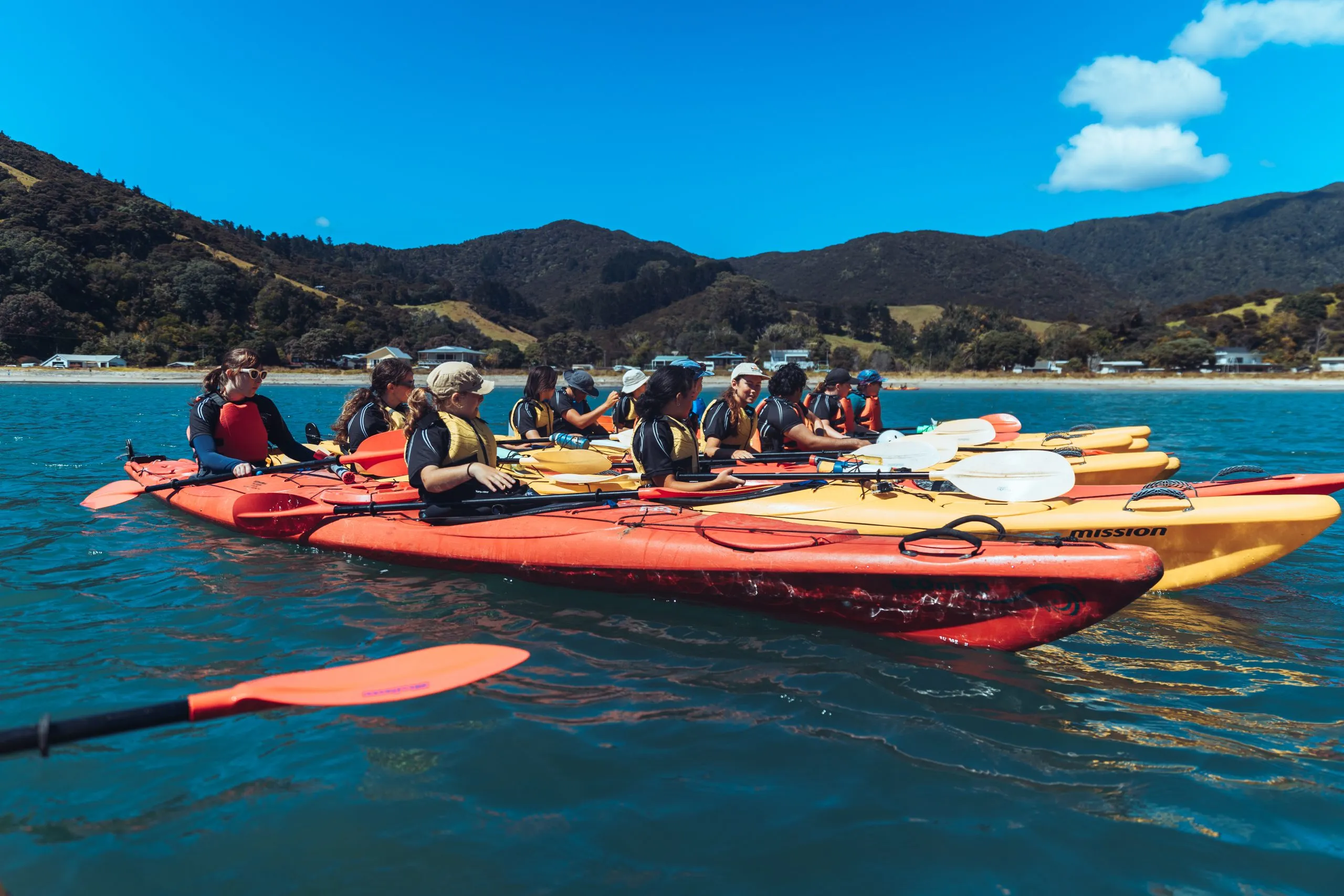
Discovery Camp is a week-long residential outdoor camp in New Zealand that Hillary Outdoors runs for homeschooled and unschooled teens aged 14 to 18. Groups are based at the Coromandel or Tongariro center and work with one instructor to set goals and shape their own week. Activities include sea kayaking and coasteering at Coromandel or caving and high ropes at Tongariro. The week ends with a self-sufficient expedition of one or two nights, when the group navigates, cooks and camps out in the bush.
At a glance
Official facts · checked 24 Nov 2026- 2027: 23 to 30 January, 17 to 23 July
- Home-schooled and unschooled students. Aged 14 to 18 (the January 2028 Coromandel page says 14 to 19)
- 2027: $1,765 (Coromandel, January), $1,460 (Tongariro, July)
- In person, Port Charles, Coromandel Peninsula, Tūrangi
- Length
- 8 days (7 nights) Coromandel, 7 days (6 nights) Tongariro
- Included / budget separately
- Included: accommodation, meals (All meals included)
- Deposit and refunds
- Cancel by email with more than 28 days' notice before the start: the program cost is refunded less the $50 booking fee
- Financial aid
- Hillary Step Scholarship: needs-based funding from Hillary Outdoors for young people facing financial barriers to attending
- Apply by
- 2027: 24 June
- Cohort and selectivity
- Not published
- Credit or certificate
- Can count toward the Duke of Edinburgh's Hillary Award – Gold Residential for students already enrolled in the award. Opportunities to gain NCEA Unit Standards
- Official page
- hillaryoutdoors.co.nz/discovery-camp
Get the key facts by email
The dates, costs and how to apply, then 2 reminders: 10 Jun (2 weeks before) and 21 Jun (3 days before).
Should you apply?
SucceedWhy it's worth it
It brings together teens who learn outside school for a week of shared cabin life, daily duties and real challenge. One instructor stays with the group all week and lets it help plan what happens. The high point is the expedition at the end, when the group navigates, cooks and camps using the skills it has just learned.
What it asks of you
You'll spend a full week away without a phone, laptop or tablet, because devices are handed in on arrival and family can reach you only through the Duty Manager in an emergency. Days run to around 7 hours of activity, and on expedition you carry your own share of the tents or hammocks, cookers and food.
Who should skip it
Students hoping to come away with a qualification. Hillary Outdoors promises only "opportunities" to gain NCEA (National Certificate of Educational Achievement) Unit Standards without naming which ones. The Duke of Edinburgh's Hillary Award Gold Residential sign-off counts only if you're already enrolled in the award.
Who is the camp for?
Discovery Camp is only for students who are homeschooled or unschooled. Hillary Outdoors publishes no selection process, so getting in comes down to fitting that description, being the right age and securing a place. The listed ages are 14 to 18, although the January 2028 Coromandel page says 14 to 19, so it's worth checking with Hillary Outdoors if you're at the top end.
Registering asks for your age on the first day, health and medical details, your swimming ability and a short statement in your own words about what's motivating you to come, plus a parent or guardian's contact details and consent. Teens with conditions such as diabetes, epilepsy, ADHD or anaphylactic allergies have attended before, and the coordinators ask families to talk to them first so they can plan support.
Hillary Outdoors is a non-profit, and each camp needs a minimum number of participants to run. One that falls short may be canceled, changed or rescheduled.
What does a week at camp look like?
Expect about 7 hours of activity a day, building from team games toward a self-sufficient expedition. Groups shape the exact plan with their instructor, so the sample weeks Hillary Outdoors publishes are a guide rather than a fixed timetable.
At Coromandel, you arrive in the late afternoon (2:30pm pick-up in Thames or 5pm drop-off at the center). The next day brings team building, beach games, snorkeling and sea kayaking, followed by two activity days of coasteering, sea kayaking, abseiling and stream walks, then a day of surf kayaking and surfing while you plan the expedition. In the sample week, the expedition takes two nights, with the group carrying its own flys or hammocks, cookers and food. On the last morning you pack up camp, return to base to reflect on the week and leave around midday.
Tongariro follows the same pattern with different terrain. You start with bush navigation, high ropes, caving and canoeing. A Mountain Day teaches you to read weather forecasts and use snowshoes and an ice axe, and a water day covers rock climbing and kayaking before the expedition. Back at base, everyone shares daily duties and lives together in the dorms.
What does the week really cost?
The Coromandel week costs NZ$1,765 for 8 days and 7 nights, and the Tongariro week costs NZ$1,460 for 7 days and 6 nights, both including GST. The price covers all meals, dorm accommodation, transport to activities, instructors, pastoral care, specialist gear, and pick-up and drop-off in Thames or Tūrangi. Getting to that pick-up point is up to you, by car or bus.
Hillary Outdoors offers weekly and monthly payment plans, and homeschooling families can put the Ministry of Education's twice-yearly Home Education Allowance toward the fee. The needs-based Hillary Step Scholarship works differently from most. You book first and then apply, and you usually hear back within a month. An award can be full, partial or declined, never covers GST or travel, and can't be paid once your invoice is settled in full. Recipients write an impact report and a thank-you letter to their funder within six weeks of camp.
Payment has to arrive by the due date on your booking. With more than 14 days' notice you can move to a later camp within a year, and otherwise cancellations go by email on this scale:
| Notice before the start | Refund |
|---|---|
| More than 28 days | Program cost minus the NZ$50 booking fee |
| 28 to 14 days | 50% of the program cost |
| Less than 14 days | None |
| Illness or injury, with a medical certificate | Program cost minus the NZ$50 booking fee |
How are campers looked after?
Staff care for participants around the clock from pick-up to drop-off. One instructor usually stays with each group through the week's activities, and a different dedicated instructor is on hand in the evenings and overnight. Students sleep in dorm-style bunkrooms of 2 to 12. For its holiday camps, Hillary Outdoors says boys and girls sleep in separate cabins and an overnight supervisor in a neighboring cabin does evening checks until everyone is asleep.
Activities run under a three-tier safety management system, and Hillary Outdoors is a registered adventure activity provider audited by AdventureMark. Its Hazard and Risk Disclosure Document sets out the risks that remain, and parents confirm they've read it before booking. In an emergency at home, family can call the Duty Manager, whose number comes in the participant booklet after you enroll. Drugs and alcohol are banned, and a student with major behavior problems can be sent home at the family's cost.
How do you sign up?
Registration runs through Hillary Outdoors' online registration and consent form.
Pick your session: Coromandel on 23 to 30 January 2027, Tongariro on 17 to 23 July 2027 (registrations close 24 June 2027) or Coromandel on 22 to 29 January 2028 (registrations close 10 December 2027).
Fill in the registration with a parent or guardian, covering your details, medical information, swimming ability and a motivation statement.
Your parent or guardian reads the Hazard and Risk Disclosure Document and agrees to the terms before you submit.
If you need funding, apply for the Hillary Step Scholarship once your registration is in, and expect an outcome within about a month.
Pay by the due date on your booking to secure your place.
Join the online prep evening before camp, where staff introduce the group and go over what to pack.
What should you do next?
Frequently asked questions
Sources
- Discovery Camp - Hillary Outdoors
hillaryoutdoors.co.nz · Official page
- Form
saefk.share.hsforms.com
- Hillary Outdoors Coromandel - Hillary Outdoors
hillaryoutdoors.co.nz
- Hillary Holiday Camp FAQS - Hillary Outdoors
hillaryoutdoors.co.nz
- Discovery Camp FAQS - Hillary Outdoors
hillaryoutdoors.co.nz
- Public Course T&Cs (PDF)
hillaryoutdoors.co.nz
- Coromandel Programme Activities booklet (PDF)
hillaryoutdoors.co.nz
- Coromandel – What's Included (PDF)
hillaryoutdoors.co.nz