In person in London, ages 15-18, from £3,745, multiple sessions.
Deadline: Not announced yet · From £3,745 · 15-18 · London · In-person
by Imperial Global Summer School
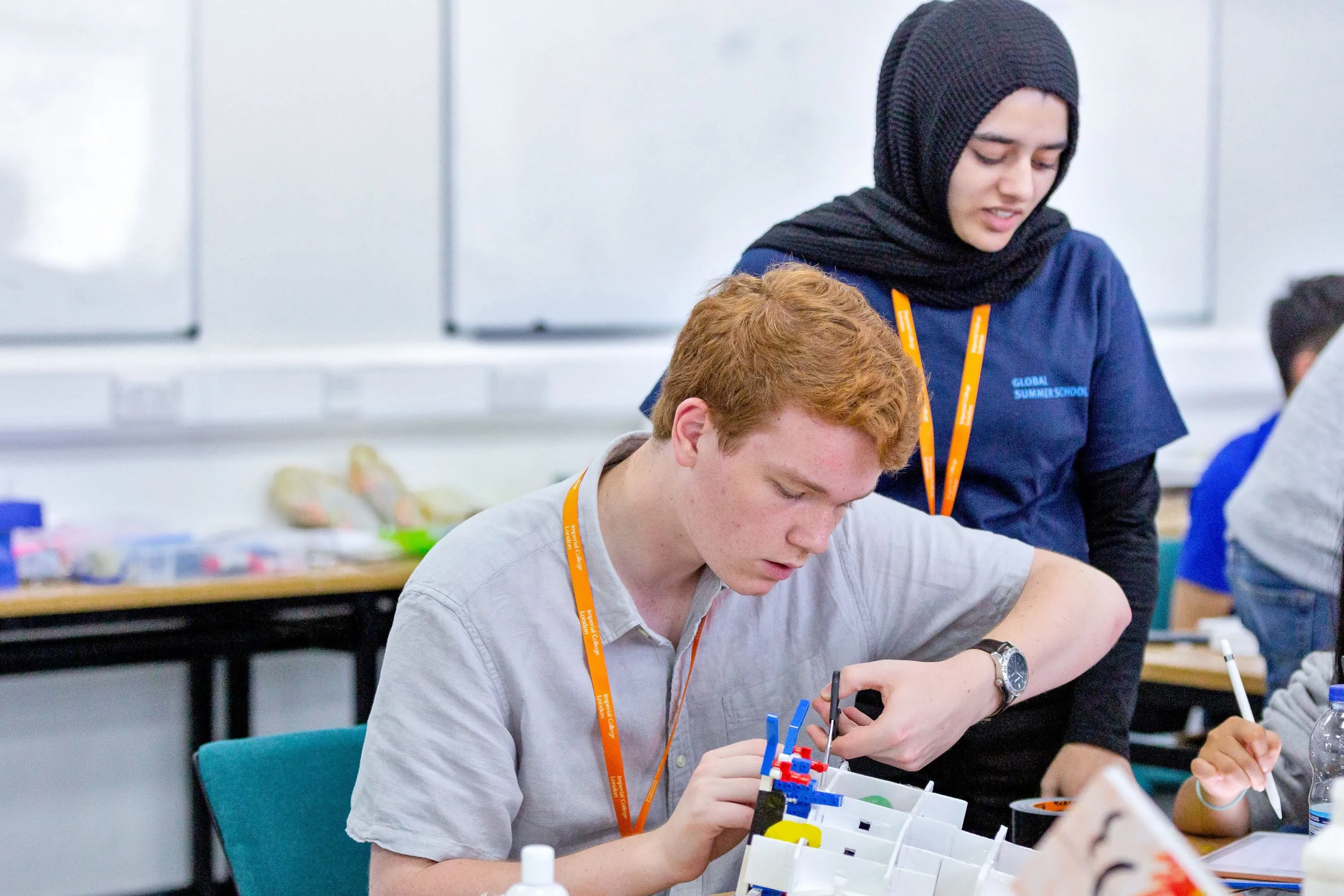
Imperial College London's Engineering Summer School is a two-week residential program on its South Kensington campus. In the first week you move through sessions run by different engineering departments, including aeronautical, chemical, civil, mechanical and design engineering, and build and test models along the way. In the second week you team up with students from Imperial's other summer subjects to develop an answer to a real-world challenge and pitch it to judges. You live in campus halls, and meals, evening activities and weekend trips are part of the package.
 Sean Stevens · Sources
Why it's worth it
Week one puts you inside Imperial's own engineering departments with the staff who teach and research there, and several sessions have you building or testing something, from a bridge model to a design loaded until it fails.
What it asks of you
The 2026 fee was £7,695 and Imperial offers no scholarships, bursaries or discounts, so the family pays it in full, along with travel and insurance. You also commit to living on campus for the full two weeks.
Who should skip it
Students who want two solid weeks of engineering, because week two is a mixed-subject entrepreneurship challenge built around pitching an idea to judges. If cost is the deciding factor and you live in the UK, Imperial points UK applicants to the free programs run by its Outreach team.
In Imperial's 2026 sample timetable, classes ran from 9:30 a.m. to about 4:30 p.m., with hour-long masterclasses on some afternoons and something planned almost every evening. Imperial calls the timetable indicative and says July and August can differ.
Week one was engineering. After arriving on Monday, you spent each day in one or two departments, usually a three-hour block in the morning and another in the afternoon, covering chemical, mechanical, civil, aeronautical and design engineering. Materials Science ran only in July and Earth Science and Engineering only in August. Everyone is placed in one of two streams on arrival, and both cover the same content.
Week two was the Innovation Challenge, with three days of project work alongside students from Imperial's other summer subjects, pitches on Thursday, a finale celebration that evening and departures by 1 p.m. on Friday.
Evenings and the middle weekend were social, with a Brighton day trip, a day exploring South Kensington's museums, a West End show (The Lion King in July, Wicked in August), bowling, a Thames boat party, a sightseeing bus tour and a talent show.
Each week-one session is taught by staff from the Imperial department that runs it. In 2026 the aeronautics session was led by Dr Ajit Panesar and Dr Paul Bruce, who head research groups in computational design and high-speed aerodynamics. Chemical Engineering had Dr Mehmet Mercangöz, Mechanical Engineering had Dr Linda Stringer and Dr Alexis Ihracska, and Materials had Dr Eleonora D'Elia.
Civil engineering was taught by research and teaching fellow Dr Sunday Popo-Ola in July and by Javier Sanchez Fernandez, a PhD student and graduate teaching assistant, in August. Staff for Design Engineering hadn't been confirmed, and Imperial hadn't yet described the Computing session. Week two is run by the Imperial Enterprise Lab, headed by Sarah Ranchev-Hale. We couldn't find class sizes or a staff-to-student ratio in Imperial's published material, so ask Imperial if that matters to you.
Imperial asks for mostly 9 to 7 (A* to A) grades at GCSE, the UK exams taken at about 16, or the international equivalent, with at least a 7 in math and the relevant sciences, and you list at least eight subjects. Predicted or recent class grades count if you haven't sat exams yet. You also need to be 16 before your session starts and not turn 18 before it ends.
English needs to be strong, and there are three ways to show it: English is your first language, you're taught in English for about half or more of your lessons, or you hold a qualification such as IELTS at the level Imperial sets for its own undergraduates.
Imperial scores applicants on age, English, academic record, the personal statement and the teacher's reference, then weighs the mix of nationalities and how applicants spread across subjects. It doesn't publish an acceptance rate, but it says an application that meets the criteria early in the window stands a strong chance. The parent or guardian reference isn't assessed, and UK-based students are as welcome as international ones.
The 2026 fee was £7,695 for the full two weeks, and Imperial hasn't yet published the 2027 fee. That single price covered tuition, lab materials and the masterclasses, along with your room in the Prince's Gardens hall and three meals a day. It also covered evening and weekend activities with their travel and tickets, the certificate and a meet-and-greet transfer at Heathrow on the first and last days. There's no cheaper option without accommodation, because everyone has to live on campus.
On top of that you pay for travel to London, travel and medical insurance (which Imperial strongly recommends), any visa costs, spending money, stationery, laundry and snacks between meals. Payment is in pounds sterling by debit or credit card, not American Express or bank transfer, and any currency conversion charges fall on the family.
The full fee is due within 14 days of an unconditional offer, a window that shrinks to seven days closer to the program, and Imperial may agree to a payment plan if your place is confirmed by mid-February. You can cancel within 14 days of confirmation, but after that the fee isn't refunded, and Imperial doesn't treat a refused visa as an exception.
Every student gets an academic, an enterprise and a pastoral mentor, all current Imperial undergraduates, and mentors supervise students at all times except when they're in their rooms. Pastoral mentors and managers live in the halls and provide support around the clock. All pastoral staff and mentors hold an enhanced DBS check (the UK criminal record check for working with young people), and a Designated Safeguarding Lead oversees safeguarding.
Halls
Prince's Gardens has swipe-card entry, CCTV and 24-hour staffed security, and you share a twin en-suite room with another student of the same sex.
Staying put
Students must live on campus for the whole two weeks and can't leave to visit family or friends, even ones in London.
Trips
Pastoral staff chaperone every social activity, all activities are risk-assessed, and there's a health and safety briefing at the start.
Needs
Accessible twin rooms, subject to availability, and a range of diets are available if you ask in advance.
You apply through Imperial's Aspire portal, and there's no closing date, because each subject closes once it's full. You can't change an application after submitting it, so double-check your referees' email addresses, because Imperial can't complete the references if either one is wrong.
Fill in the online form with your grades, English evidence, your session and a second-choice subject, and a 150-word personal statement on why you want to come and why you're suited to it.
Give your teacher's school email address so they can verify your grades and write a reference, plus your parent or guardian's details for a short supporting note.
Imperial reviews your application within 10 working days of receiving both references and may make a conditional offer.
Upload your passport, official grade documents and any English certificate within five days of that offer.
After a document check of up to five working days, you get an unconditional offer and confirm your place by signing the agreements and paying the full fee.

Sean
Talk it through with Sean
“I can help you compare the programs you're considering, think through the practicalities and work out what makes sense for you.”
In person in London, ages 15-18, from £3,745, multiple sessions.
Deadline: Not announced yet · From £3,745 · 15-18 · London · In-person
Wake Forest University in Winston-Salem, ages 14-18, from $3,500.
Deadline: Not announced yet · From $3,500 · 14-18 · Winston-Salem · In-person
Atlanta, 13 to 25 June 2027, ages 14-18, from $3,298.
21 Feb 2027 · From $3,298 · 14-18 · Atlanta · In-person
Save this program in Succeed to compare it with similar programs, dates, costs and formats in one place.
Compare with other programsimperial.ac.uk · Official page
imperial.ac.uk
imperial.ac.uk
imperial.ac.uk
imperial.ac.uk
imperial.ac.uk
imperial.ac.uk
Facts checked against the official page on 17 Nov 2026
Editor: Sean Stevens
Succeed has no commercial relationship with Imperial Global Summer School.
Spot an error? Report it