National Youth Science Forum NYSF Year 12 Program
by National Youth Science Forum
- 2027 program
The National Youth Science Forum's Year 12 Program brings students who are about to start Year 12 from across Australia onto a university campus for nine days in January. They live together, tour science and technology facilities, do hands-on lab sessions, visit university and industry sites and hear from working scientists. The 2027 program runs as two sessions, at the Australian National University in Canberra from 6 to 14 January 2027 and at the University of Queensland in Brisbane from 13 to 21 January 2027. Past participants come back as volunteer student staff to help run it.
 Sean Stevens · Sources
At a glance
Official facts · checked 24 Nov 2026- 2027: 6 to 14 January (Canberra, Australian National University), 13 to 21 January (Brisbane, University of Queensland)
- Current Year 11 students applying for the 2027 Year 12 Program. Australian citizen or resident, and/or studying full-time in an Australian high school
- 2027: $3,180
- In person, Canberra, Brisbane
- Length
- 9 days
- Included / budget separately
- Included: accommodation, meals (Included). Separately: application fee $70 (non-refundable), travel to and from the program (not included)
- Deposit and refunds
- The $70 application fee is non-refundable
- Financial aid
- Access and Equity Scholarships are a discount on the program fee, sized to each student's circumstances
- Apply by
- Not published
- Cohort and selectivity
- The NYSF Selection Panel reviews every application and selects on curiosity and motivation, not just academic results. No cohort size or acceptance rate is published
- Credit or certificate
- Not published
- Official page
- nysf.edu.au/program-year12
Should you apply?
SucceedWhy it's worth it
Selection rests on curiosity and motivation rather than marks alone, and scholarships take money off the fee according to need, so it's within reach of a curious student whose grades or family budget aren't the strongest.
What it asks of you
Nine days of the January holidays just before Year 12, and a fee that's a significant outlay unless a scholarship or Rotary funding helps.
Who should skip it
Students who want depth in a single field, because NYSF doesn't group participants by interest and everyone explores a wide range of STEM areas.
Your session isn't guaranteed
You give a preference for Canberra or Brisbane, but NYSF says capacity means it can't always honor it, so keep both sets of January dates free until you hear.
Who gets picked, and what does the application ask?
You apply during Year 11 for the program held the January before Year 12, and NYSF's Selection Panel reviews every application. NYSF selects on curiosity and motivation, not marks alone, and doesn't limit how many students can apply from one school or area. You need to be thinking about study, training or work in STEM or a STEM-related field, and to be an Australian citizen or resident or studying full-time at an Australian high school.
The academic question invites you to explain any extenuating circumstances, and the activities question asks you to mention work or caring duties that limit what you do outside school, so it pays to be open about anything that has shaped your record.
Motivation and value
Why you want to go, what you expect to get out of it and what you'd add for other participants.
Academic record
Your recent subjects and usual grades, plus your most recent school report (your Year 10 report if your Year 11 one isn't out yet).
Plans and activities
What you're thinking of doing after Year 12, even if you're unsure, and what you do outside school.
Interests and session
Your STEM areas of interest and whether you'd prefer Canberra or Brisbane.
Scholarship section
Optional, for students whose circumstances affect their ability to attend, with a letter of support from a responsible person outside your family.
What do the nine days really cost?
For 2027 the program fee is $3,180, and with the $70 application fee, which NYSF doesn't refund, the cost comes to $3,250 before travel. The program fee covers nine days of accommodation and meals, transport during the session and activities. Getting to and from Canberra or Brisbane is up to the family and costs extra, which matters most if you live far from both cities.
Access and Equity Scholarships take money off the program fee, sized to each student's circumstances, such as living in a remote or regional area, coming from a low socio-economic background or being Aboriginal or Torres Strait Islander. NYSF awarded $91,130 in scholarships in 2026 and says it supports more than 120 students each year. A scholarship can be combined with other funding, including from Rotary, NYSF's founding partner, and NYSF says many local Rotary clubs know the program and can fund students or help them fundraise. One 2025 participant had part of her cost covered by a scholarship and the rest by her local dairy.
Who runs the program day to day?
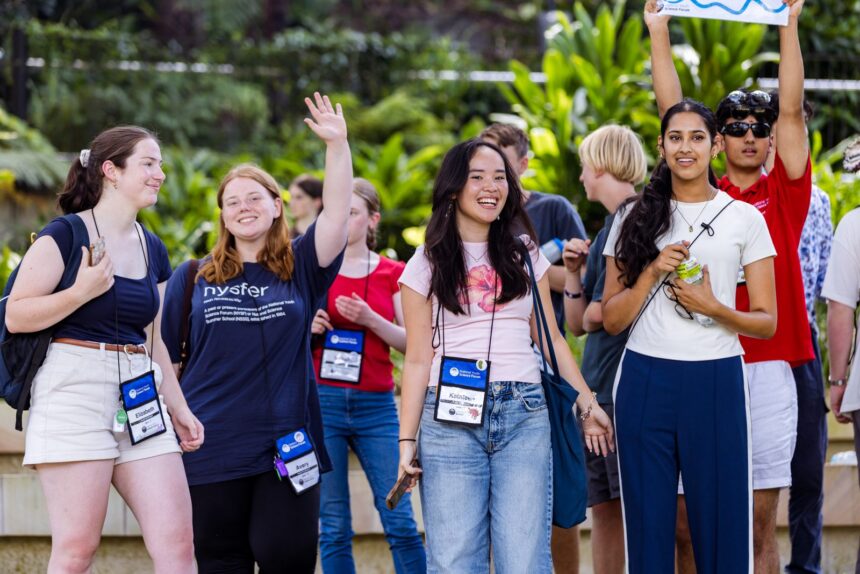
Young people who've been through the program themselves help run it. Selected past participants train through NYSF's Student Staff Leadership Program and come back the following January as volunteer Student Staff Leaders, known as Staffies. NYSF also appoints Chiefs of Staff from its alumni, and for the 2026 program they were students at the Australian National University and the University of Queensland.
The science content comes from talks by working scientists, hands-on lab and research sessions, and visits to university and industry sites. NYSF's published material doesn't name the 2027 presenters or give a staff-to-student ratio, so ask NYSF directly if either matters to you.
How are students kept safe on campus?
NYSF has written child safety rules, and its code of conduct binds participants as well as staff. Under its National Child Safety Policy, no staff member, volunteers included, can work without a valid Working with Children Check and police check. The code of conduct bars anyone from being alone with a child in connection with NYSF unless NYSF has authorized it and there's a legitimate reason relating to the child's safety and welfare.
Students agree to the code through a participant agreement, and NYSF sends it to parents before the program. Under-18s can't drink alcohol at any stage. Vaping, tobacco, prohibited substances and weapons are banned, and participants may not drive at in-person events or ride with a driver NYSF hasn't authorized. Families can raise a concern by emailing nysf@nysf.edu.au or calling the NYSF duty phone during events, and misconduct can get a participant removed from the program.
What do you take away from it?
You mostly leave with direction and contacts rather than a credential. The program is built around exploring university and STEM career pathways and building a national peer network, and NYSF doesn't describe a certificate or academic credit, so don't count on one for applications.
In 2025 a conversation with a Staffie pointed participant Lucy Tydd toward occupational therapy, and a year later she was back as a Staffie herself. That route is open only to selected Year 12 Program participants, who apply for the Student Staff Leadership Program and, if chosen, take on a volunteer leadership role the following January.

Sean
Talk it through with Sean
Want to talk it through?
“I can help you compare the programs you're considering, think through the practicalities and work out what makes sense for you.”
What should you do next?
Frequently asked questions
Sources
- Year 12 Program – NYSF
nysf.edu.au · Official page
- Student Staff Leadership Program (SSLP) – NYSF
nysf.edu.au
- Policies – NYSF
nysf.edu.au
- Access & Equity Scholarships – NYSF
nysf.edu.au
- How to apply – NYSF
nysf.edu.au
- NYSF National Child Safety Policy and Procedure (PDF)
nysf.edu.au
- Terms & conditions – NYSF
nysf.edu.au
- Codes of Conduct Policy & Procedures (PDF)
nysf.edu.au