
Medicine
Deadline: Not announced yet
From $4,995
16-18
Barcelona
In-person
by Northeastern University Pre-College Programs
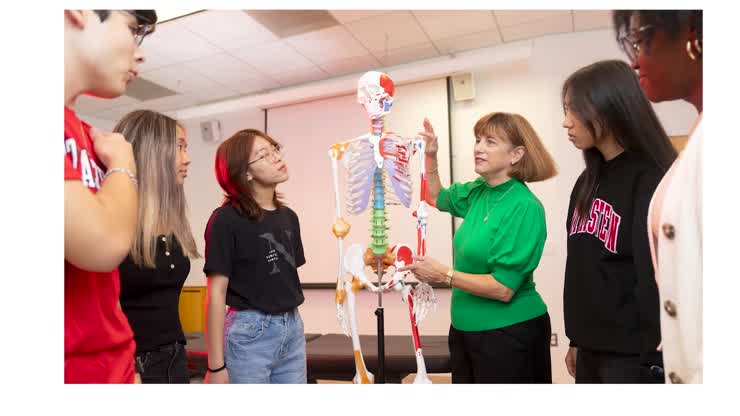
Innovations in Health Professions is a two-week residential program on Northeastern University's Boston campus where rising high school juniors and seniors try a different health career almost every day, including physician assistant, speech-language pathology, pharmacy, nursing and public health. Along the way you may work through medical simulations, practice clinical skills and complete advanced CPR certification and a Stop the Bleed program, and the sample schedule includes field trips such as a visit to an ambulance dispatch center. You live in a campus residence hall, and the 2027 session runs from 11 to 23 July.
 Sean Stevens · Sources
Get the key facts by email
The dates, costs and how to apply, then 2 reminders: 1 Mar (2 weeks before) and 12 Mar (3 days before).
Succeed's assessment
In short
Why it's worth it
You get hands-on time in Northeastern's Goldstein Simulation Center, its labs and on field trips with faculty from several health fields, and the sample schedule even includes a physical therapy cadaver lab. That's a good deal more than a lecture series about careers.
What it asks of you
You'll spend twelve days living on campus in Boston, with full weekdays of classes and some group work after hours. The cost is $6,995 before any aid, plus travel if you live farther away.
Who should skip it
Students already set on one profession, because most fields get a single morning or afternoon in the sample schedule. You'll get a taste of each one but no real chance to go deep in any of them.
Weekdays run from about 9:00 a.m. to 4:30 p.m., usually as a morning block and an afternoon block with lunch in between, and each block tends to cover a different profession. In Northeastern's sample schedule, the first week opens on Monday with orientation and bloodborne pathogen training. It then moves through physician assistant lab rotations and pharmacy activities on Tuesday, a full day of advanced CPR training on Wednesday, audiology and health psychology on Thursday, and an all-day Extreme Medicine field trip on Friday.
The second week adds a simulation lab and exercise science rotation, nursing activities, a physical therapy cadaver lab and a session on responsible AI in healthcare. There are also trips to an ambulance dispatch center and the MGH Museum of Medical History and Innovation before move-out on the final Friday. Evenings after dinner and the middle weekend are optional social time. Northeastern also says to expect some work outside class, usually group projects with other students. The schedule is only a sample and can change.
You leave with a Recognition of Completion signed by a faculty member, but no college credit or transcript. Northeastern also says students may complete an advanced CPR certification and a Stop the Bleed program, which are practical skills you can list on later applications. Northeastern doesn't say the program counts toward admission to the university itself, so it's best treated as a way to test which health career suits you, not as a head start on college.
You need to be a rising high school junior or senior by the time the program starts. International students are welcome to apply and are considered for need-based aid, but Northeastern doesn't sponsor student visas for non-credit programs like this one, so you'd need to be able to get to Boston and attend without one. You're also expected to live in the residence hall, and Northeastern may allow commuting only as an exception for extreme medical or personal reasons.
Northeastern reviews applications the same way its undergraduate admissions office does, weighing academics, activities and everything else equally. It publishes no acceptance rate, although it says its programs typically have 15 to 30 students.
Everything goes through Northeastern's residential and commuter admissions page, where the online application opens in early December 2026.
Submit the online application with an unofficial high school transcript or report cards and a personal statement of up to 250 words on why the subject excites you, why you want to enroll and what you hope to gain.
You can also name a teacher or counselor as a reference, though it's optional. Answer the financial aid questions in the same application if you'd like to be considered for aid.
Apply by one of three deadlines, all at 11:59 p.m. Eastern Time: priority on 15 January 2027, regular on 28 February 2027 or late on 15 March 2027. Northeastern may close this program after the priority round if interest is very high.
Expect your decision by email in early February, mid-March or early April, depending on your round, with any aid award included.
Pay the non-refundable deposit of 20% of tuition, after any aid or discounts, by 18 February, 1 April or 15 April 2027, depending on your round. Pay it as soon as you can, because Northeastern admits more students than it has places, fills them in the order deposits arrive and says programs typically fill before the deposit deadline.
Pay the rest of the tuition by 1 May 2027 at 11:59 p.m. Eastern Time.
The 2027 price is $6,995. That one figure covers tuition, course materials, your room in a campus residence hall, meals and social activities. Travel to and from Boston isn't on that list, so budget for it separately. You'll also need health or travel health insurance that covers you in Boston for the whole program, and most Northeastern programs require a personal laptop.
Every admitted student is considered for need-based aid, which usually comes as a scholarship or a discount on the program fee, not cash. You ask for it in the application by giving your family's adjusted gross income from the latest federal tax return and the number of dependents, with space to explain anything else, and the award arrives with your admission decision.
Northeastern has no formal payment plan, but it asks families who need more time for the final payment to email the team. Families have used 529 college savings plans to pay in the past, subject to the plan provider's rules. Some high schools and community organizations that partner with Northeastern also sponsor students.
Student Life staff, both professionals and current Northeastern students, live in the residence hall with participants. Proctors staff the building entrance around the clock, and everyone has to be inside by 10:00 p.m. each night. You'll usually share a room with a roommate and a bathroom with suitemates, and you can request a roommate.
On off-campus social outings, students may explore a set area on their own, with a meeting point and time set by staff, who encourage everyone to pair up with another participant. Leaving campus alone takes a leave request from a parent or guardian. Allergies and dietary needs go on the program form, and Northeastern asks families to email before enrolling to discuss academic, disability, religious or other accommodations.

Sean
Founder, Succeed
Talk it through with Sean
“I can help you compare the programs you're considering, think through the practicalities and work out what makes sense for you.”
20 minutes · No obligation to enroll
Save this program in Succeed to compare it with similar programs, dates, costs and formats in one place.
Compare with other programsprecollegeprograms.northeastern.edu · Official page
precollegeprograms.northeastern.edu
precollegeprograms.northeastern.edu
precollegeprograms.northeastern.edu
precollegeprograms.northeastern.edu
admissions.northeastern.edu
precollegeprograms.northeastern.edu
precollegeprograms.northeastern.edu
Not ready to decide yet? Keep it for later.