
NYU Tisch Special Programs Drama Summer High School Program
- 2027 program
A four-week residential drama program at NYU's Tisch School of the Arts in New York City, where you train in one of six studios: Atlantic, Experimental Theatre Wing, Meisner, the New Studio's musical theater program, Stonestreet screen acting, or production and design. You spend 28 hours a week in studio classes and take a weekly seminar on New York theater. The group sees four shows together, and the program ends with an open-class day for family and friends. It carries 6 letter-graded NYU credits, and you live in NYU housing for the whole program.

At a glance
Official facts · checked 12 Nov 2026- DatesOfficial
- 2027: 11 July to 7 August
- Who can applyOfficial
- Current high school sophomores and juniors at the time of application. At least 15 years old. Preference given to current high school juniors. Non-US citizens and residents need a US student visa and a valid passport
- Total costOfficial
- 2027: $15,963
- Format and placeOfficial
- In person, New York City
- Length
- 4 weeks
- Included / budget separately
- Included: accommodation, meals (10-meals-a-week plan included (mandatory minimum)). Separately: application fee $75 (non-refundable, need-based waivers available), International student fee $115 (international students only), NYU comprehensive health insurance $392 for one month (international students, 2026 rate), Residence hall cleaning fine of at least $150 if a room is left with belongings or trash
- Deposit and refunds
- Deposit $1,500. The $1,500 confirmation deposit is never refunded
- Financial aid
- Tisch offers a limited number of need-based scholarships, given to students who show the most financial need
- Apply by
- 2027: 1 December 2026 (Application and Supplemental Profile Form), 11 December 2026 (Scholarship application), 19 February (Confirmation deposit)
- Cohort and selectivity
- Tisch receives more than 800 applications across its Summer High School tracks and accepts about 146 drama students across six studios: roughly 32 Atlantic, 16 Experimental Theatre Wing, 16 Meisner, 36 New Studio, 14 Production and Design and 32 Stonestreet. Over 800 applications (all Tisch Summer High School tracks)
- Credit or certificate
- 6 transferable NYU college credits with a letter grade
Get the key facts by email
The dates, costs and how to apply, then 2 reminders: 5 Feb (2 weeks before) and 16 Feb (3 days before).
Succeed's assessment
Should you apply?
SucceedIn short
Why it's worth it
You get a condensed version of the studio training Tisch gives its BFA students, from the same faculty, plus a weekly look at how New York theater works through the shows you see and the professionals who come to talk.
What it asks of you
Full weekdays in the studio, evening events you can't skip, and four weeks living in NYU housing under a nightly curfew, even if your family lives in the city.
Who should skip it
Students who aren't sure yet which approach suits them, since you apply to one studio and spend all your training hours there. Families who couldn't go without help should also be realistic, because Tisch's scholarships are limited, go to the applicants with the greatest need and are open only to dependents of US federal tax filers.
Which studio would you train in?
You train in the one studio you pick when you apply, taught by its own faculty, who Tisch says also teach its BFA students. Each studio has its own method, and Tisch gives a rough number of students it accepts to each.
Everyone also takes the Introduction to New York Theatre seminar, taught by NYU faculty, where working actors, directors, designers and stage managers come in to talk about their careers.
Atlantic Acting School (about 32 places)
Practical Aesthetics, the approach to acting developed by Atlantic's founders, David Mamet and William H. Macy, with script analysis, scene study, Shakespeare, on-camera work, song and choreography, and audition technique with a professional casting director.
Experimental Theatre Wing (about 16)
Physically based acting that combines Grotowski and Stanislavski, with Viewpoints, contact improvisation, hip-hop, vocal work and self-scripting classes where you create original pieces.
Meisner Studio (about 16)
Classes in acting, movement, voice and speech, and clown, built on Sanford Meisner's technique.
New Studio on Broadway (about 36)
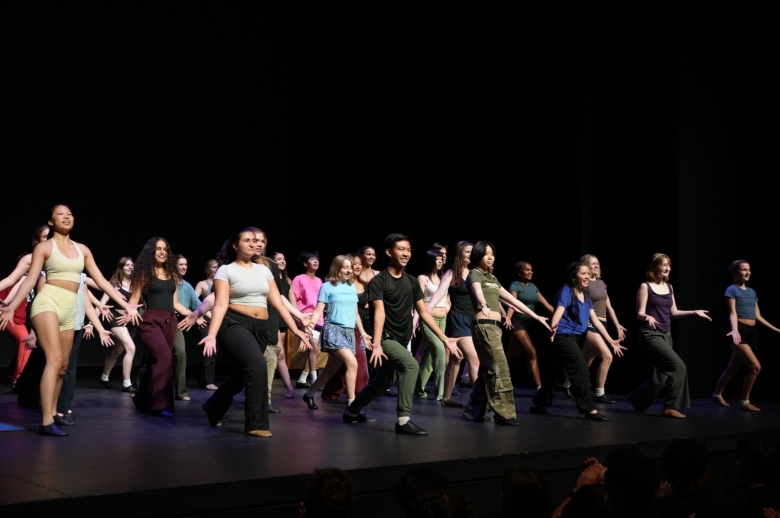
Musical theater training in acting, vocal performance, ensemble singing, physical acting and dance, including ballet, Broadway styles, contemporary and tap.
Stonestreet Screen Acting Workshop (about 32)
Screen acting in a 6,000-square-foot film and TV studio, covering multi-camera work, sitcoms, commercials, voice-overs and auditions.
Production and Design Workshop (about 14)
For students aiming at design, technical, management and other production careers rather than performing.
What does a week in the studio look like?
You're in your studio from 10:00 a.m. to 1:00 p.m. and again from 2:30 to 5:30 p.m. Monday to Friday, which Tisch counts as 28 hours of training a week. On Thursdays the afternoon studio ends at 4:00 so you can attend the New York Theatre seminar from 4:30 to 5:45. Any weekday evening from 7:00 to 10:00 may hold a curricular event, and these are mandatory.
Weekends and spare evenings go on rehearsal, homework and exploring the city, and over the four weeks you'll see four shows as a group. In 2025 these were Buena Vista Social Club, Dead Outlaw and Operation Mincemeat on Broadway and Dilaria Off-Broadway. The seminar asks for short reports on the guest speakers and a longer essay on one of the shows. Tisch publishes this as a sample week, and you get your exact studio timetable on orientation day.
Who gets in, and what does the application ask for?
You can apply if you're at least 15 and a high school sophomore or junior when you submit, with at least a 3.0 cumulative GPA on a 4.0 unweighted scale. Tisch gives preference to juniors and doesn't take freshmen or seniors for this program. There's no audition or portfolio, so your written answers, résumé, grades and recommendations carry the decision.
Tisch receives more than 800 applications across all its summer high school tracks and admits about 146 drama students across the six studios, but it doesn't say how many of those applications are for drama. Students who aren't US citizens or residents need a valid passport and, if accepted, a US student visa.
Written responses
Three answers of up to 250 words each, plus any studio-specific prompts.
Creative résumé
Your training, awards, projects, community service and work, with optional links to performance videos.
Transcript
A PDF covering every year of high school, or a coursework document emailed by your parent if you're homeschooled.
Two recommendations
At least one has to come from a high school representative, and the other can be another school representative or a community group leader, mentor or coach.
English proficiency
A test score if English isn't your native language, unless you've completed three or more consecutive years of full-time schooling taught only in English.
Supplemental Profile Form and $75 fee
Both are required. If the fee is a hardship, you can ask Tisch to waive it by emailing an explanation.
What does the summer really cost?
Tisch's charges for summer 2027 add up to $15,963. That's $12,552 in tuition for the 6 credits, plus a $200 program fee for residential activities, $1,876 for four weeks of housing, $852 for the plan of 10 meals a week and a $483 drama ticket fee. Housing and the meal plan come with every place, and you can add meals but can't go below 10 a week.
You'll also need to budget for the $75 application fee, travel to and from New York, laundry, your own bedding and towels, and spending money, since NYU says tuition and fees don't cover personal expenses. Domestic students need their own health insurance. International students pay NYU's $115 international student fee and are automatically enrolled in NYU health insurance, which cost $392 for the month in 2026. They also pay US government visa fees, which are worth checking with the official source.
A $1,500 deposit confirms your place and counts toward the bill, but you won't get it back if you cancel. If you cancel by email no later than four days after classes start, Tisch refunds the rest of your tuition and fees, although NYU Housing may charge its own cancellation fees.
Scholarships are limited and need-based, and they generally cover tuition, fees, housing and meals. Only students whose parent or guardian files US federal tax returns can apply, and the scholarship application is due 11 December 2026.
What do the credits actually give you?
You leave with 6 NYU college credits, 4 for your studio and 2 for the New York Theatre seminar, each graded A to F. Tisch says they count toward its BFA in Drama, and if you later enroll at NYU as an undergraduate they're applied to your degree automatically, with the grade going into your NYU GPA. Whether another college accepts them, or lets them replace a required class, is that college's decision. Grades are posted by September, but transcripts aren't sent automatically, so you request one from the NYU Registrar when you need it.
How are students looked after in New York?
Residential students must be back in their hall by 11:00 p.m. every night, when they hand in their NYU ID at the front desk. They have to be in their rooms for quiet hours from 1:00 a.m. and can't leave the hall before 7:00 a.m. Each floor has its own Program Assistant, an NYU college student, and a team of professional staff runs each hall. NYU's rules are set out in the NYU High School Programs Handbook, which NYU asks families to read and talk through together.
Rooms
Double rooms in four-person suites that share a bathroom, assigned at random with no roommate requests.
Guests and leave
No visitors in the hall, family included, except on move-in and move-out days, and no overnight or weekend leave unless your emergency contact requests it for extenuating circumstances at least 2 business days ahead.
Open campus
Staff go with students on program events, but you can leave campus on your own in free time, so NYU suggests agreeing on boundaries as a family. NYU Campus Safety officers are on duty 24 hours a day.
Health care
The NYU Student Health Center handles urgent concerns but has no pediatricians, so minors may be referred to an outside urgent care clinic or hospital. Students manage their own medication.
Conduct
Alcohol and drugs carry a zero-tolerance policy, and dismissal means no refund.

Sean
Founder, Succeed
Talk it through with Sean
Want to talk it through?
“I can help you compare the programs you're considering, think through the practicalities and work out what makes sense for you.”
20 minutes · No obligation to enroll
What should you do next?
Frequently asked questions
Sources
- tisch.nyu.edu/special-programs/high-school-programs/drama.html
Official page
- High School Programs Handbook
nyu.edu
- Tisch Summer High School Program Admitted Student Information
tisch.nyu.edu
- Cancellation Policy
tisch.nyu.edu
- Tisch Summer High School Application FAQ
tisch.nyu.edu
- Admissions Calendar
tisch.nyu.edu
- Summer High School Application Requirements
tisch.nyu.edu
- Tuition and Scholarships
tisch.nyu.edu
Not ready to decide yet? Keep it for later.