In person in Cambridge, ages 13 to 18, from £5,995
Deadline: Not announced yet · From £5,995 · 13-18 · Cambridge · In-person
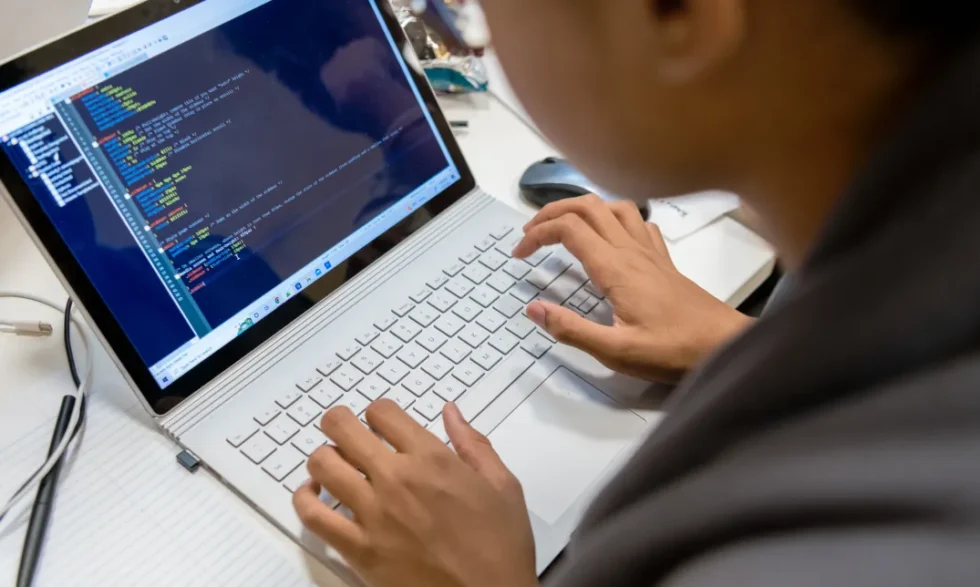
A live online coding course for 15- to 18-year-olds, taught on Zoom by Oxford Scholastica in classes of up to 15. Over two weeks you learn HTML, CSS, Python and JavaScript, build your own website and computer game, and finish with a presentation on AI and a debate about the future of computing. The one-week version covers only the first five classes, from computing history and algorithms to building a website.
 Sean Stevens · Sources
Why it's worth it
Classes are capped at 15, the named tutor works as a software developer, and half of the ten classes end with a coding task of your own, so by the end of two weeks you've built a website and a computer game.
What it asks of you
It takes about four hours every weekday at a fixed UK time, which can mean an early start or a late evening outside Europe. Missing compulsory sessions can cost you the certificate, so keep those weeks clear.
Who should skip it
Anyone who already writes Python or JavaScript, because each language gets a single introductory class.
The one-week catch
The one-week option stops after the web development class, so Python, JavaScript, the game project and the AI class all happen in week two. If those are why you're interested, book two weeks.
Each weekday brings one two-hour live class from 1 to 3 p.m. UK time, plus about two hours of independent study or group work, so Oxford Scholastica says to plan on roughly four hours a day. The ten classes move from computing history and algorithms toward hands-on coding, with something to build or research after almost every session.
| Week | Class | Topic | Independent work |
|---|---|---|---|
| 1 | 1 | Orientation and the history of computing | Research an important moment in computing to share next session |
| 1 | 2 | Regular expressions (Coding 101) | Make your own cheat sheet |
| 1 | 3 | Complexity analysis: comparing algorithm speeds | Research an algorithm widely used in software development |
| 1 | 4 | Introduction to HTML | Complete an HTML task set by the tutor |
| 1 | 5 | Web development with HTML and CSS | Build a website in HTML or CSS |
| 2 | 6 | Introduction to Python | Complete a Python task set by the tutor |
| 2 | 7 | Introduction to JavaScript | Complete a JavaScript task set by the tutor |
| 2 | 8 | Making games | Code a computer game in Python or JavaScript |
| 2 | 9 | Artificial intelligence, including the basics behind ChatGPT | Research an area of AI set by the tutor |
| 2 | 10 | The future of computing | Group presentations and a class debate |
Classes run live on Zoom, not pre-recorded, with at most 15 students, and the time is the same for everyone, 1 to 3 p.m. UK time, so check what that means where you live before you pick dates. Oxford Scholastica describes its online courses as project-based: you discuss ideas in class, apply them in coding tasks, then present your work and get feedback from your tutor and classmates.
The fee also covers four hours of masterclasses, which are skills workshops on topics such as critical thinking, public speaking and the future of AI, and there's a weekly video social where you meet students from other courses over games and quizzes. All you need is a computer with a stable internet connection and a webcam, ideally in a quiet room.
Sessions may be recorded
Oxford Scholastica's terms let it record online sessions and make recordings public, and a student who doesn't agree has to keep the camera off while recording is on.
Some reading comes first
A preparatory reading list arrives before the course starts, which helps if you've never seen code before.
The tutor Oxford Scholastica names for this course is Daniel Timms, a Cambridge mathematics graduate who now works as a software developer and STEM tutor. He previously built large-scale C++ applications and natural language processing systems at Hewlett Packard Enterprise, and he mainly works in Python. Oxford Scholastica notes that its tutors may change, so the person teaching your dates isn't guaranteed, although it says its tutors are subject experts from institutions including Oxford and Cambridge.
The course is for 15- to 18-year-olds, and you don't need any coding experience, because Oxford Scholastica sets no academic prerequisites. What it looks for is motivation, which you show in a personal statement on the registration form, and its admissions panel reads each one before deciding whether to accept you.
You also need strong English, at Common European Framework level C1, which Oxford Scholastica equates to IELTS 6.5. There's no formal test, and you can arrange a call if you're unsure of your level. Take this seriously, because the terms allow Oxford Scholastica to remove a student whose English it judges below that level without a refund. It doesn't publish how many students apply or how many it accepts.
Everyone who completes the course receives an Oxford Scholastica Academy Certificate of Achievement at an online graduation event, and you keep the projects you built, a website in week one and, on the two-week course, a computer game in week two. To graduate you have to attend every compulsory session and hand in all the work your tutor sets.
The Letter of Recommendation isn't automatic. Oxford Scholastica gives it only to students who meet its criteria, at its discretion, and it comes from your tutor at a private academy, not from a university. The certificate isn't academic credit either. Graduates can also apply for the one-year Ambassador Programme, which runs monthly virtual sessions on networking, communication and leadership.
The 2027 fee is £595 for one week or £995 for two, paid in pounds sterling, and it covers all live teaching, the masterclasses, personalized feedback, the graduation, the certificate and the Ambassador Programme invitation. Because the course is online, there's no travel or accommodation to pay for, but any bank charges or exchange-rate losses on the payment are the family's to cover, and your place is confirmed only once you've paid in full.
The refund window is short. If you cancel in writing within 14 days of paying and before the course starts, you get the fee back minus any bank or card charges. After that the fee isn't refunded for any reason, including illness, and it can't be carried over to another year or transferred to another student. Oxford Scholastica doesn't offer full-course scholarships, and its free OxBright Scholars program is open only to students nominated by partner charities such as IntoUniversity and The Access Project.
In person in Cambridge, ages 13 to 18, from £5,995
Deadline: Not announced yet · From £5,995 · 13-18 · Cambridge · In-person
Free, in person in Pittsburgh, 26 June to 24 July 2027, ages 16+
01 Feb 2027 · Free · 16+ · Pittsburgh · In-person
Online research program, ages 14 to 18, from $12,500
21 Nov 2026 · From $12,500 · 14-18 · Online · Online
Save this program in Succeed to compare it with similar programs, dates, costs and formats in one place.
Compare with other programsoxfordscholastica.com · Official page
oxfordscholastica.com
oxfordscholastica.com
oxfordscholastica.com
oxfordscholastica.com
oxfordscholastica.com
oxfordscholastica.com
oxfordscholastica.com
Facts checked against the official page on 10 Nov 2026
Editor: Sean Stevens
Succeed has no commercial relationship with Oxford Scholastica Academy.
Spot an error? Report it