
Biotechnology High School Course
Applications open
In person in Berkeley, ages 14 to 18, from $3,298.
21 Feb 2027 · From $3,298 · 14-18 · Berkeley · In-person
Oxford Scholastica's Online Summer Medicine Course runs on Zoom for one or two weeks, with a two-hour live class each afternoon UK time for students aged 15 to 18. Each class covers one area of medicine, from the heart and lungs to emergency care and medical ethics, and mixes teaching with practice in skills such as taking a patient history and reading X-rays. Two-week students finish with a group patient interview and diagnosis, and everyone who completes the course graduates at an online ceremony.
Why it's worth it
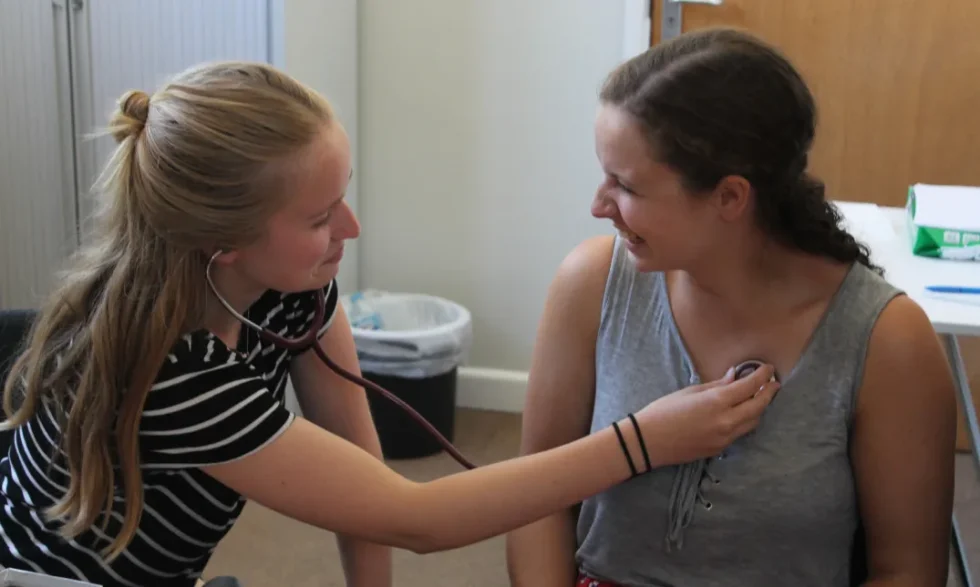
It packs a lot of clinical practice into a Zoom course: taking a patient history, examining the nervous system and abdomen, reading X-rays, and a closing patient interview where the group agrees on a diagnosis. The one-week option stops before the nervous system and abdominal examinations, the X-rays and the patient interview, so most of the value is in the two-week course.
What it asks of you
Plan on about four hours a day, two of them live at a fixed afternoon slot UK time and the rest spent on assignments or group work. The live slot doesn't move for your time zone, so check where it falls for you before picking dates.
Who should skip it
Students who want to investigate a question of their own, since the course follows a set syllabus and its research task is a presentation to classmates on a developing topic.
Each day's two-hour class covers one area of medicine, following the 10-class syllabus Oxford Scholastica publishes for the course. The one-week course ends after the fifth class, on medical ethics, so it leaves out the brain, emergency medicine, abdominal medicine, the future of medicine and the final patient interview.
Week one
An introduction to medical terminology, the NHS (the UK's National Health Service) and current issues such as dementia and cancer, followed by classes on the heart and circulation, surgery and clinical skills, the lungs, and a debate on medical ethics.
Clinical skills
The surgery class covers how injections are given, examining the retina, working out medicine doses and testing urine, and you write a patient leaflet on one of the illnesses discussed.
Week two
Mental illness and the nervous system, including management plans and assessing cognitive function, then emergency medicine with CPR and X-rays, examining the abdomen, and the future of medicine in the age of artificial intelligence.
Presentations
From the first class you prepare a talk on a condition that interests you, which you give in class five, and in class nine you research a developing topic and present it to the group.
Patient interview
The last class has you take a patient's medical history, ask questions sensitively and work with the group toward one agreed diagnosis.
Every class runs live on Zoom from 1 to 3 p.m. UK time, which is 8 to 10 a.m. on the US East Coast and 8 to 10 p.m. in Singapore or Hong Kong. Outside the live class you work on independent assignments or with your group, and your tutor gives you personalized feedback. You also get a reading list before you start, Masterclass sessions on skills such as critical thinking and public speaking, and a weekly video social with students on other courses. All you need is a computer with a stable internet connection and a webcam, ideally in a quiet room.
Oxford Scholastica's terms say online sessions may be recorded and shared publicly, and a student who doesn't agree has to keep the camera off during recording.
The tutor Oxford Scholastica features for this course is Dr Rory Maples. He's a practicing doctor specializing in general surgery at the John Radcliffe Hospital in Oxford, he's studying for a master's in digital health at Lincoln College, Oxford, and he has taught medical students in Australia and Oxford. Tutors can change, though, and Oxford Scholastica also lists Dr Kathryn Woodward as a medicine tutor. She's a Rhodes Scholar and doctoral candidate in primary health care at Oxford who also lectures at Griffith University. Classes are capped at 15 students, so you'll have real time with whoever teaches yours.
Motivation matters more than background, because Oxford Scholastica sets no academic requirements and you don't need to have studied medicine before. Its admissions panel reads a personal statement you write on the registration form, so use it to say what draws you to medicine and what you want from the course.
Your English needs to be at Common European Framework Level C1, which Oxford Scholastica equates to an IELTS (International English Language Testing System) score of 6.5. No test is required, and you can arrange a call to check your level if you're unsure.
Two weeks cost £995 and one week costs £595, which covers the live classes, Masterclasses, the reading list, your tutor's feedback and the graduation with its certificate. Two weeks gives you 20 hours of live teaching. Oxford Scholastica charges in pounds sterling, so any bank charges or exchange-rate differences fall on you. Your place is only confirmed once the full fee is paid, and that's due within 7 days of the invoice.
Refunds are tight. If you cancel in writing within 14 days of paying, before the course starts, you get the fee back minus any bank charges, card fees or exchange losses. After that the fee isn't refunded, even if you're ill, and it can't be carried over to another year or passed to another student. Oxford Scholastica advises taking out insurance to cover illness, and if you're booking months ahead, settle your summer plans before you pay.
Finish the course and you receive an Oxford Scholastica Academy Certificate of Achievement at an online graduation that family can join, and you're sent a recording afterward. Graduating depends on attending every compulsory session and handing in the work your tutor sets.
The Letter of Recommendation from your tutor isn't automatic. Oxford Scholastica gives it to students who meet its criteria, and it describes your strengths and participation. Neither the letter nor the certificate is academic credit, so treat them as evidence of your interest in medicine rather than a qualification. Graduates can also apply for the one-year Ambassador Programme, which runs monthly virtual sessions on networking, communication and leadership.
In person in Berkeley, ages 14 to 18, from $3,298.
21 Feb 2027 · From $3,298 · 14-18 · Berkeley · In-person
In person in Sydney, ages 15 to 18, 11 to 24 July 2027, from £4,995.
Deadline: Not announced yet · From £4,995 · 15-18 · Sydney · In-person
Save this program in Succeed to compare it with similar programs, dates, costs and formats in one place.
Compare with other programsoxfordscholastica.com · Official page
oxfordscholastica.com
oxfordscholastica.com
oxfordscholastica.com
oxfordscholastica.com
oxfordscholastica.com
oxfordscholastica.com
oxfordscholastica.com
Facts checked against the official page on 10 Nov 2026
Editor: Ben Stacy
Succeed has no commercial relationship with Oxford Scholastica Academy.
Spot an error? Report it