
Science
Deadline: Not announced yet
From £6,995
14-18
Cambridge
In-person
by Penn Arts and Sciences High School Programs
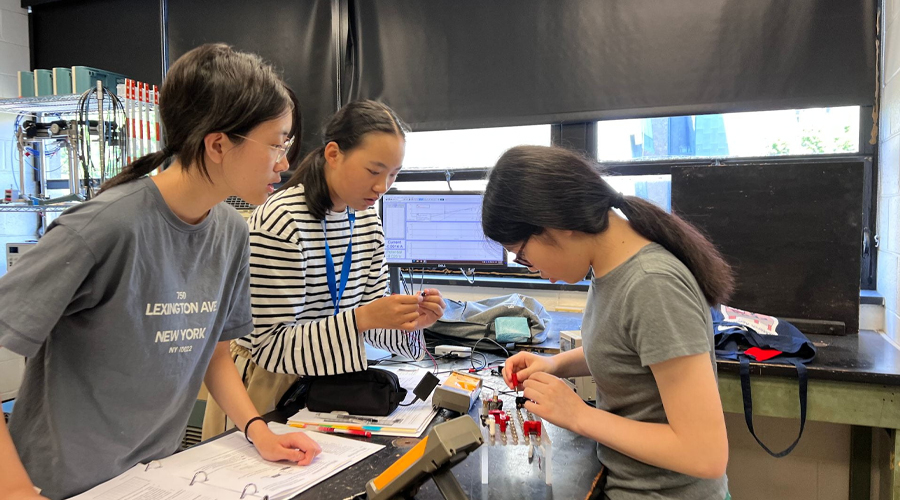
The Experimental Physics Research Academy is a three-week residential summer program at the University of Pennsylvania in Philadelphia for students in grades 9 to 11. Most days combine lectures and lab work. The first week covers mechanics, optics and electricity, the second moves on to relativity and modern physics, and Penn faculty give talks on their own research throughout. In the final week you join a week-long project in a specialized area of physics, which ends in a poster session and presentations.
 Sean Stevens · Sources
Get the key facts by email
The dates, costs and how to apply, all in one place.
Succeed's assessment
In short
Why it's worth it
The academy has run since 1998, and its core staff work in Penn's physics department. Most days include lab work as well as lectures, Penn professors talk about their own research several times a week, and the focus is on understanding physics rather than test prep or getting ahead on credit.
What it asks of you
You'll spend three weeks living on campus, with full days of class on weekdays, and Penn doesn't let residential students hold a job, do an internship or join another program while it runs.
Who should skip it
Students who want college credit, a transcript or a long research project of their own. The academy is non-credit, and its research is a single week-long project at the end.
Weekday classes ran from 9 am to about 4:30 pm in 2026, with an hour for lunch at 12:30 pm. A typical day has two or three lectures, one or two lab activities and some open time to get help or keep talking with instructors. In the first week of 2026, that meant topics like Newton's laws, kinematics and electricity alongside labs on motion, dynamics and Ohm's law.
The 2026 research talks included James Aguirre on balloon telescopes, Evelyn Thomson on high energy physics, Gary Bernstein on minor planets and Jonathan Heckman on string theory. The Fridays of the first two weeks were day trips, to the Ringing Rocks Roller Rink and Park and to Dorney Park, and week two also had a field day.
Week three was built around the projects. Afternoons from 1:30 to 4:30 pm went to interest group projects, mornings included lab tours and a graduate student panel, and the week finished with a poster session at Houston Hall on Thursday 30 July, followed by interest group presentations and closing ceremonies the next day. On a few evenings there were meetings from 6:30 to 8:30 pm, including a movie night in week two and sessions on nuclear physics and science in democracy in week three. Outside class you can use the residence hall lounges, dining halls, libraries and the gym if you're 15 or older, and residential staff plan things like trivia nights and weekend outings.
The core team is made up of Penn physics department staff, experienced school physics teachers and Penn graduate students, while Penn professors give the research talks. Director Peter Harnish designs and runs the department's first- and second-year physics labs. Head instructor Dr. Ryan Batkie holds a doctorate in science education and has taught physics since 2007, and coordinator Mary Marcopul, the department's lecture demonstration coordinator and a former physics teacher, has been with the academy since 2004.
Instructor Niral Desai teaches high school physics and was a student in the academy himself in 2010. A teaching fellow, a lab assistant and several adjunct instructors complete the team, and the adjuncts include Penn PhD students such as Mattie Denison, who studies dark matter models, and Jillian Paulin, who works on dark energy. Penn doesn't publish a class size or staff-to-student ratio.
You need to be in 9th, 10th or 11th grade, and Penn looks for at least a 3.5 GPA, strong writing, strong recommendations and a range of interests outside class. Graduating seniors can't apply. Penn doesn't publish a cohort size or acceptance rate, but admission is rolling until full and the academy reached capacity for summer 2026. When an academy fills, Penn keeps a waitlist for it.
You don't need to have taken physics before, although Penn encourages it and says about half of its students usually have. Decisions can take up to six weeks, and you have to submit the application yourself, not a parent or counselor.
Essays
Two essays of up to 400 words each, on why you want this program and on two activities outside class, plus a third on your English background if English isn't your first language.
Transcript
Your full transcript from the previous school year, official or unofficial, in English or with an official translation.
Recommendation
One letter on official letterhead from an adult who knows your work, and it has to mention this specific program.
English
Non-native speakers need TOEFL 100 (iBT), IELTS 7 or a Duolingo English Test score of 130, although students who'll have spent at least two years at an English-medium school by the time the program starts can have this waived.
Fee
A $100 nonrefundable application fee, waived for School District of Philadelphia students.
The 2026 fee was $10,050 for the three weeks. It covered teaching, a room in a Penn residence hall, the meal plan, linens, gym access, the planned activities and trips, and supervision. Penn says you don't need to buy any materials before an academy starts, but you do need your own laptop or tablet.
On top of the fee, you pay the $100 application fee, travel to and from Philadelphia, any airport transfers, meals off campus, medical costs, laundry supplies and spending money. Students with a permanent address outside the US also pay a mandatory international registration fee to ESF Pre-College, which includes health insurance. Penn doesn't give the amount. International students also need a B-2 visa, so check the visa fee with the US authorities.
A $1,500 nonrefundable deposit holds your place once you're admitted, and it counts toward the total. In 2026 bills usually arrived in early May and were due by June, and paying late added a penalty of 1.5% of the overdue amount. If you withdrew in writing by 15 May 2026, everything except the deposit was refunded, and Penn doesn't reduce the fee for late arrival or leaving early.
Philadelphia residents at School District of Philadelphia public or charter high schools can apply for a limited number of scholarships that can cover the full academy, and they get the application fee waived. Penn offers no other financial aid, including for international students, although it accepts 529 college savings plans.
Residential life is run by ESF Pre-College, which Penn partners with. ESF hires and supervises the residential staff, organizes evening and weekend activities and helps look after students' health and safety. For after-hours emergencies or urgent care, residential students go to The Children's Hospital of Philadelphia nearby. Penn's Division of Public Safety, which includes its own police department, offers 24/7 walking escorts. You must be at least 13 to live in the residence halls. ESF sends its own registration instructions within the first two weeks after admission, and every residential student has to register and complete its paperwork.
You leave with a Certificate of Completion from Penn and the poster and presentations from your final-week project. You can also ask your Penn instructors for letters of recommendation. The academy carries no college credit and you don't get a Penn transcript. Penn also says that taking part in its high school programs doesn't count as admission to Penn or guarantee a place as an undergraduate.

Sean
Founder, Succeed
Talk it through with Sean
“I can help you compare the programs you're considering, think through the practicalities and work out what makes sense for you.”
20 minutes · No obligation to enroll
Succeed has a commercial partnership with this provider.
Succeed has a commercial partnership with this provider.
Save this program in Succeed to compare it with similar programs, dates, costs and formats in one place.
Compare with other programshs.sas.upenn.edu · Official page
web.sas.upenn.edu
web.sas.upenn.edu
hs.sas.upenn.edu
hs.sas.upenn.edu
hs.sas.upenn.edu
hs.sas.upenn.edu
hs.sas.upenn.edu
Not ready to decide yet? Keep it for later.