
Rutgers Pre-College Summer Engineering Summer Academy
The Engineering Summer Academy is a one-week residential program on Rutgers University's New Brunswick campus. High school students spend the weekdays in workshops that move through the branches of engineering, from mechanical and aerospace to biomedical, electrical and computer. In between come lab and facility tours, alumni talks, a Colgate-Palmolive visit and a cardboard canoe race in a campus pool. Students share dorm rooms and finish with a Rutgers Pre-College Digital Badge, not college credit.
 Sean Stevens · Sources
At a glance
Official facts · checked 12 Nov 2026- DatesOfficial
- 2027: Not announced yet. 2026: 12 to 18 July (I), 19 to 25 July (II)
- Who can applyOfficial
- High school students completing their sophomore (10th) or junior (11th) year. Ages 16 to 18, and 16 before the summer program. English language proficiency (recommended TOEFL 79, IELTS 6.5 or Duolingo 105, or an interview). International applicants must obtain an F-1 or J-1 visa
- Total costOfficial
- $2,899 (2026)
- Format and placeOfficial
- In person, On-campus residence hall, Rutgers University–New Brunswick, New Brunswick, New Jersey
- Length
- 1 week
- Included / budget separately
- Included: accommodation, meals (Students eat in the Rutgers dining halls, which offer a variety of daily meal options). Separately: health insurance for international students about $60 for the week, visa costs for international students (F-1 or J-1), extra night between consecutive academy weeks $55
- Deposit and refunds
- Deposit $500. The $500 deposit is never refunded, with no exceptions
- Financial aid
- Not published
- Apply by
- Not publishedNot announced yet
- Cohort and selectivity
- Eligible applicants are admitted on a rolling basis until each week is full, after which qualified applicants go on a waitlist. Both 2026 Engineering weeks filled
- Credit or certificate
- Rutgers Pre-College Digital Badge credential, issued through Accredible
- Official page
- precollegesummer.rutgers.edu/academies/engineering
Get the key facts by email
The dates, costs and how to apply, all in one place.
Succeed's assessment
Should you apply?
SucceedIn short
Why it's worth it
You get inside working Rutgers engineering facilities, including its bridge-testing and asphalt pavement labs, and you meet a different department in almost every session, which makes it a quick way to find out which branch actually interests you.
What it asks of you
You'll spend a full week living on campus in July on a schedule set for you from breakfast to the evening activity. The 2026 price was $2,899, and once the deposit is paid Rutgers is strict about refunds.
Who should skip it
Students who already know their field and want to build something substantial, because the workshops change every session or two and the week ends with a digital badge, not credit or a graded project.
What does a week at the academy look like?
Most weekdays run from breakfast at 8am to dinner at 6pm, with workshops and tours through the morning and early afternoon, a talk or academic activity from 3:30pm and a supervised group activity at 7pm. Rutgers publishes this as a sample, so treat the details as a guide rather than a fixed timetable.
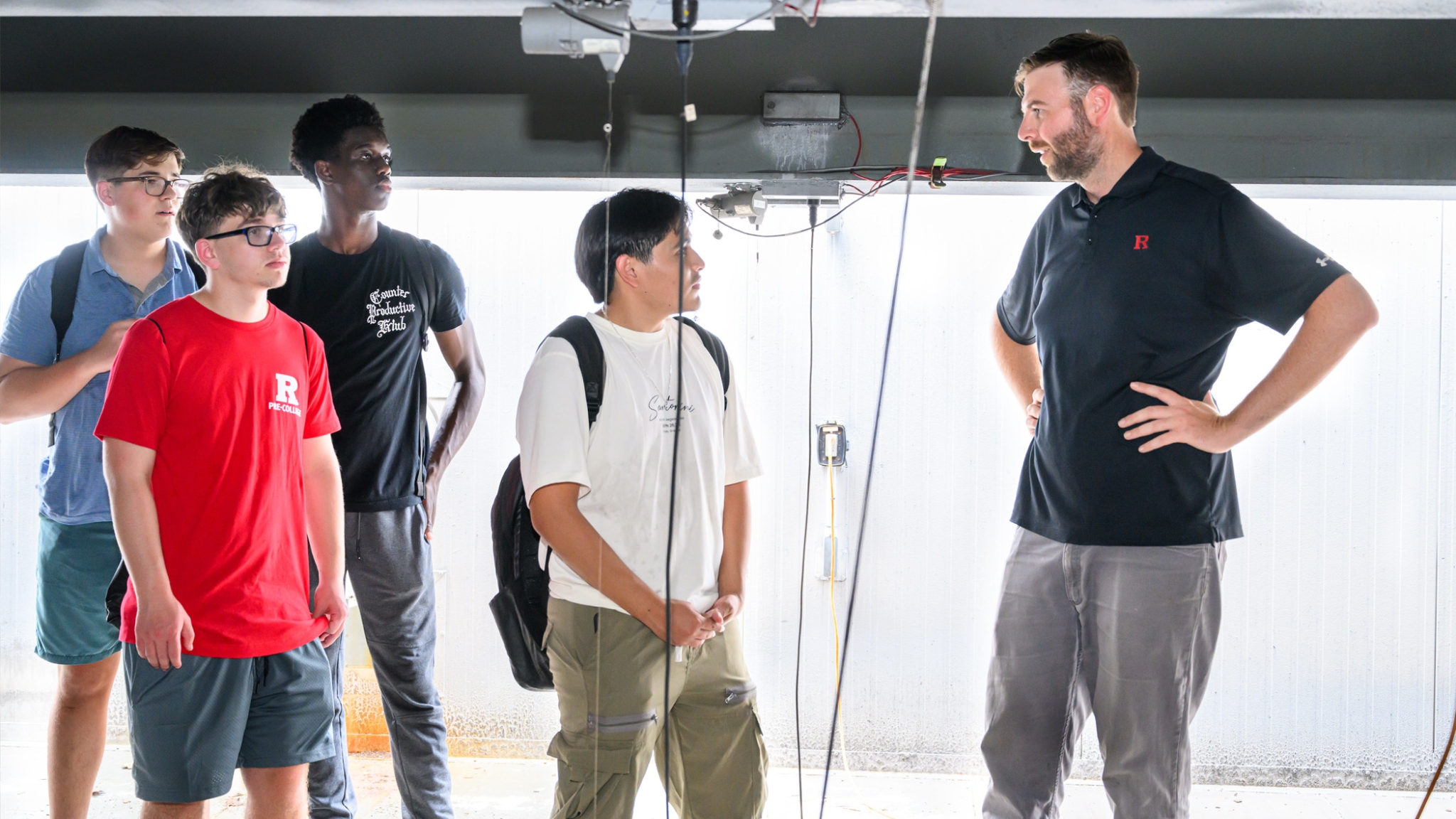
Each day covers different departments. Monday opens with orientation, then mechanical and aerospace engineering and civil and environmental engineering, with a tour of the Urban and Coastal Water System Lab. Tuesday brings industrial and systems engineering, biomedical engineering and an alumni talk. Wednesday covers materials science and chemical and biochemical engineering, plus a visit to the CAIT Asphalt Pavement Lab. Thursday pairs electrical and computer engineering with tours of the Bridge Evaluation and Accelerated Structural Testing (BEAST) facility and the Makerspace. Friday morning is a Colgate-Palmolive tour, and after another alumni talk you get free time before the closing ceremony and dinner.
You move into the dorm on Sunday and leave on Saturday morning. Evenings might be a movie at the Rutgers Cinema, crafts or sports. Rutgers says most of the work happens during the day, with only the occasional short evening reading or assignment.
Who runs the workshops?
According to Rutgers, its own faculty, researchers and student mentors lead the engineering workshops, and the week also includes two alumni talks, a guest speaker and a panel with Engineering Ambassadors. Individual instructors aren't named. Across all its academies, Rutgers says many instructors have experience teaching high school and early-college students and that most academies have 25 to 30 students.
Who can apply, and how fast do places go?
You need to be finishing 10th or 11th grade, turn 16 before the summer, have at least a 3.0 cumulative GPA and be proficient in English. Rutgers recommends a TOEFL score of 79, an IELTS score of 6.5 or a Duolingo English Test score of 105, and it can arrange a phone or video interview if you don't have a score.
The application itself is short. It asks for an online form, a transcript with at least two marking periods of grades (unofficial is fine) and an essay of no more than two paragraphs on why you want to attend and what you hope to learn. You also need a recommendation letter from a teacher or another adult who can speak to your schoolwork or personal achievements, and they have to submit it themselves. Once your application is complete, Rutgers says you'll hear back within two or three weeks.
Timing matters a lot. Rutgers admits eligible applicants on a rolling basis until each week is full and says applying early significantly improves your chances. In 2026 both Engineering weeks filled, and anyone still applying could only join a waitlist, with no guarantee of a place. International students had an earlier deadline, 12 April 2026. They also need an F-1 or J-1 visa, a copy of their passport, proof of funding and health insurance.
What did the week cost?
In 2026 the Engineering academy cost $2,899 for in-state and out-of-state students alike. That covered the program and a week in a residence hall, and Rutgers' residential academies also include meals in the dining halls and the evening activities. Because Engineering is non-credit, it carries none of the credit and student fees added to Rutgers' two credit-bearing academies.
Accepted students paid a $500 deposit to hold their place, and the rest was due by 1 June 2026. The deposit is never refunded. Rutgers considers refunds of the balance case by case, but scheduling conflicts and a place on another program don't count as reasons, and there are no refunds at all within two weeks of the start date.
International students also have to buy health insurance through Rutgers, which costs about $60 for the week, and pay for their visa, so check the visa cost with the official source. We couldn't find any scholarship or financial aid for the academies. The scholarship Rutgers advertises is for its separate Summer Scholars program.
How are students supervised on campus?
Rutgers says its academy team supervises students around the clock in the dorms, classrooms and activities, through program assistants and resident assistants. For the whole week, students can't leave campus unsupervised, even for food or a family visit.
Staff work under the university's Protection of Minors Policy, which requires training and background checks for adults who work directly with students. Alcohol and drugs are banned under a zero-tolerance policy, and bullying or harassment can get a student dismissed.
Students share a double room in a residence hall. The program team assigns roommates, usually from the same academy, and honors a requested roommate when it can. Students with food allergies or medical diets fill out a form and get labeled, pre-packaged meals from Rutgers Dining Services.
Medical, dietary and housing forms must reach Rutgers by its deadline. Without them, Rutgers won't check the student in.
What do you leave with?
You leave with a Rutgers Pre-College Digital Badge, issued through Accredible, which you can add to college applications, a resume or LinkedIn. The academy is non-credit, so there's no grade or Rutgers transcript, and the badge records that you completed the week rather than any assessed work.
Rutgers itself says taking part doesn't guarantee admission to Rutgers. The main thing you take away is a clearer sense of which engineering field suits you, along with experiences you can write about in an application essay.

Sean
Founder, Succeed
Talk it through with Sean
Want to talk it through?
“I can help you compare the programs you're considering, think through the practicalities and work out what makes sense for you.”
20 minutes · No obligation to enroll
What should you do next?
Frequently asked questions
Sources
- Engineering Summer Academy
precollegesummer.rutgers.edu · Official page
- Apply for Pre-College Summer Programs
precollegesummer.rutgers.edu
- Pre-College Policies and Safety Commitment
precollegesummer.rutgers.edu
- Summer Academies Frequently Asked Questions
precollegesummer.rutgers.edu
- Summer Academies Application
precollegesummer.rutgers.edu
- Summer Academies Program Costs
precollegesummer.rutgers.edu
- Summer Scholars Tuition and Fees
precollegesummer.rutgers.edu
- Summer Scholars Important Dates
precollegesummer.rutgers.edu
Not ready to decide yet? Keep it for later.