
Rutgers Pre-College Summer Physical Therapy Summer Academy
Rutgers runs this one-week residential academy on its New Brunswick campus for high school students thinking about a career in physical therapy. Over five class days you take a 1.5-credit college course, Foundations of Kinesiology and Health, hear from practicing physical therapists, work through hands-on labs and visit the Rutgers Doctor of Physical Therapy program in Newark. The week ends with group project presentations and a certificate ceremony.
 Sean Stevens · Sources
At a glance
Official facts · checked 12 Nov 2026- DatesOfficial
- 2027: Not announced yet. 2026: 12 to 18 July (I), 26 July to 1 August (II)
- Who can applyOfficial
- High school students completing their sophomore (10th) or junior (11th) year. Ages 16 to 18, and must be 16 before the summer. English language proficiency (recommended TOEFL 79, IELTS 6.5 or Duolingo English Test 105, or a phone/video interview if no test score). International applicants must obtain an F-1 or J-1 visa, upload a passport copy, show proof of funding and have health insurance
- Total costOfficial
- $3,784 in-state, $4,804 out-of-state (2026)
- Format and placeOfficial
- In person, On-campus residence hall, Rutgers University–New Brunswick, New Brunswick, New Jersey
- Length
- One week
- Included / budget separately
- Included: accommodation, meals (Residential students eat in the Rutgers dining halls). Separately: International student health insurance through Rutgers about $60 for the week, visa costs for international students (F-1 or J-1), Laptop required for credit-bearing academies
- Deposit and refunds
- Deposit $500. The $500 deposit is never refunded, with no exceptions
- Financial aid
- Not published
- Apply by
- 2027: Not announced yet. 2026: 12 April (International), 29 May (Domestic, , extended)
- Cohort and selectivity
- Rutgers accepts eligible applicants on a rolling basis until each week is full, then places further qualified applicants on a waitlist. Both 2026 weeks filled to capacity
- Credit or certificate
- Rutgers Pre-College Digital Badge credential and 1.5 college credits on a Rutgers transcript
Get the key facts by email
The dates, costs and how to apply, all in one place.
Succeed's assessment
Should you apply?
SucceedIn short
Why it's worth it
Most Rutgers pre-college academies don't carry credit, but this one does, so you leave with 1.5 credits on a Rutgers transcript after a week that also puts you in an anatomy lab, at the Rutgers Doctor of Physical Therapy program in Newark and in front of four different kinds of physical therapists.
What it asks of you
You live on campus for the full week and can't leave unsupervised. The course has graded assignments that count toward a grade on a real transcript, you may have short readings or project work some evenings, and you have to bring a laptop.
Who should skip it
Students still choosing between healthcare careers, because nearly every session points toward physical therapy and the Rutgers route from Exercise Science into its doctoral program.
What does a week in the academy look like?
Most days run from breakfast at 8:00am to group project time ending at 5:00pm, with dinner at 5:00pm and a supervised evening activity at 6:00pm, according to Rutgers' sample schedule. You move into a dorm on Sunday and out on Saturday, so the teaching fits into Monday to Friday.
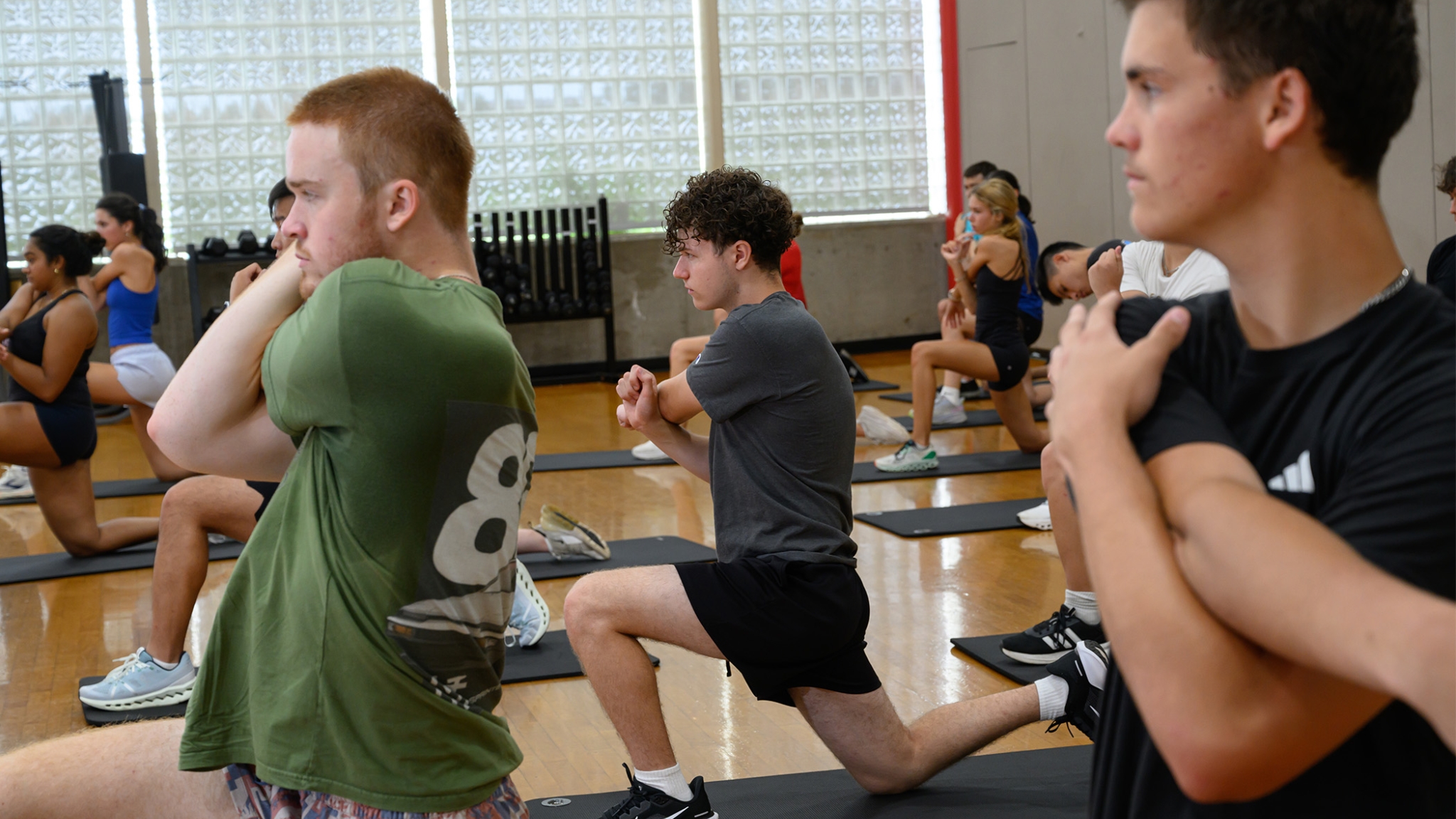
Every afternoon from Monday to Thursday includes a 3:00pm lecture for the credit course, Foundations of Kinesiology and Health, followed by half an hour on your group project. The rest of the day is where the variety comes in. There's an exercise class and gym tour on Busch Campus, a Theraband challenge, a goniometer lab and a case study discussion, and you spend Thursday morning on a field trip to the Rutgers Doctor of Physical Therapy program in Newark and Friday morning in a human cadaver anatomy lab. Guest speakers include outpatient, travel, acute care and pediatric physical therapists and a current Rutgers Exercise Science student.
On Friday afternoon groups present their projects and review the course, and the week ends with dinner and a certificate ceremony. Evenings bring things like a movie night at the Rutgers Cinema, arts and crafts and sports, although Rutgers says you may sometimes have short readings, assignments or project work then too.
Who can apply, and what does the application ask for?
For 2026, you needed to be finishing 10th or 11th grade and aged 16 to 18, already 16 before the summer, with at least a 3.0 cumulative GPA, and you had to be proficient in English. Rutgers recommends a TOEFL score of 79, an IELTS score of 6.5 or a Duolingo English Test score of 105, and may arrange a phone or video interview if you don't have a score.
The application is short. Along with the online form, you send a transcript covering at least two marking periods (unofficial copies are fine) and a personal essay of no more than two paragraphs on why you want to attend and what you hope to learn. A teacher or another adult who can speak to your achievements has to submit a recommendation directly. Rutgers reviews applications as they arrive and accepts qualified students until each week is full, and it says complete applications get a decision within two or three weeks.
That makes timing matter more than the deadline. Both 2026 weeks filled to capacity, and later applicants could only join a waitlist that didn't guarantee a place. International students had an earlier deadline in 2026, 12 April 2026 rather than 29 May 2026. They need an F-1 or J-1 visa, and when they apply they have to upload a copy of their passport, show proof of funding for the full period and have valid health insurance.
What does the week really cost?
In 2026 the week cost $3,784 for in-state students and $4,804 for out-of-state students, and the whole difference is the fee for the 1.5 credits. Both totals included a week in a residence hall, with meals taken in the Rutgers dining halls.
Accepted students paid a $500 deposit to hold a place, which Rutgers never refunds, and the balance was due by 1 June 2026. Refunds of the rest of the balance are decided case by case. A scheduling conflict or a place on another program doesn't count as a reason, while an emergency may be considered if you send a written request, with no guarantee. Nothing is refunded within two weeks of the start date.
International students also have visa costs and must buy health insurance through Rutgers, which it puts at about $60 for the week. A laptop is required for credit-bearing academies, so factor that in if you don't already have one.
| Fee (2026) | In-state | Out-of-state |
|---|---|---|
| Program fee (includes one week of housing) | $2,899 | $2,899 |
| 1.5-credit fee | $723 | $1,743 |
| Student fee | $162 | $162 |
| Total | $3,784 | $4,804 |
What do the college credits and badge actually get you?
You finish with 1.5 Rutgers credits for the course 01:377:144 Foundations of Kinesiology and Health, and you can request a transcript showing them from the Rutgers Registrar. You also get a Rutgers Pre-College Digital Badge, issued through Accredible, that you can add to college applications and LinkedIn. The credit depends on submitting the graded assignments, so it isn't just for showing up.
Rutgers says attending doesn't guarantee admission to Rutgers, so the week introduces its Exercise Science major and Doctor of Physical Therapy program without reserving you a place in either. Rutgers doesn't say whether other colleges will accept the credit, so check with the ones you're considering.
How are students looked after on campus?
Program Assistants and Resident Assistants supervise students around the clock in classes, dorms and evening activities. You have to stay with your group and program staff all week, so you can't leave campus unsupervised, even for food, a family visit or a personal errand. Staff who work with students are covered by the Rutgers Protection of Minors Policy, which requires training and background checks.
Students sleep two to a room in on-campus residence halls, with roommates usually grouped by academy, and Rutgers enforces zero tolerance for alcohol and drugs. If you have food allergies or a medically necessary diet, Rutgers Dining Services prepares labeled, pre-packaged meals for you. Medical, dietary, housing and waiver forms have to be in by the stated deadline, because Rutgers won't check in a student without them.

Sean
Founder, Succeed
Talk it through with Sean
Want to talk it through?
“I can help you compare the programs you're considering, think through the practicalities and work out what makes sense for you.”
20 minutes · No obligation to enroll
What should you do next?
Frequently asked questions
Sources
- Physical Therapy Summer Academy
precollegesummer.rutgers.edu · Official page
- Welcome to the Rutgers University-New Brunswick Pre-College Summer…
apply.summerwinter.rutgers.edu
- Pre-College Policies and Safety Commitment
precollegesummer.rutgers.edu
- Summer Academies Frequently Asked Questions
precollegesummer.rutgers.edu
- Summer Academies Application
precollegesummer.rutgers.edu
- Summer Academies Important Dates
precollegesummer.rutgers.edu
- Summer Academies Program Costs
precollegesummer.rutgers.edu
- Summer Scholars Tuition and Fees
precollegesummer.rutgers.edu
Not ready to decide yet? Keep it for later.