
Summer Springboard Advanced Neuroscience High School Course
- 2027 program
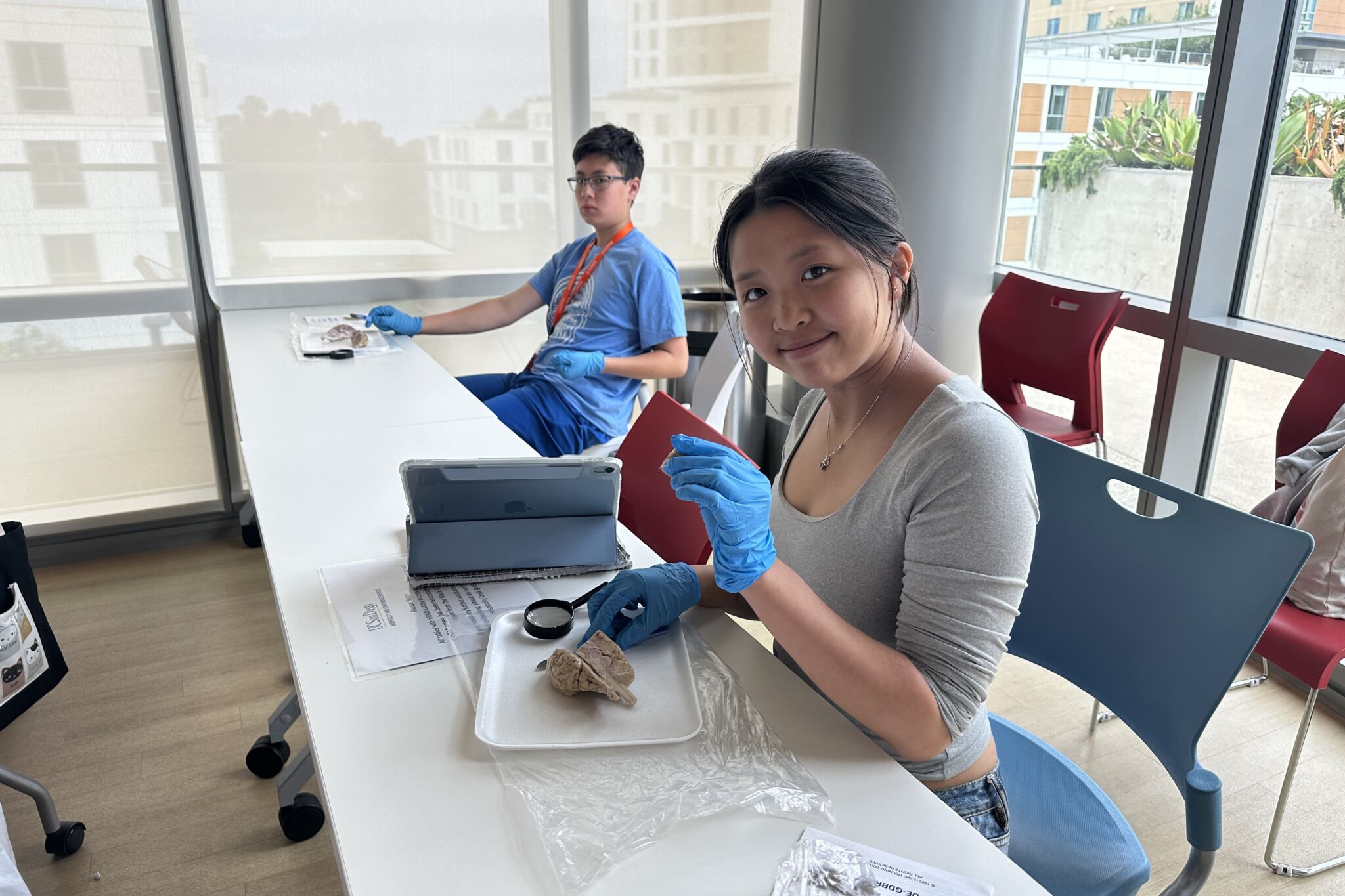
Advanced Neuroscience is a two-week summer course that Summer Springboard runs on the UC San Diego campus for high school students who've already taken AP Psychology, Honors Biology or something similar. In morning classes with a UC San Diego postdoctoral neuroscientist, you record live nerve signals, track brainwaves with EEG headsets and dissect a sheep brain. The course ends with you presenting your own research project or brain-computer interface prototype at a symposium. Afternoons bring lab visits, college-readiness workshops and trips around San Diego, and you can either live in campus suites or attend as a day commuter.
 Sean Stevens · SourcesSucceed has a commercial partnership with this provider.
At a glance
Official facts · checked 11 Nov 2026- DatesOfficial
- 2027: 20 June to 2 July
- Who can applyOfficial
- Students in grades 9 to 12. Students starting high school in the fall or who graduated in the spring are also eligible. International students show English proficiency by telephone interview, or TOEFL 490 paper or 60 iBT, Cambridge PET-Distinction or FCE-C, or SAT 450 Reading/Writing
- Total costOfficial
- 2027: $5,998 residential, $3,298 non-residential
- Format and placeOfficial
- In person, UC San Diego, San Diego, California
- Length
- 2 weeks
- Included / budget separately
- Included: accommodation, meals (Residential: all meals included). Separately: application fee from $99 (non-refundable, $149 after 21 February 2027, $199 after 18 April 2027), airport shuttle $95 each way, Unaccompanied minor service $145 each way (including shuttle), weekend excursions for commuters $125 per day
- Deposit and refunds
- Deposit $600. Cancel before 1 March: 100% of tuition is refunded, including the deposit, and only the $99 application fee is kept
- Financial aid
- Need-based scholarships cover up to 30% of residential tuition or up to 60% of commuter tuition
- Apply by
- 2027: 21 February (1st Wave), 18 April (2nd Wave), 16 May (Final General Admission)
- Cohort and selectivity
- Applicants who meet the grade, GPA, prerequisite and Essential Eligibility Criteria are placed in courses first come, first served while places last. No acceptance rate or cohort size is published
- Credit or certificate
- Certificate of completion and instructor's letter of recommendation (can be withheld for code of conduct violations or lack of participation)
Get the key facts by email
The dates, costs and how to apply, then 2 reminders: 2 May (2 weeks before) and 13 May (3 days before).
Succeed's assessment
Should you apply?
SucceedIn short
Why it's worth it
The draw is how much of the course is hands-on. You record live nerve signals, track brainwaves with EEG headsets, measure eye movements with surface electrodes and dissect a sheep brain with a UC San Diego neuroscience postdoc, and then you present your own research project or brain-computer interface prototype at a symposium.
What it asks of you
Class time is a manageable 27 hours over nine mornings, so the bigger commitments are money and dates. Residential tuition is $5,998, or $3,298 if you commute, and the course runs only once, from 20 June to 2 July 2027, with no other session to switch to.
Who should skip it
Students who need college credit, which Summer Springboard doesn't offer at UC San Diego, or who want a university's own program on their record. Summer Springboard runs the course on the campus, and UC San Diego isn't responsible for it.
Who can take the advanced course?
You need to be in grades 9 to 12 with at least a 3.0 GPA (or your school's equivalent), and this course adds its own bar on top. Summer Springboard requires you to have completed AP Psychology, Honors Biology or an equivalent introductory course in psychology or life sciences before you enroll. Students starting high school in the fall and those who graduated in the spring can also apply.
Besides contact details, the application asks for answers to short essay questions and signed agreement forms. Summer Springboard says it sends a decision within 5 to 7 business days. It publishes no acceptance rate and fills courses first come, first served, which matters here because this course has only one session. After 21 February 2027 some programs close and go to a waitlist, and the final general admission deadline is 16 May 2027.
Every application is also checked against Summer Springboard's Essential Eligibility Criteria. These cover managing your own medication, coping with shared rooms and long days, and health stability. Students with some health conditions may be asked for medical documentation and proof of 12 months' stability before they're accepted.
English by interview
International students can show their English in a telephone interview.
English by test score
They can also send a TOEFL score of 490 on paper or 60 on the iBT, a Cambridge PET with Distinction or FCE at grade C, or 450 on SAT Reading and Writing.
What does a typical day look like?
Class runs from 9am to 12pm, five mornings in the first week and four in the second, which adds up to nine 3-hour sessions. A typical day starts with breakfast at 8am in the campus dining hall, with lunch at noon. At 1:30pm there's either a recreational activity or an academic excursion linked to the course. At 3pm you go to a College Readiness Workshop or to True You, Summer Springboard's personal development sessions. You pick two 90-minute workshops over the program, on topics such as speaking with confidence, managing money and preparing for college applications.
Commuters leave at 5pm. Residential students have dinner at 6pm, clubs or other activities from 7pm, and dorm checks at 10:30pm. The weekend trips Summer Springboard lists for UC San Diego are Old Town San Diego, Little Italy's farmers market and Coronado Beach on Saturday, and the San Diego Zoo and Belmont Park on Sunday. Summer Springboard calls its posted timetable a sample, so the details can change.
Who teaches it?
Dr. Seraphina Solders teaches the course. She's a postdoctoral fellow in UC San Diego's Neurosciences Department, with a PhD in neurosciences from UC San Diego and a bachelor's in psychology and biology from San Diego State University. Her research looks at the role of the blood-brain barrier in aging and how it contributes to Alzheimer's disease risk. She currently teaches Foundations of Neuroimaging to psychology students at San Diego State.
Summer Springboard says she has taught or tutored high school, college and graduate students. Outside class, you meet UC San Diego researchers, bioengineers and graduate trainees on visits to research facilities around campus. Summer Springboard doesn't publish a class size for the course.
What does it really cost?
Residential tuition is $5,998 and commuter tuition is $3,298 for applications made by 30 November 2026, and tuition goes up on 1 December. Residential covers your room, all meals, the course, excursions and weekend trips. Commuter covers lunch, the course, excursions and weekday programming from 9am to 5pm, and you can add weekend trips at $125 per day. Advanced Neuroscience isn't one of the UC San Diego courses that carry Summer Springboard's $250 course supplement.
When you apply, you pay a $600 deposit and a non-refundable application fee. The fee starts at $99 and rises to $149 after 21 February 2027 and $199 after 18 April 2027. Flights aren't included, and neither is health insurance, which every student must show proof of. The airport shuttle costs $95 each way, or $145 each way for students traveling as unaccompanied minors, and Summer Springboard suggests bringing about $100 a week in spending money.
If you apply before 10 March 2027, you pay 33% of the balance on 10 March, another 33% on 10 April and the rest on 10 May, and payments made after 10 May carry a $150 late fee. Need-based scholarships cover up to 30% of residential or 60% of commuter tuition, but never the deposit or application fee.
An optional $699 Tuition Protection Plan, which you have to buy when you apply, lets you cancel for any reason up to the first day and get back what you've paid, apart from the plan's own cost. Summer Springboard's refund policy keeps only the application fee for cancellations before 1 March, although it calls the $600 deposit non-refundable elsewhere, so ask how the deposit is treated if you might cancel early. Without the plan, canceling gets expensive from March:
| If you cancel | Tuition refunded | Other options |
|---|---|---|
| Before 1 March 2027 | 100%, only the application fee is kept | Not needed |
| 2 March to 1 April 2027 | 100%, minus the $600 deposit and application fee | Roll 100% of payments to a future year |
| 2 April to 1 May 2027 | 75%, minus the deposit and application fee | Roll 100% to a future year, free program changes |
| After 1 May 2027 | 25%, minus the deposit and application fee | Roll 75% to a future year, $300 to change programs |
| After 1 June 2027 | Nothing | No rollover, $500 to change programs |
How are students looked after?
Summer Springboard staff live on every floor of the residence hall. The campus director and assistant director also live in the dorms and are available around the clock for emergencies. Residential students share a room with one roommate in gender-separated suites. You need a key card to get into the dorms and a separate key for your room, and UC San Diego Police operate around the clock and patrol the campus and residence halls regularly.
Students must stay in their rooms after 10pm, and staff do dorm checks at 10:30pm. In free time you can go anywhere within set campus boundaries, as long as you're in a group of three or more. If you're ill or injured, a staff member takes you for treatment, which in an emergency is likely to be the UC San Diego Health Emergency Department, about 2 miles from the dorms. Your parents are told, but the family pays any medical costs. You keep and take your own medication. Summer Springboard runs background checks on its campus directors and resident advisors. Under its code of conduct, most breaches mean being sent home at the family's expense with no refund.
What do you leave with?
You leave with a completion certificate, a letter of recommendation from your instructor and the research project or brain-computer interface prototype you presented at the closing symposium. Summer Springboard treats the certificate and letter as earned rather than automatic, and it can withhold them for lack of participation or for code of conduct breaches.
You don't get college credit, because Summer Springboard offers credit only at its Cal Poly and New York School of Interior Design programs. What you take away instead is lab experience with EEG and electrophysiology, practice forming testable hypotheses and analyzing real-time neural data, and a finished project you can talk about in detail.

Sean
Founder, Succeed
Talk it through with Sean
Want to talk it through?
“I can help you compare the programs you're considering, think through the practicalities and work out what makes sense for you.”
20 minutes · No obligation to enroll
What should you do next?
Frequently asked questions
Sources
- Advanced Neuroscience
summerspringboard.com · Official page
- Application and Enrollment FAQ
summerspringboard.com
- Campus Specific FAQ
summerspringboard.com
- Staff and Safety FAQ
summerspringboard.com
- General Information FAQ
summerspringboard.com
- Main FAQ | Knowledge Base
summerspringboard.com
- Terms & Conditions
summerspringboard.com
- 2027 HS 2-week Advanced Neuroscience Infosheet (PDF)
summerspringboard.com
Not ready to decide yet? Keep it for later.