
Summer Springboard AI & Society High School Course
- 2027 program
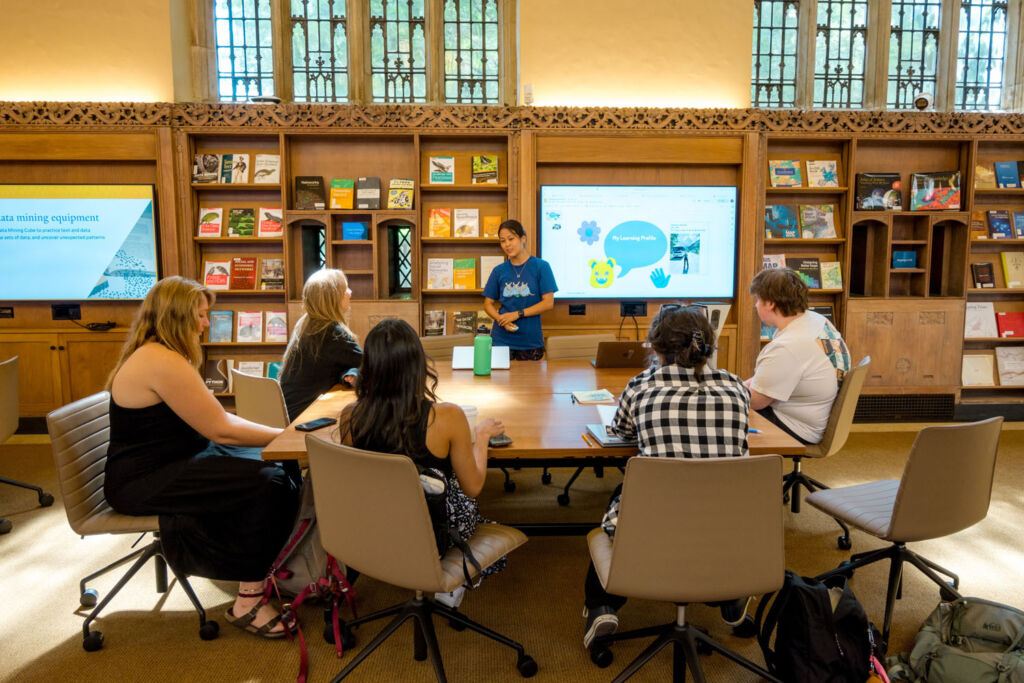
AI & Society is a one-week summer course that Summer Springboard runs on Yale University's campus in New Haven for high school students. You test and compare AI chatbots, weigh what AI costs in energy, water and jobs, and represent a tech company, government or citizen group in a mock global summit on how AI should be regulated. You also pick a real issue, such as deepfakes or biased hiring algorithms, and design a solution. No coding experience is needed, and you can either live in a Yale dorm or commute.
 Sean Stevens · SourcesSucceed has a commercial partnership with this provider.
At a glance
Official facts · checked 11 Nov 2026- DatesOfficial
- 2027: 4 to 10 July, 25 to 31 July
- Who can applyOfficial
- Students in grades 9 to 12. Students starting high school in the fall or who graduated in the spring may also enroll. International students show English proficiency by phone interview or a minimum score: TOEFL 490 paper or 60 iBT, Cambridge PET-Distinction or FCE-C, or SAT 450 Reading/Writing
- Total costOfficial
- 2027: $4,298 residential, $2,498 non-residential
- Format and placeOfficial
- In person, New Haven, Connecticut
- Length
- 1 week
- Included / budget separately
- Included: accommodation, meals (All meals for residential students, lunch only for commuters). Separately: Course supplement $250, application fee from $99 (non-refundable, $149 after 21 February 2027, $199 after 18 April 2027), airport shuttle $95 each way, Unaccompanied minor service $50 each way on top of the shuttle
- Deposit and refunds
- Deposit $600. Cancel before 1 March: 100% of tuition is refundable, except the $99 application fee
- Financial aid
- Need-based scholarships cover up to 30% of residential tuition or up to 60% of commuter tuition
- Apply by
- 2027: 21 February (1st Wave), 18 April (2nd Wave), 16 May (Final General Admission)
- Cohort and selectivity
- Summer Springboard publishes no acceptance rate. Applicants who meet the grade, GPA and Essential Eligibility Criteria are reviewed, and course places are assigned first come, first served
- Credit or certificate
- Completion certificate and letter of recommendation from the instructor (no college credit at Yale)
Get the key facts by email
The dates, costs and how to apply, then 2 reminders: 2 May (2 weeks before) and 13 May (3 days before).
Succeed's assessment
Should you apply?
SucceedIn short
Why it's worth it
The course is built around doing things, from the mock summit to the design project, and its career sessions make the case that AI needs thinkers, writers and policymakers as well as engineers. That makes it as useful to a student leaning toward law, policy or journalism as to a future engineer.
What it asks of you
Mainly money. With the $250 course supplement, a residential week comes to $4,548 and a commuter week to $2,748, before the application fee and travel, which is a lot for seven days.
Who should skip it
Students who want to learn how AI systems are built, because the course covers how AI works only at a basic level and spends its time on effects and rules. It's also new for 2027 and Summer Springboard hasn't yet named the instructor, so there's no track record or teaching profile to judge it by.
What does a day on the course look like?
On a typical day, class takes up most of the morning, from 9:00 a.m. to 1:15 p.m. with a 15-minute break at 11:00, followed by lunch and free time in a campus dining hall. At 3:00 p.m. there's an academic excursion or lab tied to your course, and commuters head home at 5:00 p.m. Residential students get free time, dinner at 6:00 and an evening activity at 7:00, then more free time before dorm checks at 9:30 p.m.
Everyone checks in on the Sunday, residential or commuter, for orientation, ice-breakers and dinner. Both weeks run Sunday to Saturday, and the weekend trips to Boston and New York City are only for students who stay more than one week, so a one-week student won't go on them.
What do you need to get a place?
You need to have finished 8th grade by the start date and to hold a 3.0 GPA or your school's equivalent, and students who graduated in the spring can enroll too. International students show their English either in a phone interview or with a minimum score of 60 on the TOEFL iBT (490 on paper), PET with Distinction or FCE grade C on a Cambridge exam, or 450 in SAT Reading and Writing.
A complete application also includes short-answer essay questions and signed agreement forms. Course places are assigned first come, first served, so a session can fill and leave you on a waitlist. Summer Springboard reviews every application against its Essential Eligibility Criteria, which expect students to manage their own care and medications, and students with some health conditions may be asked for medical clearance and a 12-month period of stability. Summer Springboard also says its programs aren't therapeutic.
What does the week really cost?
A residential week costs $4,298 and covers your room, all meals, excursions and the course. A commuter week costs $2,498 and covers lunch, the course, excursions and programming from 9 a.m. to 5 p.m. on weekdays. Summer Springboard adds a $250 course supplement for AI & Society to either price. These are its prices for applications made by 30 November 2026, and it says tuition goes up on 1 December without publishing the new figures.
Every application also needs a $600 deposit and an application fee that starts at $99. If you add another one-week course at Yale, each extra week costs $3,298 residential or $1,998 commuter. If you apply before 10 March 2027, the balance is paid in three parts on 10 March, 10 April and 10 May. Payments after 10 May carry a $150 late fee, and Summer Springboard may cancel the place without a refund if the balance isn't paid by 1 June.
Travel
Flights aren't included. The airport shuttle costs $95 each way if your flight lands in the set window, plus $50 each way for students traveling as unaccompanied minors, which Summer Springboard requires of students 14 or younger.
Other extras
Every student needs health insurance, and the family pays any medical costs. Access to Yale's Payne Whitney Gym is $27 a week, laundry runs about $1.25 a wash and $1.25 a dry, and Summer Springboard suggests about $100 a week in spending money.
Financial aid
Need-based scholarships cover up to 30% of residential tuition or 60% of commuter tuition, depending on funds and your family's finances, and can't be used toward the deposit or application fee. You apply with a form and your latest tax filing and hear back in about 7 business days.
Cancellation cover
An optional Tuition Protection Plan, bought with the application, lets you cancel for any reason up to the program day. Its 2026 terms priced it at $699, which isn't refunded.
| When you cancel | What you get back |
|---|---|
| Before 1 March 2027 | All tuition except the $99 application fee |
| 2 March to 1 April 2027 | All tuition except the deposit and application fee, or roll 100% over to a future year |
| 2 April to 1 May 2027 | 75% of tuition except the deposit and application fee, or roll 100% over |
| 2 May to 1 June 2027 | 25% of tuition except the deposit and application fee, or roll 75% over |
| After 1 June 2027 | Nothing, and no credit toward a future year |
| After the program starts | Nothing, whatever the reason for leaving |
How do you apply?
Applications go through Summer Springboard's online enrollment page, and admissions are rolling within set deadline waves.
Create an account with basic contact details and confirm the verification email.
Choose Yale, your session, AI & Society and residential or commuter tuition, then complete the application with the student present, which takes about 30 minutes.
Pay the $600 deposit and application fee to hold your place.
Expect a decision within 5 to 7 business days, and send any extra paperwork Summer Springboard asks for within 48 hours or the place can't go ahead.
Apply by 21 February 2027 to pay the lowest application fee, since it rises to $149 after that date and $199 after 18 April 2027, and some courses close at each step.
Enrollment closes on 16 May 2027. If you enroll before 25 April, pre-departure documents are due by 1 May, or within 7 days of acceptance if you enroll later, and late documents cost $50.
How are students looked after on campus?
Summer Springboard staff live on every floor of the dorm, and the Campus Director, Assistant Campus Director and other staff also live in the dorms and are available around the clock for emergencies. Getting into the dorms takes an individual access card, Yale Security patrols the campus and residence halls 24/7, and students must be in their rooms after 10 p.m. Campus directors hold bachelor's or master's degrees, and all staff go through background checks and training. Families sign the Code of Conduct before the program starts.
Free time
Students are supervised in class and on excursions, and in free time they can move around within set campus boundaries in groups of three or more.
Health care
Summer Springboard works with Yale New Haven Hospital and has a doctor on call 24/7. Staff escort sick students to care and contact parents, and students keep and take their own medications.
Rooms
Floors are separated by gender, and you'll most likely share a room with one other student in a suite with a common area, though some students get single rooms. Yale's residential colleges have no air conditioning, so Summer Springboard gives every student a fan.
Rules
Alcohol, drugs, tobacco and vaping are banned and phones must be off during activities. A student expelled for breaking the rules flies home at the family's expense with no refund.
What do you take away from the week?
You leave with a completion certificate and a letter of recommendation written by your instructor, along with the solution you designed for a real AI problem during the week. Summer Springboard says both documents are earned rather than automatic and can be withheld for breaking the Code of Conduct or not taking part. The course carries no college credit, which Summer Springboard offers only at its Cal Poly and NYSID programs.

Sean
Founder, Succeed
Talk it through with Sean
Want to talk it through?
“I can help you compare the programs you're considering, think through the practicalities and work out what makes sense for you.”
20 minutes · No obligation to enroll
What should you do next?
Frequently asked questions
Sources
- AI & Society | Yale Course
summerspringboard.com · Official page
- Need-Based Scholarships
summerspringboard.com
- summerspringboard.com/knowledge-base/travel-faq
- General Information FAQ
summerspringboard.com
- Terms & Conditions
summerspringboard.com
- Application and Enrollment FAQ
summerspringboard.com
- summerspringboard.com/apply
- summerspringboard.com/knowledge-base/campus-specific-faq-knowledge-base-summer-springboard
Not ready to decide yet? Keep it for later.