
Summer Springboard Artificial Intelligence: A Responsible Approach
- 2027 program
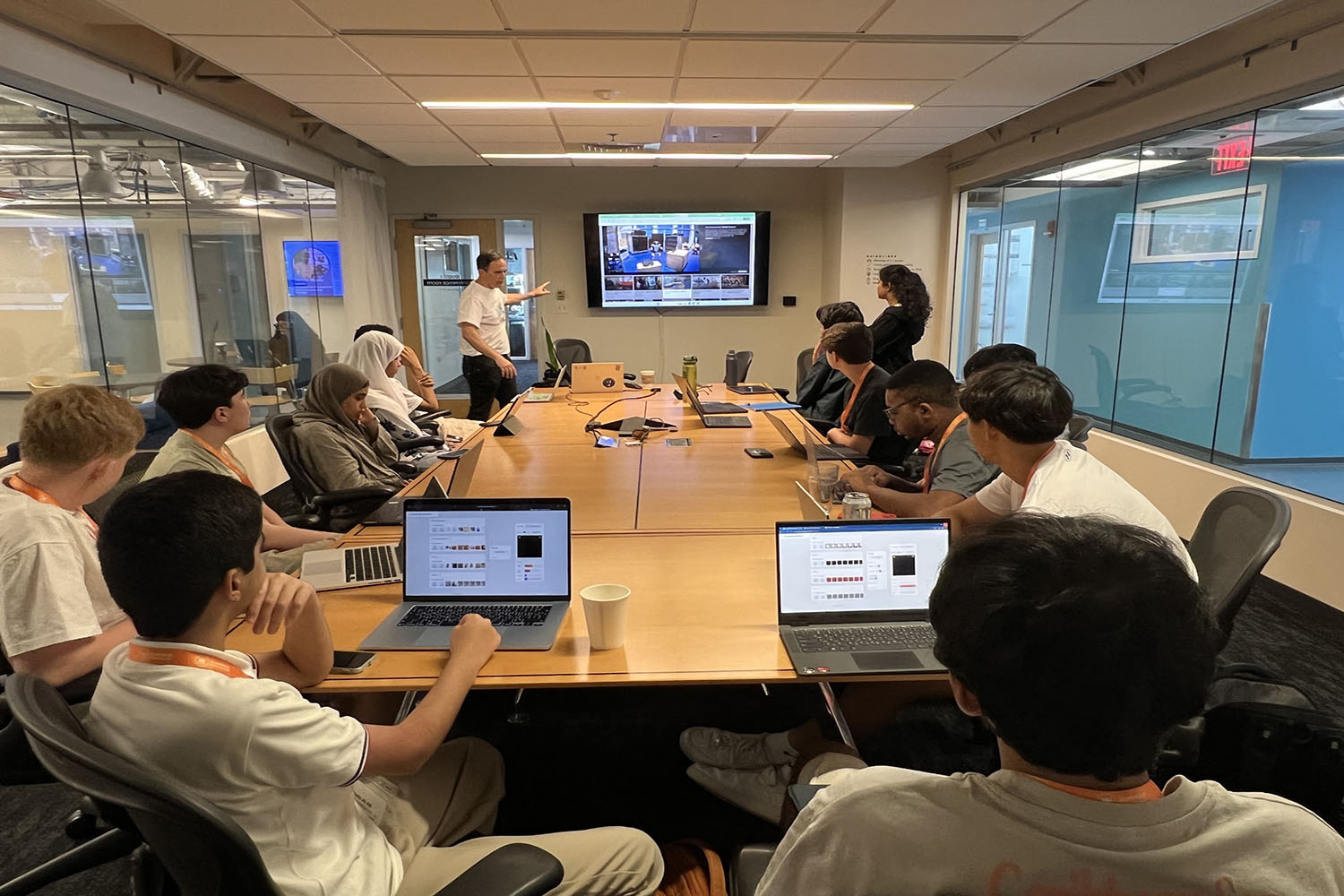
Over two weeks in July, you spend weekday mornings at Æthos, an AI startup community in the Cambridge Innovation Center next to MIT, learning core ideas such as deep learning and neural networks and looking at AI's ethical problems, including algorithmic bias. In workshops you build AI solutions of your own and pitch AI startup ideas to founders, and the course ends with a hands-on project. Afternoons bring excursions, guest speakers and college-prep workshops, and residential students live in dorms on the MIT campus.
 Sean Stevens · SourcesSucceed has a commercial partnership with this provider.
At a glance
Official facts · checked 11 Nov 2026- DatesOfficial
- 2027: 5 to 17 July (Session 2), 18 to 30 July (Session 3)
- Who can applyOfficial
- High school students in grades 9 to 12, including students starting high school in the fall and those who graduated in the spring. International students show English proficiency through a telephone interview or TOEFL 490 paper / 60 iBT, Cambridge PET-Distinction or FCE-C, or SAT 450 Reading/Writing
- Total costOfficial
- 2027: $6,798 residential, $3,298 non-residential
- Format and placeOfficial
- In person, Cambridge, Massachusetts
- Length
- 2 weeks
- Included / budget separately
- Included: accommodation, meals (All meals for residential students, lunch for commuters). Separately: mandatory course supplement $250, application fee from $99 (non-refundable), airport shuttle $95 each way, Unaccompanied minor service $50 each way on top of the shuttle
- Deposit and refunds
- Deposit $600. Cancel before 1 March: 100% of tuition is refunded, including the deposit, and only the $99 application fee is kept
- Financial aid
- Need-based scholarships cover up to 30% of residential tuition or up to 60% of commuter tuition
- Apply by
- 2027: 21 February (1st Wave), 18 April (2nd Wave), 16 May (Final General Admission)
- Cohort and selectivity
- Applicants who meet the grade, GPA and Essential Eligibility Criteria are reviewed holistically, and course places are assigned first come, first served
- Credit or certificate
- Completion certificate and letter of recommendation from the instructor
Get the key facts by email
The dates, costs and how to apply, then 2 reminders: 2 May (2 weeks before) and 13 May (3 days before).
Succeed's assessment
Should you apply?
SucceedIn short
Why it's worth it
The setting does a lot of the work. Classes run at Æthos, an AI startup community inside the Cambridge Innovation Center, where you study algorithmic bias and ethics alongside deep learning and neural networks and pitch AI startup ideas to founders.
What it asks of you
Two weeks away from home and nine three-hour morning classes, so about 27 hours of teaching, with afternoons given to excursions and college-prep workshops. The bigger ask is money, since the residential option comes to more than $7,000 once the mandatory supplement and application fee are added.
Who should skip it
Students who already code and want to build and train their own models. The instructors' background is in teaching AI literacy, including a platform that lets students explore AI without coding, and 27 hours of class leaves little room for deep technical work.
What do the two weeks actually look like?
Class runs from 9am to noon at Æthos in the Cambridge Innovation Center, just off the MIT campus. There are nine of these three-hour sessions, Monday to Friday in week one and Monday to Thursday in week two. Session 2 starts on Monday 5 July 2027 because of the holiday, so its first week of classes runs Tuesday to Friday and the second runs Monday to Friday.
Summer Springboard's sample day for its Cambridge campus starts with breakfast at 8am. After class and lunch at noon, 1:30pm brings either a recreational outing or a course excursion, and 3pm brings a College Readiness Workshop or the True You personal development sessions. Commuters leave at 5pm, while residential students have dinner at 6pm, clubs from 7pm and dorm checks at 10:30pm. Trips Summer Springboard lists for the campus include a Boston Duck Boat tour, the Freedom Trail, guided tours of MIT and Harvard, and Six Flags New England. It calls this schedule a sample that can vary. You'll also need to bring a laptop for the course.
Who teaches the course?
Two co-founders of Aikreate, an education company that teaches students about AI, lead the course. Mireia Torello, its CEO, holds a PhD in Earth Sciences and an Executive MBA from IESE Business School. She was named a 2025 Leading Woman in AI at the ASU+GSV Summit and was selected for MIT's Venture Advancement Program. Marc Oliveras, who heads its curriculum, has a PhD in Economics, more than 20 years in STEM education and nine years leading AI literacy programs. He built KreatePrompt, Aikreate's own large language model, which lets students explore AI without writing code.
Summer Springboard adds advisors from the Æthos AI Education Consortium and says students get mentorship from professionals at institutions such as Harvard and MIT. It doesn't publish a class size for the course.
What do you leave with at the end?
You leave with a completion certificate and a letter of recommendation from your instructor, along with the final project in which you apply what you've learned to a real-world problem. The certificate and letter are earned rather than automatic, and Summer Springboard can withhold them for a Code of Conduct breach or for not taking part.
There's no college credit, because Summer Springboard offers credit only on its Cal Poly and NYSID programs. The claim that the course gives you a competitive edge for college and internships is Summer Springboard's own.
Who can apply, and how hard is it to get in?
The course is open to students from rising ninth graders through graduating seniors. You must have finished 8th grade by the start date and have a 3.0 GPA or your school's equivalent. International students prove their English in a phone interview or with a TOEFL score of 490 on paper or 60 on the iBT, a Cambridge PET with Distinction or FCE at grade C, or an SAT Reading and Writing score of 450.
The application includes short-answer essay questions and signed agreement forms, and Summer Springboard says you'll get a decision within 5 to 7 business days. It publishes no acceptance rate and fills courses first come, first served, so the real test is meeting the criteria and applying before your session fills. Applications are also reviewed against its Essential Eligibility Criteria, which expect students to manage their own care and medication, walk more than a mile and follow instructions in English. It isn't a therapeutic program, and students with some health conditions may need extra paperwork and a doctor's sign-off.
What will the two weeks cost in total?
With the mandatory $250 course supplement and the application fee, which starts at $99, the residential option comes to at least $7,147 and the commuter option to at least $3,647. Residential tuition of $6,798 covers your dorm room, all meals, the course and every excursion, weekends included. Commuter tuition of $3,298 covers the course, lunch, excursions and weekday programming from 9am to 5pm, and weekend excursions cost $125 a day on top.
These are Summer Springboard's published prices, and it says tuition goes up on 1 December 2026 without yet giving the new figure. The application fee rises to $149 after 21 February 2027 and to $199 after 18 April 2027. You also pay a $600 deposit when you apply, and Summer Springboard doesn't say whether it counts toward tuition. Flights aren't included, the airport shuttle costs $95 each way, students must have health insurance, and any medical costs fall on the family.
Need-based scholarships cover up to 30% of residential tuition or 60% of commuter tuition, though not the deposit or application fee. If you cancel, Summer Springboard refunds on a sliding scale that depends on the date, from all tuition except the application fee before 1 March 2027 to nothing after 1 June 2027. An optional Tuition Protection Plan lets you cancel for any reason up to the start day, and it cost $699 under the terms Summer Springboard published for 2026.
| If you cancel | What you get back |
|---|---|
| Before 1 March 2027 | All tuition, except the $99 application fee |
| 2 March to 1 April 2027 | All tuition except the deposit and application fee, or everything rolled over to a future year |
| 2 April to 1 May 2027 | 75% of tuition except the deposit and application fee, or 100% rolled over |
| 2 May to 1 June 2027 | 25% of tuition except the deposit and application fee, or 75% rolled over |
| After 1 June 2027 | Nothing, and nothing transfers to a future year |
How are students looked after in Cambridge?
Summer Springboard staff live on every dorm floor, and the campus director and other senior staff also live in the residence halls and are available 24 hours a day. The dorms are access-controlled with individual cards, MIT Security patrols the campus and residence halls around the clock, and students must be in their rooms after 10pm. Rooms are shared, floors are separated by gender and bathrooms are communal.
Staff supervise classes, field trips and excursions, but in free time students can move around within set campus boundaries in groups of three or more. All staff pass background checks and training. A student who falls ill is taken by staff to the nearest medical facility and parents are told. Students keep and take their own medication. Breaking the Code of Conduct can mean being sent home at the family's expense with no refund.

Sean
Founder, Succeed
Talk it through with Sean
Want to talk it through?
“I can help you compare the programs you're considering, think through the practicalities and work out what makes sense for you.”
20 minutes · No obligation to enroll
What should you do next?
Frequently asked questions
Sources
- Artificial Intelligence
summerspringboard.com · Official page
- Application and Enrollment FAQ
summerspringboard.com
- Terms & Conditions
summerspringboard.com
- summerspringboard.com/knowledge-base/tuition-faq
- Campus Life FAQ
summerspringboard.com
- summerspringboard.com/knowledge-base/staff-safety-faq
- General Information FAQ
summerspringboard.com
- summerspringboard.com/knowledge-base/main-faq
Not ready to decide yet? Keep it for later.