
Summer Springboard Behavioral Economics High School Course
- 2027 program
Behavioral Economics is a two-week summer course that Summer Springboard runs on the Barnard College campus in New York City, combining psychology, neuroscience and economics to look at why people make the choices they do. Its nine three-hour morning classes cover biases, mental shortcuts, risk, reward and social influence, and the course trips include a New York research lab and a financial lab or decision-making center. It ends with an experiment you design, run and present yourself, and you can either live in the dorms or commute each day.
 Sean Stevens · SourcesSucceed has a commercial partnership with this provider.
At a glance
Official facts · checked 11 Nov 2026- DatesOfficial
- 2027: 5 to 17 July
- Who can applyOfficial
- Students entering grades 9 to 12, including students starting high school in the fall and seniors who graduated in the spring. International students show English proficiency by telephone interview or a minimum score: TOEFL 490 paper or 60 iBT, Cambridge PET-Distinction or FCE-C, or SAT 450 Reading/Writing
- Total costOfficial
- 2027: $5,998 residential, $3,298 non-residential
- Format and placeOfficial
- In person, New York City
- Length
- 2 weeks
- Included / budget separately
- Included: accommodation, meals (All meals for residential students, lunch for commuters). Separately: application fee from $99 (non-refundable, $149 after 21 February 2027, $199 after 18 April 2027), Commuter weekend excursions $125 per day, airport shuttle $95 each way, airport transfer outside the group window $195 each way
- Deposit and refunds
- Deposit $600. Cancel before 1 March: 100% of tuition is refunded except the $99 application fee, which is never refunded
- Financial aid
- Need-based scholarships cover up to 30% of residential tuition or up to 60% of commuter tuition, depending on available funds and the family's financial situation
- Apply by
- 2027: 21 February (1st Wave), 18 April (2nd Wave), 16 May (Final General Admission)
- Cohort and selectivity
- Applicants who meet the grade, GPA and English requirements are reviewed against Summer Springboard's Essential Eligibility Criteria, and courses are filled first come, first served until they close or move to a waitlist
- Credit or certificate
- Completion certificate and a letter of recommendation from the course instructor
Get the key facts by email
The dates, costs and how to apply, then 2 reminders: 2 May (2 weeks before) and 13 May (3 days before).
Succeed's assessment
Should you apply?
SucceedIn short
Why it's worth it
You don't just read about biases, you design and run an experiment to test one and then present what you found, and the course's two trips take you into a New York research lab and a financial decision-making setting.
What it asks of you
Two weeks in July and a large bill for about 27 hours of class, since the economics happens in nine morning sessions and the afternoons are shared between course trips, college-readiness workshops and recreation.
Who should skip it
Students looking for a selective program to show academic strength, because places go first come, first served to applicants who meet the grade, 3.0 GPA and eligibility requirements.
Only one date
Behavioral Economics runs only in Session 1 at Barnard, so if 5 to 17 July 2027 clashes with other plans, there's no other session to take it in summer 2027.
How are the two weeks split between class and everything else?
Class runs from 9am to noon, nine three-hour sessions in all. Because the session starts on Monday 5 July rather than the usual Sunday, for the holiday, week one's classes fall Tuesday to Friday and week two's Monday to Friday. A typical day starts with breakfast at 8am, then class, lunch at noon, a recreational activity or academic excursion at 1:30pm, and a College Readiness Workshop or True You session at 3pm.
Workshops
You choose two of four 90-minute workshops: Speaking with Confidence, Mastering Money, Developing Leadership, and Prepping for College and Career.
Bring a laptop
Summer Springboard asks every student to bring a computer for the course, and phones have to be off during program activities.
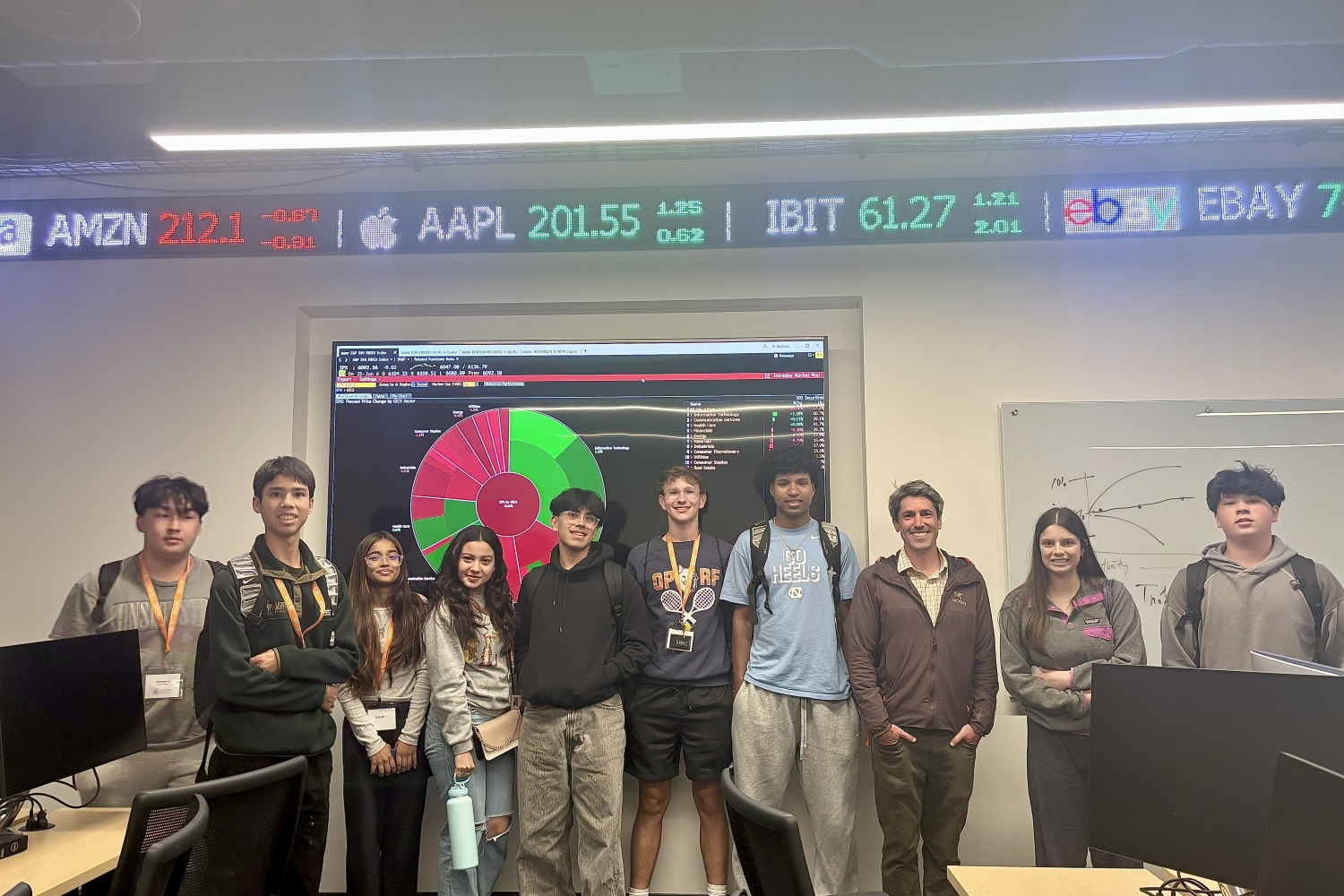
Commuters head home at 5pm. Residential students have dinner at 6pm, clubs or evening activities from 7pm and dorm checks at 10:30pm. The course's own trips are a visit to a New York lab where students see behavioral economics research in action and a trip to a financial lab or decision-making center, while weekends bring outings such as Top of the Rock, a Circle Line boat tour and Six Flags Great Adventure.
Who teaches the course?
The Barnard session is taught by Michelle Lei, a behavioral scientist who has worked with healthcare and fintech organizations to design products and decision frameworks that help people make better financial and health choices. Her research, done alongside other behavioral scientists, statisticians and engineers, compares how generative AI models and humans make judgments, including when chatbots may amplify common human blind spots.
We couldn't find a class size or student-to-teacher ratio for the course in Summer Springboard's published material, so ask admissions if that matters to you.
What do you leave with?
You leave with a completion certificate, a letter of recommendation from your instructor and the experiment you designed, ran and presented at the end of the course. There's no college credit, because Summer Springboard gives credit only at its Cal Poly and New York School of Interior Design programs.
What you get is a short piece of hands-on research you can describe in your own words, not a formal qualification.
Who can apply, and what does the application ask for?
Places are open to students entering grades 9 to 12, including those starting high school in the fall and seniors who graduated that spring, as long as they've finished 8th grade by the start date and have a 3.0 GPA or the local equivalent. International students also need to show their English is strong enough, either in a telephone interview or with one of the minimum scores below.
The application takes about 30 minutes, needs the student there to complete it, and includes short-answer essay questions and signed agreement forms. Summer Springboard reviews each one against its Essential Eligibility Criteria, which expect students to manage their own care and medication, walk more than a mile between buildings and disclose their full medical history, and it may ask for input from a doctor. Decisions take 5 to 7 business days. Courses are filled first come, first served, and Summer Springboard warns that some will close or move to a waitlist after 21 February 2027.
TOEFL
490 on the paper test or 60 on the iBT.
Cambridge
PET with Distinction or FCE at grade C.
SAT
450 in Reading and Writing.
What do the two weeks really cost?
Residential places cost $5,998 and commuter places $3,298 for families who apply by 30 November 2026. Summer Springboard raises tuition on 1 December 2026, and we couldn't find the new price in its published material. The residential price covers your room, all meals, the course and every excursion, weekends included. The commuter price covers lunch, the course, the course excursions and weekday programming from 9am to 5pm, and weekend excursions cost $125 a day extra. Behavioral Economics doesn't carry the $250 supplement that some Barnard courses do.
When you apply, you pay a $600 deposit along with a non-refundable application fee of $99, which rises to $149 after 21 February 2027 and $199 after 18 April 2027. If you apply before 10 March 2027, the balance is due in three parts on 10 March, 10 April and 10 May, with a $150 late fee for payments received after 10 May.
Cancel before 1 March and only the application fee is kept. From 2 March you also lose the deposit, from 2 April you get back 75% of tuition, after 1 May 25%, and after 1 June nothing at all. Need-based scholarships cover up to 30% of residential or 60% of commuter tuition, but never the deposit or application fee.
Getting there
Flights aren't included. The airport shuttle costs $95 each way, and students aged 14 or younger must fly as unaccompanied minors, which adds $50 each way plus the airline's own fee.
Spending money
Summer Springboard suggests about $100 a week for snacks and souvenirs, and a two-week gym membership costs $50 if you want one.
Cancellation cover
An optional Tuition Protection Plan, bought when you apply, lets you cancel for any reason up to the start day. It cost $699 under the 2026 terms, and that fee isn't refunded unless Summer Springboard cancels the program itself.
How are students looked after at Barnard?
Summer Springboard staff live on every floor of the residence hall, and the campus director and other senior staff live in the dorms too, on call around the clock. For 2027, students stay in single or double rooms in Elliott Hall, in gender-separated suites with a shared bathroom, and the building is access-controlled, so each student uses their own card to get in.
Barnard Security patrols the campus 24/7, students must be in their rooms from 10pm, and staff check rooms at 10:30pm. Urgent and emergency care is close by, including Mt. Sinai Morningside Hospital, and students carry and take their own medication, which has to be listed on the health form.
Conduct rules
Most code of conduct breaches mean immediate expulsion, and a student sent home flies on the next available flight at the family's expense, with no refund.
Getting around
Chaperones travel with students to excursions by subway or private bus, and staff meet shuttle passengers at the airport within set flight windows.

Sean
Founder, Succeed
Talk it through with Sean
Want to talk it through?
“I can help you compare the programs you're considering, think through the practicalities and work out what makes sense for you.”
20 minutes · No obligation to enroll
What should you do next?
Frequently asked questions
Sources
- Behavioral Economics
summerspringboard.com · Official page
- Campus Life FAQ
summerspringboard.com
- General Information FAQ
summerspringboard.com
- Application and Enrollment FAQ
summerspringboard.com
- Main FAQ | Knowledge Base
summerspringboard.com
- Terms & Conditions
summerspringboard.com
- HS 2-week Barnard 2027 Program Infosheet (PDF)
summerspringboard.com
- 2027 HS 2-week Behavioral Economics Infosheet (PDF)
summerspringboard.com
Not ready to decide yet? Keep it for later.