
Iacocca Global Future Leaders Lab: Silicon Valley
Applications open
Six days in San Francisco, ages 15 to 17, from $3,250, apply by 31 January 2027.
31 Jan 2027 · From $3,250 · 15-17 · San Francisco · In-person
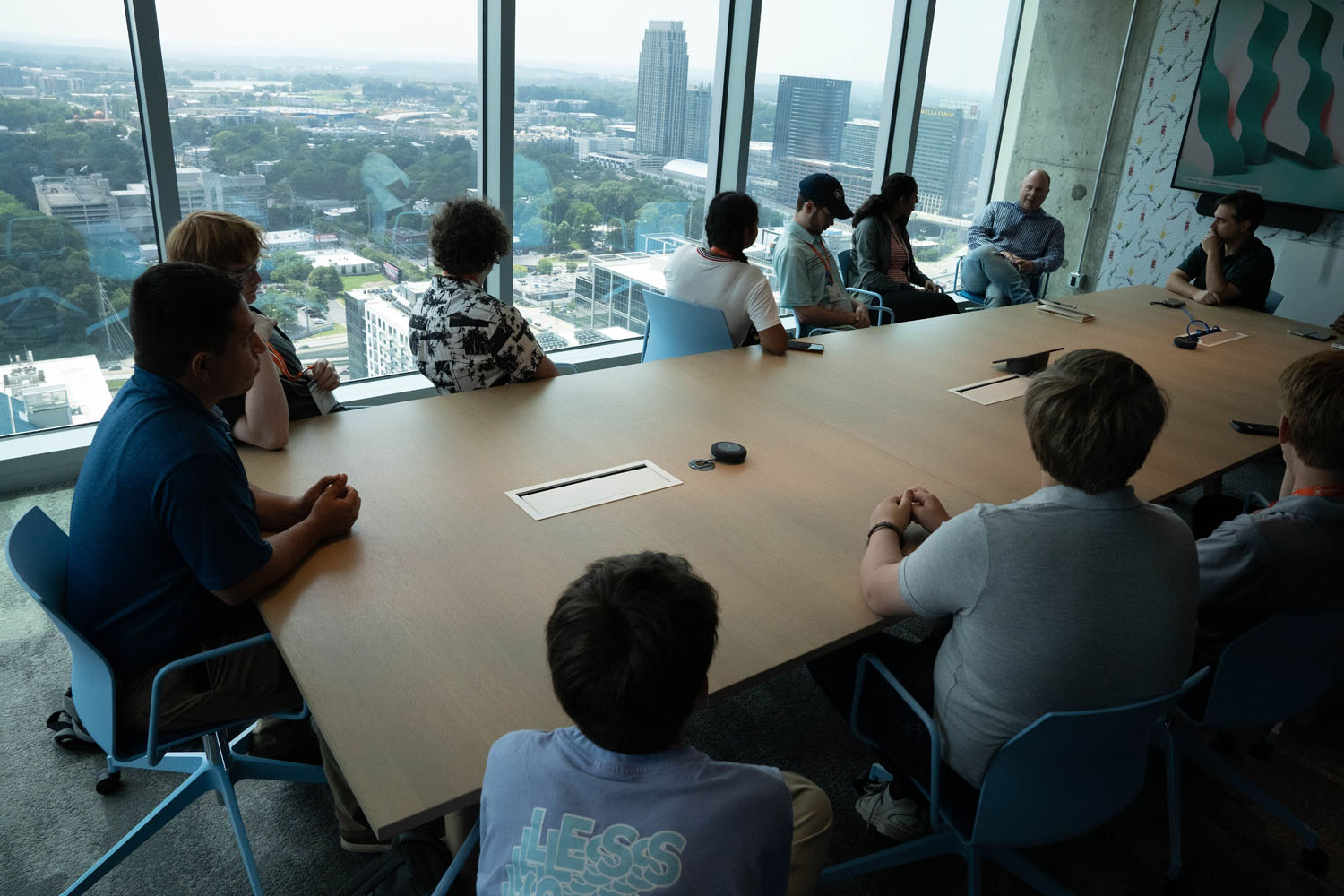
Over two weeks on the Georgia Tech campus in Atlanta, you take a single business course built around case studies, group discussions and problem-solving exercises on how companies plan and make strategic decisions. Class runs on weekday mornings, and afternoons bring course excursions, guest speakers and college readiness workshops. You can live in the dorms with meals and weekend trips included or commute in for the day, and Summer Springboard runs the program independently of Georgia Tech.
Get the key facts by email
The dates, costs and how to apply, then 2 reminders: 2 May (2 weeks before) and 13 May (3 days before).
Why it's worth it
In recent summers the course has been taught by a business strategist who has held senior innovation roles at Atlanta's airport and in the city's government. It also comes with course excursions, college readiness workshops and dorm life, so you get a trial run of college as well as a first look at business.
What it asks of you
Mostly money and two weeks of your June. Residential tuition covers almost everything apart from travel, health insurance and the application fee. Commuting costs $2,500 less but only works if you live within reach of Atlanta.
Who should skip it
Students who already know they want to study business and need something substantial to show for it, because the course ends with a completion certificate and a letter rather than college credit.
Class runs in the morning, from 9am to noon. Summer Springboard's 2026 outline for this course lists nine three-hour sessions, Monday to Friday in the first week and Monday to Thursday in the second, which comes to about 27 hours of class, with Wednesday afternoons set aside for extra academic time such as excursions and speakers.
Afternoons start after lunch in the campus dining hall. Each course's Academics in Action time includes an instructor-led activity, a project development session, and excursions or guest speakers, with at least one off-campus trip per course. The rest of the afternoon goes to recreation, college readiness workshops and True You, a two-session group reflection on personal goals. Commuters head home in the late afternoon, while residential students have dinner at 6pm, clubs or evening activities from 7pm and night checks at 10:30pm.
The 2027 excursion list includes a Georgia Tech campus tour, World of Coca-Cola, the Georgia Aquarium, the National Center for Civil and Human Rights and Six Flags Over Georgia. Check-in is at 3pm on the first day and check-out at 10am on the last.
Summer Springboard names Dr. Dawn Gregory as the Georgia Tech instructor for this course in 2025 and 2026. She's a business strategist with a Doctor of Business Administration focused on Industry 5.0 technologies including AI, and she works as Chief Digital Officer for the advisory firm Strategic Innovation. She has also been Innovation Management Officer at Hartsfield-Jackson Atlanta International Airport, Director of the Mayor's Office of Innovation for the City of Atlanta and Chief Operating Officer of a multi-state healthcare organization. Summer Springboard doesn't name a 2027 instructor for this course, so it's worth asking admissions whether she's returning.
Across its programs, Summer Springboard says morning classes break into small groups by course and that faculty come from area colleges, universities and professional forums. It doesn't publish a class size or student-to-instructor ratio for this course.
You leave with a completion certificate and a letter of recommendation from your instructor, which Summer Springboard gives students in all its programs. There's no college credit on this campus. Both documents are earned rather than automatic, and Summer Springboard may withhold them for breaking the code of conduct or not taking part. Because Georgia Tech doesn't run the program, neither the certificate nor the letter comes from the university.
You can apply if you're in grades 9 to 12 with at least a 3.0 GPA or your school's equivalent, and Summer Springboard also accepts students starting high school in the fall and seniors who graduated in the spring. International students show their English through a phone interview or any one of the minimum test scores below.
The application takes about 30 minutes, the student has to be there to complete it, and it includes short-answer essay questions and signed agreement forms. You pay the $600 deposit and the application fee when you submit, and Summer Springboard says you'll get a decision within 5 to 7 business days.
Applicants are also screened against Summer Springboard's Essential Eligibility Criteria, which cover managing your own care and medication, following instructions in English and walking more than a mile between buildings. Some health conditions call for medical documentation. Places go first come, first served, and once a course or session is full you join a waitlist without being charged.
TOEFL
490 on the paper test or 60 on the iBT.
Cambridge
PET with Distinction or FCE at grade C.
SAT
450 in Reading and Writing.
Living on campus costs $5,798 and commuting costs $3,298, plus a non-refundable application fee that starts at $99. Summer Springboard says tuition rises on 1 December 2026 without publishing the later price, and the application fee goes up to $149 after 21 February 2027 and to $199 after 18 April 2027. Residential tuition covers your room, all meals, the course, and weekday and weekend excursions. Commuter tuition covers lunch, the course and weekday excursions, and weekend trips cost $125 a day.
Flights are extra, and so is health insurance, which every student must show proof of. The airport shuttle costs $95 each way. Students 14 or younger must fly as unaccompanied minors, and on top of the airline's own fee, Summer Springboard adds $50 each way to the shuttle. If you don't pay in full, you're put on a payment plan automatically. Applying before 10 March spreads the balance over installments on 10 March, 10 April and 10 May, later applicants pay in fewer installments, and Summer Springboard can cancel an enrollment that isn't fully paid by 1 June.
Need-based scholarships can cover up to 30% of residential tuition or 60% of commuter tuition, but they can't go toward the deposit, the application fee or travel. Summer Springboard refunds less the closer to the program you cancel, and nothing comes back if a student leaves once the program has started.
| If you cancel | What you get back |
|---|---|
| Before 1 March 2027 | All tuition except the application fee |
| 2 March to 1 April 2027 | All tuition except the deposit and application fee, or 100% of what you paid as credit for a future year |
| 2 April to 1 May 2027 | 75% of tuition except the deposit and application fee, or 100% of what you paid as future credit |
| 2 May to 1 June 2027 | 25% of tuition except the deposit and application fee, or 75% of what you paid as future credit |
| After 1 June 2027 | Nothing, and no credit for a future year |
Summer Springboard staff live on each residence floor, and the Campus Director, Assistant Campus Director and other staff also live in the dorms and are on hand around the clock. The residence hall is access-controlled with individual swipe cards, Georgia Tech Security patrols the campus and residence halls 24/7, and students must be in their rooms after 10pm.
Staff directly supervise classes, field trips and excursions. In free time, students can move around within set campus boundaries in groups of three or more, so they aren't watched every minute. Suites are separated by gender. If a student is sick or hurt, a staff member goes with them for treatment, most likely at Emory University Hospital's emergency room or Concentra Urgent Care, and parents are told. The family pays any medical costs. All staff go through background checks and training, and Campus Directors hold a bachelor's or master's degree.

Sean
Talk it through with Sean
“I can help you compare the programs you're considering, think through the practicalities and work out what makes sense for you.”
Six days in San Francisco, ages 15 to 17, from $3,250, apply by 31 January 2027.
31 Jan 2027 · From $3,250 · 15-17 · San Francisco · In-person
Several sessions in Oxford, ages 12 to 16, from £3,495.
Deadline: Not announced yet · From £3,495 · 12-16 · Oxford · In-person
Several sessions in Winston-Salem, ages 14 to 18, from $3,500.
Deadline: Not announced yet · From $3,500 · 14-18 · Winston-Salem · In-person
Save this program in Succeed to compare it with similar programs, dates, costs and formats in one place.
Compare with other programsOfficial page
summerspringboard.com
summerspringboard.com
summerspringboard.com
summerspringboard.com
summerspringboard.com
summerspringboard.com
summerspringboard.com