
Final admission deadline
17 May 2026
General deadline for Summer 2026 programs.

A hands-on emergency medicine course using clinical simulations, practical skills training, patient diagnosis and treatment planning to explore healthcare careers.
See Succeed's assessment of the programme, who it may suit, the estimated total cost, what applying involves and what is still to confirm.
or let us know if .
What Succeed checks
We review public program details such as eligibility, age range, cost, duration, location, format, accommodation, meals and application timing.
What Last verified means
Last verified is the latest date Succeed checked the public details shown on this page. Program dates, prices and availability can still change.
How official sources are used
Succeed uses official provider information where available, then rewrites it into a student-facing summary for comparison and planning.
Why some dates are reference dates
If the current cycle is not available, Succeed may show the latest verified cycle dates so you can understand typical timing.
Succeed is independent from this provider unless a partnership is clearly stated.
Current status
Upcoming
Eligibility
Completed Grade 8; 3.0 GPA
Age range / Year group
Ages 14-18
Location / Region
New Haven, Connecticut, United States
Cost
$2,498; $4,298
Duration
1 week
Format
In-person
This is a practical introduction to emergency medicine built around clinical skills, simulation labs and realistic patient scenarios.
Students practise CPR, vital signs, suturing, splinting and bleeding control before researching symptoms, forming diagnoses and planning treatment in teams.
It suits students testing an interest in medicine who want more active learning than a classroom-only course.
The Emergency Medicine High School Course is a Summer Springboard academic program that introduces students to acute care through practical training and realistic simulations. Participants learn foundational techniques and explore how healthcare professionals assess and treat patients.
The experience moves from skills such as CPR, vital signs, suturing and splinting to team-based diagnosis, treatment planning and emergency-response scenarios. Campus versions also incorporate simulation-center visits, healthcare speakers or related academic excursions.
Clinical-style simulations turn medical concepts into active decision-making practice.
The curriculum combines technical procedures with patient history, diagnosis and treatment planning.
Students work with healthcare professionals and visit medical simulation facilities.
One-week and two-week versions give families different time-commitment options.
Selected campuses add a recognized CPR certification opportunity.
High school students seriously exploring medicine who enjoy practical teamwork, simulations and making decisions under pressure.
You want a purely theoretical science course, dislike hands-on medical scenarios or need a program with minimal independent self-care.
It can be worthwhile for a student who wants to test a genuine interest in emergency care through practical experience. The simulations, professional contact and team cases offer a clearer view of the field than passive career research alone.
The main limitation is cost: tuition, mandatory application charges and a course supplement can make the experience expensive, especially with travel. It is an exploratory enrichment program rather than medical qualification or university credit.
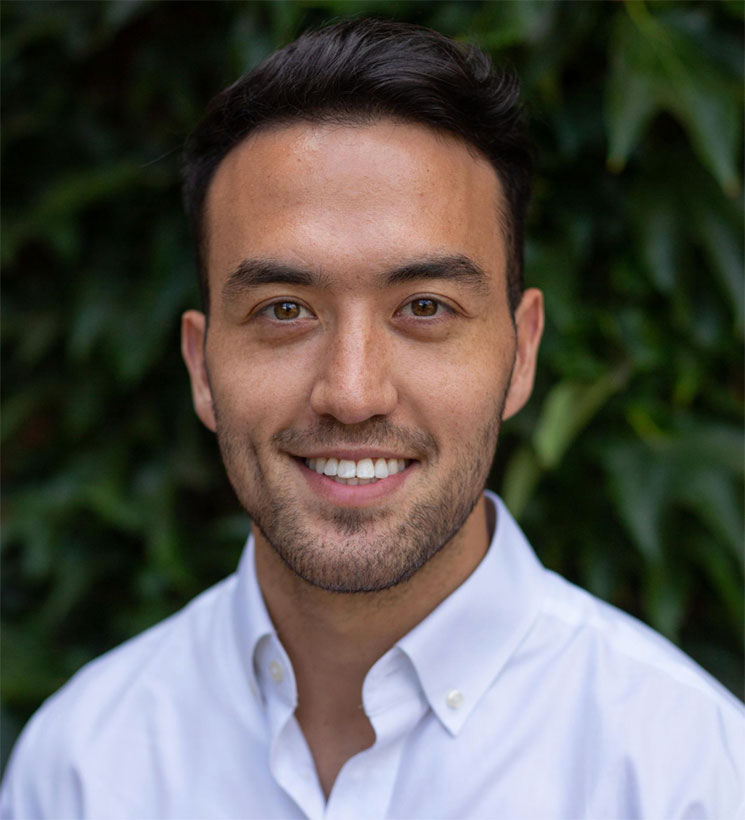
Sean
Founder, Succeed
Talk it through with Sean
“I can help you compare the programmes you're considering, think through the practicalities and work out what makes sense for you.”
20 minutes · No obligation to enrol
A practical overview of cost, accommodation, meals, dates and provider details to review before deciding.
Cost and what is included
$2,498; $4,298; includes Residential tuition includes lodging and all meals., Residential tuition includes the academic course and excursions., Commuter tuition includes lunch, the course and excursions., Commuter weekday programming runs from 9am to 5pm., Residential tuition includes weekend excursions..
Accommodation
Residential and commuter
Meals
All meals or weekday lunch
Provider details
Review the Summer Springboard provider page and official sources before making a final decision.
Dates and logistics
1 week; New Haven, Connecticut, United States.
What to check before committing
Confirm current dates, payment terms, travel arrangements, cancellation rules and what is included with the provider.
Compare this program with similar options before deciding on dates, cost, format and fit.
Compare with similar programsEffort level
High during scheduled class and simulation time.
Best started
Begin planning two to three months before the next application cycle, allowing time for documents, travel and medical information.
Main challenge
Applying clinical reasoning while staying composed in realistic simulations.
Review foundational human biology and common medical terminology. Practise communicating clearly when working through a problem with a team. Gather academic, medical and travel documents early. Discuss any support or accommodation needs with the provider before enrollment.
Useful if
You have studied basic biology or independently reviewed human anatomy.
Students progress from foundational emergency-care techniques to simulated clinical decision-making, with practical sessions, team cases and campus-specific excursions.
Learn to take vital signs, perform CPR and control bleeding.
Practise wound care, suturing, splinting and patient positioning.
Train in a medical simulation facility or clinical-style laboratory.
Research a simulated patient's history and symptoms in a team.
Develop and justify a diagnosis and treatment plan.
Respond to a mass-casualty or mock emergency scenario.
Explore medical careers through instructors, speakers or excursions.
Final admission deadline
17 May 2026
General deadline for Summer 2026 programs.
Session 1
20-26 June 2027
Session 4
11-17 July 2027
| Milestone | Date | Timezone | Status | |
|---|---|---|---|---|
Final admission deadline | 17 May 2026 | Local | Past | |
Session 1 | 20-26 June 2027 | Local | Upcoming | |
Session 4 | 11-17 July 2027 | Local | Upcoming |
Completed eighth grade before the program starts
Minimum 3.0 GPA or local equivalent
English proficiency for international students
Meets the Essential Eligibility Criteria
Able to follow staff instructions in English
Prepared for independent self-care and campus routines
Program tuition
From $2,498 — Lowest documented first-week commuter tuition.
Funding or discounts
What's included
Residential tuition includes lodging and all meals., Residential tuition includes the academic course and excursions., Commuter tuition includes lunch, the course and excursions., Commuter weekday programming runs from 9am to 5pm., Residential tuition includes weekend excursions.
Create an account using the official application portal.
Verify your email and complete the account details.
Select the campus, session, course and tuition type.
Enter the student's contact and application information.
Complete the short-answer questions and agreement forms.
Pay the application fee and $600 deposit.
Submit the completed application for review.
Complete any additional forms requested after acceptance.
Next step with Succeed
or let us know if .
Succeed replies first, usually within a working day
The program covers the following focus areas.
Foundational clinical skills
Practise CPR, vital signs, bleeding control, splinting and suturing.
Patient assessment
Research histories and symptoms before forming a diagnosis.
Treatment planning
Develop and justify treatment plans in simulated medical teams.
Emergency response
Triage and stabilize patients during pressured mass-casualty simulations.
Healthcare careers
Explore medical roles, education routes and professional environments.
Curriculum may be adjusted based on participant interests and current developments.
A typical day during the program.
Two-week courses hold three-hour Emergency Medicine classes on scheduled weekdays.
One-week courses hold five four-hour classes from Monday to Friday.
Academic excursions, laboratory visits, speakers or recreational activities follow class.
Residential schedules may include dinner, clubs, evening activities and dorm checks.
Teaching is delivered by campus-specific healthcare professionals, including emergency physicians, nurses, physician assistants, EMT instructors and medical researchers. Documented instructors bring active clinical, research and healthcare-education experience to the simulations and career discussions.
Instructor assignments differ by campus and session.
Room configuration is not documented, and the host universities generally do not operate or endorse the Summer Springboard program.
After completing this program, participants often pursue:
Use the experience to test interest in medicine or pre-med study.
Build confidence with foundational clinical and emergency-response techniques.
Reflect on careers including physician, nurse, EMT and physician assistant.
Discuss the experience as evidence of informed subject exploration.
Gain CPR certification at selected campus versions.
The program is exploratory enrichment and does not confer a medical qualification.
The course is offered across college-campus settings in New Haven, New York City, Berkeley, Washington, Atlanta, Los Angeles and San Diego, plus Oxford in the United Kingdom. Campus versions use local simulation facilities, healthcare visits and professional speakers to add context to the academic course.
Summer Springboard generally operates independently of the host universities.
Compare these Succeed-listed medicine programs if you want a different campus, age band or academic emphasis.
It offers medicine-focused campus enrichment for a similar high school audience.
Best for
Students wanting a broad US healthcare program.
It provides another in-person medicine experience in New Haven.
Best for
Older students seeking a Yale-based medicine course.
It shifts emphasis from emergency simulations toward medical and biological sciences.
Best for
Students wanting deeper biological-science breadth.
It offers a shorter age-bounded alternative with a university-preparation emphasis.
Best for
Students wanting medicine preparation in Cambridge.
Save this program in Succeed to compare it with similar programs, dates, costs and formats in one place.
Compare with other programsContent reviewed by
Co-founder, Succeed | Founder, Immerse Education (2012–2026)
Sean works at the intersection of academic enrichment, program quality and university preparation, with expertise in evaluating pre-university experiences for ambitious secondary school students.
Succeed uses official provider information where available, but keeps this public page focused on comparison and planning inside Succeed.
Course details reviewed
Campus runs compared
Tuition options checked
Admission criteria reviewed
Application process checked
Program terms reviewed
We use source material to verify core facts, then show older cycle dates as reference when a current cycle is not available. Always check current application instructions before applying.
Emergency Medicine High School Course
by Summer Springboard
Get the full picture before you decide
Succeed's assessment, estimated total cost and what applying involves.
No account needed for the Guide or Compare.