
Summer Springboard Entertainment Business & Media Management High School Course
- 2027 program
Summer Springboard runs this two-week course on the UCLA campus in Los Angeles, where high school students look at how talent agencies, PR firms and studio marketing teams launch projects and manage stars. Mornings are classes on entertainment marketing, publicity, crisis communication and talent management, and afternoons bring guest speakers, possible visits to entertainment sites and college readiness workshops. It ends with each team building and pitching a full launch strategy for an original media project. Students can live in the UCLA dorms or attend as commuters.
 Sean Stevens · SourcesSucceed has a commercial partnership with this provider.
At a glance
Official facts · checked 11 Nov 2026- DatesOfficial
- 2027: 18 to 30 July
- Who can applyOfficial
- Students in grades 9 to 12, including those starting high school in the fall or who graduated in the spring. International students must show English proficiency by telephone interview or a minimum score: TOEFL 490 paper or 60 iBT, Cambridge PET-Distinction or FCE-C, or SAT 450 Reading/Writing
- Total costOfficial
- 2027: $6,298 residential, $3,298 non-residential
- Format and placeOfficial
- In person, UCLA, Los Angeles, California
- Length
- 2 weeks
- Included / budget separately
- Included: accommodation, meals (Three meals a day for residential students, lunch only for commuters). Separately: materials and admin fee $99, application fee from $99, non-refundable ($149 after 21 February 2027, $199 after 18 April 2027), airport shuttle $95 each way, airport transfer outside the group window $195 each way
- Deposit and refunds
- Deposit $600. Cancel before 1 March: 100% of tuition is refunded, including the deposit, except the $99 application fee
- Financial aid
- Need-based scholarships cover up to 30% of residential tuition or up to 60% of commuter tuition
- Apply by
- 2027: 21 February (1st Wave), 18 April (2nd Wave), 16 May (Final General Admission)
- Cohort and selectivity
- Applicants who meet the grade, GPA and eligibility criteria are admitted on a rolling basis, and courses are filled first come, first served until full, with a waitlist after that
- Credit or certificate
- Summer Springboard completion certificate and a letter of recommendation from the instructor
Get the key facts by email
The dates, costs and how to apply, then 2 reminders: 2 May (2 weeks before) and 13 May (3 days before).
Succeed's assessment
Should you apply?
SucceedIn short
Why it's worth it
The course makes real use of its Los Angeles setting, with visiting industry professionals and possible trips to places such as studio lots or talent agencies, so a student testing out this career gets a realistic look at agency, studio and PR work in a short summer.
What it asks of you
A residential place costs $6,298 before flights and fees if you apply by 30 November 2026. The class load is light at 27 hours, with afternoons given to workshops, speakers and outings.
Who should skip it
Students who want something that counts toward a degree, because Summer Springboard gives no college credit for this course, only a completion certificate and a letter of recommendation from the instructor.
What does a day on the course look like?
Class runs from 9am to noon, Monday to Friday in the first week and Monday to Thursday in the second, which adds up to nine three-hour sessions. After lunch, a typical day on Summer Springboard's UCLA program has a recreational activity or course-related excursion at 1:30pm, then a College Readiness Workshop or a True You reflection session at 3pm. You pick two of the four 90-minute workshops: Speaking with Confidence, Mastering Money, Developing Leadership, and Prepping for College and Career.
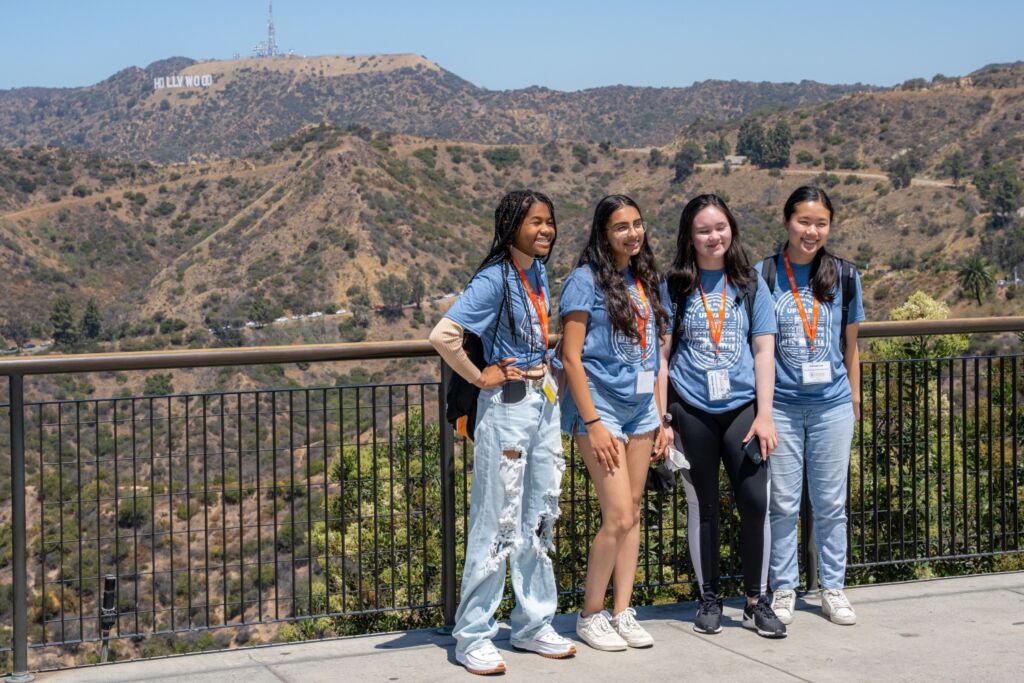
Commuter students leave at 5pm. Residential students have dinner at 6pm, clubs or evening activities from 7pm and dorm checks at 10:30pm. Weekends bring group outings for residential students, and Summer Springboard's examples include Griffith Observatory, Santa Monica Pier, Ovation Hollywood, The Grove and Farmers Market, and Pacific Park. Summer Springboard notes that this is a sample schedule and real days may vary.
Who teaches the course?
Summer Springboard hasn't named the instructor yet and lists the role as to be announced. It says its courses are taught by faculty recruited from area colleges, universities and professional forums, chosen for their subject expertise and their ability to challenge and engage students, and this course adds workshops led by visiting industry guest speakers. It doesn't publish a class size either. If who teaches matters to you, ask admissions before you apply, since the $600 deposit is due with the application.
Who can get a place?
You need to have finished 8th grade by the time the course starts, so rising freshmen through students who graduated that spring can apply, and you need a GPA of 3.0 or the local equivalent. International students show their English in a phone interview or with a TOEFL score of 490 on paper or 60 on the iBT, a Cambridge PET with Distinction or FCE at grade C, or an SAT Reading and Writing score of 450. Summer Springboard says most of its high school students are 15 to 17.
The application includes short-answer essay questions and signed agreement forms, and Summer Springboard reviews it against its Essential Eligibility Criteria, which cover things like managing your own medication and coping with shared rooms and long, structured days. It may ask for medical documentation, and it states plainly that these aren't therapeutic programs. Summer Springboard publishes no acceptance rate and assigns courses first come, first served, so a full course means a waitlist rather than a rejection.
What does it really cost?
Residential tuition is $6,298 and commuter tuition is $3,298, both for applications made by 30 November 2026. Summer Springboard says tuition rises on 1 December 2026 but hasn't published the new figure, so confirm it when you book. On top of tuition there's a non-refundable application fee that starts at $99 and rises to $149 after 21 February 2027 and $199 after 18 April 2027, and a $600 deposit is due with the application.
The residential price covers your room, all meals, the course, weekday excursions and weekend excursions. Commuters get lunch, the course and programming from 9am to 5pm on weekdays, and can add weekend excursions at $125 a day. Flights aren't included. The airport shuttle costs $95 each way, plus $50 each way for students flying as unaccompanied minors, which Summer Springboard requires for anyone 14 or younger.
Need-based scholarships cover up to 30% of residential tuition or 60% of commuter tuition, though never the deposit or application fee. Cancel before 1 March 2027 and you get all tuition back except the application fee, and the refund then shrinks in steps to nothing after 1 June 2027. An optional $699 Tuition Protection Plan, bought when you apply, lets you cancel for any reason up to the start day and get back what you've paid, but the plan's own fee isn't refunded unless Summer Springboard cancels the program.
How are students looked after?
Summer Springboard staff live on each dorm floor, and the Campus Director, Academic Manager and other staff also live in the dorms and are available 24 hours a day. The dorms have 24-hour security with electronic keys for each building and room, UCLA Police patrol the campus and residence halls, and students must be in their rooms after 10pm, with dorm checks at 10:30pm. Students share air-conditioned double or triple rooms in De Neve Plaza, assigned by gender identity.
In an emergency a staff member goes with the student for care, most likely to the Ronald Reagan UCLA Medical Center emergency room 0.4 miles from the dorms. Students keep and take their own medication. Phones are allowed but must be off during activities, and parents can reach the student through the site office. Breaking the code of conduct can mean being sent home at the family's expense with no refund.
How do you apply?
Applications start on Summer Springboard's enrollment page, which links to its online portal.
Check Summer Springboard's availability page to make sure the course is still open, then register on the portal and confirm the verification email.
Create a new application and choose UCLA, Session 3, this course, and residential or commuter tuition. The full form takes about 30 minutes and the student has to be there to complete it.
Answer the short-answer essay questions and pay the $600 deposit and application fee to hold the place.
Expect a decision within 5 to 7 business days, after which more forms open up, and be ready to return any follow-up paperwork Summer Springboard asks for within 48 hours.
Aim to apply before the 21 February 2027 or 18 April 2027 rounds, since some courses close and move to a waitlist at each, and enrollment shuts completely on 16 May 2027.
What should you do next?
Frequently asked questions
Sources
- summerspringboard.com/teen-programs/entertainment-business-media-management-ucla-summer-springboard-2
Official page
- summerspringboard.com/knowledge-base/application-faq
- Need-Based Scholarships
summerspringboard.com
- Campus Specific FAQ
summerspringboard.com
- Terms & Conditions
summerspringboard.com
- Main FAQ | Knowledge Base
summerspringboard.com
- General Information FAQ
summerspringboard.com
- 2027 Entertainment Business & Media Management Infosheet (PDF)
summerspringboard.com
Not ready to decide yet? Keep it for later.