
Residential art program in St Andrews
Deadline: Not announced yet · From £7,900 · 13-18 · St Andrews · In-person
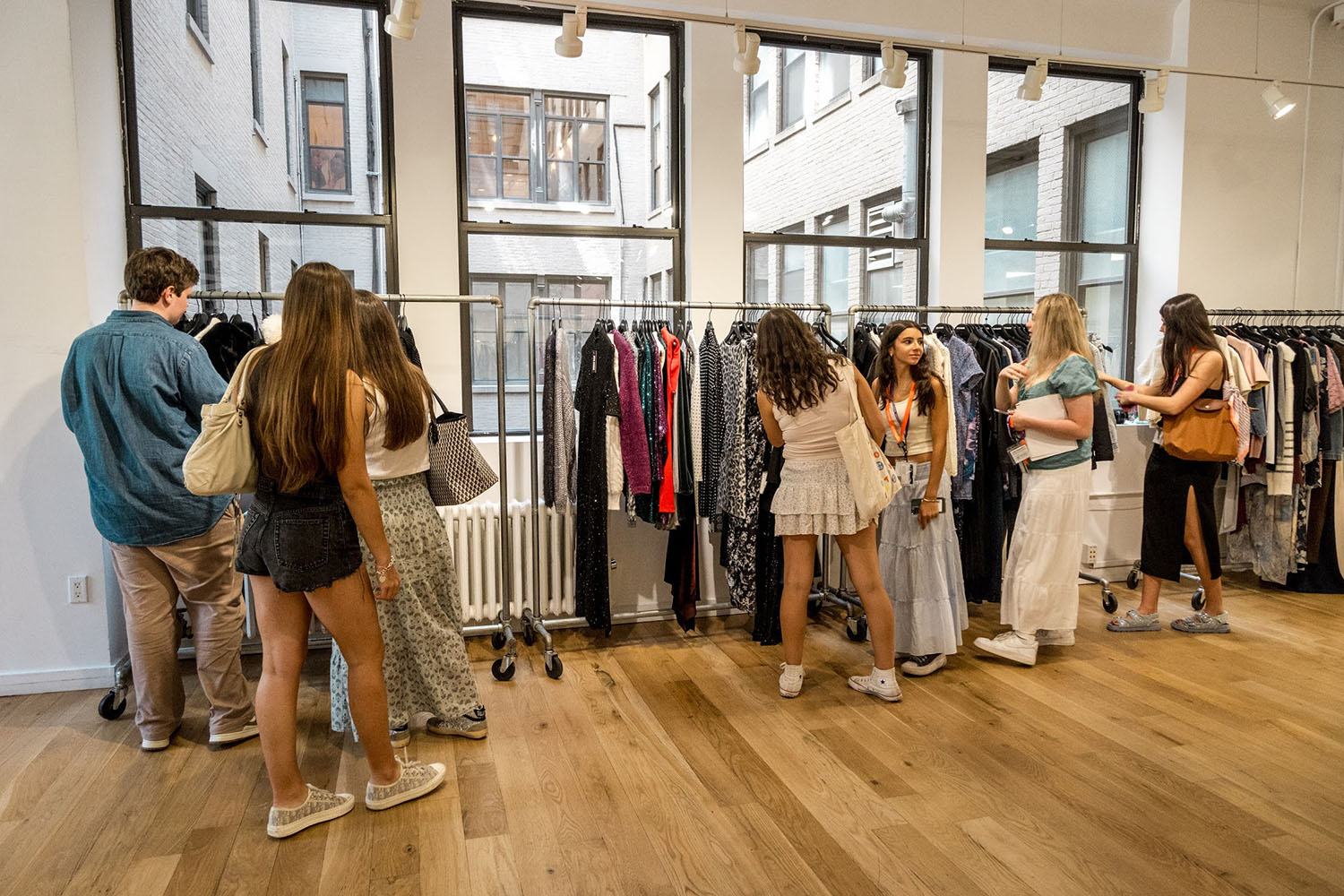
Fashion Merchandising is a two-week Summer Springboard course on the business side of fashion, taught on the Barnard College campus in New York City. With the Steve Madden brand as its focus, you study consumer behavior, trend forecasting, visual merchandising and brand strategy, with visits to the Fashion Institute of Technology and the city's fabric district. The course ends with you presenting an original bag design at Steve Madden's headquarters, and you can either live in the dorms or commute.
Get the key facts by email
The dates, costs and how to apply, then 2 reminders: 2 May (2 weeks before) and 13 May (3 days before).
Why it's worth it
The coursework is built around a real brand from the start, and afternoons take you to places like the Fashion Institute of Technology and the fabric district, which should give you a clearer sense of whether buying, product development or brand strategy suits you.
What it asks of you
Two weeks in July and a sizeable bill, since residential tuition alone is $5,998 for 13 days on campus, before flights and fees. Beyond a 3.0 GPA and some short essay answers there's no portfolio to submit, so the cost is likely to be the bigger hurdle.
After breakfast at 8am, your fashion class runs from 9am until lunch at noon. At 1:30pm the group heads out on a course excursion, such as the visits to the Fashion Institute of Technology and the fabric district, or on a recreational outing. At 3pm there's either a college readiness workshop or True You, Summer Springboard's two-session group reflection. You choose two of four 90-minute workshops: Speaking with Confidence, Mastering Money, Developing Leadership, and Prepping for College and Career.
Commuters leave at 5pm, while residential students have dinner at 6pm and clubs or other evening activities from 7pm. Weekends are for group trips, and the 2027 list includes Top of the Rock, a Circle Line boat tour, the High Line and the Vessel, and a day at Six Flags Great Adventure. On weekends residential students get a meal stipend to eat out in the city.
Emmanuel Whitmore teaches the course. He's a stylist, couture designer and fashion educator with more than 15 years in designer couture, luxury retail and image consulting. He trained in fashion design at The Art Institute and became lead couture designer at Versailles Couture, where he made custom gowns for clients including Cardi B and Nicki Minaj. He now works as a lead client advisor and stylist at Argent in SoHo, and he has taught before, including an intensive styling course for 30 students in a program affiliated with Cornell University.
Industry guests add to his teaching, and Summer Springboard says you'll meet rising designers, fashion buyers and product developers during the course. It doesn't publish a class size, so ask if that matters to you.
You leave with a professional portfolio covering brand communication, market research and creative design, and with the experience of presenting your own bag concept for Steve Madden at the company's New York headquarters. One standout design at that final showcase is picked for a special award, though Summer Springboard doesn't say what the award is.
Every student who completes the course gets a completion certificate and a letter of recommendation from the instructor, but Summer Springboard can withhold both for a code of conduct breach or for not taking part. The course carries no college credit.
Places go to students who meet Summer Springboard's requirements, in the order they apply. You need to be in grades 9 to 12 with a 3.0 GPA or the local equivalent, and students starting high school in the fall or who graduated in the spring can also enroll. Most students in the high school program are 15 to 17. International students also have to show their English, either in a phone interview or with a minimum TOEFL, Cambridge English or SAT score.
The application includes short essay answers and signed agreement forms. Summer Springboard reviews applications on a rolling basis, assigns course places first come, first served, and sends a decision within 5 to 7 business days, though it also quotes 7 to 10. Every applicant is also screened against its Essential Eligibility Criteria, which expect you to manage your own medication and personal care, walk more than a mile and follow instructions in English. Students with some health conditions may be asked for medical clearance and 12 months of stability.
Fashion Merchandising has only one session, and Summer Springboard warns that some programs close and move to a waitlist after 21 February 2027.
Residential tuition is $5,998, which covers your room, all meals, the course, and the weekday and weekend excursions. Commuter tuition is $3,298 and covers lunch, the course and weekday programming. Breakfast, dinner and weekend trips aren't included, although commuters can add weekend trips for $125 a day. Those prices hold if you apply by 30 November 2026, and Summer Springboard says tuition goes up on 1 December 2026 but doesn't give the new figure.
You also pay a non-refundable application fee, which starts at $99 and rises to $149 after 21 February 2027 and to $199 after 18 April 2027, plus a $600 deposit when you apply. Flights and health insurance aren't included, and every student has to show proof of medical insurance. Airport pickup is optional at $95 each way, and students 14 or younger must fly as unaccompanied minors, which adds $50 each way on top of the airline's own charges. Summer Springboard suggests about $100 a week for snacks and souvenirs, and an optional two-week gym membership costs $50.
If you apply before 10 March 2027, the balance is due in three installments on 10 March, 10 April and 10 May 2027, and payments after 10 May bring a $150 late fee. Need-based scholarships cover up to 30% of residential or 60% of commuter tuition, but never the deposit or application fee. The optional Tuition Protection Plan, which lets you cancel for any reason up to the first day, cost $699 per application in 2026 and has to be bought when you apply. Without it, Summer Springboard refunds cancellations on a sliding scale that shrinks as the program gets closer, and a student who leaves once the program has started gets nothing back.
| If you cancel | What you get back |
|---|---|
| Before 1 March 2027 | All tuition except the $99 application fee |
| 2 March to 1 April 2027 | All tuition except the deposit and application fee, or 100% of what you paid as credit for a future year |
| 2 April to 1 May 2027 | 75% of tuition except the deposit and application fee, or 100% as future credit |
| 2 May to 1 June 2027 | 25% of tuition except the deposit and application fee, or 75% as future credit |
| After 1 June 2027 | Nothing, and nothing carries over to a future year |
Summer Springboard staff live on every floor of the residence hall, and the campus director and assistant director also live in the dorms and are on hand for emergencies 24 hours a day. Students need their own access card to get into the building and their suite, Barnard Security patrols around the clock, and residential students must be in their rooms after 10pm, with dorm checks at 10:30pm. Suites are separated by gender, and you'll either share a room with one other student or have a single.
Staff directly supervise classes and excursions. In free time you can go anywhere within set boundaries around campus, but only in groups of three or more. If a student is ill or hurt, staff take them to the nearest medical facility and notify parents, and the family pays any costs. Mt. Sinai Morningside Hospital is close to campus. Campus directors hold bachelor's or master's degrees, and all program staff go through background checks. Breaking the code of conduct can mean being sent home at the family's expense with no refund.
Residential art program in St Andrews
Deadline: Not announced yet · From £7,900 · 13-18 · St Andrews · In-person
Two-week practical creativity program
Deadline: Not announced yet · From £3,495 · 12-16 · Oxford · In-person
Save this program in Succeed to compare it with similar programs, dates, costs and formats in one place.
Compare with other programsOfficial page
summerspringboard.com
summerspringboard.com
summerspringboard.com
summerspringboard.com
summerspringboard.com