
Summer Springboard Fundamentals of Medicine High School Course
- 2027 program
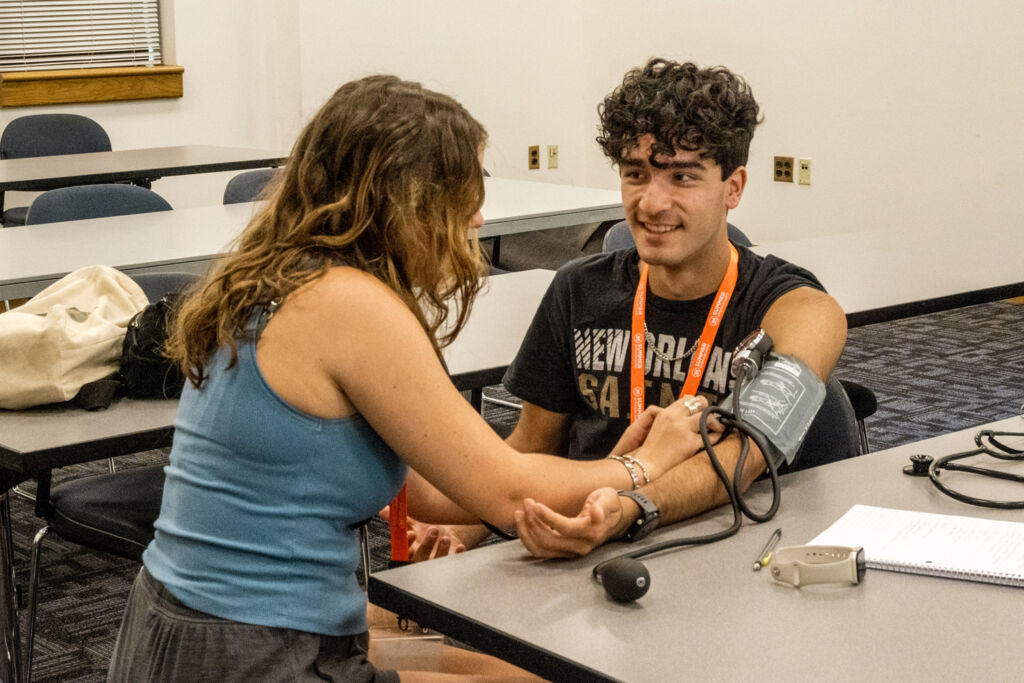
Fundamentals of Medicine is a one-week course that Summer Springboard runs on Yale University's campus in New Haven, Connecticut, for high school students who are curious about medicine but haven't settled on a direction. You learn CPR and First Aid, practice taking vital signs and patient histories, work through patient cases and hear physicians, residents and medical students describe their specialties. Mornings are class time, and afternoons go to labs and trips such as a visit to Yale's Cushing Center. You can live in the dorms or commute each day.
 Sean Stevens · SourcesSucceed has a commercial partnership with this provider.
At a glance
Official facts · checked 11 Nov 2026- DatesOfficial
- 2027: 20 to 26 June (Session 1), 4 to 10 July (Session 3), 18 to 24 July (Session 5)
- Who can applyOfficial
- Students entering grades 9 to 12, including students starting high school in the fall and students who graduated in the spring. International students show English proficiency by telephone interview or a minimum score: TOEFL 490 paper or 60 iBT, Cambridge PET-Distinction or FCE-C, or SAT 450 in Reading/Writing
- Total costOfficial
- 2027: $4,298 residential, $2,498 non-residential
- Format and placeOfficial
- In person, Yale University, New Haven, Connecticut
- Length
- 1 week
- Included / budget separately
- Included: accommodation, meals (All meals for residential students, lunch for commuters). Separately: materials and admin fee $250, application fee from $99 (rises to $149 after 21 February 2027 and $199 after 18 April 2027), airport shuttle $95 each way, Unaccompanied minor service $50 each way on top of the shuttle
- Deposit and refunds
- Deposit $600. Cancel before 1 March: 100% of tuition is refunded except the application fee, which is never refundable
- Financial aid
- Need-based scholarships cover up to 30% of residential tuition or up to 60% of commuter tuition
- Apply by
- 2027: 21 February (1st Wave), 18 April (2nd Wave), 16 May (Final General Admission)
- Cohort and selectivity
- Eligible applicants (grades 9 to 12, 3.0 GPA) are admitted on a rolling basis, and courses are assigned first come, first served. Summer Springboard publishes no acceptance rate or cohort size
- Credit or certificate
- Completion certificate and letter of recommendation from the instructor, plus CPR and First Aid certification
Get the key facts by email
The dates, costs and how to apply, then 2 reminders: 2 May (2 weeks before) and 13 May (3 days before).
Succeed's assessment
Should you apply?
SucceedIn short
Why it's worth it
It covers the groundwork every specialty shares, from vital signs and patient histories to case work, and puts you in front of physicians, residents and medical students who describe what their work is really like. That's a sensible way to find where you fit before you commit more of your summer to one field.
What it asks of you
Mostly money. A residential week costs more than $4,600 before flights, which is a lot for an introduction, while the academic bar is modest, with a 3.0 GPA and no medical experience needed.
Who should skip it
Students who already know their specialty or want real depth, because the course is deliberately broad and Summer Springboard pitches it as the step before its specialty courses.
Worth knowing
Fundamentals of Medicine is new for 2027 and Summer Springboard hasn't yet named its instructor, so this particular course has no track record to judge it by.
What does a day on the Yale campus look like?
Mornings belong to the course, which runs from 9:00am to 1:15pm with a 15-minute break at 11:00, so you get about four hours a day with your class. In Summer Springboard's sample Yale day, lunch and free time follow until 3:00pm, then an academic excursion or lab runs until 5:00pm. Those afternoon trips are tied to each course.
Commuters leave at 5:00pm. Residential students have free time, dinner at 6:00pm, an evening activity at 7:00pm and more free time before dorm checks at 9:30pm. Everyone, commuters included, checks in on the Sunday the session starts for orientation, ice-breakers and dinner. The weekend trips to Boston and New York City are only for students who stay more than one week. Summer Springboard calls the schedule illustrative and says it may change.
What do you leave with?
You leave with CPR and First Aid certification, plus a completion certificate and a letter of recommendation from your instructor, which Summer Springboard gives students in all its programs. The organizer doesn't say which body issues the CPR and First Aid certification, so check before counting on it for a job or volunteering. You'll also have investigated an emerging health question with help from current medical students and drawn up a personal roadmap to medical school covering prerequisites, the MCAT (Medical College Admission Test), applications and residency.
There's no college credit, since Summer Springboard offers credit only at its Cal Poly and New York School of Interior Design programs, and nothing is issued by Yale. The certificate and letter aren't automatic, either. Summer Springboard can withhold them for poor participation or a Code of Conduct breach.
Who can get a place?
The basic requirements are being in grades 9 to 12 and having a 3.0 GPA or the local equivalent. Students starting high school in the fall and those who graduated in the spring can also enroll, and you don't need any medical background. International students show their English in a telephone interview or with one of the minimum test scores below. The application also includes short-answer essays.
Summer Springboard reviews every application against its Essential Eligibility Criteria. These expect students to manage their own care and medication, walk more than a mile, follow staff instructions in English and cope with shared rooms and long structured days. Students with some health conditions may be asked for medical documentation and at least 12 months of stability, and the organizer is clear that its programs aren't therapeutic. Places on each course go first come, first served.
TOEFL
490 on the paper test or 60 on the iBT
Cambridge
PET-Distinction or FCE-C
SAT
450 in Reading and Writing
What does the week really cost?
A residential week comes to $4,647: $4,298 tuition, the mandatory $250 course supplement and an application fee starting at $99. A commuter week comes to $2,847, which is $2,498 tuition plus the same supplement and fee. Those tuition figures apply to applications made by 30 November 2026. Summer Springboard says tuition goes up on 1 December 2026 but hasn't published the new figure. The application fee rises too, to $149 after 21 February 2027 and $199 after 18 April 2027.
Residential tuition covers your room, all meals, the course and its excursions. Commuter tuition covers lunch, the course and excursions between 9am and 5pm, Monday to Friday. The supplement pays for lab materials, equipment, guest speakers and course trips. A $600 deposit and the application fee hold your place. If you apply before 10 March 2027, a third of the balance is due on 10 March, a third on 10 April and the rest on 10 May, and payments after 10 May carry a $150 late fee. Adding a second one-week Yale course costs $3,298 residential or $1,998 commuter for that week.
Flights aren't included, and neither is health insurance, which every student must show. The airport shuttle costs $95 each way, with another $50 each way for the unaccompanied minor service. Yale's Payne Whitney Gym is $27 a week if you want it, and laundry costs about $1.25 to wash and $1.25 to dry. Need-based scholarships can cover up to 30% of residential or 60% of commuter tuition, but never the deposit, application fee or travel.
Refunds shrink through the spring, as the table shows. Summer Springboard also sells a Tuition Protection Plan that allows cancellation for any reason up to the day the program starts. Under the 2026 terms it cost $699 and wasn't itself refundable.
| If you cancel | What you get back |
|---|---|
| Before 1 March 2027 | All tuition, except the application fee |
| 2 March to 1 April 2027 | All tuition except the deposit and application fee, or all payments as credit for a future year |
| 2 April to 1 May 2027 | 75% of tuition except the deposit and application fee, or all payments as credit for a future year |
| 2 May to 1 June 2027 | 25% of tuition except the deposit and application fee, or 75% of payments as credit for a future year |
| After 1 June 2027 | Nothing, and no credit |
| After the program starts | Nothing |
How are students looked after at Yale?
Supervision is built around staff living alongside students. Summer Springboard mentors live on each dorm floor, and the Campus Director, Assistant Campus Director and other staff live in the dorms and are on hand around the clock for emergencies. All staff go through background checks and training. The dorms need individual access cards and keys, Yale Security patrols the campus 24/7, and students must stay in their rooms after 10:00pm, following dorm checks at 9:30pm.
Staff supervise classes and excursions. In free time, students can go anywhere within set campus boundaries in groups of three or more. For health care, Summer Springboard partners with Yale New Haven Hospital and keeps a doctor on call 24/7, although families pay any medical costs. Students keep and take their own medication. Rooms are in suites on gender-specific floors with a shared bathroom, and because Yale's residential colleges have no air conditioning, Summer Springboard hands out fans. Serious Code of Conduct breaches can mean being sent home at the family's expense with no refund.
How do you apply?
Applications start on Summer Springboard's enrollment page, which leads to its Terra Ed application portal.
Timing
Admissions are rolling until enrollment closes on 16 May 2027, but some courses close or go to a waitlist after 21 February and 18 April 2027, so applying earlier is safer.
Check that your Fundamentals of Medicine session still shows as available, then register on the portal with basic contact details and confirm the verification email.
Create a new application by choosing Yale, your session, the course and residential or commuter tuition, and set aside about 30 minutes with the student present.
Answer the short-answer essay questions and sign the agreement forms.
Pay the $600 deposit and the application fee to hold the place, and expect a decision within 5 to 7 business days.
Once accepted, complete the further forms, including the medical form, Code of Conduct and waiver. If you enroll before 25 April 2027, pre-departure documents are due by 1 May 2027, while later applicants get 7 days from acceptance. Late documents cost $50.
What should you do next?
Frequently asked questions
Sources
- summerspringboard.com/teen-programs/fundamentals-medicine-yale-summer-springboard
Official page
- Need-Based Scholarships
summerspringboard.com
- General Information FAQ
summerspringboard.com
- Terms & Conditions
summerspringboard.com
- Application and Enrollment FAQ
summerspringboard.com
- summerspringboard.com/apply
- summerspringboard.com/knowledge-base/campus-specific-faq-knowledge-base-summer-springboard
- Yale Program Infosheet 2027 (HS 1-week) PDF
summerspringboard.com
Not ready to decide yet? Keep it for later.