
Summer Springboard Journalism & Broadcasting High School Course
- 2027 program
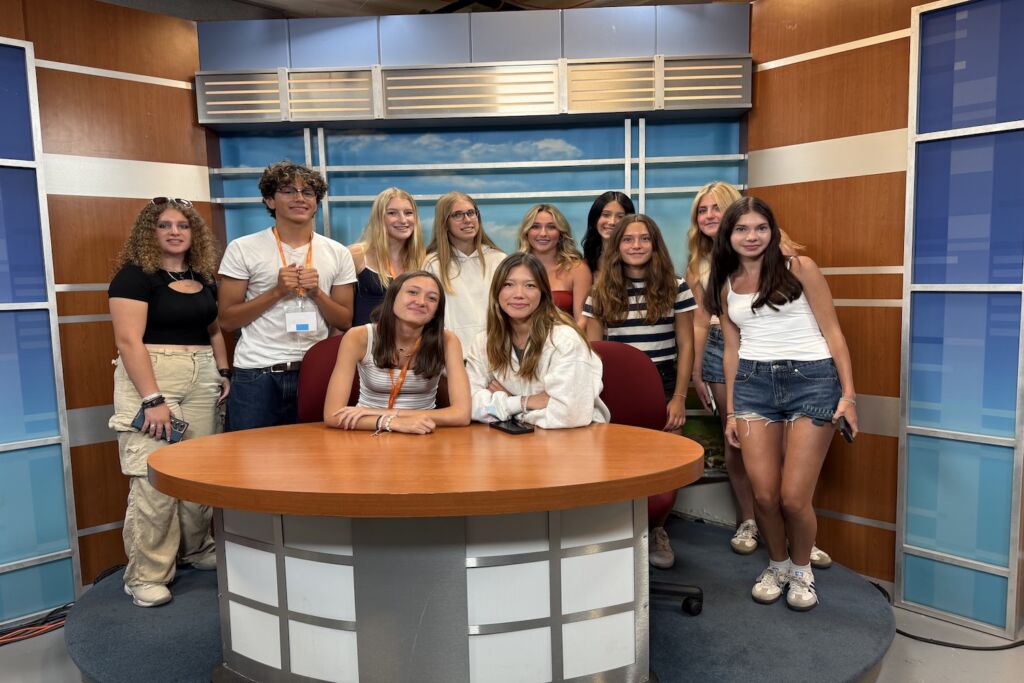
Journalism & Broadcasting is a two-week Summer Springboard course on the University of Michigan campus in Ann Arbor. You learn to pitch, report, write and present news for TV, radio, podcasts and social media in morning classes led by Emmy-winning filmmaker Troy Hale. Along the way you cover interviewing, fact-checking, video and audio production and live sports play-by-play. The course ends with your newsroom team producing and presenting its own newscast or podcast episode, and you can live in the dorms or commute each day.

At a glance
Official facts · checked 11 Nov 2026- DatesOfficial
- 2027: 18 to 30 July
- Who can applyOfficial
- Students in grades 9 to 12, including students starting high school in the fall and students who graduated in the spring. International students must show English proficiency by telephone interview or a minimum score: TOEFL 490 paper or 60 iBT, Cambridge PET-Distinction or FCE-C, or SAT 450 Reading/Writing
- Total costOfficial
- 2027: $5,698 residential, $2,998 non-residential
- Format and placeOfficial
- In person, Ann Arbor, Michigan
- Length
- 2 weeks
- Included / budget separately
- Included: accommodation, meals (Residential students get all meals, mostly in the on-campus dining hall). Separately: application fee from $99 (non-refundable), $149 after 21 February 2027, $199 after 18 April 2027, Group airport transfer $95 each way ($195 outside the group window), Unaccompanied minor service $50 each way on top of the airport transfer, Commuter weekend excursions $125 per day
- Deposit and refunds
- Deposit $600. Cancel before 1 March: all tuition, including the deposit, is refunded, and only the $99 application fee is kept
- Financial aid
- Need-based scholarships cover up to 30% of residential tuition or up to 60% of commuter tuition
- Apply by
- 2027: 21 February (1st Wave), 18 April (2nd Wave), 16 May (Final General Admission)
- Cohort and selectivity
- Applicants who meet the eligibility criteria are admitted on a rolling basis, and course places are assigned first-come, first-served. No acceptance rate is published
- Credit or certificate
- Completion certificate and letter of recommendation from the instructor
Get the key facts by email
The dates, costs and how to apply, then 2 reminders: 2 May (2 weeks before) and 13 May (3 days before).
Succeed's assessment
Should you apply?
SucceedIn short
Why it's worth it
You practice journalism rather than just reading about it, pitching and reporting your own stories, calling live play-by-play on a sports beat and ending with a newscast or podcast episode your newsroom team produces. Having a 33-time Emmy winner run the class is a real draw for a course this short.
What it asks of you
You'll spend two weeks in Ann Arbor, and the bill grows once you add flights and health insurance, which tuition doesn't cover. Commuting costs roughly half as much, but it only works if you can get to campus every weekday.
Who should skip it
Students hoping to build a serious reporting portfolio, because class meets for only nine mornings and the afternoons are shared between course outings and projects, college-prep workshops and personal development sessions.
Who teaches the course?
Troy Hale teaches it. Summer Springboard describes him as a 33-time Emmy Award winner and Senior Professor of Practice who was inducted into the Emmy Silver Circle Hall of Fame in 2024, with a career that runs from radio DJing and investigative journalism to on-camera reporting from hurricanes and presidential elections.
His work as a director and cinematographer has appeared at more than 25 international film festivals, he has won an Edward R. Murrow Award, and he judges for the National Academy of Television Arts and Sciences. He now runs his own company, Troy Hale Films. Summer Springboard doesn't publish a class size or student-to-teacher ratio for this course.
What does a day look like in Ann Arbor?
Class runs from 9am to noon, Monday to Friday in the first week and Monday to Thursday in the second, which adds up to nine three-hour sessions. Afternoons go to Academics in Action (academic excursions, guest speakers and course projects), College Readiness Workshops and True You, Summer Springboard's personal development sessions. You pick two of the four 90-minute workshops: Speaking with Confidence, Mastering Money, Developing Leadership, and Prepping for College and Career.
8:00am
Breakfast in the campus dining hall.
9:00am
Journalism & Broadcasting class until noon.
12:00pm
Lunch, then a recreational activity or academic excursion from 1:30pm.
3:00pm
A College Readiness Workshop or True You session.
5:00pm
Commuter students head home, while residential students have dinner at 6pm and clubs or evening activities from 7pm.
10:30pm
Dorm checks for residential students.
For this course, the trips include a newsroom tour, visits to a professional sports arena and local sports media outlets, and a chance to watch a live broadcast. Campus-wide outings include a private tour of Michigan Stadium (the Big House), a day at Cedar Point amusement park, a baseball game, the farmers market and the Ann Arbor art festival. Summer Springboard says its schedule is a sample and can vary.
Who can apply?
You can apply if you're in grades 9 to 12, and Summer Springboard also takes students who are about to start high school in the fall and seniors who graduated that spring. You'll need a 3.0 GPA or your school's equivalent. International students prove their English in a phone interview or with a minimum score: 490 on the paper TOEFL or 60 on the iBT, PET with Distinction or FCE at grade C in the Cambridge exams, or 450 in SAT Reading and Writing.
Applications are also screened against Summer Springboard's Essential Eligibility Criteria. Its programs aren't therapeutic, so students need to manage their own care and medication, walk distances of more than a mile and follow staff instructions in English. Students with some medical or mental health conditions may be asked for a doctor's clearance and to show at least 12 months of independent stability. Summer Springboard assigns course places on a first-come, first-served basis.
What does it really cost?
Residential tuition is $5,698 and commuter tuition is $2,998 for enrollments made by 30 November 2026. Summer Springboard says tuition goes up on 1 December 2026 but hasn't published the new figures. Every applicant also pays a non-refundable application fee starting at $99, which rises to $149 after 21 February 2027 and $199 after 18 April 2027, plus a $600 deposit when applying.
The residential price covers all meals, your room, the course and both weekday and weekend excursions. The commuter price covers lunch, the course, and excursions and activities from 9am to 5pm on weekdays, and weekend excursions cost $125 a day extra. Flights and health insurance aren't included, and every student has to show proof of medical insurance. The group airport shuttle is $95 each way ($195 outside the official pick-up and drop-off window). Students 14 or younger who fly must travel as unaccompanied minors, which adds $50 each way on top of the shuttle, plus whatever the airline charges for the service. Under its 2026 terms, the optional Tuition Protection Plan cost $699 and had to be bought with the application. It let families cancel for any reason up to the start day and get back everything they'd paid except the plan itself.
Need-based scholarships cover up to 30% of residential or 60% of commuter tuition, but never the deposit or application fee, and you apply with the first page of your family's latest tax return. If you apply before 10 March, the balance is due in thirds on 10 March, 10 April and 10 May 2027, while later applicants pay in fewer, larger installments. Payments made after 10 May carry a $150 late fee, and a balance not paid in full by 1 June can lead to cancellation without a refund. If you cancel without the protection plan, refunds follow this scale.
| If you cancel | What you get back |
|---|---|
| Before 1 March 2027 | All tuition, minus only the application fee |
| 2 March to 1 April 2027 | All tuition except the deposit and application fee, or 100% of payments as credit for a future year |
| 2 April to 1 May 2027 | 75% of tuition except the deposit and application fee, or 100% of payments as future credit |
| 2 May to 1 June 2027 | 25% of tuition except the deposit and application fee, or 75% of payments as future credit |
| After 1 June 2027 | Nothing, and nothing carries over |
| After the program starts | No refund if you leave |
How are students looked after on campus?
Summer Springboard staff live on every dorm floor, and the Campus Director, Assistant Campus Director and other staff also live in the dorms and are on hand for emergencies 24 hours a day. The dorms are access-controlled, so students need their own card to get into the building and their suite, and University of Michigan Security patrols the campus and residence halls around the clock. Students must be in their rooms after 10pm, with dorm checks at 10:30pm.
Staff directly supervise classes, field trips and excursions. In free time, students can move around within set campus boundaries in groups of three or more. Summer Springboard says all staff pass background checks and training. If a student is ill or injured, staff go with them for treatment, most likely at C.S. Mott Children's Hospital or Hellomed Central depending on the situation, and tell parents, and the family pays any medical costs. The Code of Conduct bans alcohol, tobacco, vaping and drugs, and a student who is expelled is sent home at the family's expense with no refund.
How do you apply?
Applications go through Summer Springboard's enrollment page, which leads to its online portal.
Check Summer Springboard's availability page to see that Journalism & Broadcasting is still listed for Session 1 at the University of Michigan.
Create an account with your contact details and confirm the verification email to reach the dashboard.
Click Create New Application and choose the University of Michigan campus, Session 1, Journalism & Broadcasting, and residential or commuter tuition.
Complete the short-answer essays and agreement forms with the student present, which takes about 30 minutes, and pay the $600 deposit and application fee.
Expect a decision within 5 to 7 business days, after which more enrollment forms open in your dashboard.
Apply by 21 February 2027 to keep the application fee at $99. After that date, and again after 18 April 2027, the fee goes up and some programs close to new applicants and start a waitlist, and enrollment ends on 16 May 2027.
If you enroll before 25 April 2027, send all pre-departure documents by 1 May 2027, or within 7 days of acceptance if you apply later. Late documents carry a $50 fee.

Sean
Founder, Succeed
Talk it through with Sean
Want to talk it through?
“I can help you compare the programs you're considering, think through the practicalities and work out what makes sense for you.”
20 minutes · No obligation to enroll
What should you do next?
Frequently asked questions
Sources
- Journalism & Broadcasting
summerspringboard.com · Official page
- Need-Based Scholarships
summerspringboard.com
- Campus Specific FAQ
summerspringboard.com
- summerspringboard.com/knowledge-base/general-faq
- Main FAQ | Knowledge Base
summerspringboard.com
- Terms & Conditions
summerspringboard.com
- Application and Enrollment FAQ
summerspringboard.com
- 2027 HS 2-week Journalism & Broadcasting Infosheet (PDF)
summerspringboard.com
Not ready to decide yet? Keep it for later.