
Summer Springboard Marketing Bootcamp
- 2027 program
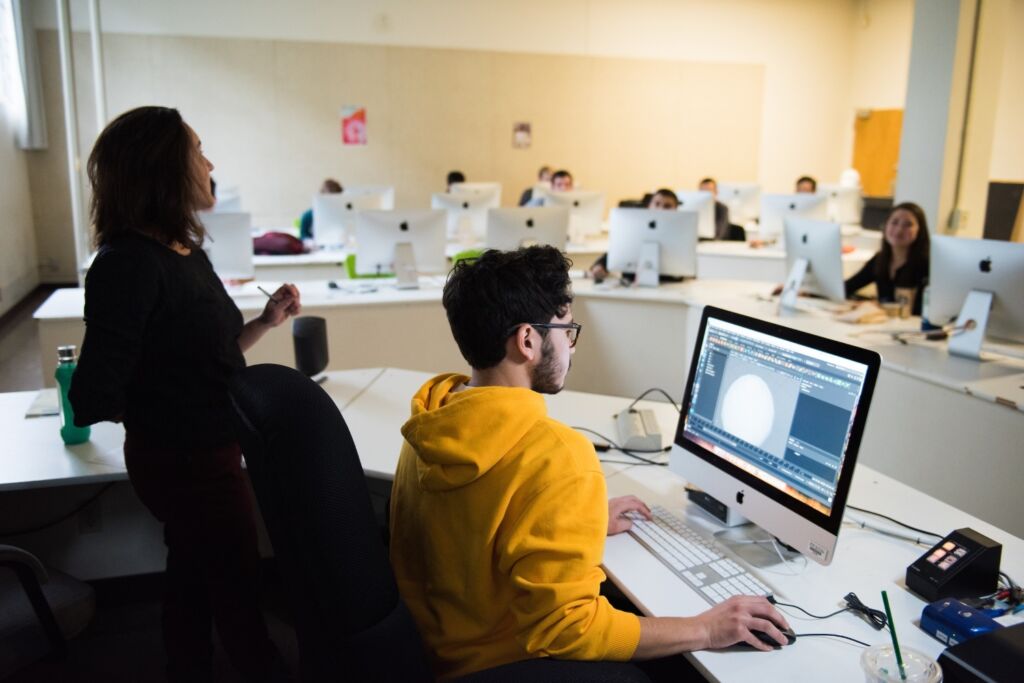
Marketing Bootcamp is a two-week course Summer Springboard runs on Cal Poly's San Luis Obispo campus, where you pick a product idea in any industry and build a marketing campaign around it, from researching the target market and writing consumer personas to sizing the Total Available Market. The course ends with you designing personalized marketing materials in Adobe InDesign, and class time is mixed with meetings with working marketers and visits to local businesses. You can live in the dorms or commute. Afternoons are filled with workshops and trips, and students living on campus also have evening activities.
 Sean Stevens · SourcesSucceed has a commercial partnership with this provider.
At a glance
Official facts · checked 11 Nov 2026- DatesOfficial
- 2027: 4 to 16 July
- Who can applyOfficial
- Students entering grades 9 to 12 (must have completed 8th grade by the program start date). Students starting high school in the fall or who graduated in the spring are also eligible. International students show English proficiency by telephone interview or a minimum score: TOEFL 490 paper or 60 iBT, Cambridge PET-Distinction or FCE-C, or SAT 450 Reading/Writing
- Total costOfficial
- 2027: $5,398 residential, $2,998 non-residential
- Format and placeOfficial
- In person, Cal Poly SLO, San Luis Obispo, California
- Length
- 2 weeks
- Included / budget separately
- Included: accommodation, meals (All meals for residential students, lunch for commuters). Separately: application fee from $99, nonrefundable ($149 after 21 February 2027, $199 after 18 April 2027), Group airport transfer $95 each way, airport transfer outside group window $195 each way, Unaccompanied minor service $145 each way
- Deposit and refunds
- Deposit $600. Cancel before 1 March: 100% of tuition is refunded and only the $99 application fee is kept
- Financial aid
- Need-based scholarships from a limited pool cover up to 30% of residential tuition or up to 60% of commuter tuition
- Apply by
- 2027: 21 February (1st Wave), 18 April (2nd Wave), 16 May (Final General Admission)
- Cohort and selectivity
- Applicants who meet the grade, GPA, English and eligibility criteria are admitted, with course places filled first come, first served. No acceptance rate or cohort size is published
- Credit or certificate
- Certificate of completion from Summer Springboard
Get the key facts by email
The dates, costs and how to apply, then 2 reminders: 2 May (2 weeks before) and 13 May (3 days before).
Succeed's assessment
Should you apply?
SucceedIn short
Why it's worth it
You're taught by a Cal Poly faculty member who teaches graphic communication, and you meet working marketers and visit a local marketing firm, small business or printing facility. That ties your campaign to how the work is really done.
What it asks of you
Two weeks in San Luis Obispo in July and a laptop for class. Residential tuition is a big outlay before you add flights, and the cheaper commuter option only works if you live within daily reach of Cal Poly.
Who should skip it
Students set on social media or online ads. The instructor's background is in prepress, variable data and print media, and Summer Springboard runs a separate Digital Marketing & Social Media course.
Who teaches the course?
Dina Vees teaches it. Summer Springboard lists her as an associate professor, and at Cal Poly she currently teaches Orientation to Graphic Communication, Consumer Packaging and Applied Graphic Communication Practices. She has a bachelor's degree in graphic communication from Carroll University and a master of fine arts in media design from Full Sail University. She previously taught print media at Waukesha County Technical College and the Milwaukee Graphic Arts Institute, and she has also worked in Harley-Davidson's motor clothes division. Her teaching interests cover prepress, workflow automation, variable data, marketing and web coding. Summer Springboard doesn't publish a class size for the course.
What does a day on the course look like?
Class runs from 9 a.m. to noon, Monday to Friday in the first week and Monday to Thursday in the second, which makes nine three-hour sessions, and Wednesday afternoons are kept for course trips and guest speakers. For this course those trips can include a local marketing firm, a small business or a printing facility.
The rest of the day follows the campus timetable. Lunch is at noon, then a recreational activity or academic excursion at 1:30 p.m., and at 3 p.m. either a College Readiness Workshop on things like essay writing and interview skills or a True You session on personal goals. Residential students eat dinner at 6 p.m., join clubs or evening activities at 7 p.m. and have dorm checks at 10:30 p.m., while commuters arrive at 8:30 a.m. and leave at 5:30 p.m. Summer Springboard's excursions at Cal Poly include Avila Beach, the SLO Farmers Market and Ravine Water Park.
What do you leave with?
You leave with the campaign you built, the concepts you pitched against real client briefs and the personalized marketing materials you designed in Adobe InDesign, which Summer Springboard describes as campaign samples for a portfolio. If your work is satisfactory you also earn 3.0 continuing education units (CEUs) from Cal Poly Extended, Professional and Continuing Education, along with a Summer Springboard certificate of completion.
Summer Springboard doesn't describe the units as college credit or say how colleges treat them, so don't count on them transferring or carrying weight in admissions. The certificate isn't automatic either, because Summer Springboard can withhold it for breaking the code of conduct or not taking part.
Who can get a place?
Students entering grades 9 to 12 with a 3.0 GPA or its local equivalent can apply, and so can students starting high school in the fall or who graduated in the spring. International students show their English in a phone interview or with a minimum score of 60 on the TOEFL iBT (490 on paper), PET-Distinction or FCE-C on the Cambridge exams, or 450 in SAT Reading and Writing. The application also asks short-answer essay questions, and Summer Springboard says it gives a decision within 5 to 7 business days of a complete application. It publishes no acceptance rate, and places in each course go first come, first served.
Every applicant is also checked against Summer Springboard's Essential Eligibility Criteria. Students need to be able to manage their own medication and personal care, walk more than a mile and follow instructions in English, and those with some health conditions may be asked for medical clearance and 12 months of stability before the start.
What does the course really cost?
Living on campus costs $5,398 in tuition, which covers your room, all meals, the course and both weekday and weekend excursions. Commuting costs $2,998 and covers the course, lunch, excursions and programming from 9 a.m. to 5 p.m. on weekdays. It doesn't include breakfast, dinner or weekend excursions, although commuters can add the weekend trips for $125 a day. These are the prices Summer Springboard publishes now, and it says tuition increases on 1 December 2026 without giving the new figure.
When you apply you pay a $600 deposit and a nonrefundable application fee of $99, which rises to $149 after 21 February 2027 and $199 after 18 April 2027. If you don't pay in full, you're put on a payment plan with the balance due by 10 May. Flights and health insurance aren't covered. Group airport transfers cost $95 each way and the unaccompanied minor service costs $145 each way, and Summer Springboard suggests about $100 a week in spending money.
Need-based scholarships cover up to 30% of residential tuition or 60% of commuter tuition, though they can't go toward the deposit or the application fee. Summer Springboard's refunds shrink through the spring, from all your tuition except the application fee if you cancel before 1 March to nothing after 1 June. The optional Tuition Protection Plan costs $699 per application, has to be bought when you apply, and lets you cancel for any reason up to the start day, although the $699 itself is only refunded if Summer Springboard cancels the program.
| If you cancel | Tuition refunded |
|---|---|
| Before 1 March | 100%, except the $99 application fee |
| 2 March to 1 April | 100%, except the deposit and application fee |
| 2 April to 1 May | 75%, except the deposit and application fee |
| 2 May to 1 June | 25%, except the deposit and application fee |
| After 1 June | Nothing |
How are students looked after?
Mentors live on each residential hall floor, and other Summer Springboard staff live on campus and are on call around the clock for emergencies. Dorms have 24-hour security with electronic keys for every building and room, floors are separated by gender, and after the 10:30 p.m. dorm check students must stay in their rooms. In free time, students can move around within set boundaries near campus in groups of three or more.
Summer Springboard says all staff are background-checked and trained. If you're ill or injured, staff take you to the nearest medical facility and tell your parents, but your family pays any costs. Every student has to show proof of medical insurance, and students keep and take their own medication. Students and a parent sign the Code of Conduct, and a serious breach can mean being sent home at the family's expense with no refund.

Sean
Founder, Succeed
Talk it through with Sean
Want to talk it through?
“I can help you compare the programs you're considering, think through the practicalities and work out what makes sense for you.”
20 minutes · No obligation to enroll
What should you do next?
Frequently asked questions
Sources
- Marketing Bootcamp| Course
summerspringboard.com · Official page
- Application and Enrollment FAQ
summerspringboard.com
- Main FAQ | Knowledge Base
summerspringboard.com
- Need-Based Scholarships
summerspringboard.com
- summerspringboard.com/discounts
- summerspringboard.com/terms-and-conditions
- Marketing Bootcamp course infosheet (PDF)
summerspringboard.com
- Summer Springboard @ Cal Poly 2027 Program Infosheet (PDF)
summerspringboard.com
Not ready to decide yet? Keep it for later.