
Summer Springboard Middle School Architecture
- 2027 program
Middle School Architecture is a one-week Summer Springboard course where students learn how buildings are imagined, drawn and built, with a personal Dream Home as the course's central project. Mornings are studio classes, and afternoons go to firm visits, architecture tours and lab time on the final project. It runs at Berkeley, NYU in New York City and Vanderbilt in Nashville, and each campus lists both residential and commuter tuition.

At a glance
Official facts · checked 11 Nov 2026- DatesOfficial
- 2027: 13 to 18 June (Vanderbilt University Session 1), 27 June to 2 July (NYU Session 1), 27 June to 2 July (Berkeley Session 1), 4 to 9 July (NYU Session 2), 4 to 9 July (Berkeley Session 2), 11 to 16 July (Berkeley Session 3) and 4 more
- Who can applyOfficial
- Completed 6th grade by the program start date (Berkeley and Vanderbilt: ages 12 to 14). NYU: ages 11 to 14 who have finished 5th grade. International students show English proficiency via a telephone interview or test scores
- Total costOfficial
- 2027: $2,798 residential, $1,398 non-residential (Vanderbilt University Session 1), $3,198 residential, $1,798 non-residential (NYU Session 1), $2,998 residential, $1,598 non-residential (Berkeley Session 1), $3,198 residential, $1,798 non-residential (NYU Session 2), $2,998 residential, $1,598 non-residential (Berkeley Session 2), $2,998 residential, $1,598 non-residential (Berkeley Session 3) and 4 more
- Format and placeOfficial
- In person, Berkeley, California, New York City, New York, Nashville, Tennessee
- Length
- 1 week
- Included / budget separately
- Included: accommodation, meals (Residential students get all meals, mostly in the campus dining hall). Separately: materials and admin fee $250, application fee from $99 ($149 after 21 February 2027, $199 after 18 April 2027), Group airport transfer $95 each way, Unaccompanied minor transportation $145 each way
- Deposit and refunds
- Deposit $600. Cancel before 1 March: 100% of tuition is refunded, except the $99 application fee
- Financial aid
- Need-based scholarships cover up to 30% of residential tuition or up to 60% of commuter tuition
- Apply by
- 2027: 21 February (1st Wave), 18 April (2nd Wave), 16 May (Final General Admission)
- Cohort and selectivity
- Summer Springboard reviews each application against its admission requirements and Essential Eligibility Criteria and sends a decision within 5 to 7 business days
- Credit or certificate
- Completion certificate and a letter of recommendation from the instructor. No college credit
Get the key facts by email
The dates, costs and how to apply, then 2 reminders: 2 May (2 weeks before) and 13 May (3 days before).
Succeed's assessment
Should you apply?
SucceedIn short
Why it's worth it
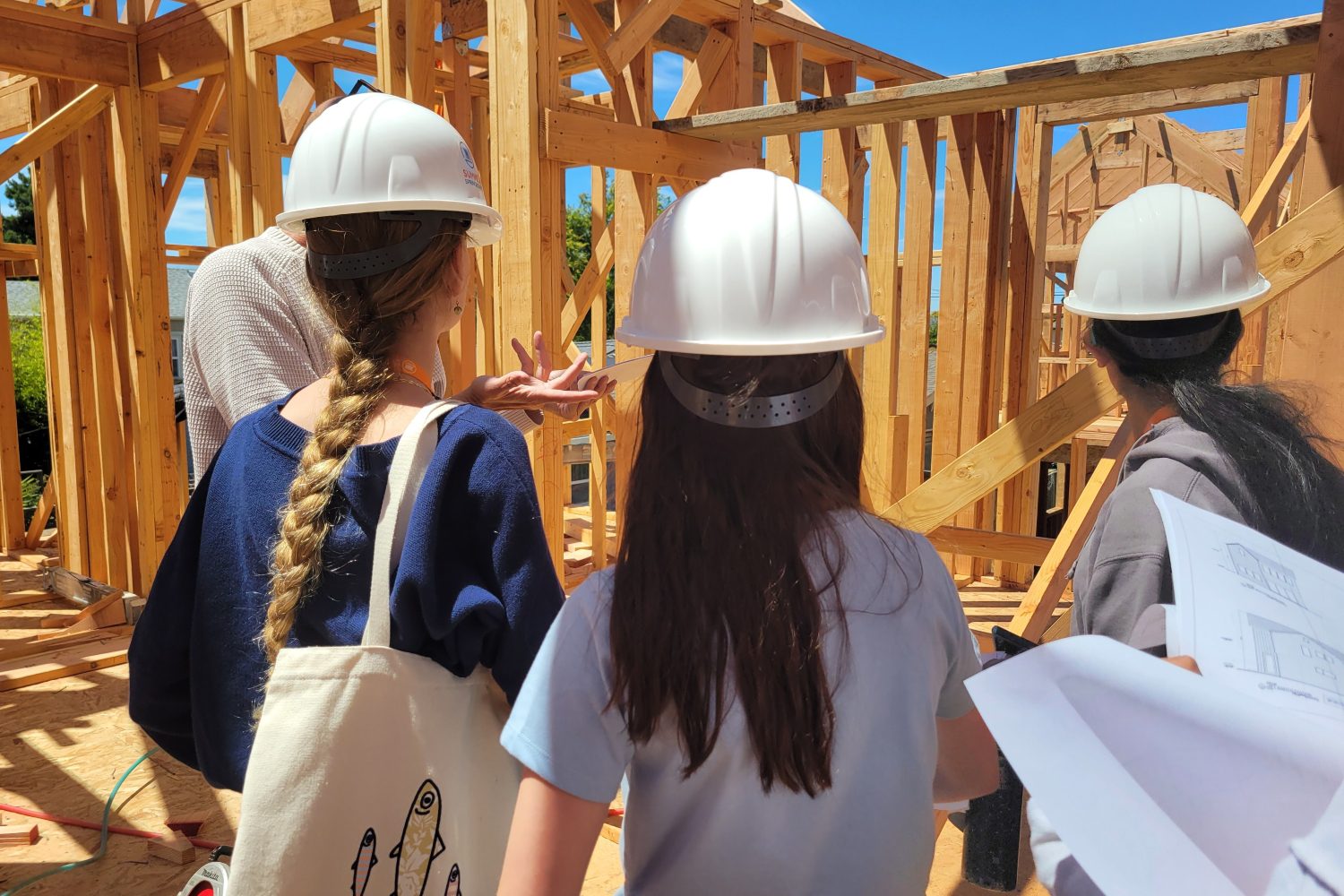
At Berkeley and NYU the instructors are working architectural designers, and past groups have visited firms such as KPF and Obra Architects in New York and toured a Berkeley home under construction with its architect, so students see real practice and not just classroom exercises.
What it asks of you
Mostly money. A residential week at Berkeley costs $3,248 with the required course supplement, before the application fee and any flights, while the academic load is light, with 15 hours of class plus afternoon lab time.
Who should skip it
Students who want college credit or a long, skills-heavy studio, because Summer Springboard gives no credit here and a week leaves little room for depth. Families set on Vanderbilt who want to know the teacher first may want to wait, since its instructor hasn't been named.
What does a week on campus look like?
Class runs from 9am to noon, Monday to Friday, which makes five three-hour sessions, and Wednesday afternoon is set aside for extra academic time that may include an excursion or guest speaker. Sessions run Sunday to Friday, with check-out at 2:30pm on the last day.
For residential students at Berkeley and Vanderbilt the rest of the day is full. Afternoons start at 1:30pm with an excursion or recreational activity, followed by a skills lab from 3:30pm where students work on their final project and then free time from 5pm. Commuters leave at 6pm, while residents have dinner and supervised evening activities such as talent shows, trivia and karaoke, are back in the dorm by 8:30pm and have a mentor check-in at 9:30pm. At NYU the day ends at 5pm and students head home.
Who teaches the architecture classes?
Each campus has its own instructor, and the two named so far are working designers. At Berkeley, Hara Chung trained at the Mackintosh School of Architecture in the UK and has worked on projects for CBRE, Lyft and HP as well as dozens of custom homes around the San Francisco Bay Area. She has also taught student-led projects at Quimby Oak School. At NYU, Emma Sumrow teaches at Columbia University's Graduate School of Architecture, Planning, and Preservation and at the New Jersey Institute of Technology, holds a Master of Architecture from Columbia and worked as an architectural designer at Bernard Tschumi Architects.
Vanderbilt's instructor hasn't been announced yet. Summer Springboard says it recruits faculty from area colleges, universities and professional forums, and it doesn't publish class sizes.
Who can apply?
You need to have finished sixth grade by the time the program starts and to have at least a 3.0 GPA (or the local equivalent), and Berkeley and Vanderbilt set the age range at 12 to 14. NYU is the exception, taking 11- to 14-year-olds who have finished fifth grade. Summer Springboard says the course suits all experience levels, so you don't need a drawing background.
The application includes short-answer essay questions and signed agreement forms, and every application is reviewed against Summer Springboard's Essential Eligibility Criteria. These expect students to manage their own personal care and medications, walk more than a mile between buildings and follow staff instructions in English, and students with some health conditions may be asked for medical clearance. International students show their English in a phone interview or with test scores. Summer Springboard publishes no acceptance rate or cohort size.
What does a week really cost?
Once you add the required $250 course supplement, which pays for drafting equipment, sketchbooks and supplies you keep, a residential week costs $3,248 at Berkeley, $3,448 at NYU and $3,048 at Vanderbilt. Commuter places come to $1,848, $2,048 and $1,648. The application fee comes on top, starting at $99 and rising to $149 after 21 February 2027 and $199 after 18 April 2027. Summer Springboard lists these prices for applications made by 30 November 2026 and says tuition goes up on 1 December, without publishing the new figures.
Residential tuition covers all meals, your room, excursions, the course and evening activities. Commuter tuition covers lunch, the course, excursions and daytime programming. Flights and health insurance are extra, and so is the optional airport pickup ($95 each way for group transfers). Commuters at Berkeley and Vanderbilt can add weekend excursions for $125 a day.
One thing to check before booking NYU: Summer Springboard describes its NYU middle school program as a commuter program where students go home at 5pm, yet it also lists a residential price, so ask what that price includes.
Paying
You pay a $600 deposit and the application fee when you apply. If you apply before 10 March, the balance is due in three parts on 10 March, 10 April and 10 May, and payments after 10 May carry a $150 late fee.
Cancelling
Cancel before 1 March and you get all tuition back except the $99 application fee. From 2 March to 1 April, everything except the deposit and application fee comes back, from 2 April to 1 May it's 75% of tuition, after 1 May it's 25%, and after 1 June nothing is refunded.
Optional protection
A Tuition Protection Plan lets you cancel for any reason up to the day the program starts. In its 2026 terms it cost $699, which was never refunded.
Financial aid
Need-based scholarships cover up to 30% of residential tuition or 60% of commuter tuition, but never the deposit or application fee, and Summer Springboard says it replies within 7 business days.
| Campus | Residential tuition | Commuter tuition | Residential with $250 supplement | Commuter with $250 supplement |
|---|---|---|---|---|
| Berkeley | $2,998 | $1,598 | $3,248 | $1,848 |
| NYU | $3,198 | $1,798 | $3,448 | $2,048 |
| Vanderbilt | $2,798 | $1,398 | $3,048 | $1,648 |
How are middle schoolers looked after?
Middle school students have their own staff, housing and schedule, apart from Summer Springboard's high school programs, and the organizer describes the setting as more structured, with closer supervision. At Berkeley and Vanderbilt, staff live on each dorm floor, and other staff stay on campus to deal with emergencies around the clock. Dorms have 24-hour security and electronic keys for every building and room, housing is split by gender, and everyone is back in the dorm by 8:30pm. Summer Springboard staff supervise all excursions.
At NYU, classes are in the Kimmel Center, where entry is limited to people with an NYU connection. Students check in with the Summer Springboard team at the front desk each day, and anyone under 18 has to be accompanied by a chaperone inside the building. An optional airport service has staff meet arriving students and take them to their residence hall.
How do you apply?
Applications go through Summer Springboard's online enrollment page.
Create an account with your basic contact details and confirm the verification email.
Start a new application from the dashboard and choose the campus, session, course and residential or commuter tuition, with the student present for the roughly 30-minute form.
Pay the $600 deposit and the application fee to hold the place. The fee starts at $99, rises to $149 after 21 February 2027 and to $199 after 18 April 2027, and some sessions may close or go to a waitlist at each of those dates.
Expect a decision within 5 to 7 business days, after which further forms open, including the code of conduct, waiver and medical consent.
Apply by 16 May 2027 at the latest, when Summer Springboard closes enrollment.
What should you do next?
Frequently asked questions
Sources
- Middle School Architecture
summerspringboard.com · Official page
- Main FAQ | Knowledge Base
summerspringboard.com
- General Information FAQ
summerspringboard.com
- Need-Based Scholarships
summerspringboard.com
- Terms & Conditions
summerspringboard.com
- summerspringboard.com/apply
- NYU Middle School Summer Program - Summer Springboard
summerspringboard.com
- 2027 MS 1-week Junior Architecture infosheet (PDF)
summerspringboard.com
Not ready to decide yet? Keep it for later.