
Summer Springboard Middle School Business & Entrepreneurship
- 2027 program
Students finishing grades 6 to 8 spend a week on one of seven US university campuses, inventing a company in teams, writing a business plan that covers marketing, finance and operations, and pitching it Shark Tank-style to a panel of business people. Mornings are for class, and afternoons bring guest entrepreneurs and visits to local businesses. Summer Springboard runs the course, not the universities, and families choose between living on campus and a cheaper commuter option.
 Sean Stevens · SourcesSucceed has a commercial partnership with this provider.
At a glance
Official facts · checked 11 Nov 2026- DatesOfficial
- 2027: 13 to 18 June (Vanderbilt University, Session 1), 27 June to 2 July (Berkeley, Session 1), 27 June to 2 July (New York University, Session 1), 4 to 9 July (UC San Diego, Session 1), 4 to 9 July (New York University, Session 2), 4 to 9 July (Georgetown University, Session 1) and 11 more
- Who can applyOfficial
- Must have completed 6th grade of middle school by the program start date (for students completing grades 6 to 8). 3.0 Grade Point Average (or local equivalent). International students demonstrate English proficiency by telephone interview or minimum test scores
- Total costOfficial
- 2027: $2,798 residential, $1,398 non-residential (Vanderbilt University, Session 1), $2,998 residential, $1,598 non-residential (Berkeley, Session 1), $3,198 residential, $1,798 non-residential (New York University, Session 1), $2,998 residential, $1,598 non-residential (UC San Diego, Session 1), $3,198 residential, $1,798 non-residential (New York University, Session 2), $2,998 residential, $1,598 non-residential (Georgetown University, Session 1) and 11 more
- Format and placeOfficial
- In person, University residence hall, Berkeley, Washington, DC, San Diego, New York City, Seattle, Nashville, Ann Arbor
- Length
- 1 week
- Included / budget separately
- Included: accommodation, meals (Residential students get three buffet-style meals a day in the campus dining hall, and commuter students get lunch). Separately: application fee from $99 (non-refundable), Group airport transfer $95 each way, Unaccompanied minor transportation $145 each way, optional tuition Protection Plan $699 (2026 terms)
- Deposit and refunds
- Deposit $600. Cancel before 1 March: 100% of tuition is refunded, and only the $99 application fee is kept
- Financial aid
- Need-based scholarships cover up to 30% of residential tuition or up to 60% of commuter tuition
- Apply by
- 2027: 21 February (1st Wave), 18 April (2nd Wave), 16 May (Final General Admission)
- Cohort and selectivity
- Applicants who meet the grade, 3.0 GPA and Essential Eligibility Criteria are admitted on a rolling basis while places last, and full courses or sessions move to a waitlist
- Credit or certificate
- Completion certificate and a letter of recommendation from the instructor. No college credit.
Get the key facts by email
The dates, costs and how to apply, then 2 reminders: 2 May (2 weeks before) and 13 May (3 days before).
Succeed's assessment
Should you apply?
SucceedIn short
Why it's worth it
The week builds toward a real audience, with teams pitching a business they made up to a panel of business people, and the afternoons take students to local businesses and bring in entrepreneurs to talk about their work. Several of the instructors named for 2027 run companies or coach startups themselves.
What it asks of you
Apart from a 30-minute application with short essays, there's little for the student to do beyond the week itself. The real commitment is the family's money: up to $3,198 in residential tuition for six days on campus, before the application fee and travel, and refunds shrink fast once spring arrives.
Who should skip it
Students who want serious business study or something that counts at school, because the course is five mornings long and ends with a completion certificate and a recommendation letter, not credit.
What does the week look like?
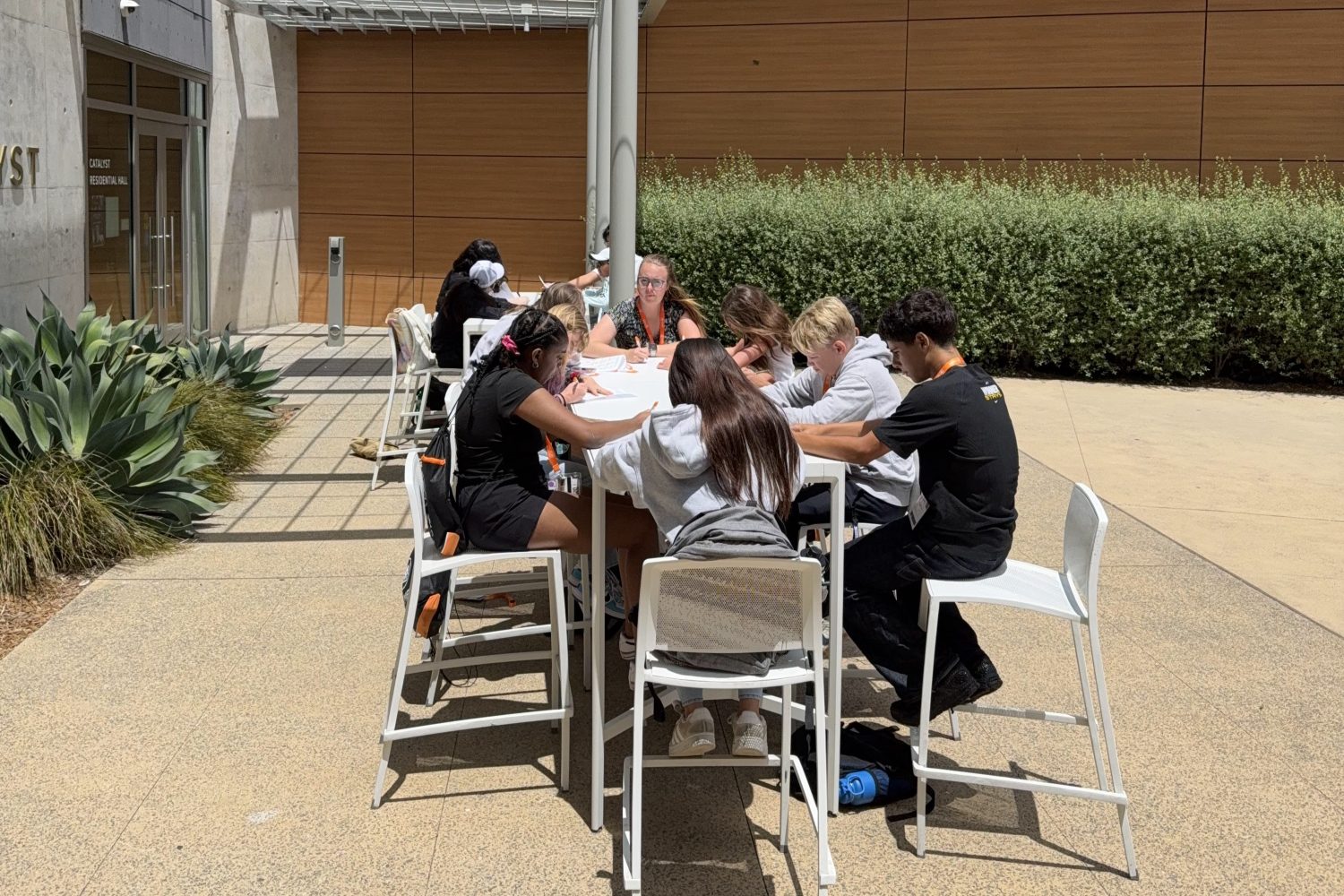
Class runs from 9am to noon, Monday to Friday, which adds up to five three-hour sessions, or 15 hours, across the week. Each session runs Sunday to Friday, with residential students checking in on Sunday afternoon and everyone leaving at 2:30pm on Friday. Wednesday afternoon is set aside for extra academic time, which may bring an excursion or a guest speaker.
Other afternoons go to guest speakers and visits to local businesses, large and small. Summer Springboard's examples from past summers include a Wall Street tour and a visit to the NBA for the NYU group. In Michigan, students went to 1 Million Cups, where local entrepreneurs present their businesses to the community, and the founder of Molly's Cupcakes gave them a behind-the-scenes tour. In San Diego, students made their own candles at a small soap and candle shop. Residential students have social activities in the evenings.
Commuter students are on campus from 9am to 5pm Monday to Thursday and until 2:30pm on Friday, with lunch included but no evening program.
Who teaches the course on each campus?
Each campus has its own instructor, so who teaches your week depends on where you go. Summer Springboard says it recruits faculty from local colleges, universities and professional fields, and several of the people it names for 2027 run companies or work with startups.
Berkeley
André van der Bergh spent more than 25 years in retail in South Africa and the Middle East, has run Team Business programs since 2002 and judges DECA business competitions up to the international level.
UC San Diego
Dr. Nicole Johnson is CEO of TetraCore Consulting, a small business in Los Angeles, and has more than 23 years in education and business.
Seattle
Amelia Marckworth teaches undergraduate entrepreneurship at Seattle University and has reviewed more than 500 business plans.
Nashville
Katy Schmitt, a former classroom teacher, founded the Nashville education company Thrive Education Partners in 2018 and still runs it.
New York
Emily Palmer is a former New York Times and People journalist who founded a literacy nonprofit, so her background is storytelling and building an organization rather than running a company.
Georgetown and Michigan
Dr. Carletta S. Hurt, an entrepreneur and former president of the National Black MBA Association's DC chapter, taught the Georgetown course in 2026. Summer Springboard hasn't clearly confirmed Georgetown's 2027 instructor and hasn't named Michigan's, so ask who will teach your week if it matters to you.
How are middle schoolers looked after?
Middle schoolers are kept apart from Summer Springboard's high school students, with their own staff, housing and schedule, and Summer Springboard says those staff are trained for this age group and supervise more closely. Residential students share a gender-segregated dorm room with roommates, with an extra-long twin bed and linens provided, and eat in the university dining hall.
For students flying in, an optional airport transfer has staff meet them at the airport and take them to the residence hall, and there's a separate unaccompanied minor service. The Code of Conduct is strict. Summer Springboard says most violations lead to immediate expulsion, with the student sent home at the family's expense and no refund. We couldn't find a staff-to-student ratio, so it's worth asking before you book.
Who can apply?
You need to have finished sixth grade by the time the program starts, and the course takes students up to those finishing eighth grade. Summer Springboard also asks for a 3.0 GPA or the local equivalent, and international students show their English either in a phone interview or with a minimum test score.
Beyond grades, every applicant is screened against Summer Springboard's Essential Eligibility Criteria. Students need to manage their own personal care and medication, follow instructions in English, walk more than a mile around campus and cope with shared rooms and long, structured days. Summer Springboard stresses that its programs aren't therapeutic, and a student with a condition that needs specific support may be asked for medical documentation and at least 12 months of stability. Admission is rolling and places in each course and session go first come, first served, so applying early matters as much as meeting the criteria.
What does a week really cost?
Tuition for the week is $2,798 to $3,198 if you live on campus and $1,398 to $1,798 if you commute, depending on the campus, with NYU the most expensive. Living on campus covers all meals, your room, excursions, the course and evening activities. The commuter price covers the course, lunch and excursions but not breakfast, dinner or the evening program. These prices apply to applications made by 30 November 2026. Summer Springboard raises tuition on 1 December 2026, and the new figures haven't been published.
On top of tuition there's a non-refundable application fee, which starts at $99 and rises to $149 after 21 February 2027 and to $199 after 18 April 2027. Flights and health insurance aren't included. The optional group airport transfer costs $95 each way, and the unaccompanied minor service costs $145 each way. A $600 deposit holds the place, and the balance is paid in installments, with the last due by 10 May 2027. Need-based scholarships can cover up to 30% of residential tuition or 60% of commuter tuition.
An optional Tuition Protection Plan lets you cancel for any reason up to the day the program starts and get back the fees you've paid, though not the cost of the plan itself, which was $699 under its 2026 terms. You have to buy it when you apply.
Without the plan, the refund rules tighten through the spring, so be sure of your summer plans before 1 March 2027:
Before 1 March 2027
All tuition comes back, and only the application fee is kept.
2 March to 1 April 2027
All tuition comes back except the deposit and application fee, or you can roll everything you paid over to a future year.
2 April to 1 May 2027
You get back 75% of tuition, minus the deposit and application fee, or you can roll everything you paid over to a future year.
After 1 May 2027
25% of tuition comes back, minus the deposit and application fee, or 75% of what you paid can be rolled over.
After 1 June 2027
Nothing is refunded or carried over.
| Campus | Residential | Commuter | 2027 sessions |
|---|---|---|---|
| Berkeley, California | $2,998 | $1,598 | 5 one-week sessions, 27 June to 30 July 2027 |
| Georgetown, Washington, DC | $2,998 | $1,598 | 4 to 9 July and 11 to 16 July 2027 |
| UC San Diego | $2,998 | $1,598 | 3 one-week sessions, 4 to 23 July 2027 |
| NYU, New York City | $3,198 | $1,798 | 4 one-week sessions, 27 June to 23 July 2027 |
| University of Washington, Seattle | $2,798 | $1,398 | 18 to 23 July 2027 |
| Vanderbilt, Nashville | $2,798 | $1,398 | 13 to 18 June 2027 |
| University of Michigan, Ann Arbor | $2,798 | $1,398 | 11 to 16 July 2027 |
How do you apply, and by when?
Every campus and course uses Summer Springboard's single enrollment page.
Check that your campus and week still have space on Summer Springboard's program availability page, since full sessions move to a waitlist.
Create an account on the application portal and confirm your email address.
Fill in the application, choosing campus, session and residential or commuter tuition. It takes about 30 minutes, needs the student present and includes short-answer essay questions.
Pay the $600 deposit and the application fee to hold the place, and expect a decision within 5 to 7 business days.
Once accepted, complete the remaining forms, including a code of conduct, waiver and medical consent signed by student and parent. Pre-departure documents are due by 1 May 2027 if you enroll before 25 April, or within 7 days of acceptance if you enroll later.
Apply by 21 February 2027 before the first round of closures, or by 18 April 2027 before the second, because some sessions fill and close after each. Enrollment ends on 16 May 2027.

Sean
Founder, Succeed
Talk it through with Sean
Want to talk it through?
“I can help you compare the programs you're considering, think through the practicalities and work out what makes sense for you.”
20 minutes · No obligation to enroll
What should you do next?
Frequently asked questions
Sources
- summerspringboard.com/business-and-law-track/middle-school-business-entrepreneurship
Official page
- Terms & Conditions
summerspringboard.com
- Application and Enrollment FAQ
summerspringboard.com
- summerspringboard.com/apply
- Tuition and Financial Aid FAQ
summerspringboard.com
- General Information FAQ
summerspringboard.com
- Main FAQ | Knowledge Base
summerspringboard.com
- 2027 Middle School 1-week Business & Entrepreneurship infosheet (PDF)
summerspringboard.com
Not ready to decide yet? Keep it for later.