
Summer Springboard Middle School Electrical Engineering
- 2027 program
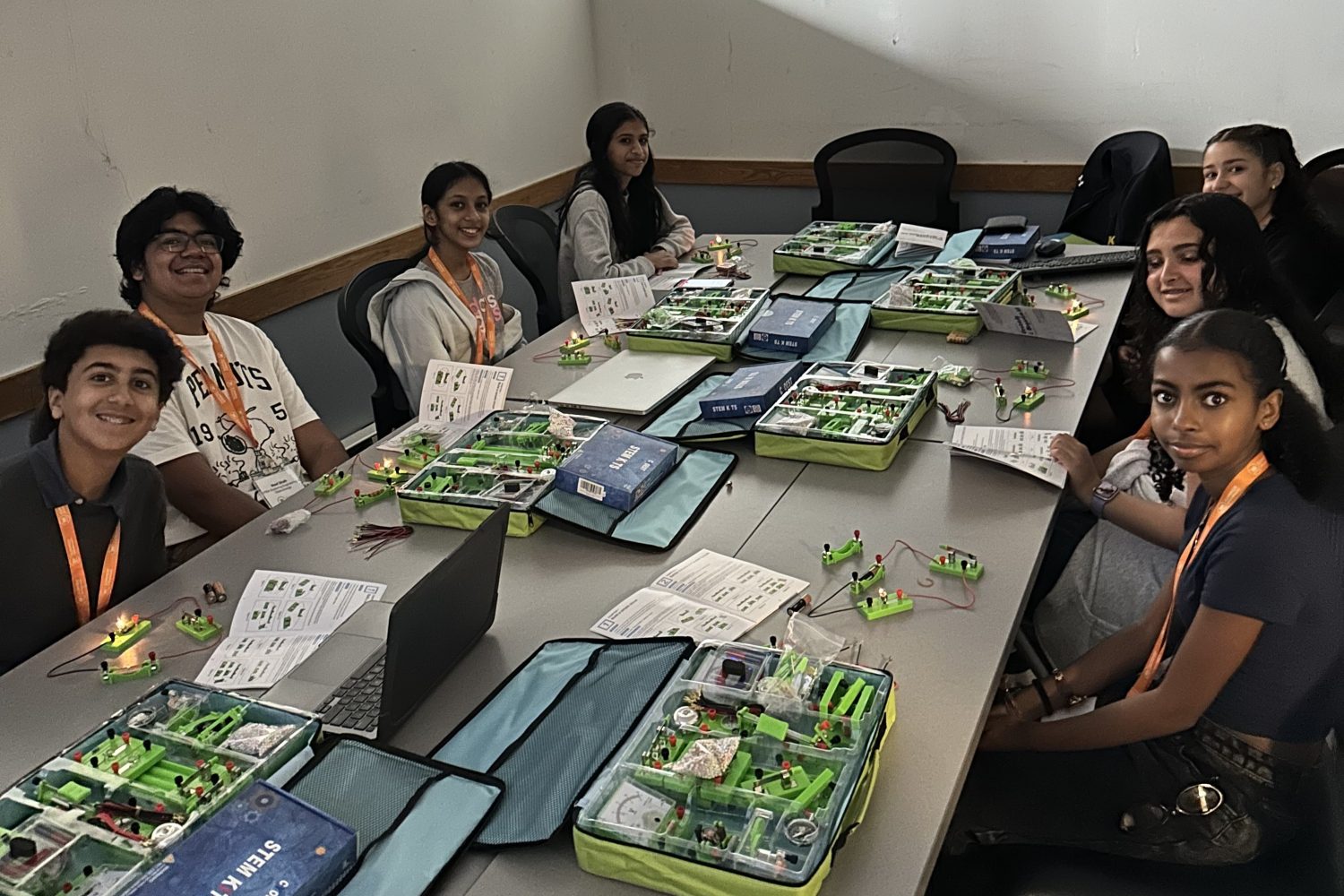
Middle School Electrical Engineering is a one-week summer course that Summer Springboard runs on Georgetown University's campus in Washington, D.C. Students build circuits, program sensors with an Arduino microcontroller and work in teams on electronic projects, including solar-powered cars, and they show a finished project on the last day. Classes run every weekday morning, with afternoon project labs and trips to the Smithsonian and a robotics laboratory. Students can either live in the dorms or come in each day as commuters.
 Sean Stevens · SourcesSucceed has a commercial partnership with this provider.
At a glance
Official facts · checked 11 Nov 2026- DatesOfficial
- 2027: 4 to 9 July (Session 1), 11 to 16 July (Session 2)
- Who can applyOfficial
- Ages 12 to 14, having completed 6th grade by the program start date. 3.0 Grade Point Average (or local equivalent). International students show English proficiency by telephone interview or minimum test scores
- Total costOfficial
- 2027: $2,998 residential, $1,598 non-residential
- Format and placeOfficial
- In person, University residence hall, Washington, DC
- Length
- One week
- Included / budget separately
- Included: accommodation, meals (All meals for residential students). Separately: Course supplement $250 (mandatory), application fee from $99 (non-refundable, rising to $149 after 21 February 2027 and $199 after 18 April 2027), airport shuttle $95 each way (optional), Unaccompanied minor service $50 each way on top of the transfer fee
- Deposit and refunds
- Deposit $600. Cancel before 1 March: 100% of tuition is refunded, except the $99 application fee
- Financial aid
- Need-based scholarships cover up to 30% of residential tuition or up to 60% of commuter tuition, depending on the program
- Apply by
- 2027: 21 February (1st Wave), 18 April (2nd Wave), 16 May (Final General Admission)
- Cohort and selectivity
- Applicants who meet the grade and 3.0 GPA requirements are reviewed holistically against Summer Springboard's Essential Eligibility Criteria, and places on a course go first come, first served until it fills
- Credit or certificate
- Certificate of completion and letter of recommendation from the professor
Get the key facts by email
The dates, costs and how to apply, then 2 reminders: 2 May (2 weeks before) and 13 May (3 days before).
Succeed's assessment
Should you apply?
SucceedIn short
Why it's worth it
The class is led by a university engineering professor, and the week mixes hands-on building with trips to the Smithsonian and a robotics laboratory. That gives a younger student a real feel for the field without needing any experience first.
What it asks of you
Class time is five 3-hour mornings plus afternoon project labs, with no experience needed, so the bigger commitment is money. The residential fee is steep for six days once the mandatory course supplement is added, and families who aren't local also pay for travel, since flights aren't included.
Who should skip it
Students who already program Arduinos or build their own circuits, because the course assumes no prior experience and a single week leaves little room to go further.
What does a week on the course look like?
Class runs from 9am to noon, Monday to Friday, which makes five 3-hour sessions, and Wednesday afternoon is set aside for extra academic time that may include an excursion or a guest speaker. Check-out is at 2:30pm on Friday.
The rest of the day follows Summer Springboard's typical Georgetown schedule. Residential students have breakfast at 8am, and after lunch at noon there's either an academic excursion or a recreational activity at 1:30pm, followed by an Academic Skills Lab at 3:30pm, where students work on their final projects. Free time starts at 5pm. Commuters leave before dinner, while residential students eat together and then join a supervised evening activity such as trivia or karaoke at 7pm.
The course's two off-campus trips go to the Smithsonian and a robotics laboratory, and the week finishes with students showing the working electronic project they've built.
Who teaches the class?
The course is led by Ekundayo Shittu, PhD, a professor in George Washington University's Department of Engineering Management and Systems Engineering, where he directs the Systems Modeling Laboratory for Economic Decisions. He has a bachelor's degree in electrical engineering from the University of Ilorin and a PhD in industrial engineering and operations research from UMass Amherst. He also co-edited a book on renewable energy, and he's a KEEN Fellow who has led summer spreadsheet modeling workshops for high school students.
Summer Springboard doesn't publish a class size or staff ratio for this course.
What will you leave with?
Students who complete the week get a certificate of completion and a letter of recommendation from their professor, and they'll have built and presented a working electronic project. Summer Springboard says both the certificate and the letter are earned rather than automatic, so it can withhold them for a Code of Conduct breach or for not taking part.
The course carries no college credit, and it isn't a Georgetown University qualification. The letter comes from a one-week course, so treat it as a record of what the student did rather than an academic credential.
Who can get a place?
Summer Springboard's middle school courses are for students who have finished 6th grade by the start date, up to those completing 8th grade, and applicants need a 3.0 GPA or the local equivalent. No electronics experience is needed. International students show their English through a telephone interview or a minimum test score.
The application includes short-answer essay questions and signed agreement forms, and the deposit and application fee are paid when you submit it. Applications are reviewed against Summer Springboard's Essential Eligibility Criteria, which cover things like managing your own medication and walking more than a mile, and Summer Springboard may ask for medical documentation. A decision comes within 5 to 7 business days. Summer Springboard doesn't publish an acceptance rate, and places on each course go first come, first served, so when a course or session is full you're put on a waitlist.
What does a week really cost?
A residential place costs $2,998 and a commuter place $1,598. Every student on this course also pays a mandatory $250 course supplement and an application fee starting at $99, which brings the total to $3,347 residential or $1,947 commuter at the lowest application fee. Summer Springboard says these prices apply to applications made by 30 November 2026 and that tuition rises on 1 December 2026, but it hasn't published the higher figure.
Residential tuition covers all meals, a shared dorm room, the course, excursions and weekend trips. Commuter tuition covers lunch, the course and excursions on weekdays from 9am to 5pm, and weekend excursions cost $125 a day extra. The application fee rises to $149 after 21 February 2027 and to $199 after 18 April 2027, and it's never refunded. You pay a $600 deposit when you apply, and the rest is paid in installments, with the final payment due by 10 May 2027. Flights aren't included, and the airport shuttle costs $95 each way.
If you cancel before 1 March 2027, you get all tuition back apart from the application fee. From 2 March to 1 April, tuition is still refunded but the deposit and application fee aren't. After that, the refund drops to 75% of tuition from 2 April and 25% after 1 May, again minus the deposit and fee, and after 1 June nothing is refunded.
Need-based scholarships can cover up to 30% of residential tuition or 60% of commuter tuition. You apply with your family's tax information, and the award can't be used toward the deposit or application fee.
How are students looked after?
Residential students live in a Georgetown residence hall with 24-hour security and key-card entry, and Summer Springboard staff live on the same floor. Rooms are air-conditioned doubles with one roommate, and floors are separated by gender. Students are back in the dorm by 8:30pm with a mentor check-in at 9:30pm, and the middle school program has its own staff and housing, separate from the high school program.
Staff supervise classes and excursions, and Summer Springboard says all program staff go through background checks and training. A student who is sick or injured is taken by staff to the nearest medical facility and parents are contacted, but the family pays any medical costs. Before the program every family completes a medical form and shows proof of health insurance.

Sean
Founder, Succeed
Talk it through with Sean
Want to talk it through?
“I can help you compare the programs you're considering, think through the practicalities and work out what makes sense for you.”
20 minutes · No obligation to enroll
What should you do next?
Frequently asked questions
Sources
- Middle School: Electrical Engineering
summerspringboard.com · Official page
- 2027 Middle School 1-week Electrical Engineering V2
link.summerspringboard.com
- Staff and Safety FAQ
summerspringboard.com
- Application and Enrollment FAQ
summerspringboard.com
- Main FAQ | Knowledge Base
summerspringboard.com
- General Information FAQ
summerspringboard.com
- Need-Based Scholarships
summerspringboard.com
- Terms & Conditions
summerspringboard.com
Not ready to decide yet? Keep it for later.