
Summer Springboard Middle School Fundamentals of Engineering
- 2027 program
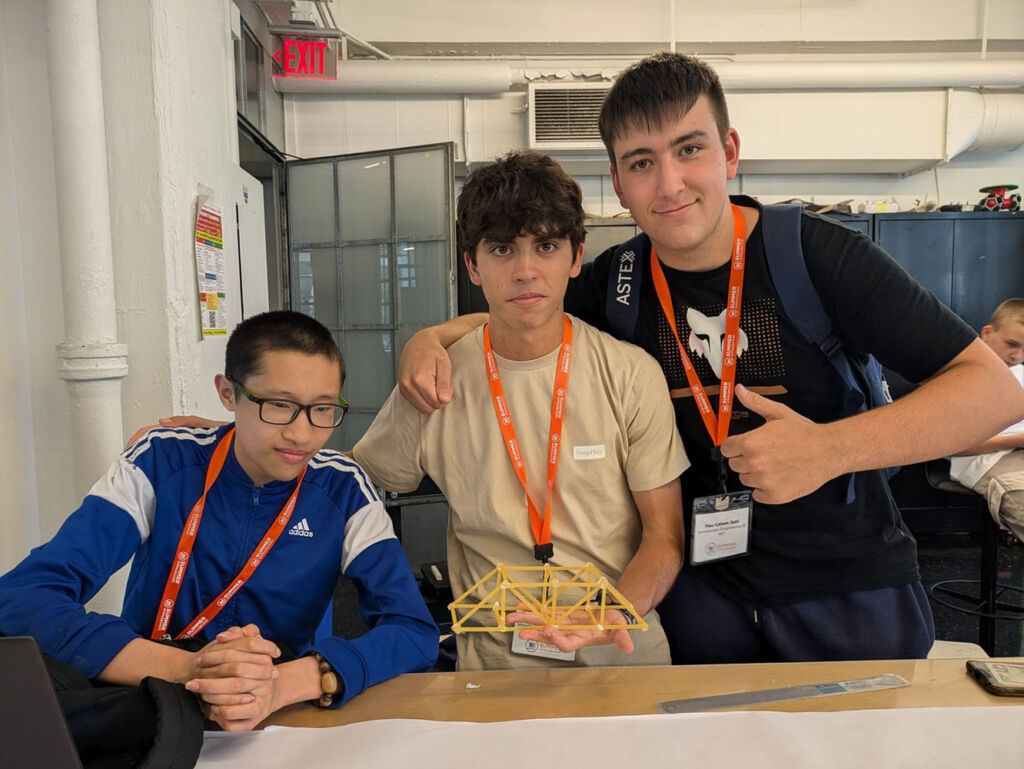
Over one week in summer 2027, middle schoolers spend each morning on hands-on engineering projects such as rubber-band-powered vehicles, circuits and programmable models, with each day given to a different branch like civil, mechanical or electrical engineering. Afternoons bring a skills lab and course-linked trips, and the week includes Q&A sessions with engineering professionals. Summer Springboard runs the course at Berkeley, NYU and UC San Diego, and depending on the campus, students either live in the dorms or commute.
 Sean Stevens · SourcesSucceed has a commercial partnership with this provider.
At a glance
Official facts · checked 11 Nov 2026- DatesOfficial
- 2027: 27 June to 2 July (Berkeley Session 1), 27 June to 2 July (NYU Session 1), 4 to 9 July (NYU Session 2), 4 to 9 July (Berkeley Session 2), 4 to 9 July (UC San Diego Session 1), 11 to 16 July (NYU Session 3) and 7 more
- Who can applyOfficial
- Completed 6th grade by the program start date. Berkeley and UC San Diego: ages 12 to 14 who have finished 6th grade, NYU: ages 11 to 14 who have finished 5th grade. International students show English proficiency through a telephone interview or a test score
- Total costOfficial
- 2027: $2,998 residential, $1,598 non-residential (Berkeley Session 1), $3,198 residential, $1,798 non-residential (NYU Session 1), $3,198 residential, $1,798 non-residential (NYU Session 2), $2,998 residential, $1,598 non-residential (Berkeley Session 2), $2,998 residential, $1,598 non-residential (UC San Diego Session 1), $3,198 residential, $1,798 non-residential (NYU Session 3) and 7 more
- Format and placeOfficial
- In person, Berkeley, New York City, San Diego
- Length
- 1 week
- Included / budget separately
- Included: accommodation, meals (Residential students get all meals, commuters get lunch). Separately: Course supplement $250 (mandatory), application fee from $99 (non-refundable), Group airport transfer $95 each way (optional), Unaccompanied minor transportation $145 each way (optional)
- Deposit and refunds
- Deposit $600. Cancel before 1 March: 100% of tuition is refunded, except the $99 application fee
- Financial aid
- Need-based scholarships cover up to 30% of residential tuition or up to 60% of commuter tuition
- Apply by
- 2027: 21 February (1st Wave), 18 April (2nd Wave), 16 May (Final General Admission)
- Cohort and selectivity
- Summer Springboard publishes no acceptance rate. Admissions are rolling, courses are assigned first come, first served, and full courses or sessions move to a waitlist
- Credit or certificate
- Completion certificate and letter of recommendation from the instructor
Get the key facts by email
The dates, costs and how to apply, then 2 reminders: 2 May (2 weeks before) and 13 May (3 days before).
Succeed's assessment
Should you apply?
SucceedIn short
Why it's worth it
Class time centers on designing, building, testing and redesigning real things, and at Berkeley and NYU it's led by people who teach engineering at university level, so a young student learns the design process from someone who knows it well.
What it asks of you
Class runs three hours each morning, with an afternoon skills lab for working on projects, so the academic load is light. The bigger commitment is the cost of a single week, and living on campus costs $1,400 more than commuting.
Who should skip it
Students who already build circuits or program robots on their own may find it too basic, because the course gives each branch of engineering about a day and never stays long on any one of them.
What does a week on the course look like?
Class runs from 9 a.m. to noon, Monday to Friday, which adds up to five 3-hour sessions, and the week ends with check-out at 2:30 p.m. on Friday. Each day takes on a different branch of engineering, such as civil, mechanical or electrical, and you build things like rubber-band-powered vehicles, working circuits and programmable models, then test and redesign them. Wednesday afternoon is set aside for extra academic time, which may include an excursion or a guest speaker.
On the residential campuses at Berkeley and San Diego, the rest of the day is planned for you. After lunch comes a recreational activity or a course-linked trip, then an Academic Skills Lab at 3:30 p.m. for working on final projects, free time at 5 p.m., dinner at 6 p.m. and an evening activity such as trivia, karaoke or a talent show. Everyone is back in the dorm by 8:30 p.m., with a mentor check-in at 9:30 p.m. Commuters are on campus from 9 a.m. to 5 p.m. Monday to Thursday and leave at 2:30 p.m. on Friday.
At NYU, classes meet at the Kimmel Center near Washington Square Park, afternoons go to excursions and the skills lab, and students head home at 5 p.m. In past years the New York group visited the Brooklyn Bridge, the New York Hall of Science and Mercer Labs, while Bay Area students visited local tech companies.
Who teaches the engineering class?
Each campus has its own instructor, and at Berkeley and NYU it's a university engineering professor. At Berkeley the class is taught by Dr. Roya Nasimi, an Assistant Professor of Civil Engineering at California State University, East Bay. She holds a PhD in structural engineering, runs a lab on dynamics and smart structures and has worked on full-scale bridge experiments. At NYU it's André J. Butler, an Industry Professor of civil, urban and environmental engineering at NYU's Tandon School of Engineering, who won two Teacher of the Year awards at Mercer University's School of Engineering.
Summer Springboard hasn't yet named the UC San Diego instructor and says only that its faculty are recruited from area colleges, universities and professional forums, so ask before you choose San Diego if the teacher matters to you. Industry professionals also join the course for Q&A sessions about engineering careers.
Who can apply, and how selective is it?
You need to have finished 6th grade by the time the course starts and have a 3.0 GPA or your school's equivalent. NYU is the exception on grade, because Summer Springboard lists it for ages 11 to 14 who have finished 5th grade. If you've only just finished 5th grade, confirm with Summer Springboard that the NYU course is open to you before you apply.
The application asks for short-answer essay questions and signed agreement forms along with the deposit and application fee, and Summer Springboard says it sends a decision within 5 to 7 business days. Admissions are rolling and courses are filled first come, first served, so when you apply matters, because a full session means a waitlist.
Every application is also checked against Summer Springboard's Essential Eligibility Criteria, which cover things like managing your own medications, walking more than a mile around campus and following staff instructions in English. Students with some health conditions may be asked for medical documentation, and Summer Springboard states that its programs aren't therapeutic.
What does a week really cost?
For one week at Berkeley or UC San Diego, a family pays $3,347 for the residential option or $1,947 as a commuter. Those totals add the tuition Summer Springboard lists for applications made by 30 November 2026, the mandatory $250 supplement for this engineering course and the $99 application fee. At NYU the same sums come to $3,547 and $2,147. Tuition goes up on 1 December 2026 and the new figure isn't published yet, so check the price on the day you apply. The application fee also rises, to $149 after 21 February 2027 and $199 after 18 April 2027.
Residential tuition covers your room, all meals, the course, excursions and evening activities. Commuter tuition covers lunch, the course and weekday excursions, and at Berkeley and San Diego commuters pay $125 a day to join weekend excursions. Airport transfers are optional and extra, at $95 each way for the group transfer. One thing to check: Summer Springboard describes the NYU course as a commuter program, with students heading home at 5 p.m., yet it also lists a $3,198 residential price, so ask what that price includes before you book.
You pay a $600 deposit with the application. If you apply before 10 March, the balance is split into three payments due on 10 March, 10 April and 10 May. Cancel before 1 March and you get all the tuition back except the application fee. From 2 March the deposit and fee are no longer refunded, and the share of tuition you get back falls to 75% from 2 April, 25% after 1 May and nothing after 1 June. An optional $699 Tuition Protection Plan, bought when you apply, lets you cancel for any reason up to the day the program starts. Need-based scholarships cover up to 30% of residential tuition or 60% of commuter tuition, but never the deposit or application fee.
| Campus | Residential total | Commuter total |
|---|---|---|
| Berkeley | $3,347 | $1,947 |
| UC San Diego | $3,347 | $1,947 |
| NYU | $3,547 | $2,147 |
How are students looked after?
On the residential campuses, a Summer Springboard staff member lives on your floor, and other staff live on campus and handle emergencies around the clock. At Berkeley you share a dorm room on a gender-segregated floor, and the dorms have 24-hour security and electronic keys for each building and room. At UC San Diego you share a room in a suite separated by gender, with staff including the campus director living in the dorms. UCSD Police patrol around the clock, and students must be in their rooms after 9:30 p.m. At NYU, students check in each day with the Summer Springboard team at the Kimmel Center's front desk, and NYU's Campus Safety Department manages building security.
The middle school program runs separately from the high school one, with its own staff, housing and schedule, and at Berkeley Summer Springboard says every excursion is supervised by its middle school staff. With the optional airport transfer, staff meet students at the airport and take them to their residence hall. Summer Springboard doesn't give a staff-to-student ratio, so ask if that matters to you.
What do you leave with?
You'll have built a set of projects over the week, and you also get a completion certificate and a letter of recommendation from your instructor, which Summer Springboard gives every student who finishes a program. There's no college credit, since Summer Springboard offers credit only through its Cal Poly and NYSID programs, and neither runs this course.

Sean
Founder, Succeed
Talk it through with Sean
Want to talk it through?
“I can help you compare the programs you're considering, think through the practicalities and work out what makes sense for you.”
20 minutes · No obligation to enroll
What should you do next?
Frequently asked questions
Sources
- Middle School Fundamentals of Engineering
summerspringboard.com · Official page
- 2027 Middle School 1-week Fundamentals of Engineering V2
link.summerspringboard.com
- Need-Based Scholarships
summerspringboard.com
- summerspringboard.com/knowledge-base/general-faq
- summerspringboard.com/knowledge-base/application-faq
- Terms & Conditions
summerspringboard.com
- summerspringboard.com/apply
- Summer Springboard @ UC San Diego
summerspringboard.com
Not ready to decide yet? Keep it for later.