
Summer Springboard Middle School Marine Biology
- 2027 program
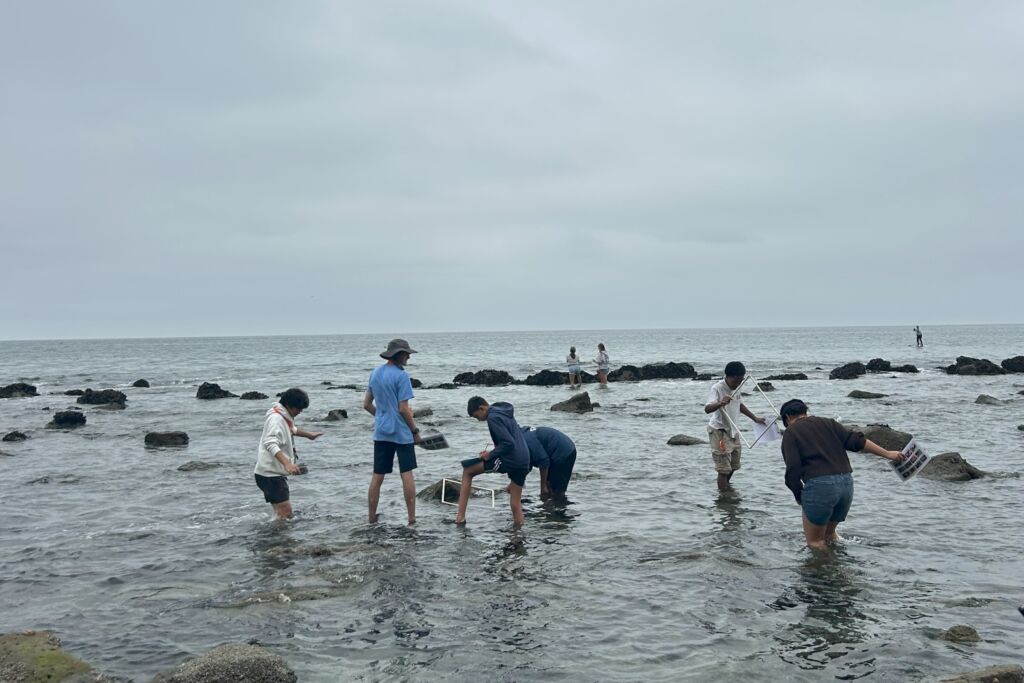
Middle School Marine Biology is a one-week Summer Springboard course on the UC San Diego campus for students who have finished 6th grade. Students spend five mornings in class on ocean ecosystems and marine animal anatomy, dissect marine organisms and run simple ecosystem health checks. The week also includes visits to Birch Aquarium, Scripps Institution of Oceanography and the Torrey Pines Wetlands and a whale watching tour. Students can either live in the dorms or commute.
 Sean Stevens · SourcesSucceed has a commercial partnership with this provider.
At a glance
Official facts · checked 11 Nov 2026- DatesOfficial
- 2027: 4 to 9 July, 11 to 16 July, 18 to 23 July, 25 to 30 July
- Who can applyOfficial
- Ages 12 to 14 who have finished 6th grade by the program start date. 3.0 Grade Point Average (or local equivalent). International students must show English proficiency through a telephone interview or minimum test scores
- Total costOfficial
- 2027: $2,998 residential, $1,598 non-residential
- Format and placeOfficial
- In person, University dorm suites, UC San Diego, San Diego, California
- Length
- 1 week
- Included / budget separately
- Included: accommodation, meals (All meals for residential students, lunch only for commuters). Separately: Marine Biology course supplement $250 (mandatory), application fee from $99 (non-refundable), airport shuttle $95 each way, Unaccompanied minor service $50 each way on top of the airport shuttle
- Deposit and refunds
- Deposit $600. Cancel before 1 March: all tuition, including the deposit, is refunded and only the $99 application fee is kept
- Financial aid
- Need-based scholarships cover up to 30% of residential tuition or up to 60% of commuter tuition
- Apply by
- 2027: 21 February (1st Wave), 18 April (2nd Wave), 16 May (Final General Admission)
- Cohort and selectivity
- Applications are reviewed against a 3.0 GPA requirement and Summer Springboard's Essential Eligibility Criteria. No acceptance rate or cohort size is published
- Credit or certificate
- Summer Springboard completion certificate and letter of recommendation from the instructor
Get the key facts by email
The dates, costs and how to apply, then 2 reminders: 2 May (2 weeks before) and 13 May (3 days before).
Succeed's assessment
Should you apply?
SucceedIn short
Why it's worth it
Students do the science themselves, dissecting marine animals and running simple ecosystem health checks with sampling and biodiversity counts, and their teacher researches kelp forests at Scripps.
What it asks of you
Summer Springboard expects students to be fairly independent, which for residential students means managing their own medication and personal care while sharing a dorm suite. The mandatory course supplement and the application fee come on top of tuition, and flights are extra.
Who should skip it
Students who want college credit for their summer, because Summer Springboard gives a completion certificate and a letter of recommendation from the instructor, and offers credit only at two other campuses.
Flying in alone
Summer Springboard requires students aged 14 or younger who fly in to travel as unaccompanied minors, so you'll book flights under the airline's rules and pay the airline's fee, plus an extra $50 each way to Summer Springboard on top of the airport transfer.
What does a day in the week look like?
Class runs from 9am to noon, Monday to Friday, which makes five three-hour sessions, and Wednesday afternoon adds extra academic time that may include an excursion or guest speaker. Residential students start the day with breakfast at 8am in the campus dining hall. After lunch at noon, everyone heads out at 1:30pm on a course excursion or a recreational outing such as the beach, before an Academic Skills Lab at 3:30pm.
Free time runs from 5pm until dinner at 6pm, and evening activities such as trivia nights and karaoke start at 7pm. Residential students are back in the dorm by 8:30pm for a mentor check-in at 9:30pm. Commuters are on campus from 9am to 5pm Monday to Thursday and until 2:30pm on Friday, when the week ends for everyone.
Who teaches the course?
Mohammad Sedarat, a marine scientist and Ph.D. candidate in the Jennifer Smith Lab at Scripps Institution of Oceanography, teaches the course. His doctoral research looks at how climate change is reshaping kelp forests in San Diego and across southern California, and he has taught undergraduates, high schoolers and middle schoolers at UC San Diego for more than ten years. Students also hear from marine biology professionals about career paths and research. Summer Springboard doesn't publish a class size for this course.
How are students looked after?
Summer Springboard staff live on every dorm floor, and the Campus Director, Assistant Campus Director and other staff also live in the dorms and are available 24 hours a day. Getting into the residence hall and suite takes an individual access card, and each room has its own key. UCSD Police patrol the campus and residence halls around the clock, and residential students must be in their rooms after 9:30pm.
Students share a room with one other student in a gender-separated suite. Staff supervise classes and trips directly, while in free time students can move within set campus boundaries in groups of three or more. All staff go through background checks and training. If a student is sick or hurt, staff take them to the nearest medical facility and contact the parents, and the family pays any costs, which is why Summer Springboard asks for proof of medical insurance.
Who can apply, and what does the application ask for?
Summer Springboard takes students aged 12 to 14 who have finished 6th grade by the program start date and have a 3.0 GPA or the local equivalent. International students show their English in a telephone interview or with a minimum test score. The application itself includes short-answer essay questions and signed agreement forms.
Applications are also checked against Summer Springboard's Essential Eligibility Criteria, which ask students to handle daily life independently, walk more than a mile between buildings and follow staff instructions in English. Students with some medical or mental health conditions may be asked for extra documentation or a doctor's sign-off.
What does the week really cost?
With the mandatory fees, a residential place comes to at least $3,347 and a commuter place to at least $1,947. That's tuition of $2,998 or $1,598, plus the $250 Marine Biology course supplement and the application fee, which starts at $99. Residential tuition covers all meals, a dorm room, the course, excursions and evening activities. Commuter tuition covers lunch, the course and excursions, and weekend excursions cost $125 a day extra.
Those tuition figures are for applications made by 30 November 2026. Summer Springboard raises tuition on 1 December 2026 and hasn't said by how much. The application fee also rises, to $149 after 21 February 2027 and $199 after 18 April 2027. You pay a $600 deposit when you apply, and the balance follows on a payment plan, with a $150 late fee on payments made after 10 May 2027. If it isn't paid in full by 1 June 2027, Summer Springboard can cancel the place without a refund.
Flights, health insurance and spending money are extra, and Summer Springboard suggests about $100 a week for spending money. Its airport transfer costs $95 each way. Need-based scholarships cover up to 30% of residential tuition or 60% of commuter tuition, but not the deposit or application fee. Cancel before 1 March 2027 and you get everything back except the application fee. After that you lose the deposit, and refunds drop to 75% of tuition from 2 April, 25% after 1 May and nothing after 1 June.
How do you apply?
Applications go through Summer Springboard's online enrollment form.
Enter basic contact information, confirm the verification email and click Create New Application on the dashboard.
Choose the UC San Diego middle school campus, your session, this course and residential or commuter tuition, then complete the application, which takes about 30 minutes with the student present.
Pay the deposit and application fee to hold the place.
Expect a decision within 5 to 7 business days, after which more forms open, and return any extra paperwork Summer Springboard asks for within 48 hours or the place can't be offered.
Apply by 16 May 2027 at the latest, when enrollment closes, and check Summer Springboard's availability list first, because some courses close after the 21 February and 18 April 2027 application rounds.

Sean
Founder, Succeed
Talk it through with Sean
Want to talk it through?
“I can help you compare the programs you're considering, think through the practicalities and work out what makes sense for you.”
20 minutes · No obligation to enroll
What should you do next?
Frequently asked questions
Sources
- Middle School Marine Biology
summerspringboard.com · Official page
- summerspringboard.com/knowledge-base/application-faq
- 2027 Middle School 1-week Marine Biology V2
link.summerspringboard.com
- Need-Based Scholarships
summerspringboard.com
- Travel Logistics FAQ
summerspringboard.com
- summerspringboard.com/terms-and-conditions
- Tuition and Financial Aid FAQ
summerspringboard.com
- General Information FAQ
summerspringboard.com
Not ready to decide yet? Keep it for later.