
Summer Springboard Middle School Medicine
- 2027 program
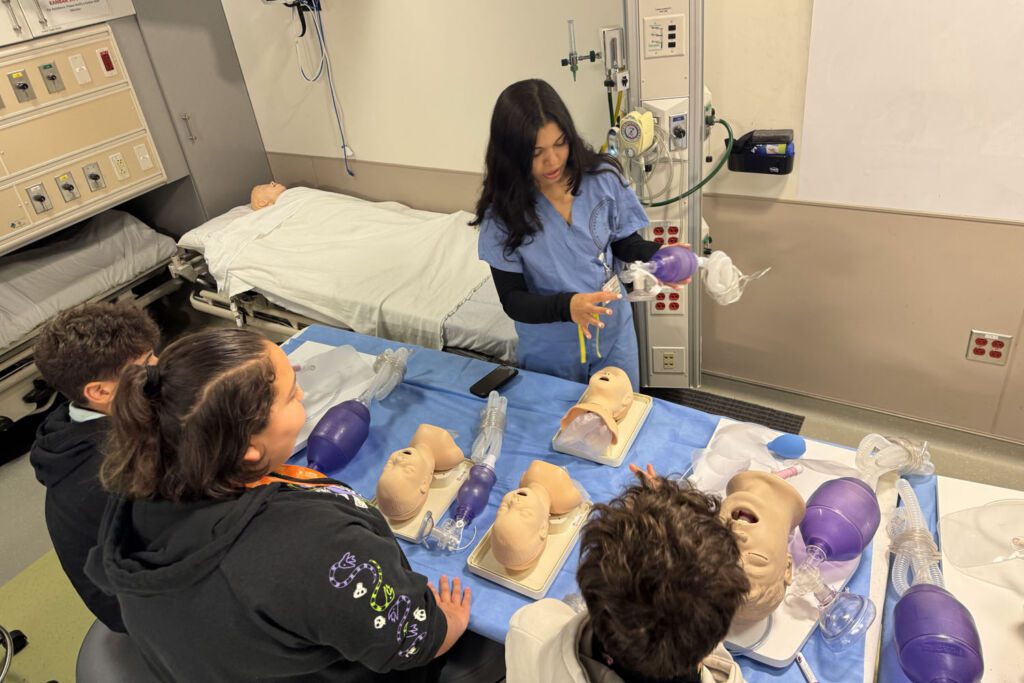
Middle School Medicine is a one-week summer course from Summer Springboard where middle schoolers practice emergency skills such as CPR, splinting and bleeding control through simulations. They also work in small teams to research a patient's symptoms, make a diagnosis and plan treatment. Mornings are class, and afternoons bring excursions that vary by campus, such as simulation center visits, ambulance tours or talks from EMTs. It runs at Berkeley, Georgetown, NYU, UC San Diego, the University of Washington and Vanderbilt, with residential and commuter places.
 Sean Stevens · SourcesSucceed has a commercial partnership with this provider.
At a glance
Official facts · checked 11 Nov 2026- DatesOfficial
- 2027: 13 to 18 June (Vanderbilt Session 1), 27 June to 2 July (Berkeley Session 1), 27 June to 2 July (NYU Session 1), 4 to 9 July (Berkeley Session 2), 4 to 9 July (Georgetown Session 1), 4 to 9 July (UC San Diego Session 1) and 10 more
- Who can applyOfficial
- Completed 6th grade of middle school by the program start date. Aimed at students completing grades 6 to 8. NYU campus: ages 11 to 14 who have finished 5th grade, Berkeley campus: ages 12 to 14 who have finished 6th grade. International students show English proficiency through a telephone interview or minimum test scores
- Total costOfficial
- 2027: $2,798 residential, $1,398 non-residential (Vanderbilt Session 1), $2,998 residential, $1,598 non-residential (Berkeley Session 1), $3,198 residential, $1,798 non-residential (NYU Session 1), $2,998 residential, $1,598 non-residential (Berkeley Session 2), $2,998 residential, $1,598 non-residential (Georgetown Session 1), $2,998 residential, $1,598 non-residential (UC San Diego Session 1) and 10 more
- Format and placeOfficial
- In person, Berkeley, Washington, DC, San Diego, New York City, Seattle, Nashville
- Length
- 1 week
- Included / budget separately
- Included: accommodation, meals (All meals for residential students, lunch only for commuters). Separately: Middle School Medicine course supplement $250 (mandatory), application fee from $99 (non-refundable, $149 after 21 February 2027, $199 after 18 April 2027), Group airport transfer $95 each way, airport transfer outside group window $195 each way
- Deposit and refunds
- Deposit $600. Cancel before 1 March: 100% of tuition is refunded, including the deposit, except the $99 application fee
- Financial aid
- Need-based scholarships from a limited pool, awarded according to available funds for the program and the family's financial situation
- Apply by
- 2027: 21 February (1st wave), 18 April (2nd wave), 16 May (Final general admission)
- Cohort and selectivity
- Summer Springboard reviews applications holistically against its eligibility criteria and publishes no acceptance rate, and some programs close and move to a waitlist after each application wave
- Credit or certificate
- Completion certificate and letter of recommendation from the instructor, plus CPR certification
Get the key facts by email
The dates, costs and how to apply, then 2 reminders: 2 May (2 weeks before) and 13 May (3 days before).
Succeed's assessment
Should you apply?
SucceedIn short
Why it's worth it
Practicing clinicians teach it, including UCSF resident physicians at Berkeley and a University of Washington critical care professor in Seattle, and most campuses add a simulation center visit or ambulance tour on top of CPR certification. That's genuinely hands-on medicine for students this young.
What it asks of you
A Sunday-to-Friday week away and, with the mandatory $250 Medicine supplement, $3,048 to $3,448 for a residential place before the application fee and travel. Commuting brings that down to $1,648 to $2,048, which only works if you live near a campus.
Who should skip it
Students after serious coursework or something for a transcript, because class is five 3-hour mornings and Summer Springboard gives a completion certificate and an instructor's letter, not credit.
Pick the campus with care
Instructors and excursions differ from campus to campus, from the UCSF Kanbar simulation center at Berkeley to the Mount Sinai Simulation Center at NYU, and Summer Springboard describes NYU as a commuter program, so read the page for the campus you want.
How are the week's classes and afternoons laid out?
Class runs from 9am to noon, Monday to Friday, so the course itself is five 3-hour sessions, and Wednesday afternoon adds extra academic time that may include an excursion or guest speaker. The week ends with check-out at 2:30pm on Friday.
Summer Springboard's Berkeley timetable shows the rest of a residential day: lunch at noon, a recreational activity or course excursion at 1:30pm, an academic skills lab at 3:30pm, free time from 5pm, dinner at 6pm and supervised evening activities such as trivia nights and karaoke at 7pm. Everyone is back in the dorm by 8:30pm. Commuters are on program from 9am to 5pm Monday to Thursday and go home before dinner and the evening activities.
Who teaches the course on each campus?
Each campus has its own instructor, and every one Summer Springboard names has worked in clinical care as a doctor, nurse or EMT.
Berkeley
Coordinated by Dr. Mariam Hjaige, a former chief resident in emergency medicine at UCSF, and taught by a group of UCSF resident physicians.
Georgetown
Nilufer Mutlu, an associate professor of nursing at Montgomery College with acute care experience and formal training in simulation teaching.
UC San Diego
Matthew Mandel, an EMT and CPR instructor who spent nearly a decade in hospital emergency rooms, teaches sessions 1 and 2, and registered nurse Kimya Owens teaches session 3.
NYU
Alethea Johnson, a licensed nurse with more than 10 years of experience who previously taught Summer Springboard's high school Emergency Medicine course.
University of Washington
Dr. Engi Attia, an associate professor in pulmonary and critical care medicine at the University of Washington.
Vanderbilt
Donald Hollis III, a pediatric physician at Meharry Medical College in Nashville.
How are middle schoolers supervised?
Middle schoolers live and take part in activities apart from Summer Springboard's high school students, with their own staff trained for the age group and what the organizer calls increased supervision. At Berkeley, a staff mentor lives on each hall floor, other staff are on campus around the clock for emergencies, and dorms have 24-hour security with electronic keys to every building and room. Floors are separated by gender, students are back in the dorm by 8:30pm, and every excursion is supervised by middle school staff.
At NYU, students check in each day with the Summer Springboard team at the Kimmel Center front desk, where entry is controlled by NYU Campus Safety, so it matters that they arrive on time.
Who can apply, and what does the application ask?
Students need to have finished 6th grade by the start date and hold a 3.0 GPA or local equivalent, and Summer Springboard aims the course at students completing grades 6 to 8. NYU goes a little younger, taking ages 11 to 14 who have finished 5th grade, while Berkeley lists ages 12 to 14.
The application includes short-answer essay questions and signed agreement forms, and international students show their English through a telephone interview or test scores. Summer Springboard reviews applications holistically against its Essential Eligibility Criteria, which expect students to manage their own personal care and medication, and it may ask for medical documentation. It doesn't publish an acceptance rate, but it warns that some programs close and move to a waitlist after each application wave.
What does a week really cost?
With the mandatory $250 Medicine supplement, a residential week costs $3,048 to $3,448 and a commuter week $1,648 to $2,048, depending on the campus, plus a non-refundable application fee that starts at $99 and rises to $149 after 21 February 2027 and $199 after 18 April 2027. These are the prices Summer Springboard lists in November 2026, and it says tuition goes up on 1 December 2026.
Residential tuition covers all meals, lodging, excursions, the course and evening activities. Commuter tuition covers lunch, the course, excursions and daytime programming. Flights, health insurance, airport transfers ($95 each way in the group window) and unaccompanied minor transport ($145 each way) are extra. A $600 deposit holds the place when you apply, and Summer Springboard doesn't say outright whether it counts toward tuition. If you apply before 10 March, the balance is due in thirds on 10 March, 10 April and 10 May.
Cancel before 1 March and only the application fee is kept. From 2 March you lose the deposit too, and the tuition refund drops to 75% from 2 April, 25% after 1 May and nothing after 1 June. The optional $699 Tuition Protection Plan lets you cancel for any reason up to the start day. Need-based scholarships cover up to 30% of residential or 60% of commuter tuition, but not the deposit or application fee.
| Campus | Residential tuition | Commuter tuition | With $250 supplement (residential / commuter) |
|---|---|---|---|
| Berkeley, Georgetown, UC San Diego | $2,998 | $1,598 | $3,248 / $1,848 |
| NYU | $3,198 | $1,798 | $3,448 / $2,048 |
| University of Washington, Vanderbilt | $2,798 | $1,398 | $3,048 / $1,648 |
How do you apply, and by when?
You apply through Summer Springboard's enrollment page, which leads to its online application portal.
Check Summer Springboard's program availability page to confirm your campus and session still have room.
Enter basic contact details, confirm the verification email and finish your account details on the dashboard.
Create a new application, choosing the campus, session, course and residential or commuter tuition, and set aside about 30 minutes with the student present.
Pay the $600 deposit and the application fee to hold the place.
Expect an enrollment decision within 5 to 7 business days, after which more forms open up for you to complete.
Watch the wave deadlines of 21 February 2027 and 18 April 2027, after which some programs close or waitlist, and the final general admission deadline of 16 May 2027.

Sean
Founder, Succeed
Talk it through with Sean
Want to talk it through?
“I can help you compare the programs you're considering, think through the practicalities and work out what makes sense for you.”
20 minutes · No obligation to enroll
What should you do next?
Frequently asked questions
Sources
- Middle School Medicine
summerspringboard.com · Official page
- Need-Based Scholarships
summerspringboard.com
- Terms & Conditions
summerspringboard.com
- General Information FAQ
summerspringboard.com
- Main FAQ | Knowledge Base
summerspringboard.com
- Apply Now | Enrollment
summerspringboard.com
- Middle School Hub - Summer Springboard
summerspringboard.com
- 2027 Middle School Medicine Infosheet (PDF)
summerspringboard.com
Not ready to decide yet? Keep it for later.