
Summer Springboard Middle School Neuroscience
- 2027 program
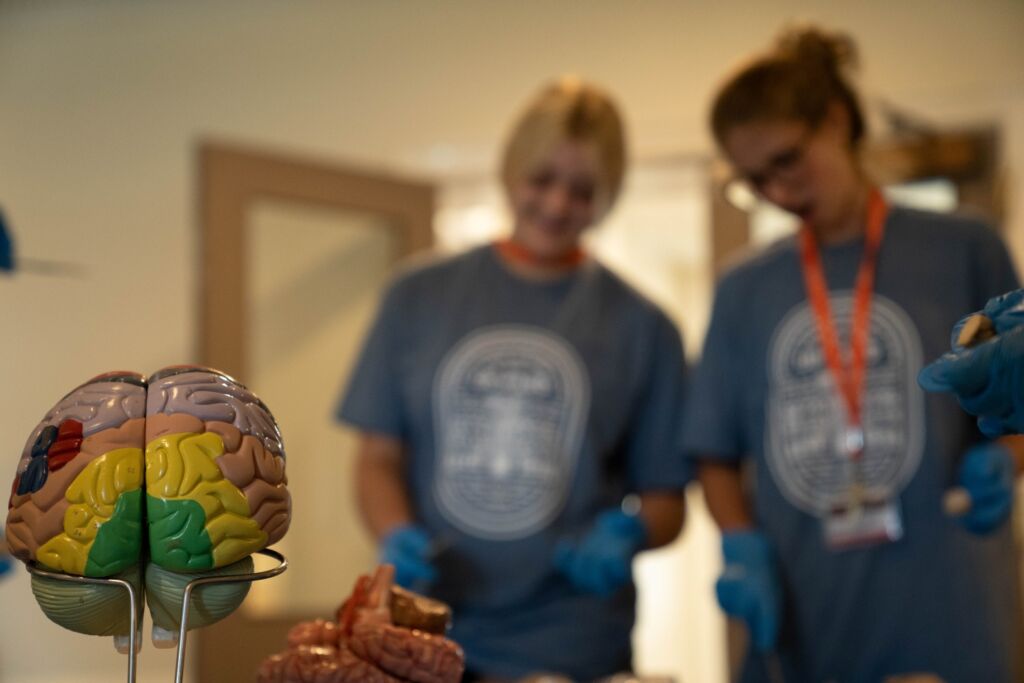
Middle School Neuroscience is a one-week summer course in New York City where students aged 11 to 13 build brain and neuron models, test their reaction times and senses, and learn how scientists study the brain, from Phineas Gage to brain-computer interfaces. Mornings are spent in class at NYU's Kimmel Center, and afternoons bring excursions and project labs. The week ends with a Brain Expo, where teams present an experiment they designed themselves. Summer Springboard runs it on NYU's campus, and students can either live in a residence hall or commute.
 Sean Stevens · SourcesSucceed has a commercial partnership with this provider.
At a glance
Official facts · checked 11 Nov 2026- DatesOfficial
- 2027: 27 June to 2 July, 4 to 9 July, 11 to 16 July, 18 to 23 July
- Who can applyOfficial
- Ages 11 to 13 and finished 6th grade by the program start date. International students show English proficiency through a telephone interview
- Total costOfficial
- 2027: $3,198 residential, $1,798 non-residential
- Format and placeOfficial
- In person, Residence hall, New York City, New York (NYU Kimmel Center)
- Length
- One week (Sunday to Friday)
- Included / budget separately
- Included: accommodation, meals (All meals for residential students, lunch for commuters). Separately: application fee $99 (rises to $149 after 21 February 2027 and $199 after 18 April 2027), airport shuttle $95 each way, Unaccompanied minor service $50 each way on top of the shuttle, Late payment fee $150
- Deposit and refunds
- Deposit $600. Cancel before 1 March: 100% of tuition is refunded, except the $99 application fee, which is never refundable
- Financial aid
- Need-based scholarships cover up to 30% of residential tuition or up to 60% of commuter tuition
- Apply by
- 2027: 21 February (1st wave), 18 April (2nd wave), 16 May (Final general admission)
- Cohort and selectivity
- Applicants who meet the grade, GPA and Essential Eligibility Criteria are accepted while places last, with courses filled first come, first served and a waitlist once a session is full
- Credit or certificate
- Completion certificate and letter of recommendation from the course instructor
Get the key facts by email
The dates, costs and how to apply, then 2 reminders: 2 May (2 weeks before) and 13 May (3 days before).
Succeed's assessment
Should you apply?
SucceedIn short
Why it's worth it
It turns brain science into things you make and test, from clay brains and neuron models to reaction-time trials and an egg-drop helmet. It ends with a team experiment you plan yourself and present at the Brain Expo, and the afternoon excursions take the subject out of the classroom and into New York City.
What it asks of you
The real commitment is money rather than effort. For applications made by 30 November 2026, a single week costs $1,798 as a commuter or $3,198 living on campus, before any travel, and Summer Springboard also asks for a 3.0 GPA.
Who should skip it
Students who already know some neuroscience and want to go deep, because five days of class spread across anatomy, the senses, memory, sleep and brain technology leave little time for any one topic.
What does a day at the Kimmel Center look like?
Class runs from 9:00 a.m. to noon, followed by lunch in the campus dining area near the classrooms. At 1:30 p.m. the group heads out on an academic excursion, and from 3:30 p.m. there's a skills lab where teams work on their final projects, which in this course means the brain experiment for the Brain Expo. Students are dismissed at 5:00 p.m.
The week starts on a Sunday, when every student, commuters included, checks in and joins orientation, ice-breakers and dinner. All NYU middle school students visit one of New York City's museums together during the week, and each course also takes its own subject-related trips. Residential students stay on for dinner and evening activities, while commuters head home, since breakfast, dinner and evenings aren't part of their price.
What do you take away from the week?
Students who finish the week get a completion certificate and a letter of recommendation from their instructor, but no college credit, which Summer Springboard offers only at two other campuses. Both are earned rather than automatic, and Summer Springboard can withhold them for lack of participation or a breach of its code of conduct.
You also leave with your team's own brain experiment, planned and run during the week and presented to the class at the Brain Expo. The certificate comes from Summer Springboard, not NYU, which doesn't run the program.
Who can apply, and what does the application ask for?
Summer Springboard's 2027 rules for its NYU middle school program ask for students aged 11 to 13 who have finished 6th grade by the program start date and have a 3.0 GPA or the local equivalent. International students can show their English in a telephone interview.
The application takes about 30 minutes, the student has to be present to complete it, and it includes short-answer essay questions and signed agreement forms. Summer Springboard reviews each application against its Essential Eligibility Criteria, which cover things like managing your own medication and following staff instructions in English, and it may ask for medical documentation. Decisions arrive within 5 to 7 business days.
Admission is rolling, and places in each course go first come, first served. Once a session is full you join a waitlist, and you aren't charged the deposit or application fee until a spot opens.
What does a week really cost?
A week costs $3,198 if your child lives on campus or $1,798 as a commuter, which is what Summer Springboard charges for applications made by 30 November 2026. Tuition goes up on 1 December 2026, and Summer Springboard hasn't published the higher figure.
The residential price covers lodging, all meals, the course, excursions and evening activities. The commuter price covers the course, lunch and excursions, with programming from 8:30 a.m. to 5:15 p.m. on Monday and 9:00 a.m. to 5:15 p.m. Tuesday to Friday. It doesn't include housing, breakfast, dinner or evening activities. Neuroscience doesn't carry the $250 supplement that some other NYU courses do.
When you apply you pay a $600 deposit and a non-refundable application fee of $99, which rises to $149 after 21 February 2027 and $199 after 18 April 2027. If you apply before 10 March 2027, the balance is due in installments on 10 March, 10 April and 10 May 2027. Payments after 10 May carry a $150 late fee, and if the balance isn't paid by 1 June, Summer Springboard may cancel the enrollment without a refund.
Need-based scholarships cover up to 30% of residential or 60% of commuter tuition, depending on available funds and your family's finances. They apply to tuition only, never the deposit, application fee or travel, and you'll upload the first page of your latest tax return to apply.
Flights
These aren't included, and Summer Springboard's optional airport shuttle costs $95 each way.
Unaccompanied minor service
Students 14 or younger must fly as unaccompanied minors, and Summer Springboard adds $50 each way on top of the shuttle, plus whatever the airline charges.
Spending money
Summer Springboard suggests about $100 a week for snacks and souvenirs.
Health insurance
Tuition doesn't cover it, and every student must show proof of insurance.
Tuition Protection Plan
This optional, non-refundable plan lets you cancel for any reason up to the first day. Its 2026 terms priced it at $699 per application.
| If you cancel | What you get back |
|---|---|
| Before 1 March 2027 | All tuition, but not the application fee |
| 2 March to 1 April 2027 | All tuition except the deposit and application fee, or 100% of what you paid as credit for a future year |
| 2 April to 1 May 2027 | 75% of tuition except the deposit and application fee, or 100% as future credit |
| 2 May to 1 June 2027 | 25% of tuition except the deposit and application fee, or 75% as future credit |
| After 1 June 2027 | Nothing, and nothing carries over to a future year |
How are 11- to 13-year-olds looked after in the city?
Summer Springboard runs its middle school weeks separately from its high school programs, with staff trained for this age group, their own housing and schedules, and closer supervision. At NYU, classes are in the Kimmel Center, where access is limited to NYU students, faculty and staff and security is run by NYU's Campus Safety Department. Every student checks in with the Summer Springboard team at the front desk each day, so tell the team in advance if your child will be late.
Chaperones travel with students on the subway or private buses to excursion sites. If a student is sick or hurt, staff take them to the nearest medical facility and contact the parents, and the family pays any costs. Before the week, families complete a medical form and show proof of insurance. Summer Springboard doesn't name the residence hall used by residential students, so ask before booking if that matters to you.
Staff checks
All program staff go through background checks and training, and campus directors hold a bachelor's or master's degree.
Rules
Students and a parent sign a code of conduct, and leaving the group without permission can mean being sent home at the family's expense.
Phones
Students may bring a cell phone but must keep it off during program activities.
Airport pickup
For an extra fee, staff meet students at the airport and take them to their residence hall.
How do you apply?
Applications go through Summer Springboard's enrollment page, and admission is rolling until enrollment closes on 16 May 2027.
Create an account on the application portal, confirm the verification email and fill in your account details.
Click Create New Application, then choose the NYU middle school campus, your session, Middle School Neuroscience and residential or commuter tuition.
Complete the roughly 30-minute application with the student present, including the short-answer questions.
Pay the $600 deposit and the application fee to hold the place. The fee goes up after 21 February and again after 18 April 2027, which is also when some courses may close or move to a waitlist.
Expect a decision within 5 to 7 business days, after which further forms open in your account.
Sign the code of conduct, waiver and medical forms, which are due by 1 May 2027 if you enroll before 25 April, or within 7 days of acceptance after that.

Sean
Founder, Succeed
Talk it through with Sean
Want to talk it through?
“I can help you compare the programs you're considering, think through the practicalities and work out what makes sense for you.”
20 minutes · No obligation to enroll
What should you do next?
Frequently asked questions
Sources
- Middle School Neuroscience
summerspringboard.com · Official page
- Travel Logistics FAQ
summerspringboard.com
- summerspringboard.com/knowledge-base/staff-safety-faq
- General Information FAQ
summerspringboard.com
- Application and Enrollment FAQ
summerspringboard.com
- Terms & Conditions
summerspringboard.com
- Tuition and Financial Aid FAQ
summerspringboard.com
- MS 1-week NYU 2027 infosheet (PDF)
summerspringboard.com
Not ready to decide yet? Keep it for later.