
Summer Springboard Middle School Psychology & Neuroscience
- 2027 program
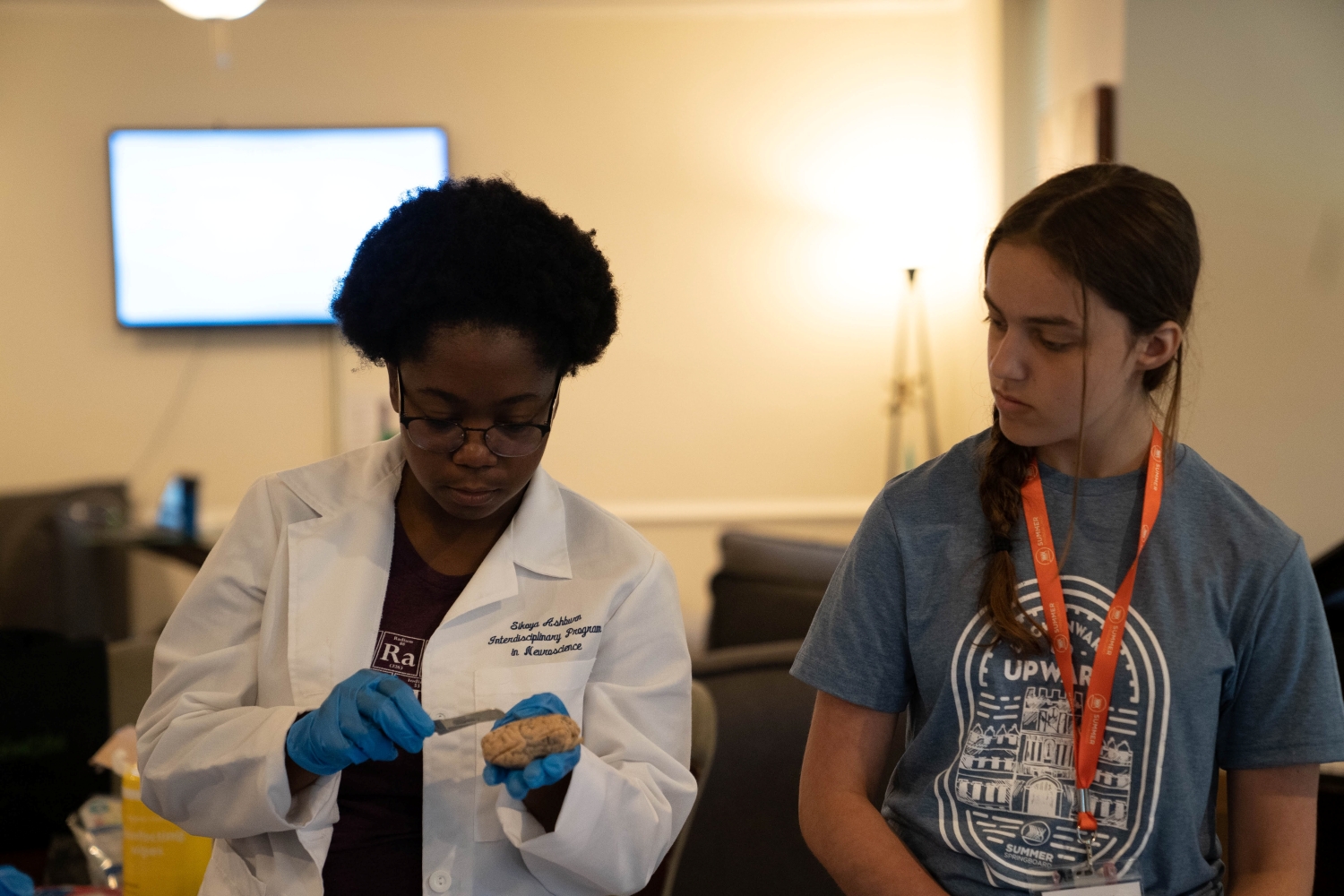
Middle School Psychology & Neuroscience is a one-week summer course from Summer Springboard for students who have finished 6th grade, held on the campuses of Berkeley, UC San Diego, Vanderbilt and the University of Washington. Each morning you spend three hours in class on emotions, personality, beliefs and how the brain shapes behavior, with lab work that includes dissecting sheep brains and cow spinal cords. Afternoons bring skills labs, excursions and guest professionals, and you either live in a campus dorm or come in each day as a commuter.
 Sean Stevens · SourcesSucceed has a commercial partnership with this provider.
At a glance
Official facts · checked 11 Nov 2026- DatesOfficial
- 2027: 13 to 18 June (Vanderbilt University Session 1), 27 June to 2 July (Berkeley Session 1), 4 to 9 July (UC San Diego Session 1), 4 to 9 July (Berkeley Session 2), 11 to 16 July (UC San Diego Session 2), 11 to 16 July (Berkeley Session 3) and 4 more
- Who can applyOfficial
- Completed 6th grade of middle school by the program start date. Ages 12 to 14, 3.0 Grade Point Average (or local equivalent). International students must demonstrate English proficiency via a telephone interview or minimum test scores
- Total costOfficial
- 2027: $2,798 residential, $1,398 non-residential (Vanderbilt University Session 1), $2,998 residential, $1,598 non-residential (Berkeley Session 1), $2,998 residential, $1,598 non-residential (UC San Diego Session 1), $2,998 residential, $1,598 non-residential (Berkeley Session 2), $2,998 residential, $1,598 non-residential (UC San Diego Session 2), $2,998 residential, $1,598 non-residential (Berkeley Session 3) and 4 more
- Format and placeOfficial
- In person, Berkeley, San Diego, Nashville, Seattle
- Length
- 1 week
- Included / budget separately
- Included: accommodation, meals (All meals for residential students, lunch for commuters). Separately: application fee from $99 (non-refundable, rises to $149 after 21 February 2027 and $199 after 18 April 2027), airport shuttle $95 each way, Unaccompanied minor service $50 each way on top of the shuttle, Commuter weekend excursions $125 per day
- Deposit and refunds
- Deposit $600. Cancel before 1 March: 100% of tuition is refunded, including the deposit, except the $99 application fee
- Financial aid
- Need-based scholarships covering up to 30% of residential tuition or 60% of commuter tuition, applied for through Summer Springboard's scholarship form
- Apply by
- 2027: 21 February (1st Wave), 18 April (2nd Wave), 16 May (Final General Admission)
- Cohort and selectivity
- Admissions are rolling: applications that meet the grade and GPA criteria are reviewed holistically, and places in each course and session are assigned first come, first served until they fill
- Credit or certificate
- Completion certificate and letter of recommendation from the instructor
Get the key facts by email
The dates, costs and how to apply, then 2 reminders: 2 May (2 weeks before) and 13 May (3 days before).
Succeed's assessment
Should you apply?
SucceedIn short
Why it's worth it
It's designed for middle schoolers, and it gets them doing real neuroscience early: dissecting sheep brains and cow spinal cords, running lab experiments on memory and decision-making, and talking with clinical psychologists and neuroscientists.
What it asks of you
The academic load is light, with 15 hours of class over five mornings, so the real commitment is money and logistics. Flights aren't included, and Vanderbilt and the University of Washington each run only one session, so your summer has to fit those dates.
Who should skip it
Students hoping for college credit or a substantial research project should look elsewhere. Summer Springboard gives a completion certificate and a letter of recommendation from the instructor rather than credit, and it pitches the course as an introduction to the field.
What does a week on campus look like?
Class runs from 9am to noon, Monday to Friday, which makes five three-hour sessions, and Wednesday afternoon is set aside for extra academic time that may include an excursion or guest speaker. Sessions start on a Sunday and end with check-out at 2:30pm on Friday.
The rest of the day follows the same timetable on every campus: lunch at noon, a recreational activity or academic excursion at 1:30pm, an academic skills lab at 3:30pm for project work, and free time from 5pm. Commuters head home before dinner. Residential students eat at 6pm and join supervised evening activities such as trivia nights and karaoke at 7pm. They're back in the dorm by 8:30pm, with a mentor check-in at 9:30pm.
Excursions vary by campus. A past Berkeley group visited San Francisco State University's Cognitive Psychophysiology Lab and watched an EEG test being run.
Who teaches the course on each campus?
Each campus has its own instructor, so who teaches you depends on where you go. Summer Springboard says it recruits faculty from local colleges, universities and professional fields for their subject expertise.
Berkeley
Janet Muro teaches psychology and English for Aspire Public Schools. She holds a BA in psychology from San Francisco State University and an MA in education from the University of the Pacific, and she led the curriculum design for the first UC-accepted psychology course at Aspire Richmond California College Preparatory Academy.
UC San Diego
Dr. Sara Roldan holds a doctorate in clinical psychology, is a TEDx speaker and often uses films, superheroes and gaming to explain psychological ideas.
Vanderbilt
Summer Springboard names Dr. Kevan Kidder, who earned his PhD in psychology (neurosystems and behavior) at the University of Washington and later researched aging and neurodegenerative disorders such as Alzheimer's and Parkinson's there. It also lists the 2027 Vanderbilt instructor as still to be announced, so it's worth confirming who will teach.
University of Washington
The instructor hasn't been announced yet.
Who can apply, and how hard is it to get a place?
The course is open to students who have finished 6th, 7th or 8th grade, so a student who has just finished 8th grade can still go, as long as they're 14 or under and have a 3.0 GPA or its local equivalent.
Beyond the grades, the application asks for short answer essay questions and signed agreement forms. Summer Springboard reviews each one holistically against its Essential Eligibility Criteria and may ask for input from a student's medical team to plan support. It doesn't publish an acceptance rate or cohort size. In practice the bigger hurdle is space, because admissions are rolling and courses are filled first come, first served, so a popular session can fill before you apply.
What does a week really cost?
Residential tuition is $2,998 at Berkeley and UC San Diego and $2,798 at Vanderbilt and the University of Washington, while commuter tuition is $1,598 and $1,398. Those prices apply to applications made by 30 November 2026, and Summer Springboard raises tuition on 1 December 2026 without publishing the new figure.
Residential tuition covers your dorm room, all meals, the course, excursions and evening activities. Commuter tuition covers lunch, the course and weekday excursions, and commuters can add weekend excursions for $125 a day. Every applicant also pays a non-refundable application fee of $99, which rises to $149 after 21 February 2027 and $199 after 18 April 2027, and a $600 deposit is due when you apply.
Flights are extra, and so is the $95-each-way airport shuttle. Students aged 14 or under who fly must travel as airline unaccompanied minors, which adds $50 each way to the shuttle on top of the airline's own charge. Need-based scholarships cover up to 30% of residential or 60% of commuter tuition.
Cancel before 1 March and you get everything back except the application fee. After that you lose the deposit and application fee, but the rest of the tuition is refunded until 1 April. From 2 April you get 75% of tuition back, after 1 May 25%, and after 1 June nothing. An optional Tuition Protection Plan costs $699 per application and has to be bought when you apply. It lets you cancel for any reason up to the start date and get back what you've paid, apart from the $699 itself.
How do you apply?
Applications go through Summer Springboard's enrollment page.
Check Summer Springboard's program availability list to make sure your campus and session are still open.
Enter basic contact details, confirm the verification email and complete your account details on the dashboard.
Create a new application, choosing campus, session, course and residential or commuter tuition. This takes about 30 minutes, and the student has to be there for it.
Pay the $600 deposit and the application fee to hold your place, ideally before the first-wave deadline of 21 February 2027, after which some sessions may close or move to a waitlist.
Expect a decision within 5 to 7 business days, and once you're accepted, more forms open up. If Summer Springboard asks for extra paperwork, it has to be done within 48 hours or the student can't be accepted.
If you don't pay in full, you're automatically put on the payment plan. Enrollment closes on 16 May 2027.
How are middle schoolers looked after?
Summer Springboard staff live on every dorm floor, and other staff live on campus to handle emergencies around the clock. The middle school program runs separately from the high school one, with its own staff, housing and a more structured day.
Dorms have 24-hour security and electronic key access, housing is separated by gender, and all excursions are supervised, with chaperones on public transit and buses. Housing differs by campus: UC San Diego puts students two to a room in suites and provides basic linens, while University of Washington rooms are doubles or triples with fans but no air conditioning. Families who keep kosher or halal should know that Vanderbilt and the University of Washington have no certified kosher or halal options, while Berkeley and UC San Diego say they can accommodate both diets.

Sean
Founder, Succeed
Talk it through with Sean
Want to talk it through?
“I can help you compare the programs you're considering, think through the practicalities and work out what makes sense for you.”
20 minutes · No obligation to enroll
What should you do next?
Frequently asked questions
Sources
- summerspringboard.com/medicine-healthcare-track/middle-school-psychology-neuroscience
Official page
- Travel Logistics FAQ
summerspringboard.com
- Application and Enrollment FAQ
summerspringboard.com
- summerspringboard.com/knowledge-base/general-faq
- Main FAQ | Knowledge Base
summerspringboard.com
- Tuition and Financial Aid FAQ
summerspringboard.com
- summerspringboard.com/apply
- 2027 Middle School 1-week Psychology & Neuroscience Infosheet (PDF)
summerspringboard.com
Not ready to decide yet? Keep it for later.