
Summer Springboard Middle School Trial Law
- 2027 program
Middle School Trial Law is a one-week Summer Springboard course where middle schoolers learn how trial lawyers build and argue a case, from researching evidence to examining witnesses, then put it all together in a mock trial at the end of the week. A practicing trial attorney teaches the morning classes, and afternoons go to court and law school visits or lab time spent preparing the case. It runs at Georgetown in Washington, DC, at UC San Diego and at NYU in New York City, with residential and commuter places.
At a glance
Official facts · checked 11 Nov 2026- DatesOfficial
- 2027: 27 June to 2 July (NYU, Session 1), 4 to 9 July (UC San Diego, Session 1), 4 to 9 July (NYU, Session 2), 4 to 9 July (Georgetown, Session 1), 11 to 16 July (UC San Diego, Session 2), 11 to 16 July (NYU, Session 3) and 3 more
- Who can applyOfficial
- Ages 12 to 14 who have finished 6th grade (Georgetown, UC San Diego). Ages 11 to 14 who have finished 5th grade (NYU). International students show English proficiency through a telephone interview
- Total costOfficial
- 2027: $3,198 residential, $1,798 non-residential (NYU, Session 1), $2,998 residential, $1,598 non-residential (UC San Diego, Session 1), $3,198 residential, $1,798 non-residential (NYU, Session 2), $2,998 residential, $1,598 non-residential (Georgetown, Session 1), $2,998 residential, $1,598 non-residential (UC San Diego, Session 2), $3,198 residential, $1,798 non-residential (NYU, Session 3) and 3 more
- Format and placeOfficial
- In person, Washington, DC, San Diego, New York City
- Length
- 1 week
- Included / budget separately
- Included: accommodation, meals (Residential students get all meals in the campus dining hall, and commuters get lunch). Separately: application fee from $99 (rises to $149 after 21 February 2027 and $199 after 18 April 2027), Group airport transfer $95 each way ($195 outside the group window), Unaccompanied minor service $145 each way, Commuter weekend excursions $125 per day (Georgetown, UC San Diego)
- Deposit and refunds
- Deposit $600. Cancel before 1 March: 100% of tuition is refunded, and only the $99 application fee is kept
- Financial aid
- Need-based scholarships cover up to 30% of residential tuition or up to 60% of commuter tuition
- Apply by
- 2027: 21 February (1st Wave), 18 April (2nd Wave), 16 May (Final General Admission)
- Cohort and selectivity
- Summer Springboard reviews completed applications holistically against its eligibility criteria and fills course places first come, first served. It publishes no acceptance rate or cohort size
- Credit or certificate
- Not published
Get the key facts by email
The dates, costs and how to apply, then 2 reminders: 2 May (2 weeks before) and 13 May (3 days before).
Succeed's assessment
Should you apply?
SucceedIn short
Why it's worth it
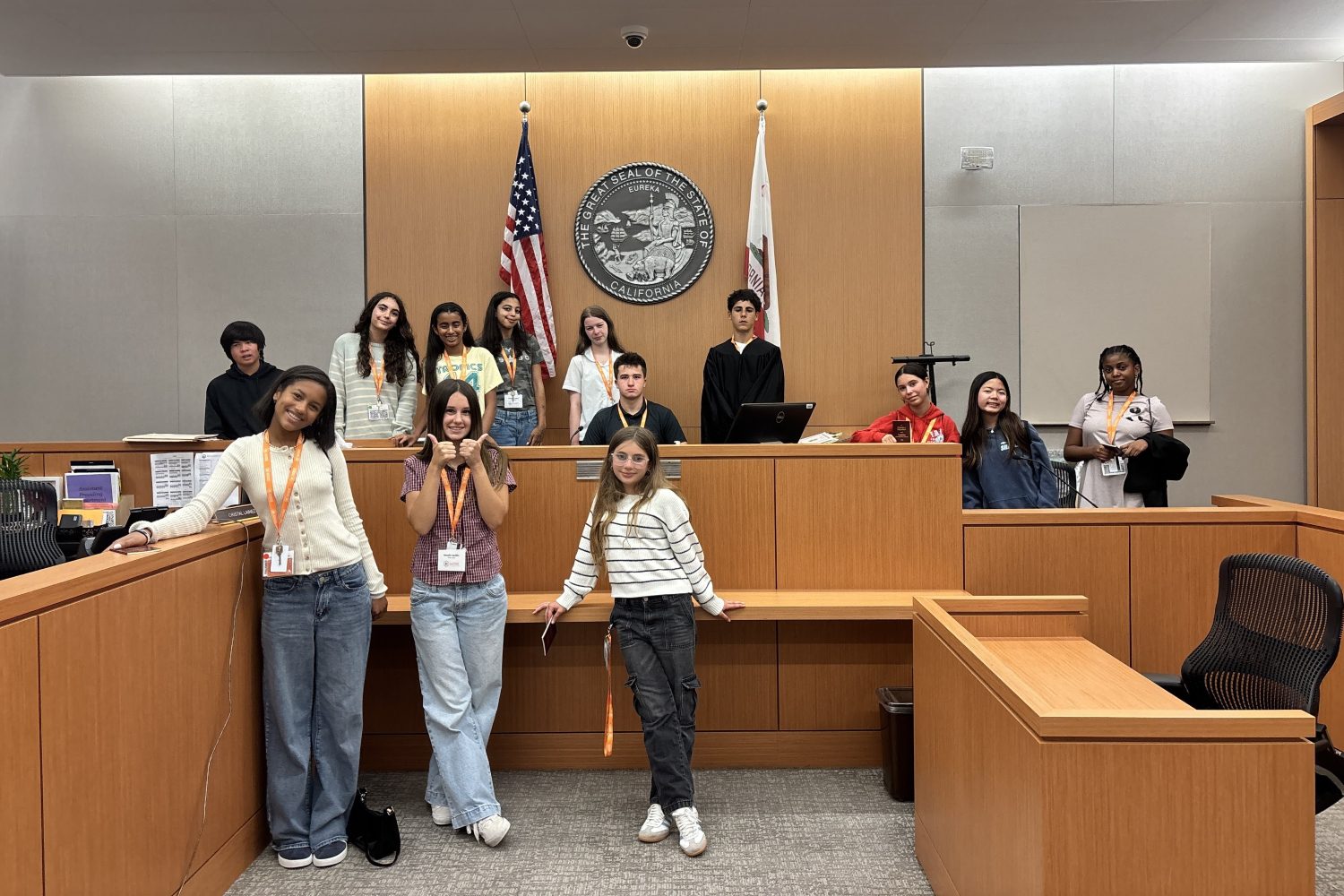
Students don't just hear about courts, they go to them. The Georgetown group visits the D.C. Superior Court and the U.S. Supreme Court, and San Diego students may hold their mock trial at the San Diego Superior Court, all under an instructor who tries cases for a living.
What it asks of you
The course itself takes a week of mornings in class plus afternoon lab time on the case, so the bigger commitment is money and travel. Residential tuition is $2,998 to $3,198 for six days, depending on the campus, and families who don't live near Washington, San Diego or New York also pay to get there.
Who should skip it
Students who've already done mock trial or want sustained legal study, because the course is built as a beginner's introduction and fits into five mornings of class.
What does a week of trial law look like?
Class runs from 9am to noon, Monday to Friday, and Summer Springboard sets aside Wednesday afternoon for extra academic time with possible trips or guest speakers. At Georgetown and UC San Diego, the day starts with breakfast at 8am, then class, lunch at noon, a court visit or recreational activity at 1:30pm, and a skills lab at 3:30pm where students prepare their case for the mock trial. Free time follows at 5pm.
Commuters head home before dinner, while residential students eat together, join supervised evening activities such as trivia or karaoke, are back in the dorm by 8:30pm and check in with a mentor at 9:30pm. At NYU the day follows the same pattern but ends at 5pm. Sessions start on a Sunday and wrap up at 2:30pm on Friday, after the final trial, which past students ran through every phase, from jury selection to closing arguments.
Who teaches the trial law classes?
Each campus has its own instructor, and all three are practicing trial lawyers. At Georgetown it's Dennis Clark, a prosecutor in Maryland and Washington, DC, who has run nearly 50 jury trials and has taught criminal procedure and trial advocacy at American University's Washington College of Law since 2016. At UC San Diego it's Zach Brooks, a trial attorney in state and federal court who owns a criminal defense firm, and at NYU it's Phillip C. Hamilton, a trial attorney, professor and litigator who handles civil, criminal and white-collar cases.
Guest speakers from the legal world add to the instructor's teaching, and at NYU Summer Springboard lists civil rights lawyers, criminal defense attorneys and felony prosecutors among them. Class sizes aren't published.
Who gets a place on the course?
At Georgetown and UC San Diego the course is open to students aged 12 to 14 who have finished 6th grade, while NYU takes students aged 11 to 14 who have finished 5th grade. Every campus asks for a 3.0 GPA or the local equivalent, and international students show their English through a telephone interview.
The application includes short-answer essay questions and signed agreement forms. Summer Springboard reviews it holistically against its Essential Eligibility Criteria, which cover managing your own care and medication, following staff instructions in English and walking more than a mile between buildings. It says its programs aren't therapeutic and may ask for medical documentation. There's no published acceptance rate, and places in each course go first come, first served, so a popular session can fill before an eligible student applies.
What does a week really cost?
At Georgetown and UC San Diego, a week costs $2,998 for residential students and $1,598 for commuters. At NYU it's $3,198 residential and $1,798 commuter, although Summer Springboard describes the NYU course as a commuter program with a day that ends at 5pm, so ask before booking the residential option there. These prices hold for applications made by 30 November 2026, and tuition goes up on 1 December 2026 by an amount Summer Springboard doesn't publish.
Residential tuition covers housing, all meals, the course, excursions and evening activities. Commuter tuition covers lunch, the course, excursions and daytime programming, and at Georgetown and UC San Diego commuters can add weekend excursions for $125 a day. On top of that comes an application fee that starts at $99 and climbs to $149 and then $199 at the February and April application deadlines, and a $600 deposit is paid with the application. Group airport transfers cost $95 each way, and the unaccompanied minor service is $145 each way.
Need-based scholarships cover up to 30% of residential tuition or 60% of commuter tuition, but never the deposit or fees. If plans change, canceling before 1 March 2027 gets back everything except the application fee, the refund shrinks in steps after that, and after 1 June 2027 nothing comes back.
How are middle schoolers looked after?
Middle schoolers are kept apart from Summer Springboard's high school students, with their own staff, housing and schedules and closer supervision. At Georgetown, students share an air-conditioned double room on gender-separated floors where staff also live, and the residence halls have 24-hour security and key-card entry. At UC San Diego, students share rooms in gender-separated suites, with staff living on every floor and senior staff on call around the clock. Campus police patrol 24/7 there, and students must be in their rooms after 9:30pm. NYU classes run in the access-controlled Kimmel Center, where students check in with staff at the front desk each day.
A staffed airport pickup is available for an extra fee. A student expelled for breaking the code of conduct travels home at the parents' expense and gets no refund.
What does applying involve?
Applications go through Summer Springboard's online enrollment page on a rolling basis, and the final deadline is 16 May 2027. Before that come two wave deadlines, on 21 February and 18 April 2027, after which some courses close or move to a waitlist.
Create an account with basic contact details and confirm the verification email.
Start a new application and choose the campus, session, course and residential or commuter tuition.
Complete the full application, including the short-answer questions, which takes about 30 minutes with the student present.
Pay the $600 deposit and the application fee to hold the place.
Expect a decision within 5 to 7 business days, then complete the extra forms that open after acceptance.
Pay the balance: for applications made before 10 March 2027, a third is due on 10 March, a third on 10 April and the rest on 10 May.

Sean
Founder, Succeed
Talk it through with Sean
Want to talk it through?
“I can help you compare the programs you're considering, think through the practicalities and work out what makes sense for you.”
20 minutes · No obligation to enroll
What should you do next?
Frequently asked questions
Sources
- Middle School Trial Law
summerspringboard.com · Official page
- Application and Enrollment FAQ
summerspringboard.com
- Need-Based Scholarships
summerspringboard.com
- Tuition and Financial Aid FAQ
summerspringboard.com
- Main FAQ | Knowledge Base
summerspringboard.com
- summerspringboard.com/terms-and-conditions
- summerspringboard.com/apply
- 2027 Middle School 1-Week Trial Law infosheet (PDF)
summerspringboard.com
Not ready to decide yet? Keep it for later.