
In-person journalism and media course in Cambridge, ages 14 to 18, from £6,295.
Deadline: Not announced yet · From £6,295 · 14-18 · Cambridge · In-person
Sport & Society is a two-week course on the UC Santa Barbara campus where high school students study how fans, athletes, media and sports organizations communicate with one another. Summer Springboard runs it, and in 2026 instructor Steven Kubitza taught the morning classes. The hands-on work includes planning media coverage for an event like the NFL Draft and a mock simulation on referee harassment. Afternoons and evenings bring excursions, college readiness workshops and campus activities, and you can either live in the dorms or commute.
Get the key facts by email
The dates, costs and how to apply, then 2 reminders: 2 May (2 weeks before) and 13 May (3 days before).
Why it's worth it
It treats your interest in sport as a serious academic subject, with questions like why fans tie their identity to a team and why men's and women's sports get different coverage. If you live on campus, it pairs that with two weeks of living like a college student.
What it asks of you
The residential option cost $5,798 in 2026 before flights, and the course itself is 27 hours of class. The rest of the value is in excursions, workshops and dorm life, so it pays off best if you want that side too.
Who should skip it
Students who want credit or a selective credential to strengthen an application should look elsewhere. You leave with a certificate and a letter, not college credit, and getting in depends on clearing a 3.0 GPA bar rather than beating other applicants.
In 2026, class ran from 9am to noon, Monday to Friday in the first week and Monday to Thursday in the second. That's nine three-hour sessions, or 27 hours of teaching, with Wednesday afternoons set aside for extra academic time such as excursions and speakers. Summer Springboard says the course includes visits to local sport organizations, although it listed those trips as tentative for 2026.
Afternoons begin at 1:30pm with an academic excursion or a recreational activity, followed by either a college readiness workshop or True You, Summer Springboard's group reflection sessions. You pick two 90-minute workshops from Speaking with Confidence, Mastering Money, Developing Leadership, and Prepping for College and Career. Commuters leave at 5pm, while residential students have dinner at 6pm, clubs or evening activities from 7pm and dorm checks at 10:30pm, with weekend trips around Santa Barbara to places like Stearns Wharf and State Street. Bring a laptop, because Summer Springboard asks every student to have one for their course.
Steven Kubitza taught it in 2026. He's an instructor and PhD candidate in Communication at UC Santa Barbara, and his research is in organizational communication with a focus on sport. He has also worked in sport sales, sport compliance and sport journalism, and he spent more than a decade managing online sports news websites. He designed his own sport communication course at UCSB, and Summer Springboard says his aim is for students to leave ready for research and industry roles in sport and communication.
Summer Springboard describes morning classes as small groups but doesn't publish a class size for this course.
You leave with a completion certificate and a letter of recommendation written by your instructor. Summer Springboard says both are earned rather than automatic, so it can withhold them for poor participation or a conduct breach. This course carries no college credit.
You'll also have your media coverage plan for a major event, which is the most concrete piece of work you can show afterward. Summer Springboard presents the course as preparation for studying sport management, communication, public relations, journalism or law, but that's its own description rather than any college's view of the course.
You can apply if you'll have finished 8th grade by the start date and have a 3.0 GPA or the local equivalent. Seniors who graduated that spring are eligible too, and international students also need to show their English through a phone interview or a qualifying test score. Summer Springboard publishes no acceptance rate and fills each course first come, first served, so once a course is full, new applicants go on a waitlist.
The application asks for short-answer essays and signed agreement forms. It takes about 30 minutes with the student present, and a decision comes in five to seven business days. Summer Springboard also screens applicants against its Essential Eligibility Criteria, which include managing your own medication and personal care, walking more than a mile and following staff instructions in English, and it may ask for medical documentation.
For 2026, Summer Springboard charged $5,798 to live on campus and $3,298 to commute, plus an application fee starting at $99. It lists the same tuition for its 2027 UC Santa Barbara session for anyone who applies by 30 November 2026, and tuition goes up on 1 December. The application fee rises to $149 after 21 February 2027 and to $199 after 18 April 2027, and a $600 deposit is due when you apply.
The residential price covers your room, all meals, the course, and weekday and weekend excursions. Commuters get the course, lunch, excursions and programming from 9am to 5pm on weekdays, and weekend trips cost $125 a day extra. Neither option covers flights or health insurance, and every student must show proof of insurance. Summer Springboard's airport shuttle is $95 each way, or $195 each way outside its group pick-up and drop-off window. Students aged 14 or under must fly as unaccompanied minors, which adds $50 each way to the $95 shuttle fee, on top of whatever the airline charges for the service. Summer Springboard suggests about $100 a week in spending money.
Cancel before 1 March and you get back all tuition except the application fee. Between 2 March and 1 April you still get your tuition back but lose the $600 deposit. From 2 April only 75% of tuition comes back, after 1 May only 25%, and after 1 June nothing, and the deposit stays with Summer Springboard in each case. Need-based scholarships of up to 30% of residential tuition or 60% of commuter tuition come from a limited pool and apply only to tuition, not to the deposit, the application fee or travel.
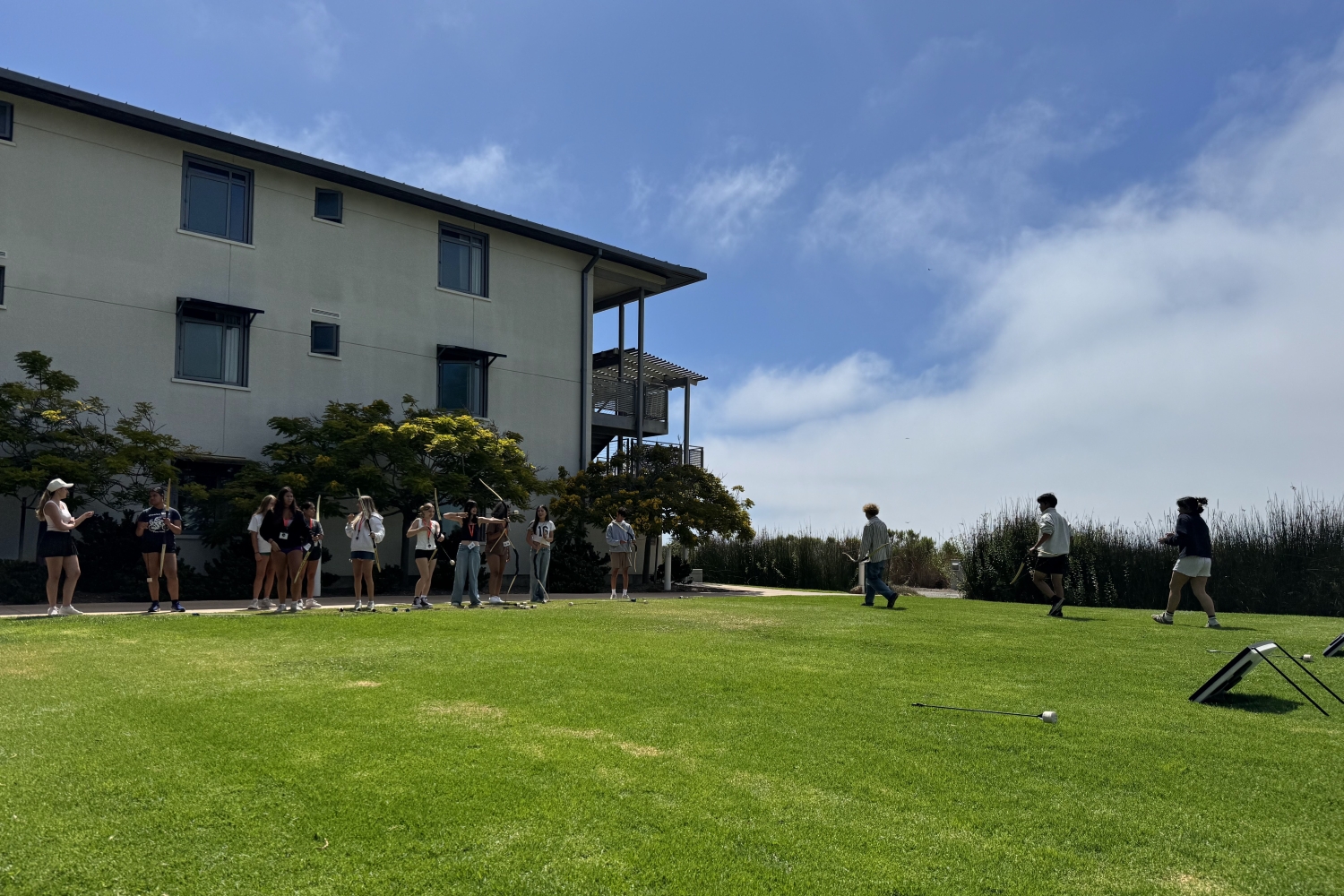
Residential students live in Manzanita Village, a residence hall on the bluffs, in double or triple rooms with bathrooms shared by four or five students. The building's outside doors stay locked around the clock. You get an e-key for your building and a separate key for your room, Student Safety Partners patrol the halls at night, and campus police are on site.
Staff supervise classes, field trips and excursions directly. In free time you can move around within set campus boundaries in groups of three or more. All staff pass background checks, Campus Directors hold degrees and have experience working with teens, and staff are available 24 hours a day. If you're ill or hurt, staff take you to the nearest medical facility and contact your parents, but the family pays the bill. You keep and take your own medication, and phones have to be off during program activities. The rooms have no air conditioning, although Summer Springboard says summers on the bluffs are usually mild and you can bring a small fan.

Sean
Talk it through with Sean
“I can help you compare the programs you're considering, think through the practicalities and work out what makes sense for you.”
In-person journalism and media course in Cambridge, ages 14 to 18, from £6,295.
Deadline: Not announced yet · From £6,295 · 14-18 · Cambridge · In-person
In-person journalism program in Cambridge for ages 14 to 18, from £7,900.
Deadline: Not announced yet · From £7,900 · 14-18 · Cambridge · In-person
Digital media production course in Los Angeles, ages 15 to 18, from $8,130.
Deadline: Not announced yet · From $8,130 · 15-18 · Los Angeles · In-person
Save this program in Succeed to compare it with similar programs, dates, costs and formats in one place.
Compare with other programssummerspringboard.com · Official page
summerspringboard.com
summerspringboard.com
summerspringboard.com
summerspringboard.com
summerspringboard.com
summerspringboard.com