
Succeed has a commercial partnership with this provider.
Biology
Deadline: Not announced yet
From £3,745
15-18
London
In-person
by Tufts University Pre-College Programs
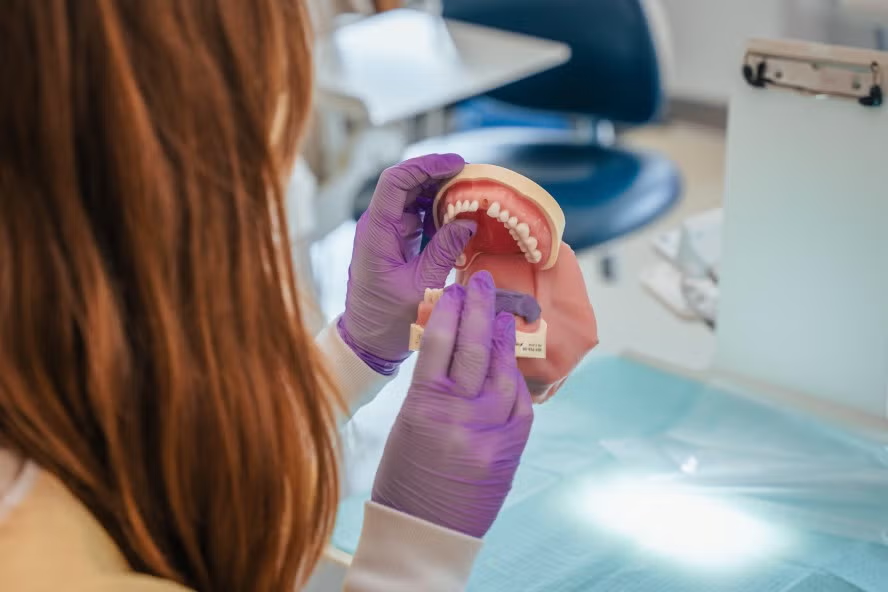
Mini Dental School is a summer intensive from Tufts University's Pre-College Programs, taught with faculty and students from the Tufts School of Dental Medicine on the Boston Health Sciences Campus. Your days mix lectures on dental specialties with hands-on practice such as filling a mock cavity, plaque removal and suturing, and the program ends with a capstone project you present at a closing gala. Session 1 is a one-week commuter session, and Session 2 runs for two weeks with the choice of living on campus or commuting.
 Sean Stevens · Sources
Get the key facts by email
The dates, costs and how to apply, all in one place.
Succeed's assessment
In short
Why it's worth it
The program is run with the Tufts School of Dental Medicine, so you actually do the work, from filling a mock cavity to suturing, instead of only hearing about it. The capstone you present at the closing gala also gives you something concrete to talk about when you explain your interest later.
What it asks of you
Mostly money and logistics. Even the one-week session costs $3,625 and comes with no housing, so it only works if you can get to Boston's Health Sciences Campus every weekday.
Who should skip it
Students who want college credit or a broad tour of medicine, because the program isn't for credit and stays focused on dentistry.
International families
Tufts can't sponsor visas for this program, and it won't admit you to the commuter-only Session 1 unless a close relative within 50 miles provides your housing and transport and signs a waiver along with your parent.
Tufts describes the program as a mix of lectures, hands-on simulations, interactive workshops and patient case reviews, and it posts a sample schedule for each session on the program page that shows how the days divide. Program days run Monday to Friday, with commuters checking in at 8:45 a.m. and finishing by 6:00 p.m., and nothing is scheduled on weekends.
The hands-on work is the heart of it. You practice simulated procedures such as filling a cavity in a mock tooth, plaque removal and suturing, while the teaching covers dental specialties, human anatomy with a focus on the mouth, newer dental technology and real patient cases. Session 1 leans on dentistry case studies and also touches on other health science fields, while Session 2 goes deeper into clinical simulations. At the first Mini Dental School in 2025, students also heard from a panel of dental students and worked in small groups on research projects, such as the effects of vaping on oral health. Everything builds toward a capstone project, which you present on the last day at a closing gala that friends and family can attend.
The program lead is Dr. Jason Cummins, a clinical instructor in the Department of Public Health and Community Service at Tufts University School of Dental Medicine, who also works with the school's admissions office on recruitment and outreach. Tufts says you learn with guidance from its dental faculty and dental students, and it pitches Session 1 as a small-group week with more contact with dental school faculty.
At the first Mini Dental School in 2025, dental school faculty taught topics like X-rays, cavities and cancer screening, while seven dental students served as teaching assistants and worked one-on-one with participants during hands-on activities. Cummins said he wanted students to feel comfortable starting conversations with the TAs so they could learn about dental school informally.
You need to be entering grade 11 or 12, or finishing high school in spring 2027, be 16 by the first day and have taken a year of high school biology. Tufts calls the program highly competitive and says it fills quickly. The first edition in 2025 drew nearly 80 applications for a program originally planned for 20 to 25 students, and 44 ended up attending. Tufts doesn't publish an acceptance rate and gives no feedback if you're turned down.
Tufts says your transcript and recommendation letter are the best ways to stand out, so choose a teacher, coach or mentor who can describe your background, your interest in dentistry and your curiosity in real detail.
English proficiency
If English isn't your first language, you'll need a TOEFL iBT score of 100, IELTS 6.5, PTE 68, Duolingo 120, or a transcript showing at least a year in good standing at an all-English school. Tufts doesn't accept TOEFL's "My Best Scores," so the 100 has to come from a single sitting.
Homeschooled students
You're welcome to apply. A parent can write one recommendation, and Tufts asks for any transcripts from work outside the home since 9th grade.
Tufts explains each step on its How to Apply page, and it reviews applications on a rolling basis.
From 14 December 2026, fill in the online application with your personal and parent details, the biology classes you've taken and a statement of interest of up to 300 words.
Give contact details for a school official, who'll be emailed to upload your official transcript, and for the person writing your recommendation.
Make sure your parent or guardian completes the permission form Tufts emails them, because review doesn't begin until the transcript and permission form arrive.
Have everything in by 1 May 2027, and expect a decision usually within 10 business days of Tufts receiving all your materials.
If you're admitted, pay the $550 deposit within 10 days, counting weekends and holidays, to hold your seat.
Pay the balance by 15 May 2027 and complete the enrollment forms, including health and vaccination records, by 1 June 2027.
Session 1 is the cheaper way in at $3,625 for one week, but it's commuter-only. Session 2 costs $5,425 if you commute or $6,950 if you live on campus, so living on campus adds $1,525 for the two weeks, which covers a double or triple room and the meal plan. Commuters get lunch on program days but cover breakfast, dinner and travel themselves.
Once admitted, you pay a $550 deposit, which counts toward the fee but isn't returned if you withdraw, and the balance is due by 15 May 2027. Tuition can be refunded if you withdraw in writing by 15 May 2027 at 11:59 p.m. ET, and not after that. A visa delay or denial doesn't count as a reason for a refund. Summer fees can't go on Tufts' Tuition Payment Plan, and a late balance can be charged a fee of 1.5% a month, compounded.
Financial aid
Tufts offers a limited number of need-based scholarships, typically covering 75% to 100% of the fee, with decisions twice a month from February. It suggests waiting for your aid decision before paying the deposit, though the session may fill in the meantime. International students aren't eligible. In 2025, aid fully covered six students' tuition and partly covered two more.
Health extras
International students without U.S.-based health insurance are enrolled in a plan and billed for it ($19.07 for one week or $52.16 for two in 2026). International students who can't show the required vaccinations may have to get them on campus for a fee ($55 in 2026). Medical fees of any kind are billed separately.
Tufts runs its residential programs at a staff-to-student ratio of 1:10 and makes reasonable efforts to background-check staff and give them Title IX training. Residential students in Session 2 live in residence halls on the Medford/Somerville campus and check in with trained residential counselors several times a day. Curfew is 10 p.m. in the hall and 11 p.m. in rooms from Sunday to Thursday, and 10:30 p.m. and midnight on Fridays and Saturdays. Breaking curfew can mean dismissal without a refund.
Students can't be in a lab or leave campus without a staff member or official parental permission, and attendance is taken each morning and after lunch. Commuters aren't supervised outside program hours, including on the trip to and from campus. Tufts has its own 24-hour police department, but the program has no on-site mental health counseling, so students are encouraged to stay in touch with their own provider.
Arrival
On arrival day, staff meet residential students at Boston Logan Airport, North Station or South Station and take them by shuttle to campus. Tufts can't accommodate early arrivals or late departures.
Rules
Residential students may not have or drive a vehicle during the program, and commuters may not enter the residence halls.

Sean
Founder, Succeed
Talk it through with Sean
“I can help you compare the programs you're considering, think through the practicalities and work out what makes sense for you.”
20 minutes · No obligation to enroll
Succeed has a commercial partnership with this provider.
Succeed has a commercial partnership with this provider.
Save this program in Succeed to compare it with similar programs, dates, costs and formats in one place.
Compare with other programsuniversitycollege.tufts.edu · Official page
now.tufts.edu
universitycollege.tufts.edu
universitycollege.tufts.edu
universitycollege.tufts.edu
universitycollege.tufts.edu
universitycollege.tufts.edu
universitycollege.tufts.edu
Not ready to decide yet? Keep it for later.