
Tufts University Pre-College Programs Mini Med School
by Tufts University Pre-College Programs
- 2026 program
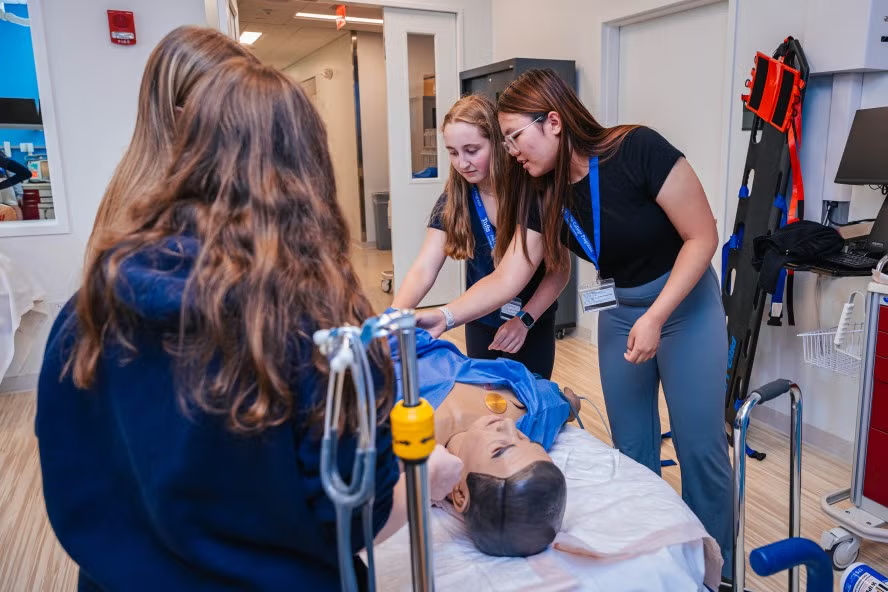
Mini Med School is a one- or two-week summer intensive for students entering 11th or 12th grade, designed and run by faculty from Tufts University School of Medicine. Your days mix lectures and career panels with small-group patient case studies led by medical students, plus hands-on time in Tufts' Clinical Simulation Center and anatomy lab, where you practice skills such as suturing and taking vital signs. Each session ends with a group capstone project on a clinical skill or health topic, which Session 2 students turn into a video.
 Sean Stevens · Sources
At a glance
Official facts · checked 12 Nov 2026- DatesOfficial
- 2027: 28 June to 2 July (Session 1, Commuter Only), 11 to 23 July (Session 2), 25 to 30 July (Session 3)
- Who can applyOfficial
- Entering grades 11 to 12 (shared admissions tables also list the previous spring's high school graduates). At least 1 year of high school biology. Non-native English speakers must show proficiency (TOEFL iBT 100, IELTS 6.5, PTE 68, Duolingo 120, or 1 or more years at an all-English school). International students welcome, but Tufts cannot sponsor visas for this program
- Total costOfficial
- $3,625 Session 1 commuter, $6,950 Session 2 residential, $5,425 Session 2 commuter, $4,650 Session 3 residential, $3,625 Session 3 commuter (2026)
- Format and placeOfficial
- In person, Medford, MA, Boston, MA
- Length
- 1 week (Sessions 1 and 3), 2 weeks (Session 2)
- Included / budget separately
- Included: meals (Residential fees include three meals a day and Sunday brunch and dinner at Dewick-MacPhie Dining Center, meals on the Boston and Grafton campuses are boxed lunches or provided by staff). Separately: health insurance for international students without U.S. coverage: $19.07 Session 1 or 3, $55.16 Session 2 (2026), laundry: $1.50 per cycle, breakfast and dinner for commuter students, medical, hospital and counseling fees
- Deposit and refunds
- Deposit $550. Withdraw in writing by 11:59 p.m
- Financial aid
- Limited need-based financial aid for students with demonstrated need
- Apply by
- Applications open 14 December 2026. Deadline: Not published
- Cohort and selectivity
- Tufts describes Mini Med School as highly competitive and quick to fill, reviews complete applications holistically on a rolling basis and does not publish an acceptance rate
- Credit or certificate
- Not for credit
Get the key facts by email
The dates, costs and how to apply, all in one place.
Succeed's assessment
Should you apply?
SucceedIn short
Why it's worth it
You don't just hear about medicine. You suture, practice CPR and take vital signs in Tufts' Clinical Simulation Center, see human organs in its anatomy lab and work through patient cases in small groups led by current medical students, who are also the people you can quiz about the road ahead.
What it asks of you
An early, firm commitment. Tufts admits on a rolling basis and wants a $550 non-refundable deposit within 10 days of an offer, and under its current policy summer tuition can't be refunded after 15 May, so the money is locked in weeks before the program starts.
Who should skip it
Students looking for something that strengthens a college application on paper, because the program isn't for credit and Tufts states that taking part doesn't result in or guarantee admission to any Tufts degree program.
What do the days actually involve?
Tufts' sample timetables run from 9:00 a.m. to between 5:00 and 6:00 p.m. on weekdays, and commuters check in by 8:45 a.m. and finish no later than 6:00 p.m. A typical week mixes lectures and keynote speakers with small-group rotations: suturing, CPR, wound care and airway practice in the simulation center, anatomy lab sessions, patient case studies and a multi-day diagnostic lab called The Tragic Case of Stan, where you run clinical-style tests to find the cause of a fictional patient's bacterial infection and choose a treatment. The last day ends with a capstone gala and a closing ceremony. Tufts says the timetable may still change.
The sessions differ in more than length. Session 1 is commuter-only and based on the Boston Health Sciences campus, with a smaller group and more contact with medical school faculty. Session 2 adds career seminars, extra simulation center time, a full-day trip to the Cummings School of Veterinary Medicine in Grafton and a capstone video. Session 3 is built around meeting students from around the world and hands-on activities. Sessions 2 and 3 are based in Medford, with buses to the Boston campus on Tuesdays and Wednesdays in the samples. Residential students get evening activities such as ice cream socials and trips to Davis Square, and Session 2 includes a weekend, when past Tufts trips have gone to places like Crane Beach and Six Flags New England.
Who teaches you?
Faculty from the Department of Medical Education at Tufts University School of Medicine design and run the program, and Tufts medical students and faculty do the teaching. The three co-directors all hold posts at the medical school. Dr. Berri Jacque chairs the Department of Medical Education and teaches immunology, Dr. Tony Gao is an assistant professor of medical education with a background in biomedical engineering, and Dr. Liz Genné-Bacon is associate director of the school's Center for Science Education, with a research background in molecular neuroscience and genetics.
Day to day, you'll spend most of your time with medical student teaching assistants, who lead the case-study groups, the Stan lab sessions and the capstone teams. Question-and-answer sessions bring in admissions staff, doctors and other health professionals such as dentists, veterinarians and physician assistants.
Who can apply, and what does the application ask?
You need to be entering 11th or 12th grade, have a year of high school biology and be 16 by the first day of your session. Tufts' general eligibility table also lists students who graduated from high school the spring before. The application asks for a personal statement of interest of up to 300 words, your relevant classes, one letter of recommendation and a parent permission form, while a school official uploads your transcript directly. Review only starts once the transcript and parent consent arrive, and decisions usually come within 10 business days of a complete file.
Tufts calls Mini Med School highly competitive and says it fills up quickly, but it publishes no acceptance rate. International students are welcome but must show English proficiency if English isn't their first language (for example a TOEFL score of 100 or IELTS 6.5), can't get visa sponsorship for this program and can join commuter-only Session 1 only with a signed waiver confirming that a close relative within 50 miles of Tufts will provide housing and transport.
What does each session cost?
Tufts lists its summer 2026 fees and says 2027 fees may change. In 2026 a commuter place cost $3,625 for Session 1 or Session 3 and $5,425 for Session 2, while a residential place cost $4,650 for Session 3 and $6,950 for Session 2. Residential fees cover a double room in an air-conditioned dorm with bedding, three meals a day (brunch and dinner on Sundays), daily activities and weekend trips. Commuters get lunch on program days but pay for breakfast and dinner and for getting to campus.
On top of the fee, international students without U.S. health insurance were billed for a Tufts plan in 2026 ($19.07 for Session 1 or 3, $55.16 for Session 2), and a missing vaccination given on campus carries a fee ($55 in 2025). Medical visits, laundry ($1.50 a cycle), flights and spending money are extra too. Tufts has limited need-based aid and says its pre-college scholarships typically cover 75% to 100% of the fee, with awards made twice a month from February. U.S. students, including undocumented and DACA students, can apply, but international students can't. If aid decides whether you can go, Tufts suggests waiting for its decision before paying the deposit, though your place could fill in the meantime.
How are students looked after?
Residential students have one resident advisor for every 10 students, plus a residence director and senior staff, and Tufts says it makes reasonable efforts to background-check and give Title IX training to everyone responsible for pre-college students. Dorms need a Tufts ID card to enter, bedrooms lock, and students must be in the residence hall by 10:00 p.m. from Sunday to Thursday (10:30 p.m. on Friday and Saturday), with a buddy system during free time. Nobody leaves campus without staff or official parental permission. Staff meet students at Logan Airport, North Station and South Station on arrival day, and other arrival times need arranging with Tufts in advance.
Tufts collects allergy and health details before the program and uses its own urgent care and Boston hospitals when needed, with any medical bills charged to the family. There's no on-site mental health counseling. Commuters are supervised only during program hours, and their families are responsible for the daily journey.

Sean
Founder, Succeed
Talk it through with Sean
Want to talk it through?
“I can help you compare the programs you're considering, think through the practicalities and work out what makes sense for you.”
20 minutes · No obligation to enroll
What should you do next?
Frequently asked questions
Sources
- Summer Pre Med Programs for High School Students ❘ Tufts
universitycollege.tufts.edu · Official page
- University Policies - Boston, MA - Tufts University College
universitycollege.tufts.edu
- Get Your Questions Answered with the Tufts Pre-College FAQ
universitycollege.tufts.edu
- How to Complete Your Tufts Precollege Application ❘ Boston
universitycollege.tufts.edu
- Frequently Asked Questions
universitycollege.tufts.edu
- Tuition & Fees
universitycollege.tufts.edu
- Visiting Students
universitycollege.tufts.edu
- Billing & Payment
universitycollege.tufts.edu
Not ready to decide yet? Keep it for later.